Red Light Toothbrush vs Oral Light Therapy Mouthpiece – Which is Better for Gum Health?
If you’re comparing a red light toothbrush with an oral light therapy mouthpiece, you’ve probably noticed that home gum care hasn’t changed much in years. Brush twice a day, floss, and book regular dental cleanings.
Both devices build on that foundation by adding targeted light wavelengths that may help support gum tissue between visits, without replacing the daily habits your dentist still wants you to keep up with.
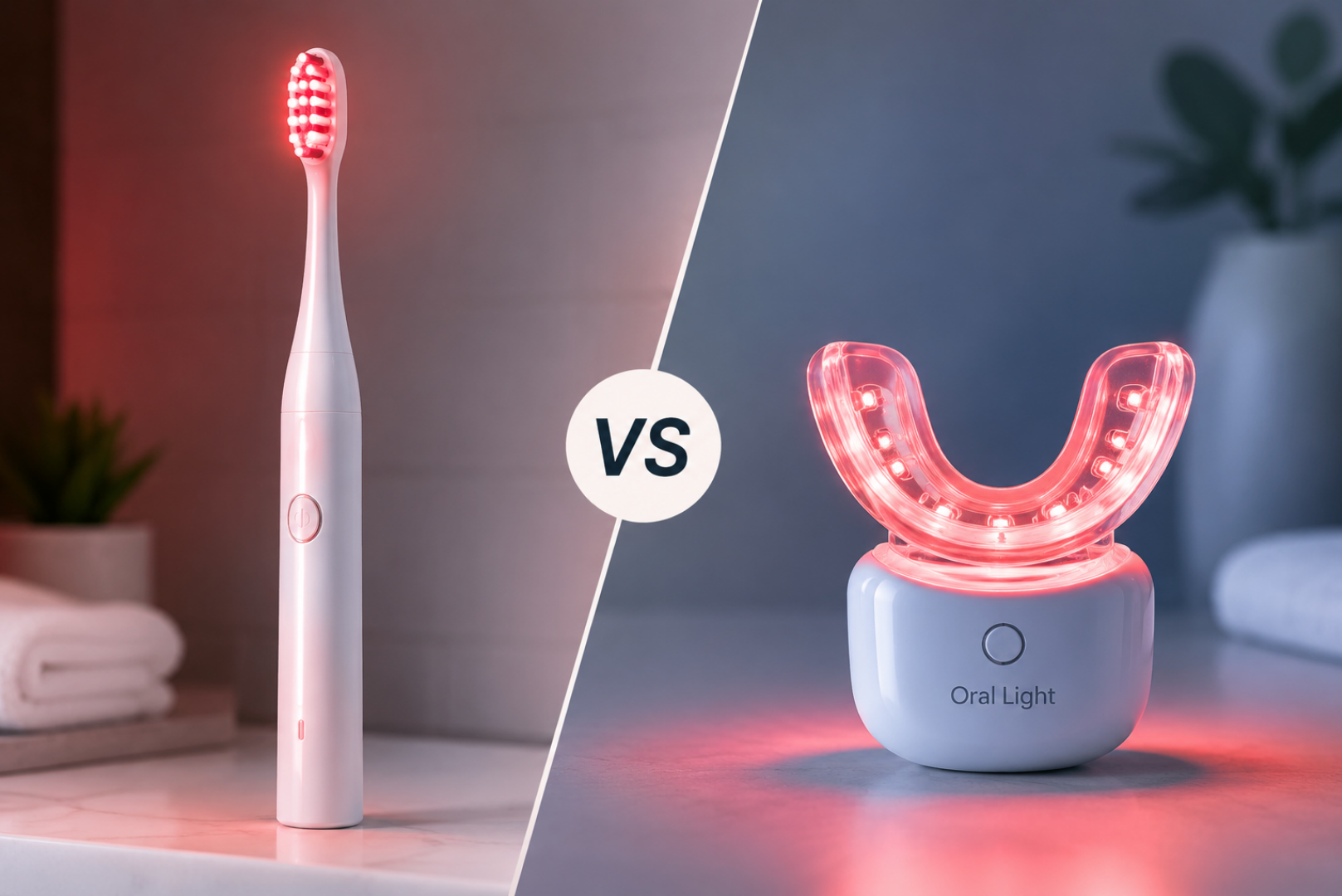
One option replaces your regular brush with a red light toothbrush that combines sonic cleaning with LED support. The other uses an oral light therapy mouthpiece to give more of the gumline a dedicated light session.
Both support at-home gum care, but the choice comes down to convenience during brushing versus fuller gumline coverage after brushing.
| Aspect | Red Light Toothbrush | Oral Light Therapy Mouthpiece | Quick Take |
|---|---|---|---|
| Gum health stage | Mild gingivitis, early bleeding, general upkeep | Longer sessions and fuller coverage; periodontitis care belongs with a dentist | Toothbrush for early, milder cases |
| Light coverage | Moving brush head, a few seconds per gum area | Stationary full-arch LEDs, 5 to 10 minutes per session | Mouthpiece for longer, steadier exposure |
| Session length | 2 minutes, built into brushing | 5 to 10 minutes, separate session | Toothbrush for everyday ease |
| Wavelengths | 660 nm red plus 830 nm near-infrared | 660 nm red + 450 nm blue (Oral Care Pro); 415 nm blue, 660 nm red, 850 nm near-infrared (Hooga Oral Therapy Device) |
Mouthpiece adds blue light options |
| Cost and upkeep | One-time cost, similar to a premium electric toothbrush | Higher upfront cost; aPDT systems also need mouth rinse refills | Toothbrush for a smaller spend |
| Clinical evidence | Gingivitis and dentin hypersensitivity studies | Periodontitis trial data is specific to Lumoral-style aPDT, not consumer trays | Depends on the exact device |
Disclosure: This article contains affiliate links. We may earn a commission on qualifying purchases at no extra cost to you.
How Does Red Light Therapy Work on Your Gums?
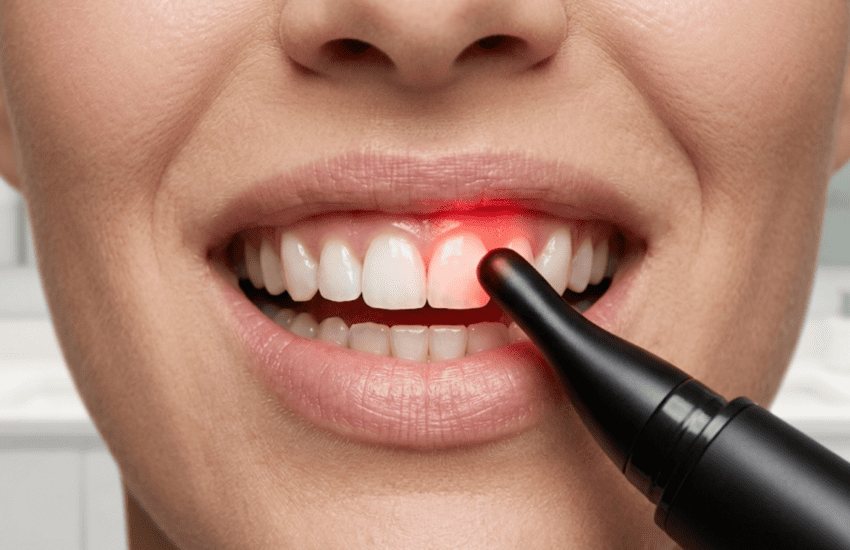
Red light therapy for gums usually uses wavelengths in the 630 to 680 nm range. These wavelengths are common in photobiomodulation research because they can interact with mitochondrial pathways linked to cellular energy. For gum tissue, that may support normal repair processes and a healthier response to irritation.
Some oral light therapy devices also use blue light, often around 405 to 450 nm. Blue light is studied for its antibacterial effect because certain bacterial compounds, including porphyrins and flavins, can absorb the light and produce reactive oxygen species that may damage bacterial cells.
Near-infrared light usually sits around 810 to 850 nm. It reaches slightly deeper than red light, which is why some oral care devices include it for tissue beneath the gum surface. Results still depend on the device, dose, session length, and the person’s gum health.
A red light toothbrush adds light during your normal two-minute brush. An oral light therapy mouthpiece usually runs for five to fifteen minutes as a separate session.
In use, red light focuses more on the gum surface, while near-infrared light reaches farther into the soft tissue below. For most people the sensation is barely noticeable, with no real warmth or tingling.
Oral light therapy is still an add-on to basic gum care. It works alongside brushing, flossing, and professional cleanings, not instead of periodontal treatment. For more background, see this overview of red light therapy for teeth and gums.
What Is a Red Light Toothbrush and How Does It Work?
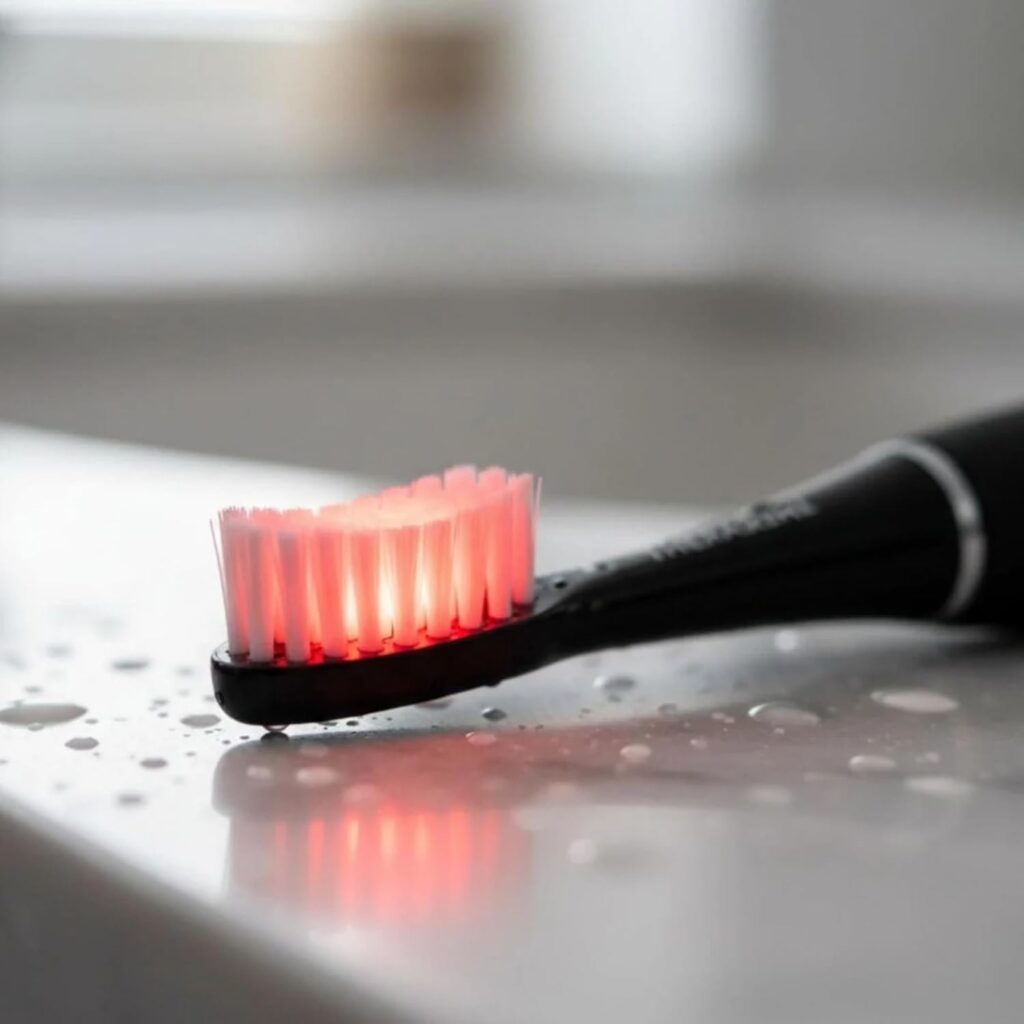
A red light toothbrush is a powered toothbrush with LEDs set into the brush head, emitting wavelengths that reach gum tissue while you brush.
The Therasage TheraSmile is one example. It pairs red light at 660 nm with near-infrared at 830 nm, so the light reaches both surface gum tissue and the deeper structures beneath it, all inside the two minutes you already spend at the sink.
The light works while the bristles clean, so there is no separate step and nothing new to learn.
Sonic vibration runs at 31,000 strokes per minute to help lift plaque along the gumline, a built-in smart timer keeps you brushing for the full recommended stretch, and several brushing modes let you adjust the feel. Replaceable heads keep the brush going without buying a whole new device.
Ready to Upgrade your Toothbrush?
TheraSmile pairs 31,000 rpm sonic cleaning with Red, Blue, and Near-Infrared light support through two interchangeable brush heads. You still brush for two minutes, but you get a more targeted clean designed to support gum comfort, oral hygiene, and a fresher-feeling mouth.
Check Price of the Therasage TheraSmile.
What Is an Oral Light Therapy Mouthpiece?
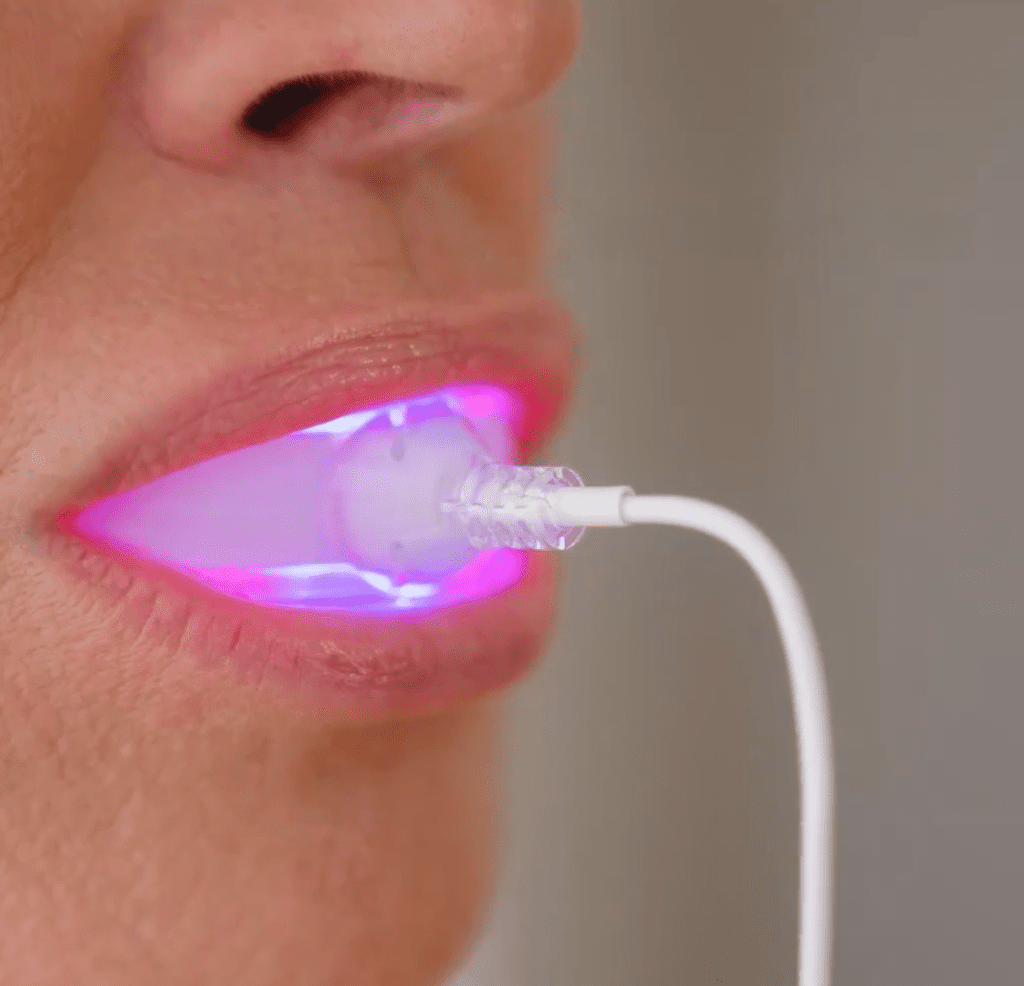
An oral light therapy mouthpiece is a mouthguard-shaped tray worn over both arches at once.
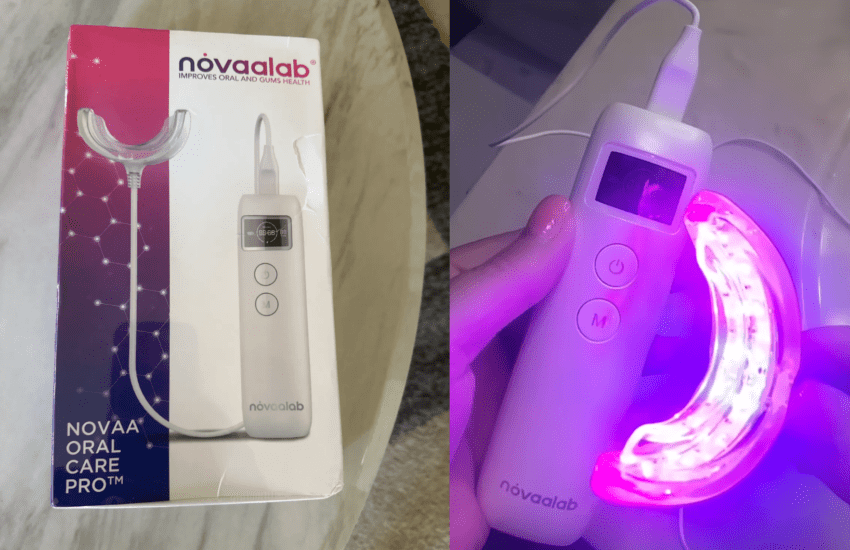
The NovaaLab Oral Care Pro holds 16 LEDs, eight at 660 nm red and eight at 450 nm blue, set to reach the gumline across the whole mouth in one session.
A treatment runs ten minutes, hands-free, while the tray sits over the teeth. There is no brushing motion involved.
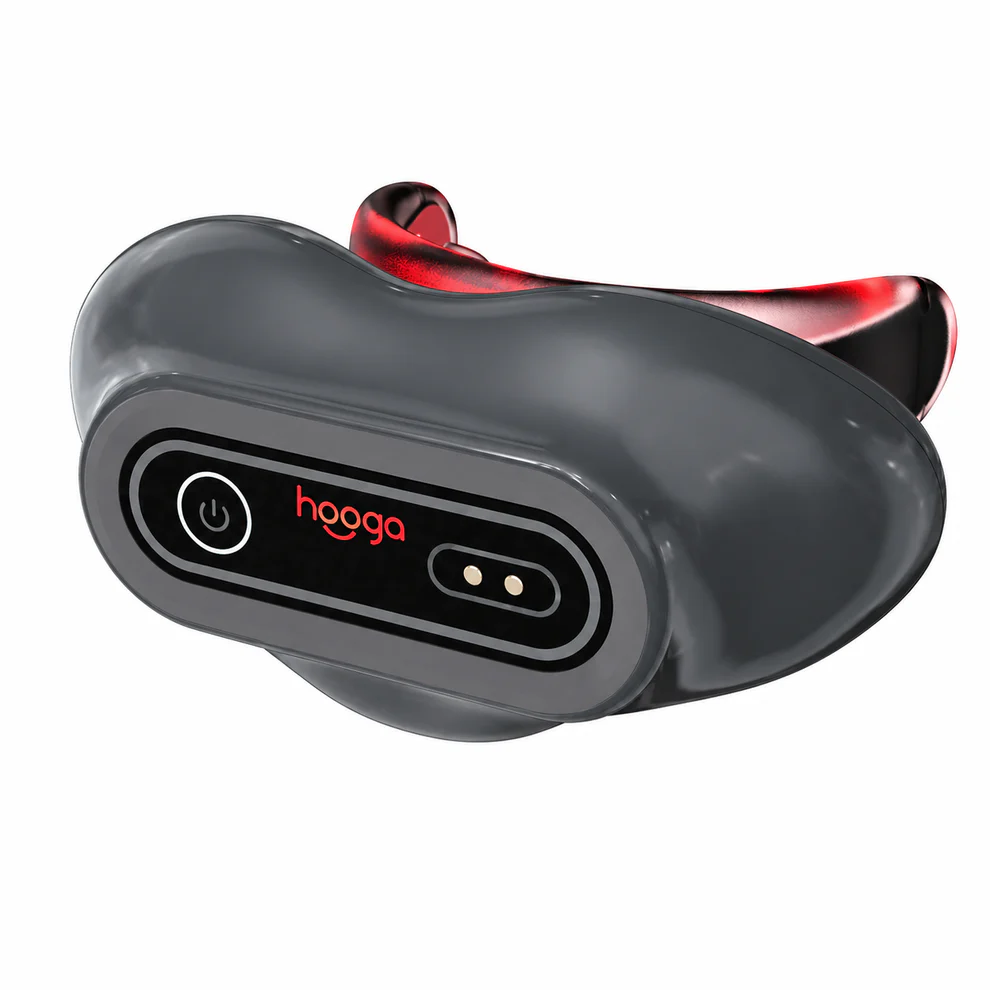
For near-infrared coverage alongside red and blue light, the Hooga Lip, Gum & Teeth Device is a triple-wavelength option, pairing 415 nm blue, 660 nm red, and 850 nm near-infrared across 36 LEDs in a five-minute session.
Want Fuller Coverage Than a Brush?
The Oral Care Pro uses 16 red and blue LEDs in a full-arch tray for broader gumline coverage, hands-free use, and a fresher-feeling finish after brushing.
Check Price of the Oral Care Pro.
Red Light Toothbrush vs Mouthpiece: The Key Differences Compared
Which Device Fits Your Gum Care Goals?
A red light toothbrush fits daily oral care with less extra effort. It combines sonic brushing with LED light, so you still brush for two minutes without adding a separate oral light therapy session. This works well for people who already use an electric toothbrush and want red or near-infrared light built into normal brushing.
An oral light therapy mouthpiece can give broader gumline coverage than a brush head because the LED tray sits across more of the mouth at once.
Some systems, such as Lumoral-style aPDT devices, pair dual-wavelength light with a photosensitive mouth rinse that binds to oral biofilm before the light session. Other oral LED trays rely on red and blue light alone, so coverage, session length, wavelengths, and product claims vary by brand.
A toothbrush is better for everyday brushing and lower effort. A mouthpiece is better for people who want a separate full-mouth light session beyond brushing and flossing. Persistent bleeding, gum pain, swelling, or other dental concerns should still be checked by a dentist.
The Verdict: A red light toothbrush is the easier starting point for everyday gum care and occasional bleeding during brushing or flossing. A mouthpiece is better for people who want a separate, longer light session with fuller gumline coverage. Ongoing bleeding, deep pockets, implant irritation, or worsening symptoms should be checked by a dentist instead of managed with a device alone.
How Light Coverage Compares: Brush Head vs Full Arch
The TheraSmile carries 660 nm red light and 830 nm near-infrared light as the brush head moves around the mouth. Since it works like a regular sonic toothbrush, each section of gumline gets brief exposure during the two-minute brushing cycle. Toothpaste, brush angle, and movement can also affect how much light reaches the tissue.
The Oral Care Pro takes the opposite approach. Its full-arch tray sits over the mouth and holds 16 red and blue LEDs near the gumline for a ten-minute session. Since the tray stays in place, the light exposure is longer and more consistent than what a moving brush head can offer.
That does not mean every tray performs the same way. LED placement, output, distance from the gums, tray fit, and session length all affect coverage. The clearest difference is time on target: TheraSmile adds light while you brush, while Novaa gives the gumline a separate, longer light session.
Red Light Toothbrush vs Oral Light Therapy Mouthpiece: Which Is Easier to Use Daily?
Daily use usually comes down to steps, storage, travel, and cost.
A red light toothbrush asks for very little beyond normal brushing. You brush for two minutes, twice a day, with no separate light session, tray, controller, or mouth rinse. It works like a sonic electric toothbrush, so the red and near-infrared light becomes part of the same brushing session.
An oral light therapy mouthpiece needs more attention. A full-arch LED tray can offer longer gumline coverage, but the ten-minute session is easier to skip at night. Some people use these devices heavily at first, then pull them out only before a dental cleaning.
Some aPDT mouthpiece systems also require an activating mouth rinse before each session. That adds another step, refill costs, and more pieces to store. The tray, controller, charger, and rinse tablets also take up more space than a toothbrush, especially when traveling.
For daily oral care, the red light toothbrush is the easier choice because it adds LED exposure to brushing you already do.
The mouthpiece is stronger for targeted gumline coverage, receding gums, and a longer full-mouth oral light therapy session. Just factor in the extra session time, storage, and any refill costs before choosing a tray.
Who Should Choose a Red Light Toothbrush?
A red light toothbrush may be a better fit for:
- Gums that bleed during flossing while pocket depths still read normal at cleanings, where the aim is calming mild inflammation without adding a separate device that needs its own session.
- Anyone already using a quality electric toothbrush who wants a step up, especially if early gum sensitivity has come up at recent appointments.
- Maintenance after professional gum treatment, when the focus is keeping the gums healthy between dental cleanings.
- Reluctance to take on a longer nightly session. The two-minute, brush-and-done approach fits anyone who knows a separate tray would not get used.
Who Should Choose an Oral Light Therapy Mouthpiece?
- Anyone who wants a longer, hands-free light session with fuller gumline coverage than a moving brush head gives.
- Extra support after professional gum treatment, used between cleanings rather than in place of them.
- People with implants who want broader light exposure, keeping in mind that implant inflammation should be checked by a dentist.
- Cases that call for near-infrared light alongside red and blue. The Hooga Lip, Gum & Teeth Device pairs 415 nm blue, 660 nm red, and 850 nm near-infrared across 36 LEDs in a five-minute session.
Are Red Light Oral Devices Safe? Side Effects and Precautions
Most people use red light toothbrushes and oral light therapy mouthpieces without major issues, but eye exposure, photosensitivity, pregnancy, and dental implants deserve a closer look.
- Avoid direct eye exposure. Blue light in the 405 to 450 nm range can pose retinal risk at high intensity or with direct exposure. Since oral devices sit inside the mouth, eye exposure is limited. Still, do not stare into active LEDs or point them toward your eyes.
- Check medications that increase light sensitivity. Tetracyclines such as doxycycline, plus oral or topical retinoids, may make tissue more reactive to light. Stop using the device if you notice burning, sores, or unusual irritation.
- Be cautious with photosensitivity conditions. People with porphyria or other light-sensitive conditions should check with a clinician before using blue light oral devices.
- Ask first during pregnancy. Pregnancy data is limited, so follow the device instructions and check with a physician before use.
- Dental implants and restorations are usually not an issue. Low-level LED oral devices are not generally known to damage titanium implants, crowns, fillings, or composite restorations.
- See a dentist if symptoms worsen. Stop use and book an exam if irritation lingers, bleeding gets worse, new sensitivity appears, or an implant area feels sore or swollen.
An oral light device can be part of home care, but it should not replace professional treatment for worsening symptoms.
The Bottom Line on Red Light Toothbrush vs Mouthpiece
Home gum care has come a long way beyond brushing, flossing, and waiting for the next dental cleaning. Both red light toothbrushes and oral light therapy mouthpieces give people another way to support the gumline between appointments, but they serve different needs.
A red light toothbrush is the better first step for most people. It adds red and near-infrared light to brushing you already do, so it works well for mild gum irritation, occasional bleeding, and daily plaque control. The main benefit is consistency. You don’t have to remember a separate light session.
An oral light therapy mouthpiece is the stronger fit when you want longer, fuller gumline coverage. A full-arch tray holds light near the gums for several minutes at a time, which can be useful for receding gums, post-treatment gum maintenance, or people who want a dedicated oral light therapy device.
Some people may start with the toothbrush and add a mouthpiece later. Others may prefer the tray from the start if gumline coverage is the priority. Neither choice should replace periodontal care. Persistent bleeding, deep pockets, implant soreness, or worsening gum inflammation should be checked by a dentist.
Recommended Red Light Oral Devices
Best for Beginners and Daily Upkeep
The TheraSmile’s 660 nm and 830 nm light and 31,000-stroke sonic cleaning go to work during the two minutes you already brush, so calmer gums cost you no extra time and no new habit to keep up.
Check Price of the Therasage TheraSmile.
Best for Full-Arch Red and Blue Coverage
The Novaa Oral Care Pro uses 16 red and blue LEDs in a full-arch tray, giving the gumline a steady ten-minute light session across the whole mouth after brushing.
Check Price of the Novaa Oral Care Pro.
Best for Added Near-Infrared Reach
The Hooga Lip, Gum & Teeth Device pairs 415 nm blue, 660 nm red, and 850 nm near-infrared across 36 LEDs, so a five-minute session reaches deeper tissue alongside the surface gumline.
Check Price of the Hooga Oral Therapy Device.
Frequently Asked Questions
Does red light therapy actually work for gums?
Red and near-infrared light therapy has been studied in dentistry for gum inflammation, wound healing, and periodontal support, especially as an adjunct to standard dental care. The proposed mechanism is photobiomodulation, where certain wavelengths interact with cellular pathways involved in energy production, inflammation signaling, and tissue repair.
The evidence is strongest for professionally guided or adjunctive use, including post-procedure healing and periodontal therapy. For at-home red light toothbrushes and oral light therapy mouthpieces, the research is promising but still device-specific, so results can vary by wavelength, dose, coverage, and gum health.
Can a red light toothbrush replace my regular dental cleanings?
No, a red light toothbrush cannot replace professional dental cleanings. Professional cleanings remove calcified tartar that you cannot remove at home, no matter what tools you use.
Red light therapy enhances your gum health between cleanings and may help you maintain better results, but you still need to see your dentist regularly for proper periodontal maintenance.
How long does it take to see results from oral light therapy?
People may start noticing changes in gum bleeding and inflammation within four to six weeks of consistent use.
The timeline depends heavily on what condition you’re treating and how consistently you use the device.
Is blue light safe for your mouth every day?
Blue light used in toothbrushes and oral devices is generally considered safe for daily use at the power levels these devices deliver. The concern with blue light is mainly about potential disruption to useful oral bacteria when used excessively or at very high intensities.
Most consumer devices are designed with suitable dosing that shouldn’t cause microbiome issues when used as directed.
Do red light toothbrushes help with receding gums?
Red light therapy can potentially slow the progression of gum recession by supporting collagen production and reducing chronic inflammation, but it cannot regenerate tissue that has already receded. For existing recession, you would need grafting or other surgical interventions. Red light is more of a preventive and maintenance tool than a restorative one for recession.
Can I use oral light therapy if I have dental implants?
Yes, red and near-infrared light therapy is actually useful for dental implants. Studies have shown that photobiomodulation can enhance osseointegration, the process where your bone fuses to the implant.
Disclaimer: This article is for general information only and is not dental or medical advice. Red light oral devices are extra support and do not diagnose, treat, or cure gum disease. Gum bleeding, pain, swelling, or loose teeth can be signs of gingivitis or periodontitis, and persistent or worsening symptoms should be evaluated by a dentist or periodontist. Always read the manufacturer’s instructions and speak with a qualified professional before starting a new device, particularly with existing dental work, implants, pregnancy, photosensitivity, or other health conditions.