Best Red Light Therapy for Hair Loss At Home
Hair loss is often first noticeable in small changes, such as a widening part, more strands left in a brush, or areas of the scalp becoming more visible than before.
The best red light therapy for hair loss at home gives you a non-invasive way to support thinning hair without pills, injections, or regular salon appointments.
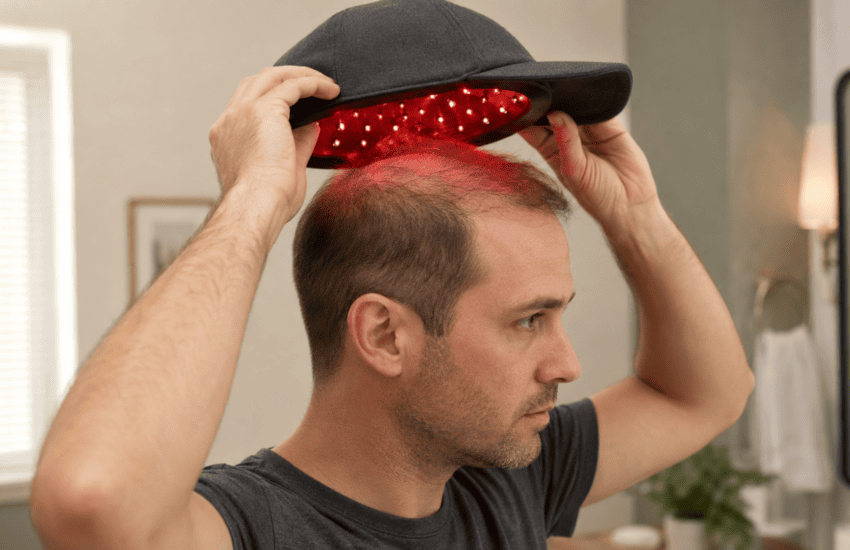
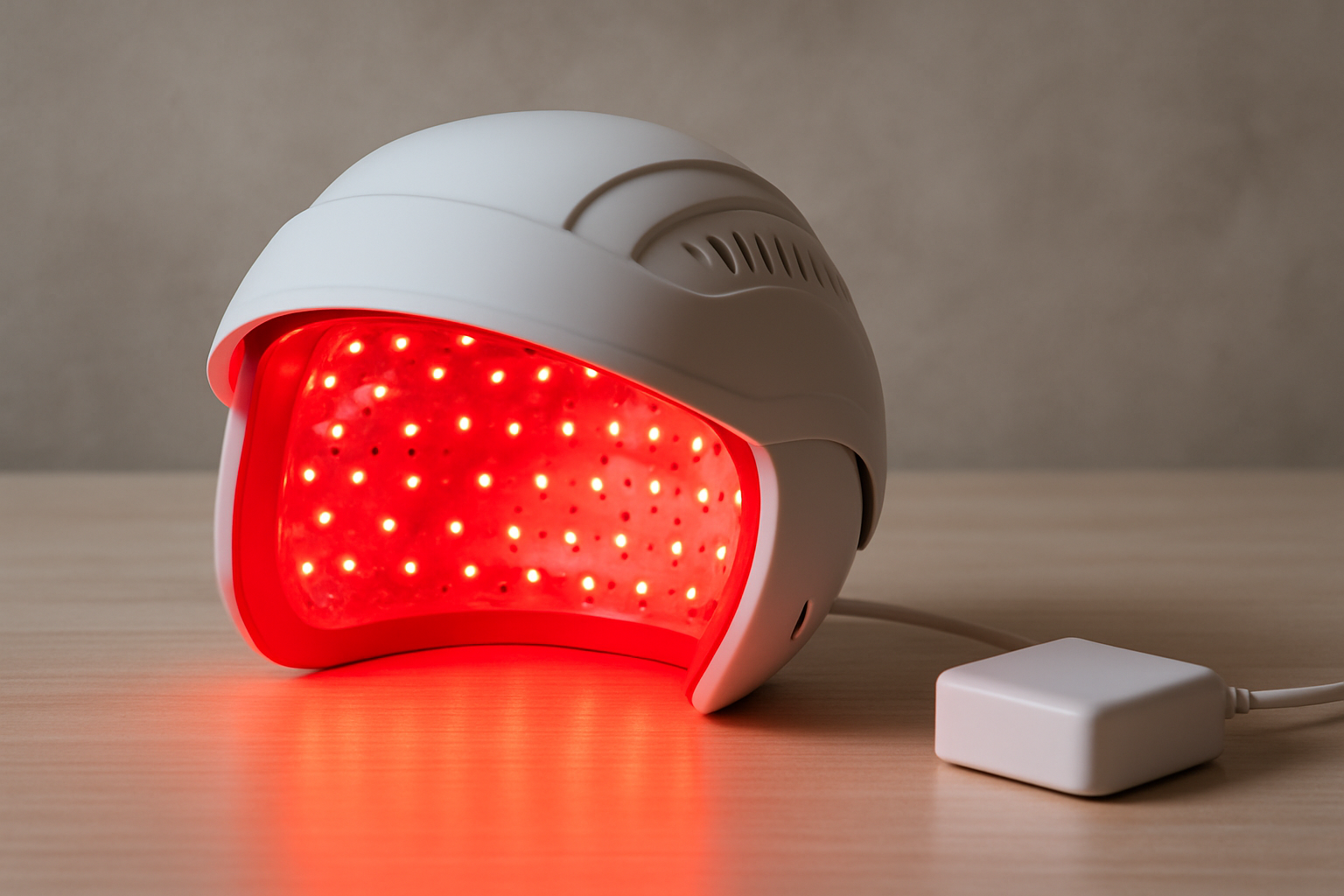
These at-home caps, helmets, and handheld devices use targeted red light wavelengths which may help support follicle activity, support healthier-looking hair growth, and reduce shedding over time.
Below, you’ll find full-coverage helmets, easy-to-wear caps, and a targeted handheld option, so you can choose the right red light therapy device for your routine, hair goals, and type of hair thinning.
Quick Comparison: Top Red Light Therapy Devices for Hair Loss
| Product | Diodes & Type | Wavelengths | Session | Best For | |
|---|---|---|---|---|---|
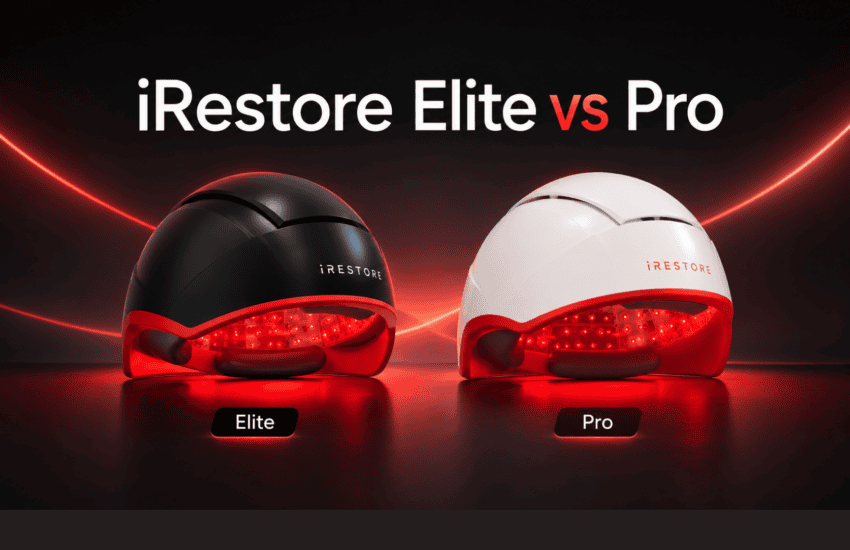
| iRestore Elite | 300 lasers and 200 LEDs | 625nm, 655nm, and 680nm | 12 min daily | Best overall | Shop on Amazon |
| CurrentBody Skin LED Hair Regrowth Device | 120 LEDs | 620-660nm | 10 min daily | Full scalp LED coverage | Shop on Amazon |
| Kiierr 272 Premier | 272 lasers | 650nm | 30 min every other day | Laser-only cap | Shop on Amazon |
| Capillus Spectrum | 312 lasers | 650nm and 808nm | 6 min daily | Short daily sessions | Shop on Capillus |
| Viconor 272 Laser Cap | 272 lasers and LEDs | 650nm | 30min, 3x a week, every other day | Budget laser-cap alternative | Shop on Amazon |
| Lumy Health LED & Laser Therapy Cap | 100 LEDs and 22 lasers | 630nm, 850nm, and 430nm | 20 min | Affordable hybrid build | Shop on Lumy |
| Hairmax LaserBand 82 | 82 lasers | 655nm | 90 sec, 3x weekly | Targeted thinning spots | Shop on Amazon |
| HairMax Ultima 12 Classic LaserComb | 12 lasers | Laser light | 8 min, 3x weekly | Targeted comb-style treatment | Shop on Amazon |
How Do At-Home Red Light Devices Work for Hair Loss?
Red light therapy, also called low-level light therapy or LLLT, uses red and near infrared wavelengths to expose the scalp to light. These devices are usually non-UV and low heat, so treatment should feel mild during use.
The main difference is coverage. Helmets and caps treat larger areas of the scalp, while combs and bands are better for targeted thinning around the hairline, part, or crown.
Most sessions take anywhere from 90 seconds to 30 minutes, depending on the device. Some are made for daily use, while others are used a few times per week.
Laser diodes deliver more focused light, while LEDs spread light across a wider area. Results build gradually, so the best device is the one you can use consistently as directed over time.
Best Red Light Therapy Devices for Hair Loss At Home in 2026
Best Overall: iRestore Elite
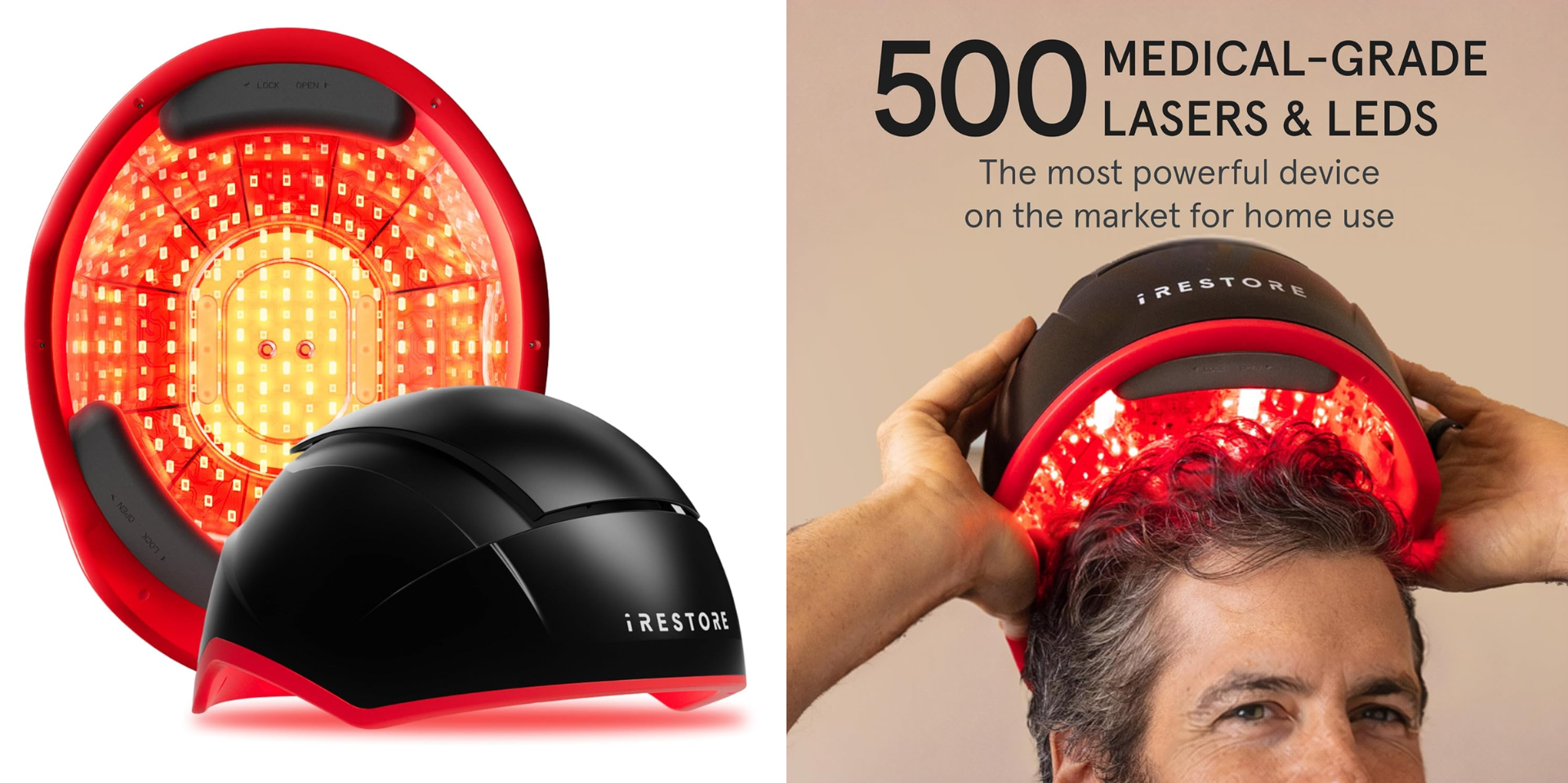
The iRestore Elite uses 500 combined laser and LED diodes inside a contoured helmet, making it a strong choice for people dealing with moderate thinning across the crown, hairline, and temples.
The rigid shape keeps light contact even across the scalp, and the hybrid build aims to support both surface follicles and slightly deeper tissue.
Key Features
- 300 lasers and 200 LEDs for full coverage
- 625nm, 655nm, and 680nm wavelengths
- Helmet shape for even contact across the scalp
- 12-minute daily sessions
- Rechargeable battery option for cordless wear
Best for: People with moderate pattern thinning across the full scalp who want a hybrid laser-and-LED build, including those who tried single-wavelength devices first.
Good to Know: The structured helmet design gives full scalp coverage, but it’s bulkier than a cap or comb. It’s best for home use, not travel or use on the go.
Best LED Helmet: CurrentBody Skin LED Hair Regrowth Device
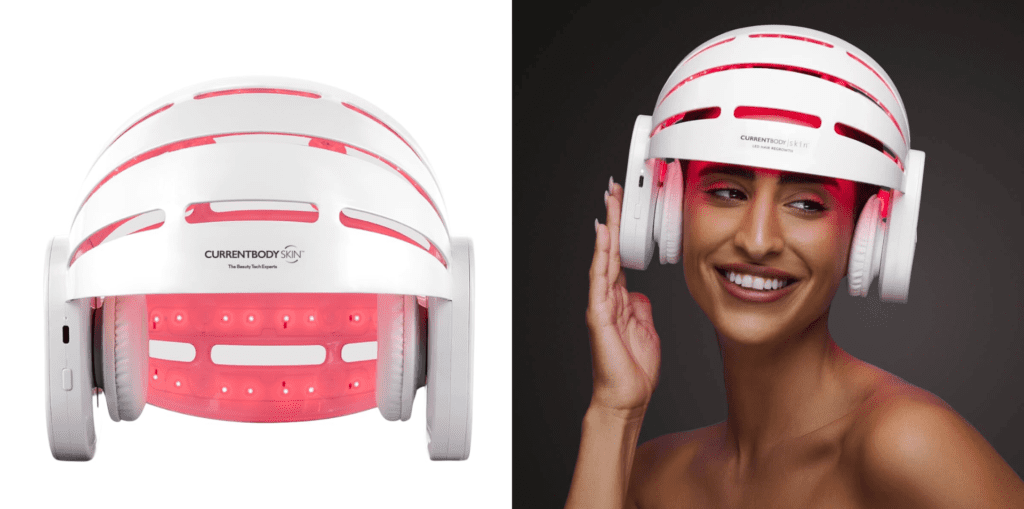
The CurrentBody Skin LED Red Light Hair Growth Helmet is a premium pick for full scalp red light therapy at home. It uses 120 red LEDs across the 620 to 660nm range, with a hands-free helmet design that covers the crown, hairline, and temples in one 10 minute session.
If you’re looking for a shorter daily treatment that doesn’t require moving a comb or band across thinning areas, this device is easier to wear and use. The built-in timer keeps each session straightforward, while the Bluetooth audio headphones make the 10 minutes easier to fit into your day.
Key Features
- 120 LEDs across the 620 to 660nm range
- 18 J/cm² output to deliver light energy to the scalp during each session
- 10 minute daily sessions that are easy to fit into a regular hair growth schedule
- Hands-free helmet design for full scalp coverage without moving a comb, band, or panel
- Two size options to help the helmet sit properly on the head
Best For: People who want a short daily red light therapy session with full scalp coverage. It’s especially useful for early stage thinning, diffuse shedding, or ongoing hair maintenance at home.
Keep in Mind: CurrentBody uses a single wavelength LED design rather than a laser and LED mix. That keeps the treatment simple, but results still depend on using it consistently over time.
Best Laser-Only Cap: Kiierr 272 Premier
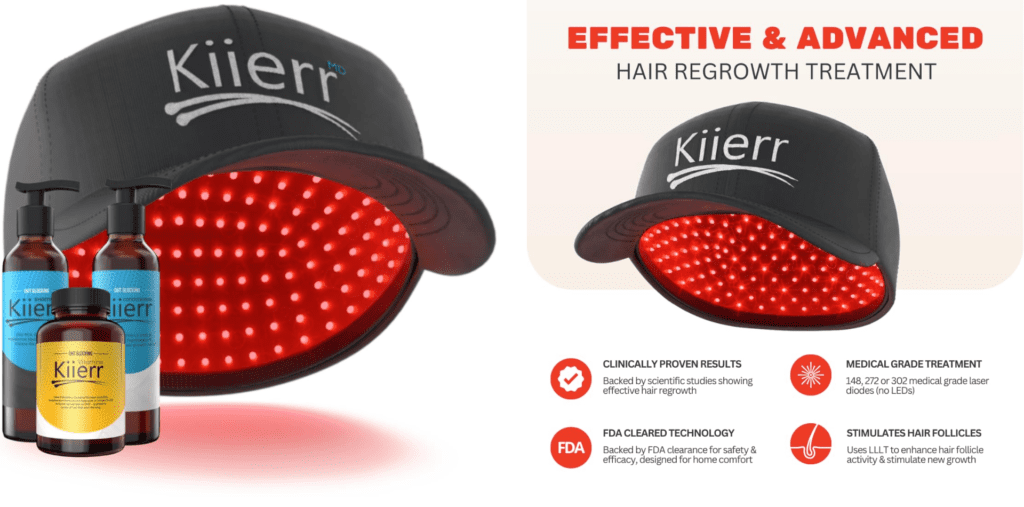
The Kiierr 272 Premier is a laser cap for hair growth that uses 272 lasers at 650nm to target thinning areas across the scalp. Its flexible cap design fits most head sizes and gives you fuller coverage without the bulk of a structured helmet.
Sessions take about thirty minutes every other day, so it may suit people who don’t want a daily treatment. The cap is lightweight enough to wear at home while reading or watching TV.
Key Features
- 272 laser diodes at 650nm to revitalize the scalp and support hair growth
- 1360 mW total output to support steady light energy delivery during each session
- 30 minute sessions every other day, which may suit people who don’t want a daily treatment
- Flexible cap shape that fits most head sizes without the bulk of a helmet
- Cordless rechargeable design for hands free wear while you’re at home
Best For: People who prefer a laser only hair growth cap over an LED device and want something flexible enough to wear during downtime at home.
Good to Know: The 30 minute session is longer than some helmet treatments, so it works best when paired with low-level activities like reading or listening to a podcast.
Best for Short Daily Sessions: Capillus Spectrum
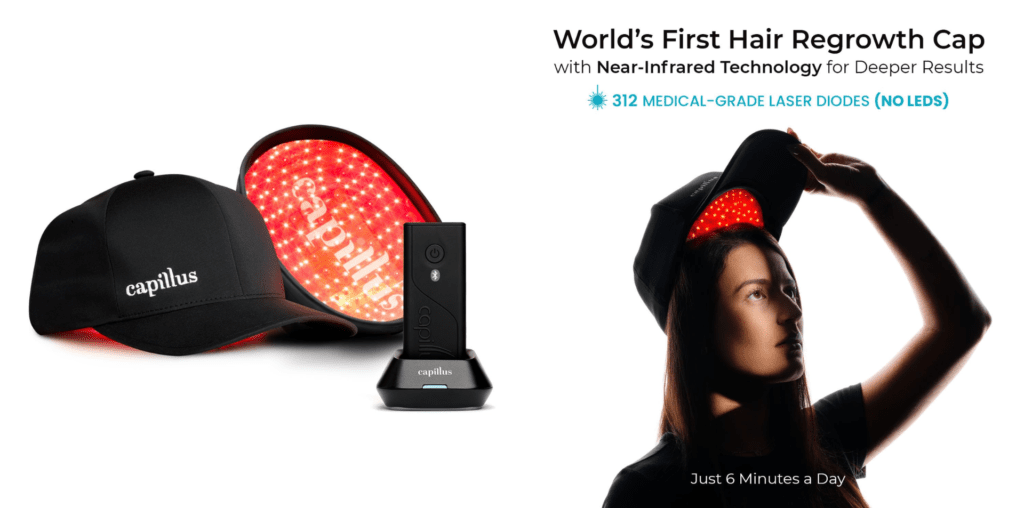
The Capillus Spectrum is built for people who want one of the shortest daily laser cap sessions for hair growth. It uses 312 laser diodes across two wavelengths – 650nm red light and 808nm near infrared – to support full scalp coverage in a soft cap that wears like a regular ball cap.
The 6 minute daily session is easy to fit into a morning or evening routine. Auto shutoff keeps the treatment from running too long, while Bluetooth app sync gives you a simple way to track use over time.
Key Features
- 312 laser diodes to help target thinning areas across the scalp
- 650nm red light and 808nm near-infrared light for layered scalp exposure
- 6 minute daily sessions for people who want a shorter treatment time
- Auto shutoff to keep each session from running too long
- Bluetooth app sync to help track use over time
Best for: People who want a short daily laser cap session and a soft cap shape that looks more like everyday headwear than a helmet.
Good to Know: The 808nm near-infrared wavelength is paired with 650nm red light, giving this cap a less common wavelength combination than many laser hair growth devices in this diode range.
Best Budget Laser-Cap: Viconor 272 Laser Cap
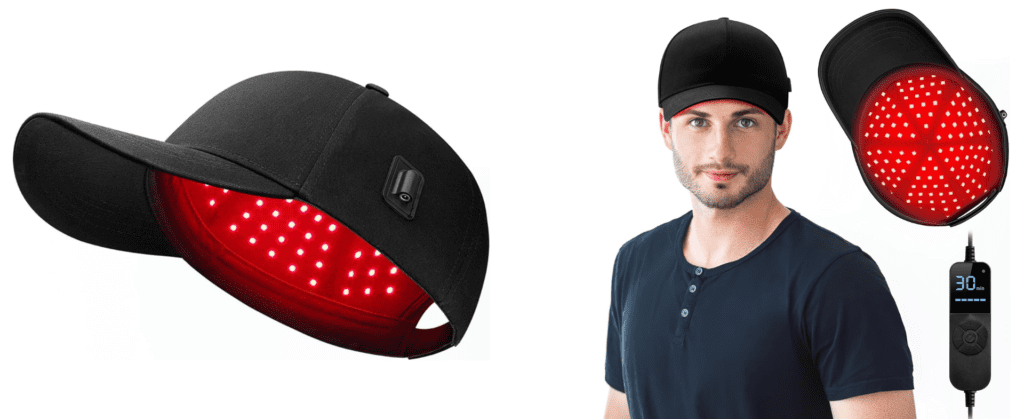
The Viconor 272 Laser Cap is a softer, less bulky alternative that can be used everyday as opposed to a rigid helmet. It uses 272 lasers and LEDs at 650nm to help cover thinning areas across the scalp, including the crown, part, and hairline.
The flexible cap shape is made for easy wear at home, so you can use it during quiet downtime without holding a comb or moving a band across your scalp.
It’s designed for common thinning patterns like crown thinning, a widening part, or thinning around the hairline, making it a practical soft cap option for both men and women.
Key Specifications:
- 272 lasers and LEDs to help support light coverage across the scalp
- 650nm wavelength to support follicle activity in thinning areas
- Soft cap design for people who don’t want a rigid helmet
- Lightweight build for easier daily wear at home
- Suitable for men and women dealing with common thinning patterns
Best for: People who want a flexible laser cap that feels less bulky than a helmet and covers common thinning areas like the crown, part, and hairline.
Best Budget Hybrid Hair Growth Cap: Lumy Health LED & Laser Therapy Cap
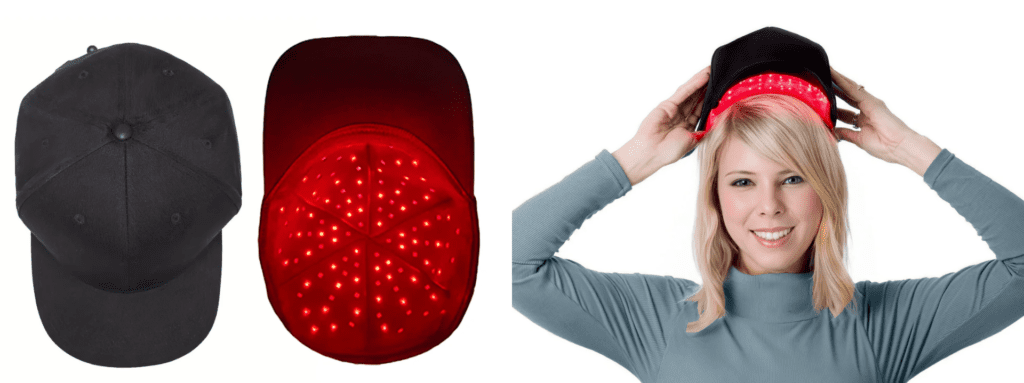
The Lumy Health LED and Laser Therapy Cap is made for people who want to try red light therapy for hair growth without moving into the higher price range of premium caps. It combines 100 LEDs with 22 laser diodes in a soft full scalp cap, giving you both LED and laser light in one at-home device.
The Lumy uses 630nm red light and 850nm near-infrared light, with an added wavelength for scalp care. The 20 minute sessions are longer than some higher end caps, but the soft shape and detachable light panel make it easier to store, pack, and use at home.
Key Specifications:
- 100 LEDs and 22 laser diodes for hybrid light coverage across the scalp
- 630nm, 850nm and 430nm wavelengths to support scalp exposure with red and near-infrared light
- 20 minute sessions for people who don’t mind a longer treatment time
- Soft cap shape that fits most head sizes without the bulk of a helmet
- Detachable light panel for easier storage and travel
Best for: People who are new to red light therapy and want a lower priced hybrid cap with both LED and laser output.
Good to Know: The diode count is lower than many premium laser caps, so this is best for people who want an entry level device rather than the highest coverage option.
Best Quick Targeted Treatment: Hairmax LaserBand 82
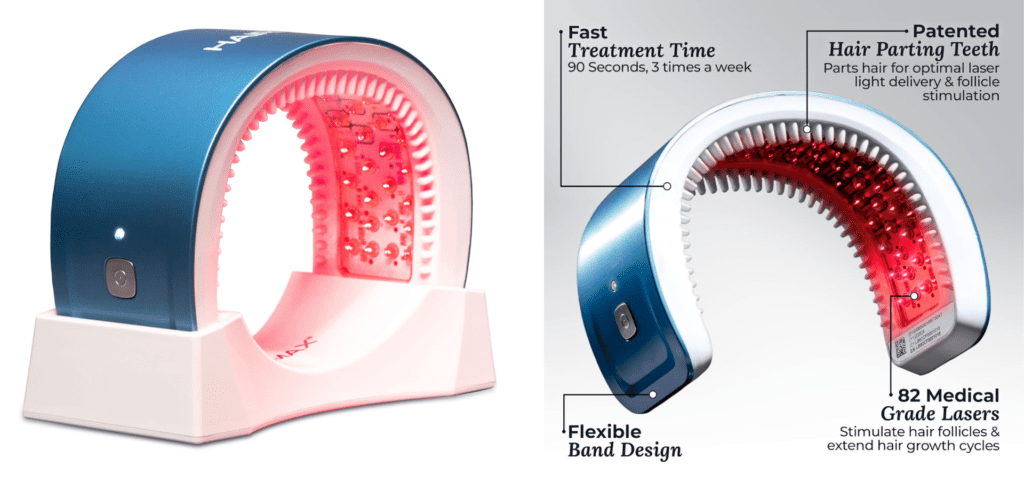
The HairMax LaserBand 82 is built for people who want a fast laser hair growth device for targeted thinning areas. Instead of wearing a full cap or helmet, you glide the flexible band across areas like the hairline, part, or crown.
It uses 82 laser diodes at 655nm, with hair parting teeth that help move hair out of the way so the light can reach the scalp. Each session takes about 90 seconds, three times a week, making it one of the quickest options for people who don’t want a longer cap treatment.
Key Specifications:
- 82 laser diodes at 655nm to help target thinning areas
- 1230 mW output to support light energy delivery during each short session
- 90 second sessions three times a week for a shorter treatment schedule
- Hair parting teeth to help clear hair from the scalp
- Flexible band shape for sweeping across the hairline, part, and crown
Best for: People who want a quick laser hair growth treatment for smaller thinning areas, without committing to a full cap or helmet session.
Good to Know: The band has to be moved across the scalp during use, so it’s not hands-free like a cap or helmet.
Best Laser Comb: HairMax Ultima 12 Classic LaserComb
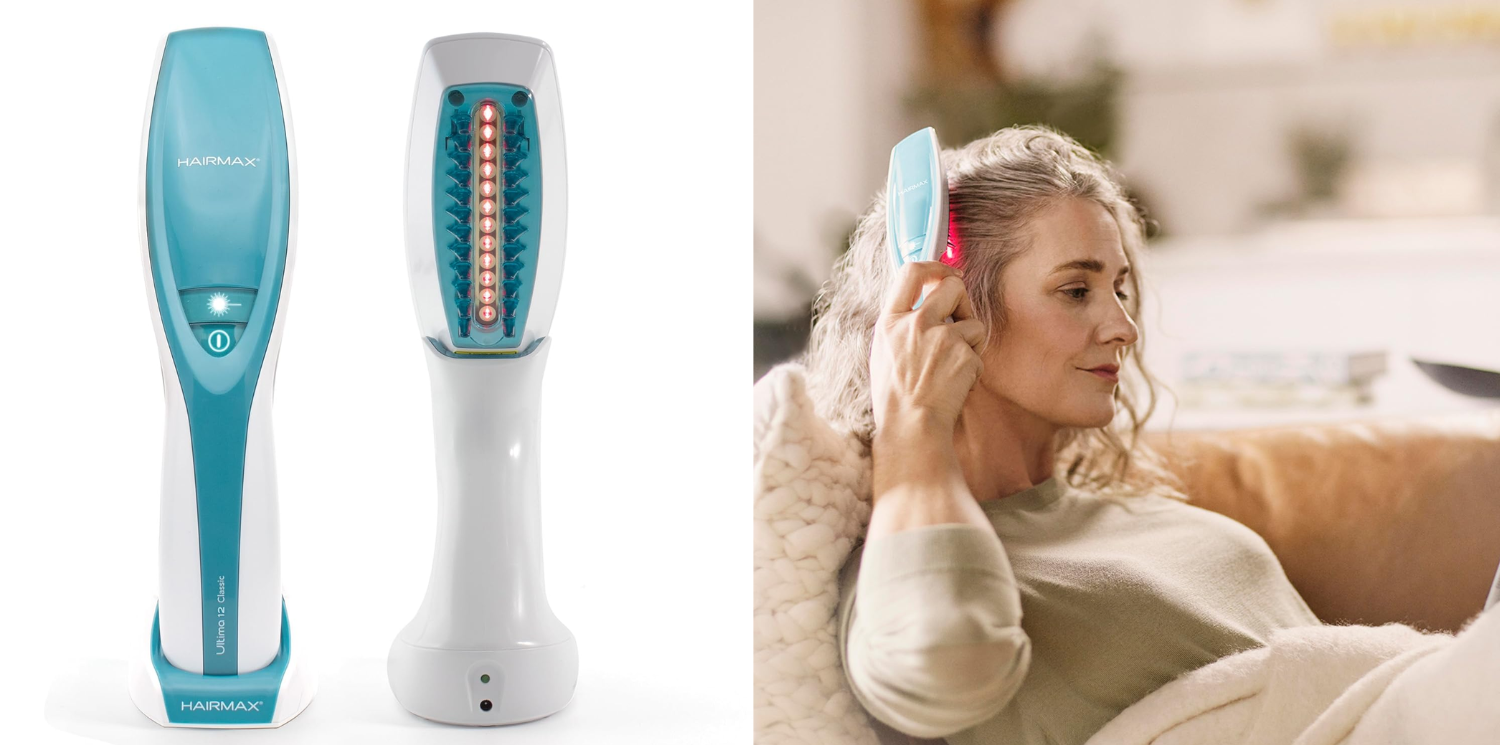
The HairMax Ultima 12 Classic LaserComb is made for people who prefer a comb-style laser hair growth device over a cap or helmet. It uses 12 medical grade lasers with built-in hair parting teeth, so you can target thinning areas around the hairline, part, temples, or crown more directly.
Each treatment takes 8 minutes, three times per week, which gives it a shorter weekly schedule than many full scalp caps. It’s also cordless and rechargeable, making it easier to use at home or pack for travel.
HairMax is one of the better known names in at-home laser hair growth devices, and its laser combs have been widely sold in the US for years.
Key Features
- 12 medical-grade lasers (no LEDs) for targeted scalp exposure
- Patented hair parting teeth to help move hair aside so light can reach the scalp
- 8 minute sessions three times per week for a manageable treatment schedule
- Cordless rechargeable design for use at home or while traveling
- Charging cradle included for storage and recharging
Best For: People who want an established laser comb for targeted thinning areas instead of a full cap, helmet, or budget scalp tool.
Keep in Mind: This is not hands-free like a laser cap or helmet. You’ll need to move the comb across the scalp during each session, so it works best for people who don’t mind a more active treatment.
How to Choose the Right Red Light Therapy Device for Hair Loss
The best red light therapy device for hair loss depends on your thinning pattern, schedule, and how much scalp coverage you want. Some devices are made for full scalp treatment, while others are better for targeted areas like the hairline, part, or crown.
Helmet, Cap, or Handheld Device
Red light therapy helmets and laser caps are best for full scalp coverage. They’re hands-free, so they’re easier to use while sitting at home.
Handheld laser combs and bands work better for smaller thinning areas, but they need to be moved across the scalp during use.
- Choose a helmet or cap if you have diffuse thinning across the crown, part, or temples
- Choose a laser comb or band if you want to focus on a receding hairline, widening part, or crown spot
- Choose a soft laser cap if you want something easier to store or pack
- Choose a structured helmet if you want a more secure fit and even scalp coverage
Laser Diodes vs LEDs
Laser diodes and LEDs are both used in red light therapy for hair growth, but they deliver light differently. Laser diodes create more focused light, while LEDs spread light across a wider area.
- Laser hair growth devices often cost more, especially when they use a higher diode count
- LED hair growth helmets can offer broad scalp coverage at a lower price than some laser caps
- Hybrid laser and LED caps combine focused and wider light delivery
- Red light wavelengths between 630nm and 660nm are commonly used in hair growth devices
Wavelengths and Session Time
Wavelength and session length can affect which device feels easiest to use consistently. A shorter session may be better if you want something quick, while a longer session can work if you already have time set aside at home.
- 650nm to 660nm red light is common in at-home hair growth devices
- 808nm to 850nm near infrared light is sometimes added for deeper scalp exposure
- 6 to 10 minute sessions are easier to fit into a busy day
- 25 to 30 minute sessions may work well while reading, watching TV, or listening to a podcast
Red Light Therapy vs Minoxidil for Hair Loss
Red light therapy and minoxidil are two of the most common non-surgical options for thinning hair, but they work differently.
- Minoxidil is a topical treatment that helps extend the growth phase of the hair cycle and is FDA-approved for androgenetic alopecia.
- Red light therapy, also called low-level light therapy (LLLT), uses red or near-infrared light to stimulate follicles and support hair density over time. Studies show both can improve hair growth in pattern hair loss when used consistently for several months.
For many people, minoxidil may be the stronger first-line option because it has longer clinical use and wider dermatologist support.
Red light therapy can be appealing if you want a drug-free option or want to add another treatment without daily topical application. Some research suggests combining red light therapy with minoxidil may improve results compared with using one treatment alone, although outcomes vary by person and severity of hair loss.
Tips for Using Red Light Therapy for Hair Loss at Home
How you use a red light therapy device for thinning hair can matter as much as which device you choose. The best results usually come from consistent use, so pick a schedule that’s easy to repeat.
- Use your device at the same time each day or on the same days each week
- Place the cap, helmet, comb, or band on clean, dry hair and scalp
- Take monthly photos in the same lighting to track changes in shedding, thickness, and coverage
- Give it time, since hair growth results are usually gradual
- Support your routine with good nutrition, gentle scalp care, and medical advice if your hair loss is sudden or severe
The Bottom Line on At-Home Red Light Hair Therapy
At-home red light therapy devices for hair loss can be a practical way to support thinning hair, scalp health, and fuller looking hair without regular clinic visits. Results take time, so the best red light therapy device is the one that fits your schedule and is easy to keep using.
A red light therapy cap or helmet can work well if you want full scalp coverage, while a laser comb or band may be better for targeted thinning around the hairline, part, or crown. The right choice depends on your hair loss pattern, budget, and how much time you want to spend on each session.
Remember that hair growth is a gradual process. Pair red light therapy with good nutrition and gentle scalp care to support healthier looking hair over time.
Frequently Asked Questions
Does red light therapy actually work for regrowing hair?
Red light therapy uses red and near-infrared wavelengths shown in studies to support hair density and thickness in people with pattern thinning. Results vary by person, by device, and by how consistently the protocol is followed. Red light therapy for hair loss is a gradual process rather than a quick fix, and stopping the protocol usually means the gains slow or fade.
How many times per week should you use red light for hair growth?
Most red light therapy devices for hair loss are built around schedules of three to four sessions per week or daily short sessions. The right frequency depends on the device, since some caps run 6-minute daily sessions and others run 25 to 30 minutes every other day. Check the manufacturer’s instructions and stay consistent with it.
What wavelength works best for red light hair therapy?
Wavelengths between 630nm and 660nm have the most published research behind them for scalp follicle support. Some devices add near-infrared wavelengths in the 808nm to 850nm range to reach slightly deeper tissue. Look for devices that list exact wavelengths rather than vague terms like “red light only.”
Can red light therapy regrow hair on completely bald areas?
Red light therapy works best on areas where follicles are still present but miniaturized or dormant. In zones that have been smooth and bald for many years, the follicles are usually no longer viable, so a red light hair growth cap cannot bring them back. For those areas, hair transplant options or other clinical paths are more realistic.
Are there any side effects of red light therapy for hair loss?
Red light therapy is generally considered safe with minimal side effects. Some users may experience mild scalp irritation or temporary redness, but these effects usually subside quickly.
If you experience persistent discomfort, stop use and ask a healthcare professional.
Can I use red light therapy with other hair loss treatments?
Many people successfully mix red light therapy with other hair loss treatments like minoxidil or finasteride. However, it’s always best to ask a healthcare professional before combining treatments to confirm safety and effectiveness.
How does red light therapy compare to hair transplants?
Red light therapy is a non-invasive treatment that can help stimulate existing hair follicles, while hair transplants involve surgically moving hair from one area of the scalp to another. Red light therapy is generally less expensive and has fewer risks, but may not be as effective for advanced hair loss.
Is red light therapy effective for all types of hair loss?
Red light therapy is most effective for androgenetic alopecia (male and female pattern baldness). Its effectiveness for other types of hair loss, such as alopecia areata or telogen effluvium, may vary.
Consult with a dermatologist to decide if red light therapy is suitable for your specific type of hair loss.
Can I use red light therapy if I have a scalp condition?
If you have a pre-existing scalp condition, it’s important to ask a dermatologist before starting red light therapy. Some conditions may be aggravated by the treatment, while others may not interfere with its use.
How long does it take to see results from at-home red light devices?
Hair grows slowly, and most red light therapy protocols suggest several months of consistent use before changes are visible in the mirror. Some people notice less shedding earlier than fuller density, since slowing loss tends to come before new growth. Monthly photos from the same angle are the most reliable way to track progress.
Do laser diodes work better than LEDs for hair loss?
Laser diodes deliver focused light at a single wavelength and tend to penetrate scalp tissue more directly than LEDs, which spread light across a wider area. Both have research support and both are used in successful at-home devices. The diode count, wavelength, and how consistently you use the device often matter more than the diode type alone.
Health Disclaimer: The information in this article is for educational purposes only and is not intended as medical advice. Red light therapy devices are not a cure for hair loss, and results may vary. Always consult a qualified healthcare professional or dermatologist before starting any new treatment, especially if you have underlying health conditions or are using other therapies.