Are Infrared Saunas Better Than Steam Saunas?
Are infrared saunas better than steam saunas? If you’re trying to pick between these two popular heat therapy options, you’re probably feeling a bit overwhelmed by all the conflicting information out there.
While neither one is universally “better”, it really depends on what you’re hoping to get from your sauna sessions. Infrared vs steam sauna debates usually miss the point, which is that each type heats your body differently and offer their own unique benefits.
I’m going to walk you through how each sauna works, what they’re best for, and which one might fit your lifestyle and health goals. By the end, you’ll know exactly which type deserves a spot in your wellness routine.
How Infrared and Steam Saunas Heat Your Body

The biggest difference between infrared and steam isn’t just the temperature. It’s how the heat is delivered.
Infrared Saunas
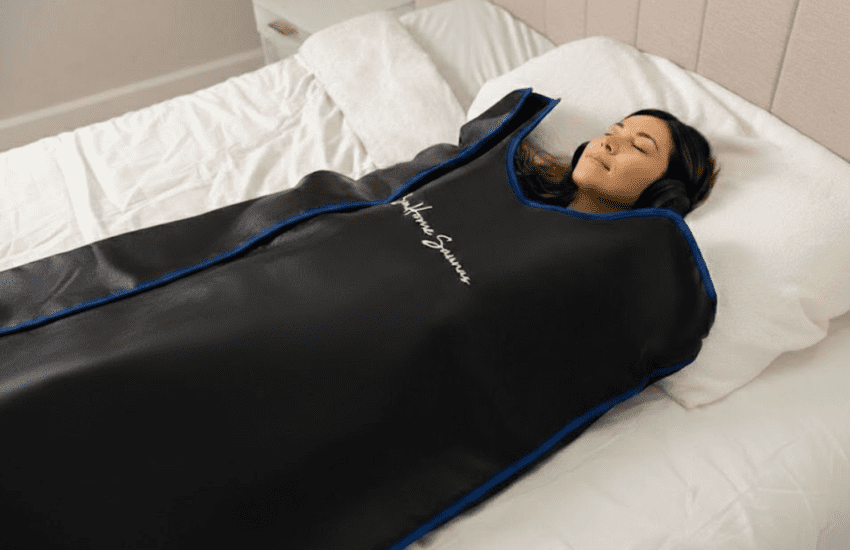
Infrared saunas use infrared light to warm your body more directly. The air often feels milder, but you still heat up and sweat.
- Infrared saunas operate with dry heat and infrared light panels.
- Typically runs at lower air temperatures than steam rooms
- Often described as feeling like gentle warmth soaking in
Steam Saunas (steam rooms / wet saunas)
Steam rooms heat the air and fill the space with moisture. The humidity makes the heat feel heavier and more immediate.
- High humidity (often close to 100%)
- Often feels hotter than the number on the thermometer suggests
- Similar to the effect of a very steamy shower, but more intense
- Steam rooms create moisture through water poured over hot rocks or steam generators
Think of it like this: infrared is like standing in warm sunlight on a cool day, while steam is like sitting in a hot, humid greenhouse.
Benefits Compared: What Each Sauna Is Best Known For

Both saunas make you sweat and boost circulation, but they beneficial in different areas. Infrared saunas are known for deeper tissue penetration, which some people find helpful for muscle recovery and joint stiffness. The dry heat is also easier to tolerate for longer sessions.
Steam saunas are known for its respiratory benefits and skin hydration. That moist heat helps to open up your airways and gives your skin a dewy, hydrated glow. If you’ve ever felt your sinuses clear in a steamy shower, you know exactly what I mean.
Infrared Sauna Benefits
- Infrared is a popular choice for soreness, recovery, and winding down without the heavy “wet heat” feeling
- Post-workout muscle relaxation
- Joint stiffness and general aches
- Longer, more comfortable sessions for many people
- Easier to breathe for those who dislike humid air
Note: You’ll see bold claims online about infrared “detoxing” or dramatic cellular effects. Sweating is real, but your liver and kidneys do the real detox work. If you like infrared, think of it as heat-based recovery and relaxation, not a cleanse.
Steam Sauna Benefits
- Sinus relief and clearer airways
- Skin that looks plumper and more hydrated right after
- A deep sweat that feels intense fast
- The classic steam-room experience many people love
If your main goal is respiratory comfort and a fresh-faced glow, steam is often the favorite.
Infrared Sauna vs Steam Sauna: Session Comfort and Heat Tolerance

Your personal comfort matters more than you might think. Infrared saunas feel less intense because the air temperature stays lower, even though you’re sweating just as much. You can usually stay in for 30-45 minutes without feeling like you need to escape.
Steam saunas hit you immediately with that thick, humid heat. Some people love that intense, can’t-breathe sensation (in a good way), while others find it claustrophobic. Sessions typically run shorter at around 15-20 minutes.
- Infrared feels gentler and less oppressive, while steam sauna humidity can feel overwhelming for beginners or those with heat sensitivity
- Breathing is easier in infrared saunas due to dry air, while steam rooms require adjustment time and shorter initial sessions
- Infrared allows reading or listening to music more comfortably
Home Setup: Cost, Installation, and Maintenance

If you’re thinking about a home sauna, logistics matter as much as the benefits.
Infrared Sauna for Home Use
Infrared units are typically simpler to buy and set up.
- Often comes as a prefab cabin
- Can work in a spare room with the right space and electrical setup
- Usually lower maintenance (wipe down, keep it dry, check bulbs occasionally, basic upkeep)
- Infrared technology uses less electricity than steam generators
Steam Room for Home Use
Steam rooms are more like a renovation project.
- Requires waterproofing, ventilation, drainage, and a steam generator
- More ongoing maintenance to avoid mold and mineral buildup
- Usually a higher total cost once installation is included
When it comes to infrared vs a steam sauna for your home, infrared wins for convenience
Steam vs Infrared for Skin and Beauty

If glowing skin is your goal, steam takes the crown. That humidity plumps your skin, opens pores, and makes everything feel softer. It’s like a facial in a box. Your skin drinks up the moisture while you sweat out impurities.
Infrared saunas promote collagen production through deep heat, which some studies suggest may help with skin elasticity over time. The sweating is more profuse in infrared, which fans of detoxification love (though your kidneys and liver do the real detox work).
- Steam sauna benefits for skin include immediate hydration and pore cleansing
- Infrared may stimulate collagen and improve skin tone with regular use
- Both saunas promote sweating and circulation for healthy-looking skin
- Steam is better for immediate pre-event skin prep or facials
- Infrared sauna vs steam room for detox: both cause sweating but detox claims are overstated
- Acne and blackheads tend to respond well to steam’s pore-opening effects
Infrared vs Steam Sauna: How to Choose
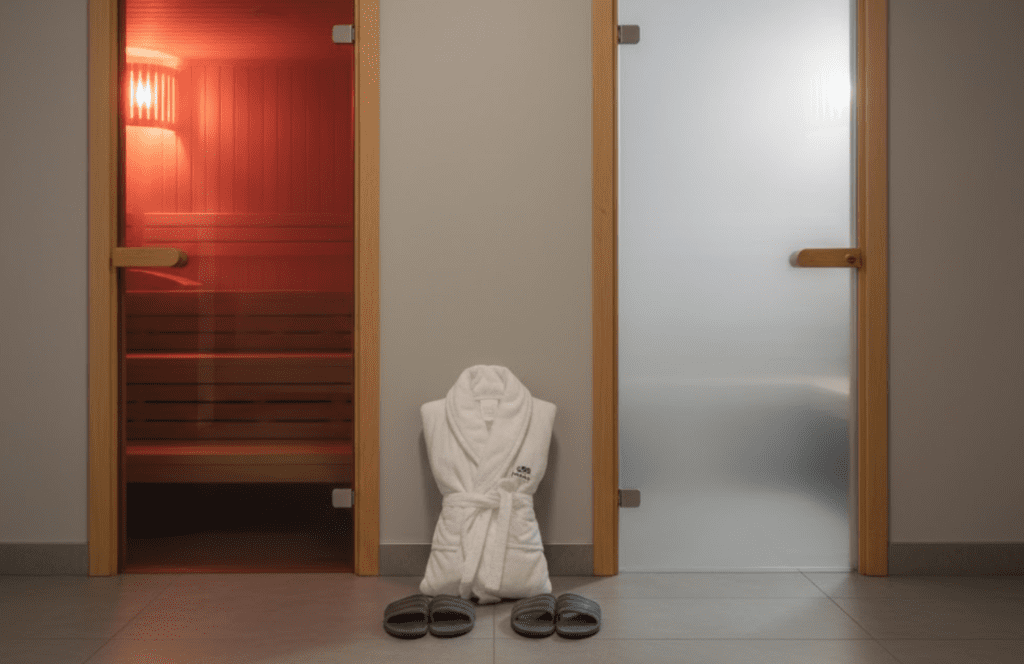
Here’s my honest take: choose infrared if you want convenience, lower costs, easier breathing, and longer sessions focused on muscle recovery or relaxation. It’s the better option for home use and beginners.
Go with steam if you love that intense, humid heat, want respiratory and skin hydration benefits, and don’t mind the higher installation costs and maintenance. Steam is ideal if you’re building a dedicated spa space or already have a gym setup.
Another idea is if you have access to both at a gym or spa, use them for different purposes. I rotate between them depending on whether I want to help alleviate muscle soreness (infrared) or want to clear my sinuses and pamper my skin (steam).
The choice between an infrared sauna and a steam sauna depends on your primary health goals:
- Infrared suits people with heat sensitivity, soreness, or limited space
- Steam is ideal for athletes needing respiratory support or skin enthusiasts
- Consider trying both at a facility before investing in home installation
- Your decision between an infrared or steam sauna should factor in budget, space, and preferences
The Bottom Line: Are Infrared Saunas Better Than Steam Saunas?

So, are infrared saunas better than steam saunas? The answer is: it depends entirely on what you’re after.
Infrared wins for convenience, cost, and gentle heat that penetrates deep into your muscles. Steam wins for respiratory benefits, skin hydration, and that traditional sauna experience many people love.
If you’re installing a sauna at home and want something low-maintenance that the whole family can use comfortably, infrared is probably your best bet. If you’re building out a spa bathroom or already love steam rooms at the gym, and you don’t mind the extra installation work, steam might be worth it.
The good news? You can’t make a wrong choice here. Both types of saunas offer real benefits for relaxation, circulation, and overall wellness. Start with what fits your budget and space, and you can always explore the other option down the road. Your body will thank you either way.
Frequently Asked Questions
Can infrared saunas help with arthritis pain?
Infrared saunas may provide relief for arthritis pain through deep tissue heating that reaches inflamed joint structures. The infrared radiation penetrates several centimeters into your tissues, directly heating the joint capsules, ligaments, and surrounding muscles.
This increases blood flow to these areas, reduces inflammation, and helps relax tight muscles that often accompany arthritic joints.
Many people with rheumatoid arthritis and osteoarthritis report a degree of pain reduction with regular infrared sauna use.
Do steam rooms help clear sinuses?
Steam rooms can be effective for clearing sinus congestion. The humid air directly moistens your nasal passages and sinus cavities, helping to thin thick mucus and making it easier to drain. The heat increases blood flow to these tissues, which can help reduce inflammation and bring immune cells to fight infection.
Many people experience immediate relief from sinus pressure and congestion within 10-15 minutes in a steam room.
How long should you stay in an infrared sauna?
Most people benefit from 20-40 minute sessions in an infrared sauna. Because the air temperature is lower than traditional saunas, you can tolerate longer sessions comfortably.
Start with 15-20 minutes if you’re new to sauna use and gradually increase duration as your body adapts.
Listen to your body and exit if you feel dizzy, nauseous, or excessively uncomfortable.
Can saunas help you lose weight?
Saunas cause temporary water weight loss through sweating, but this returns within hours of normal hydration. You’re not burning significant fat in a sauna.
The metabolic increase is minimal, roughly equivalent to light physical activity, burning maybe 50-150 extra calories per session.
Saunas can complement a weight management strategy through stress reduction and supporting overall metabolic health, but they cannot create meaningful fat loss without addressing diet and exercise.
Are infrared saunas safe for daily use?
Infrared saunas are generally safe for daily use for healthy people, though most experts recommend 3-4 sessions per week as opposed to daily use. This allows your body adequate recovery time between sessions.
Daily use is safe if sessions are shorter (15-20 minutes) and you stay well-hydrated. People with cardiovascular conditions, pregnant women, and those taking certain medications should consult their doctor before regular sauna use.
Which is better for skin, steam or infrared?
Steam saunas provide immediate hydration and make skin feel plumper right after a session. Infrared saunas may offer superior long-term skin benefits through enhanced collagen production from deep tissue heating.
The increased circulation triggered by infrared penetration stimulates growth factors that promote collagen and elastin synthesis.
For immediate gratification and surface hydration, choose steam. For cumulative improvements over months of regular use, infrared might provide better results.
Do infrared saunas help with muscle recovery?
Infrared saunas can speed up muscle recovery when used properly. The deep tissue heating increases blood flow to muscles, bringing oxygen and nutrients while removing lactic acid and other metabolic waste products.
Wait 30-60 minutes after intense exercise before using the sauna to allow your body to cool down first.
Sessions of 20-30 minutes provide optimal benefits for recovery without interfering with your body’s natural cooling processes.
Can steam saunas trigger asthma attacks?
Steam saunas can trigger breathing difficulties in people with asthma, affecting roughly 15-20% of asthma sufferers. The high humidity overstimulates airway receptors, causing bronchoconstriction and making breathing more difficult.
If you have asthma, infrared saunas with dry heat are generally safer.
Always have your rescue inhaler nearby and exit immediately if you experience any breathing difficulties.