6 Best Full Spectrum Infrared Saunas for Home (2026 Update)
Finding the right full spectrum infrared sauna comes down to two things: the heat technology you want, and a size and layout that fits your space.
If you’re tired of crowded gym saunas or want a dedicated wellness space at home, a full spectrum model gives you access to near, mid, and far infrared wavelengths in one cabin.
These saunas work differently than traditional steam rooms. Instead of heating the air around you, infrared penetrates your skin to warm you from within. Full spectrum models combine all three wavelengths, which many people find helpful for muscle recovery, skin comfort, and unwinding after long days.
Choosing between brands, sizes, and features can feel overwhelming. This guide walks through options that fit different spaces, budgets, and wellness routines.
Full Spectrum Infrared Home Saunas: Comparison Chart
| Product | Capacity | Power |
|---|---|---|
| Sun Home Equinox 2-Person | 2 people | 120V / 20A (dedicated) |
| Clearlight Sanctuary 3 | 3 people | 240V / 12A (NEMA 6-15P) |
| Sun Home Luminar Outdoor 5 | 5 people | 240V / 30A (NEMA L6-30P) |
| Dynamic Santiago | 2 people | 120V / 15A |
| Sunlighten mPulse Believe | 2 people | 120V / 20A (dedicated) |
| MEISSALIVVE 2 Person Indoor Infrared Sauna | 2 people | 120V / 20A |
As an Amazon Associate & affiliate partner we earn on qualifying purchases at no extra cost to you.
How Do Full Spectrum Infrared Saunas Work?
Full spectrum infrared saunas use three wavelengths to warm your body at different depths.
Near infrared works on your skin’s surface and can feel helpful for skin comfort. Mid infrared reaches into muscles and soft tissue, which many people love after workouts. Far infrared penetrates deepest and tends to produce the most heat.
These cabins connect to your home’s power and usually warm up in about 10 to 20 minutes. Here’s what a typical session looks like:
- You sit or recline on a bench while infrared panels around the cabin deliver the heat.
- Most sessions last 20 to 40 minutes, usually in the 120°F to 150°F range.
- You’ll sweat gradually as your core temperature rises, but the air stays cooler than in a traditional sauna.
- Depending on the model, you might also get extras like Bluetooth audio, chromotherapy lighting, or app control.
- Some people use theirs a few times a week, others hop in daily. It mostly comes down to how you like to recover and unwind.
Many find full spectrum saunas easier to tolerate than steam rooms because the heat feels gentler. If you’re sensitive to high temperatures or prefer a more comfortable session, this type of sauna can be a great fit.
Best Full Spectrum Infrared Saunas for Home Use in 2026
Best Overall: Sun Home Equinox 2-Person Full-Spectrum Infrared Sauna
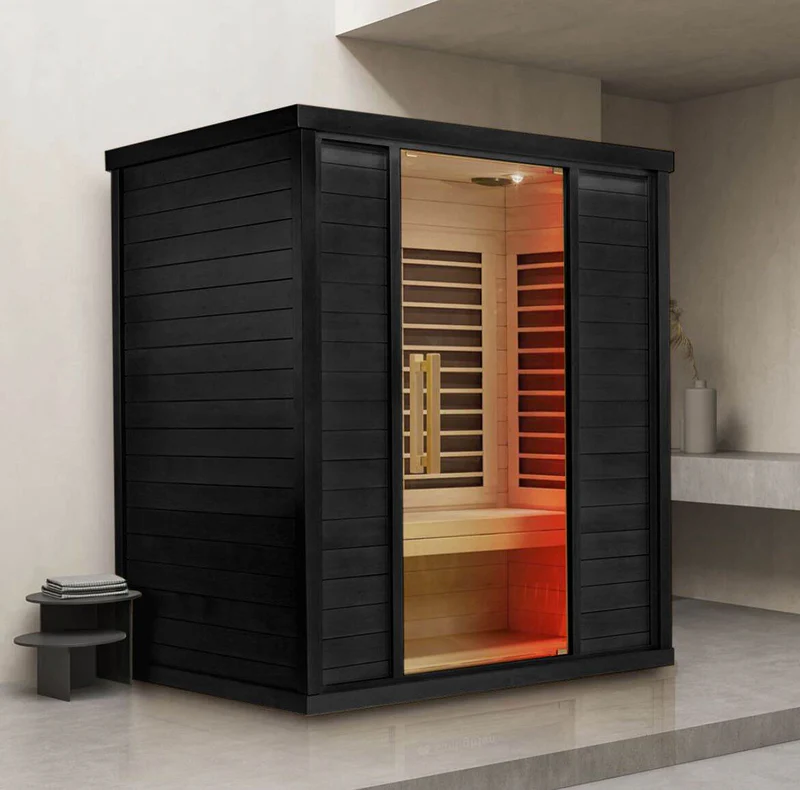
The Sun Home Equinox is for people who want very low EMF and a higher heat ceiling in a full spectrum cabin.
This popular infrared sauna uses patented shielding technology that keeps electromagnetic fields around 0.5 mG, and it can reach up to 165°F, which is a strong max temperature for an infrared sauna if you like hotter sessions.
This sauna uses six carbon heaters plus full spectrum panels to deliver near, mid, and far infrared all at once. Users highlight the fast warm-up time and the premium feel of the hand-sanded cedar interior as some of their feature favorites.
Key Specifications:
- Full spectrum heaters for near, mid, and far infrared wavelengths
- Ultra-low EMF shielding at 0.5 mG during use
- Reaches 165°F with high-wattage heater output
- Bluetooth surround sound system for music or guided sessions
- Kiln-dried and air-dried cedar panels for long-term durability
- Chromotherapy lighting with adjustable color settings
Best for: People wanting low EMF exposure, hotter infrared sessions, or are looking for a premium cabin that feels worth the spend long-term. It is a good fit if you have the space for a two person unit and can support a 240V power connection.
Good to Know: The Equinox runs on 240V, so you’ll need a dedicated outlet installed by an electrician if you don’t already have one. Assembly usually takes two people a few hours, but the panel-locking system doesn’t require power tools or complicated hardware.
Best for Large Households: Clearlight Sanctuary 3 Full Spectrum Infrared Sauna
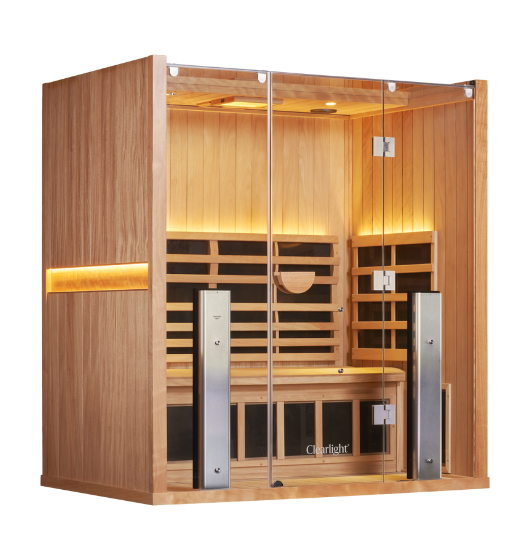
The Clearlight Sanctuary 3 is sized for three people and uses a heater layout designed to surround you with infrared heat.
True Wave™ far infrared heaters are positioned on the back wall and side walls, with additional heat placed under the bench, near your calves, and in the floor. Full spectrum heaters sit on the front wall, so you get stronger heat to the front of the body as well.
Clearlight’s app control lets you start your sauna remotely, which can be helpful if you like to pre-heat while you finish dinner or wrap up a workout.
Key Specifications:
- True Wave™ carbon and ceramic hybrid heaters for full spectrum coverage
- Three-person capacity with bench seating (bench cushion upgrade available)
- App-enabled digital control for remote preheating and scheduling
- High-grade chromotherapy with 96 LED lights
- Available in mahogany or basswood finishes
- Glass front and ceiling for an open, modern feel
Best for: Families or couples who want space to sauna together, and those that like remote controls and smart features. The larger footprint works well in basements, spare rooms, or home gyms with enough clearance.
Good to Know: The Sanctuary 3 runs on 240V and weighs about 580 pounds when fully assembled. You’ll want to confirm your floor can support the weight and that you have a few inches of clearance around the sauna for ventilation. Basswood tends to be lighter in color than mahogany, so pick whichever matches your space.
Best Outdoor Option: Sun Home Luminar Outdoor 5-Person Full Spectrum Infrared Sauna
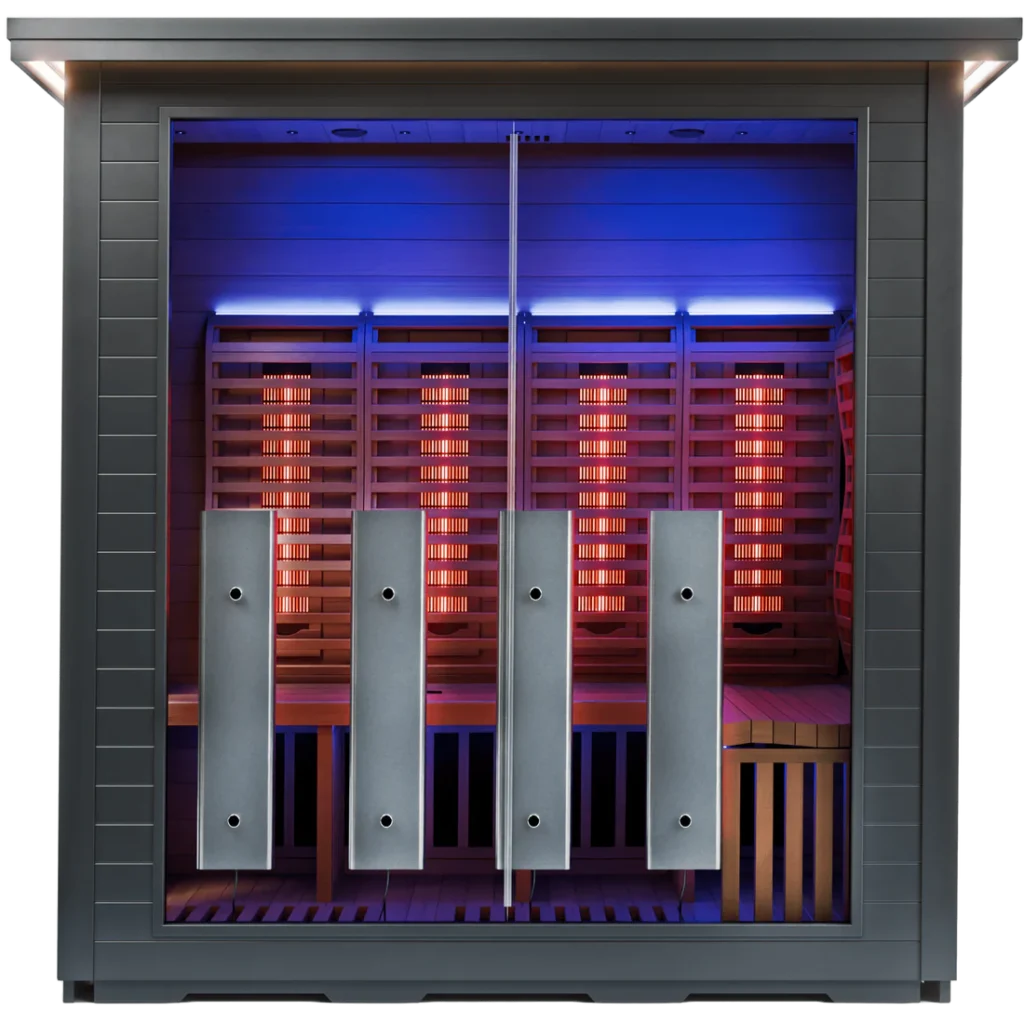
Most infrared saunas are designed for indoor rooms, but the Sun Home Luminar is made for outdoor placement across the seasons, with clear guidance for weather and drainage.
The exterior uses aerospace-grade aluminum and a thermally efficient construction that helps it hold cabin heat through changing conditions. The tinted glass adds privacy while still letting you look out, which is a big part of the appeal if your sauna faces a yard or view.
Heating is designed to surround the cabin, with 10 full spectrum heaters around you plus 5 far infrared heaters under the bench, near the calves, and in the floor. That layout is aimed at more consistent coverage when the cabin is full.
If you have a backyard wellness space or want a sauna near a pool or hot tub, the Luminar is a great fit for outdoor placement.
Key Specifications:
- 15 heater layout for more even whole cabin coverage
- Aerospace-grade aluminum exterior for all-season durability
- Double pane tinted glass with LED accents for a backyard vibe
- Five-person capacity with bench seating and floor heater
- App enabled control center and built-in audio
- Cedar interior with thick double pane glass for insulation
Best for: Homeowners with outdoor space who want a sauna in their backyard or deck area, families or groups who need room for multiple people, or anyone building a wellness retreat with cold plunge or hot tub nearby.
Good to Know: The Luminar It requires 240V, 30 amps, and a NEMA L6 30P plug on a dedicated circuit, so plan on an electrician for a safe install. For outdoor placement, it also needs a base with good drainage and snow should be cleared from the roof if it builds up.
Best for Small-Spaces: Dynamic Santiago 2-Person Full Spectrum Infrared Sauna
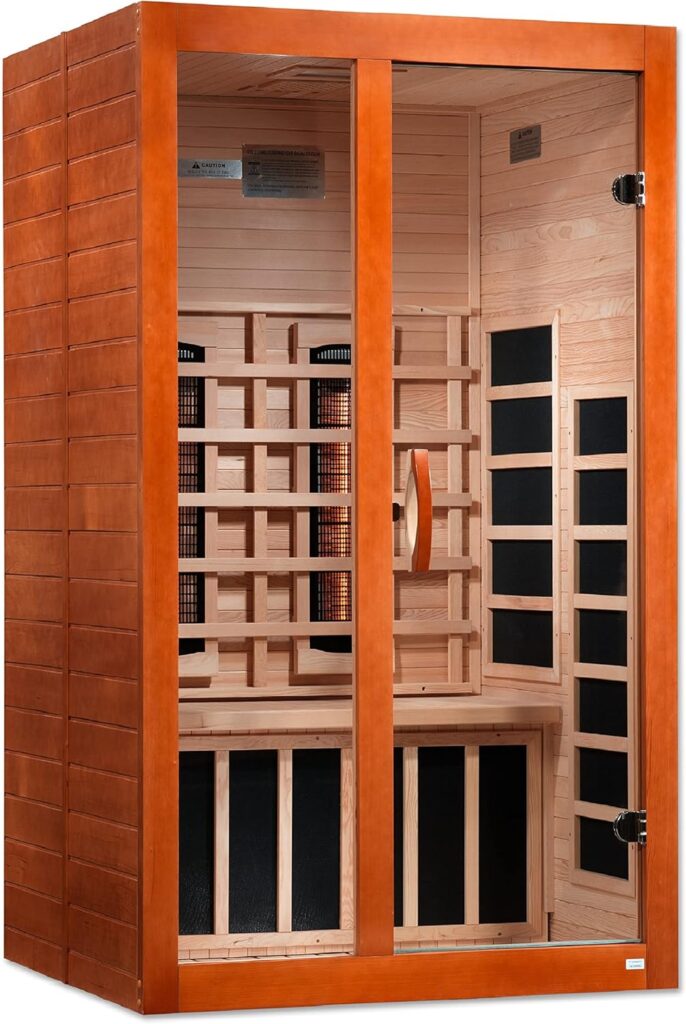
If you don’t have space for a large cabin or want to avoid the cost of a 240V outlet installation, the Dynamic Santiago plugs into a standard 120V wall socket. That makes it easier to set up in smaller spaces where running new electrical lines isn’t practical.
This model uses seven heating elements, with five carbon panels for broad, even infrared heat plus two near infrared elements for more direct, surface-level warmth.
It runs on a standard 120V / 15A outlet and is designed to deliver typical infrared sauna temperatures, topping out around 140°F, without the electrical requirements of many 240V cabins
Key Specifications:
- Five carbon panels plus two near infrared heating elements
- Runs on standard 120V household outlet with no special wiring
- Canadian hemlock wood construction for natural insulation
- Bluetooth speakers with AUX connection for music or podcasts
- Chromotherapy lighting with multiple color options
- Snap-together assembly system with no power tools needed
Best for: People who want a plug-in indoor sauna that runs on 120V power, fits comfortably in smaller rooms, and keeps setup simple. Great fit if you prefer convenience and price over the higher heat ceilings you typically get with many 240V cabins. Plan for a dedicated outlet if possible, since that’s commonly recommended for this model.
Good to Know: Because it runs on 120V, the Santiago heats more slowly and reaches a lower maximum temperature than 240V models—usually around 140°F instead of 150°F or higher. If you prefer very hot sessions, you might notice the difference, but many users find the heat comfortable and effective.
Best Smart Sauna Technology: Sunlighten mPulse Smart Sauna
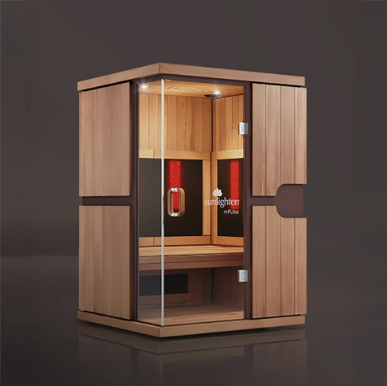
Sunlighten positions mPulse as its smart sauna line that combines full spectrum infrared with built-in red light and near infrared LEDs, so you can get both in one cabin rather than buying separate devices. If you are comparing similar setups, see our guide to the best 2 person saunas with red light therapy.
The Sunlighten app includes guided wellness programs plus manual control, which is ideal if you prefer sessions that are mostly set up for you, with the option to fine tune.
Sunlighten also leans on published research around its SoloCarbon heating technology, which may appeal if you like brands that point to clinical and third party testing.
Key Specifications:
- Full spectrum infrared plus red light and near infrared LED panels
- Tablet control, mobile app support, and built in wellness programs
- Chromotherapy lighting comes standard on the mPulse line.
- Available in 1-, 2-, and 3-person models
- Electrical varies by size. Smaller models can be 120V in the US while larger models require 240V
Best for: People who want both red light and infrared in one device, tech-oriented users who like app controls and preset programs, or anyone interested in saunas with published research behind the heating technology. This model suits those who prefer guided sessions over manual settings.
Good to Know: Power requirements depend on the mPulse size. Some models run on 120V, while larger cabins require 240V, and pricing tends to sit at the premium end of Sunlighten’s lineup.
Best Value Full Spectrum: MEISSALIVVE 2 Person Full Spectrum Infrared Sauna
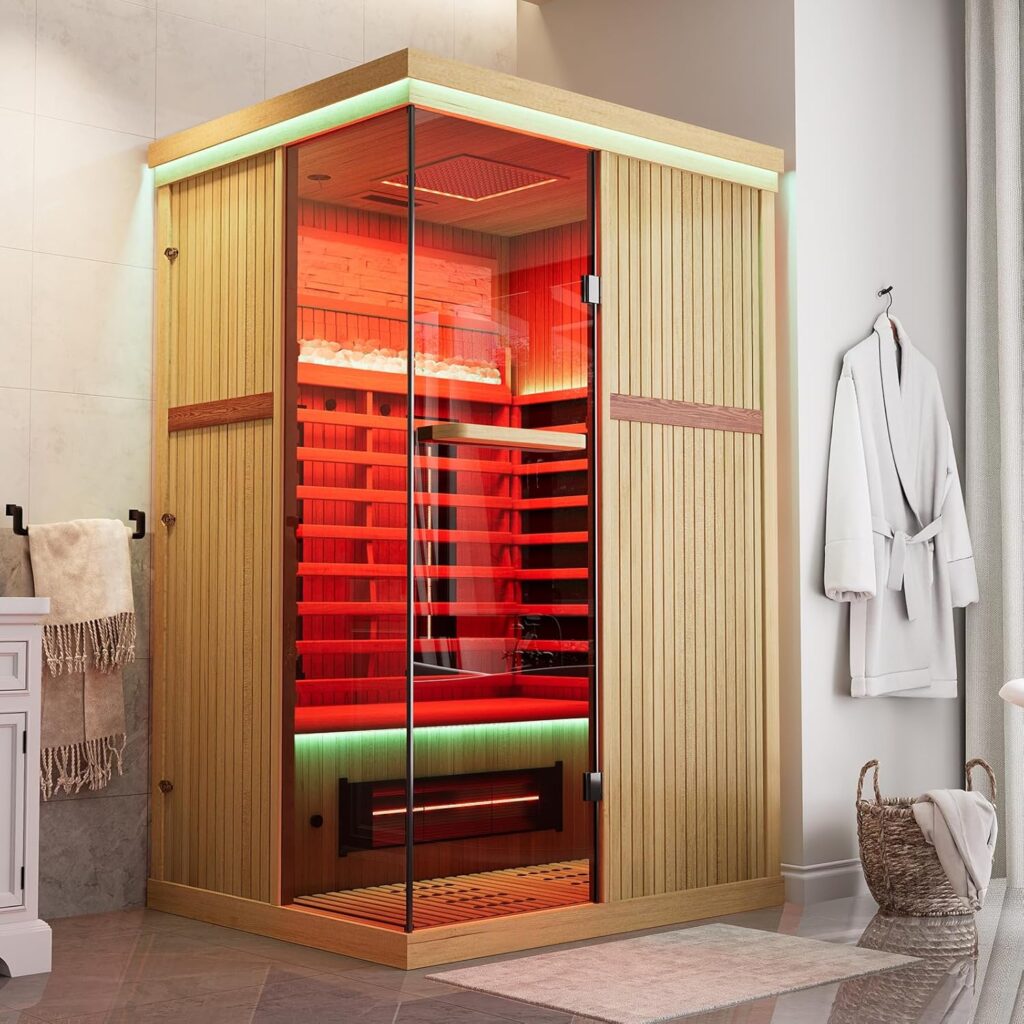
The MEISSALIVVE sauna gives you full spectrum heat at a more accessible entry point.
It combines heating tubes and mica carbon plates to generate near, mid, and far infrared during warmup. While it doesn’t include all the premium features of higher-end models, it covers the essentials: full spectrum coverage, Bluetooth audio, and chromotherapy lighting.
The 7-year warranty is notably longer than many budget saunas, which can be reassuring if you’re concerned about long-term durability. Users find this model heats quickly, is very easy to put together and sturdy enough for everyday use.
Key Specifications:
- Heating tubes plus mica carbon plates for full spectrum output
- Two person capacity with bench seating
- Canadian hemlock wood with thick insulated walls and corrosion resistance
- Built-in bluetooth speakers with phone or tablet holder on door
- 7-year comprehensive warranty on components and wood
Best for: First-time sauna buyers who want full spectrum without premium pricing, people who prefer function over brand names or extras, or anyone looking for a solid warranty at this budget level. This model works well if you want to try full spectrum infrared without a major investment.
Good to Know: The MEISSALIVVE runs on 120V and ships via freight delivery. Assembly is straightforward with snap-together panels, but you’ll need two people and a few hours. The heating tubes warm up quickly, but some users report the cabin doesn’t always reach its maximum listed temperature—though most find the heat range comfortable.
How to Choose the Best Full Spectrum Infrared Sauna for Your Home
Heater Configuration and Brand Technologies
The number and placement of heaters affects how quickly your sauna warms up and whether the heat feels even. Models with 6 to 10 heaters positioned on multiple walls, under the bench, and in the floor tend to heat faster than cabins with just 4 or 5 panels concentrated in one area.
Carbon panels emit consistent far infrared and stay cooler to the touch, while ceramic elements heat up faster and produce more intense warmth. Some brands mix both types—like Clearlight’s True Wave system or Sunlighten’s SoloCarbon panels—which can give you steady background heat plus quick temperature boosts.
Near infrared elements are sometimes separate tubes or rods rather than full panels, and they generate more surface heat than mid or far infrared. If you’re sensitive to intense warmth on your skin, check how many near IR elements a model includes and whether you can control them independently.
A few practical considerations:
- More heaters usually cost more to run, though the difference is typically a few dollars per month
- Budget models often skip mid infrared or use fewer near IR elements to cut costs
- Brand-specific heating technologies like True Wave or SoloCarbon tend to come with higher price tags but also longer warranties
- If you’re comparing models, ask whether heaters can be controlled separately or if they all run at once
EMF Levels and Electrical Requirements
Most modern saunas use shielded heaters that keep EMF levels under 3 milligauss at sitting distance.
If you’re particularly concerned about electromagnetic field exposure, look for models that publish specific readings and mention ultra-low EMF or shielding technology. Sun Home’s 0.5 mG rating is among the lowest available, while many other quality brands sit around 1 to 3 mG.
Electrical setup can be a bigger factor than most people expect:
- 120V saunas plug into regular outlets, which keeps setup simple and avoids electrician costs
- 240V models need a dedicated circuit and professional installation, which usually adds a few hundred dollars upfront
- 240V saunas heat faster and reach higher maximum temperatures, but 120V models work fine if you don’t mind slightly longer warmup times
- Check your home’s electrical panel capacity before committing to a 240V model—older homes sometimes need panel upgrades to add new circuits
Space, Assembly, and Placement
Measure your available space before choosing a size. Two-person saunas typically need about 4 by 4 feet of floor space, while three-person models stretch to around 5 by 4 feet. You’ll also need a few inches of clearance on all sides for ventilation and a bit more above the roof if the ceiling is low.
Most infrared saunas arrive as flat-packed panels that snap together in a few hours. Two people and a basic toolkit are usually enough, though some models include extra features like panel-locking systems or pre-wired electrical connections that speed things up.
Think about where you’ll put the sauna:
- Basements, spare bedrooms, and master bathrooms are common spots, but make sure the floor can handle the weight
- Outdoor models need a level surface and protection from direct weather exposure, even if they’re built for outdoor use
- Carpet is fine for most saunas, but you might want to put a mat underneath to catch sweat or protect the floor
- If you’re renting, a 120V model makes more sense since you can take it with you and won’t need to modify the electrical system
Tips for Getting the Most from Your Full Spectrum Infrared Sauna
Once your sauna is set up, a few habits can help you settle into a routine. Many people find that warming up the cabin while they finish dinner or a workout makes it easier to hop in without waiting.
Here’s some tips if you’re just getting started:
- Start with shorter sessions around 15 to 20 minutes if you’re new to infrared heat, then gradually increase to 30 or 40 minutes as your body adjusts. For a deeper guide, see how long to stay in an infrared sauna.
- Drink water before, during, and after your session to stay comfortable and avoid feeling lightheaded
- Sit on a towel and use another towel on the floor to absorb sweat, which keeps the wood cleaner and makes maintenance easier
- Play calming music or guided meditations through the Bluetooth speakers if your sauna has them, many users find this helps them relax more fully
- Use chromotherapy lighting if your model includes it, especially if you’re sensitive to bright light or prefer a softer ambiance
Most people use their sauna a few times a week, though some prefer daily sessions. If you’re using it after workouts, you might notice your muscles feel looser and less stiff the next day. If you’re using it to unwind, many people find the quiet, warm space helpful for clearing their head before bed.
Cleaning is straightforward: wipe down the bench and floor with a damp cloth after each session, and leave the door open for a bit to let moisture escape. Avoid harsh cleaners or oils that can damage the wood or heating panels.
Conclusion: Which Full Spectrum Infrared Sauna for Home Is Best?
Full spectrum infrared saunas give you access to near, mid, and far infrared wavelengths in one cabin, which gives you more flexibility than far infrared only models.
When you’re comparing options, the decision usually comes down to three things: the space you have, the power you can support, and whether you’ll realistically use it a few times a week.
If you care about low EMF and a hotter cabin, the Sun Home Equinox is a popular pick. If you want a more guided experience with preset programs and app control, Clearlight and Sunlighten are the premium choices.
If you’re aiming for an affordable home sauna you can plug in and start using quickly, Dynamic Santiago and MEISSALIVVE are good entry level options. They’re especially convenient if you want a simpler setup.
Most of these saunas are a real investment, but when used regularly, they can earn their place in your at-home wellness routine many times over.
FAQ: Full Spectrum Infrared Saunas for Home
What is the best full spectrum infrared sauna?
There isn’t one single best full spectrum infrared sauna for everyone, because the right choice depends on your space, power setup, and what you care about most, like max heat, EMF levels, smart programs, or outdoor durability.
That said, the Sun Home Equinox is often a favorite in this category because it combines full spectrum heating with a high max temperature and strong low EMF positioning, all in a premium two person cabin that works well for most home setups with the right electrical. If you want the simplest “safe bet” to start your shortlist, it’s a popular place to begin.
Are full spectrum infrared saunas worth it?
Full spectrum infrared saunas give you access to near, mid, and far wavelengths in one session, which many people find helpful for muscle recovery and unwinding after long days. They cost more than far infrared-only models but can feel more versatile if you use them regularly. Whether the extra investment makes sense depends on how often you’ll actually use the sauna and whether you value having all three wavelengths.
Which is better, full spectrum or far infrared sauna?
Full spectrum saunas deliver near, mid, and far infrared at once, while far infrared models focus on the deepest-penetrating wavelength. Far infrared tends to be more affordable and straightforward, making it a good fit if you mainly want heat and don’t need surface-level near-infrared.
Are all infrared saunas full spectrum?
Most infrared saunas use far infrared only, which penetrates deepest and produces the most heat. Full spectrum models cost more because they add near and mid infrared emitters alongside far infrared panels. If a sauna doesn’t specifically mention “full spectrum” or list all three wavelengths, it’s likely a far infrared-only model, which many people find perfectly adequate for regular use.
What is the healthiest type of infrared sauna?
Low-EMF infrared saunas with shielded heaters keep electromagnetic field exposure minimal, typically under 3 milligauss at sitting distance. Full spectrum models give you near, mid, and far wavelengths, while far infrared-only saunas focus on deep tissue warmth.
What are the downsides of infrared saunas?
Infrared saunas require dedicated floor space and either a 120V or 240V electrical setup, which can add installation costs if you need an electrician.
They take 10 to 20 minutes to preheat and can feel too hot for people sensitive to heat, though most users find the warmth gentler than traditional steam rooms. If you’re deciding between the two, see our infrared vs steam sauna comparison.
Assembly usually takes two people a few hours, and the cabins need regular wiping to remove sweat and keep the wood in good condition.
This article is for informational purposes only and is not medical advice. Full spectrum infrared saunas may not be suitable for everyone, especially if you are pregnant, have a heart condition, low blood pressure, heat sensitivity, or any medical condition that could be affected by heat exposure. Always follow the manufacturer’s instructions, stay hydrated, stop if you feel unwell, and speak with a qualified healthcare professional before starting sauna use or making changes to your health routine.