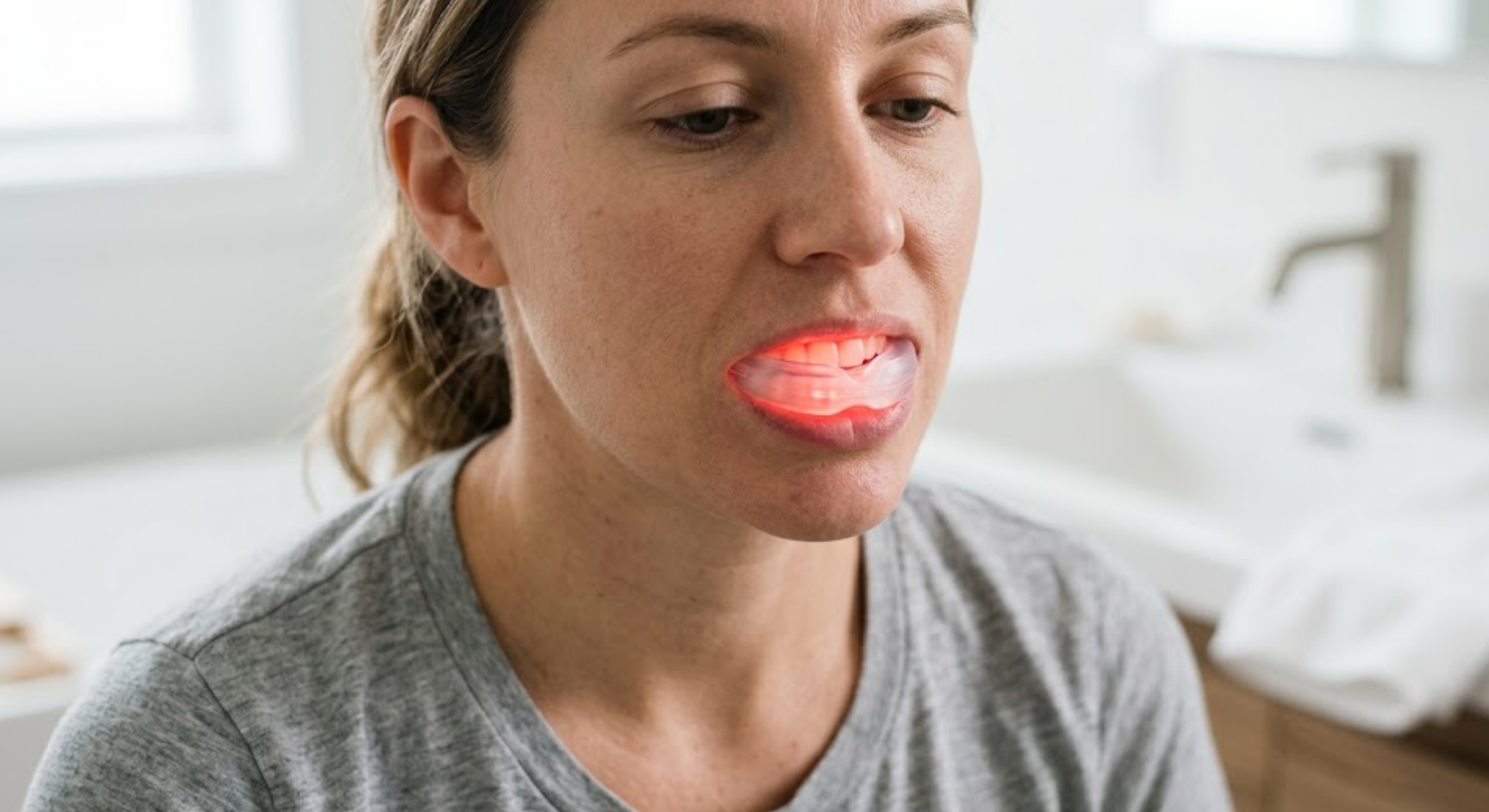
Best Red Light Therapy for Receding Gums
Receding gums can be stressful to deal with, especially when a dental cleaning brings up pockets, sensitivity, or early signs of bone loss.
Red light therapy for receding gums has gotten more attention as a daily add-on, and current devices go far beyond the usual bulky panels.
The five picks below feature targeted, intraoral, or precision-tip devices made to deliver light where it matters most – right along your gum line.
Top 5 Red Light Therapy Devices for Receding Gums – Comparison Chart
| Product | Device Type | Wavelengths | Session | Best For | Where To Buy |
|---|---|---|---|---|---|
| NovaaLab Oral Care Pro | Intraoral tray | 660nm red + 450nm blue | 10 min | Full-mouth gum and bacteria coverage | Shop on Novaalab |
| dpl Oral Care Light Therapy System | Intraoral mouthguard | 660nm red + 880nm infrared + 415nm blue | 10 min | Broader wavelength mix | Shop on Amazon |
| SPARX Electric Toothbrush | LED electric toothbrush | Red LED + blue LED modes | 2 min (brush) | Light therapy during daily brushing | Shop on Amazon |
| Hooga Red Light Therapy Torch | Precision-tip handheld | 415nm blue + 630/660nm red + 850/940nm NIR | 1–3 min per area | Targeted spot treatment | Shop on Hooga |
| BioLight Guardian | Hands-free mouthpiece | 630nm red + 850nm NIR | 16 min | Passive daily sessions, no holding | Shop on Amazon |
Disclosure: As an Amazon Associate I earn from qualifying purchases at no extra cost to you.
How Red Light Therapy Helps Receding Gums
Oral light therapy devices use red, near-infrared, and sometimes blue wavelengths to reach gum tissue and structures that support your teeth.
- Red light in the 630 to 660nm range works closer to the surface and may help with gum inflammation linked to gingivitis and early periodontal disease
- Near infrared light in the 810 to 880 nm range reaches deeper into periodontal tissue and alveolar bone, which are the structures most affected by gum recession
- Blue light in the 415 to 450 nm range targets the oral bacteria involved in gum disease
Intraoral trays and mouthguards place these wavelengths directly along the gum line, while precision tip devices let you target a specific recession site or periodontal pocket.
No matter how the light is delivered, the aim is consistent low level exposure that may help calm inflammation, support blood flow in the tissue, and create better conditions for healing between professional cleanings.
Best Red Light Therapy Devices for Receding Gums in 2026
Best Overall: NovaaLab Oral Care Pro
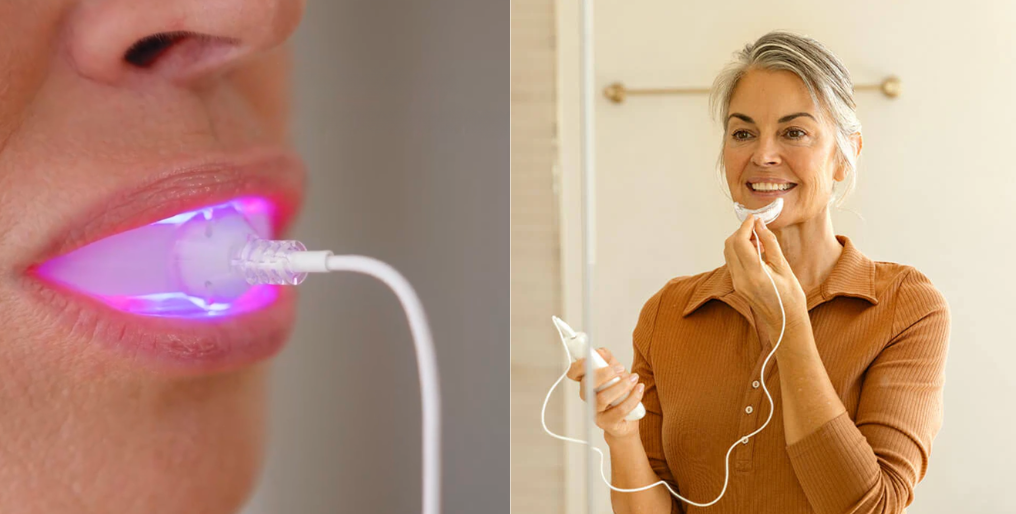
The NovaaLab Oral Care Pro is one of the most talked-about intraoral gum devices in periodontal health forums, and for good reason.
It sits in your mouth like a mouthguard, delivering 660nm red light and 450nm blue light across your full gum line in one 10-minute session. No holding, no aiming. Just consistent full-arch oral photobiomodulation every night.
Key Specifications:
- 8 red LEDs (660nm) and 8 blue LEDs (450nm) for dual-action gum care
- 28 mW/cm² irradiance at direct contact
- 10-minute auto-shutoff built into each session
- Rechargeable via USB, cordless during use
- 50,000+ hour LED lifespan
- CE and RoHS certified
Best for: Anyone managing periodontal pockets or early gingival recession who wants full-arch coverage in a single daily session, without adjusting position or timing.
Good to Know: This intraoral tray treats your full arch rather than targeting a single tooth. Pair it with consistent brushing and flossing for day-to-day gum health support.
Best Intraoral Mouthguard: dpl Oral Care Light Therapy System
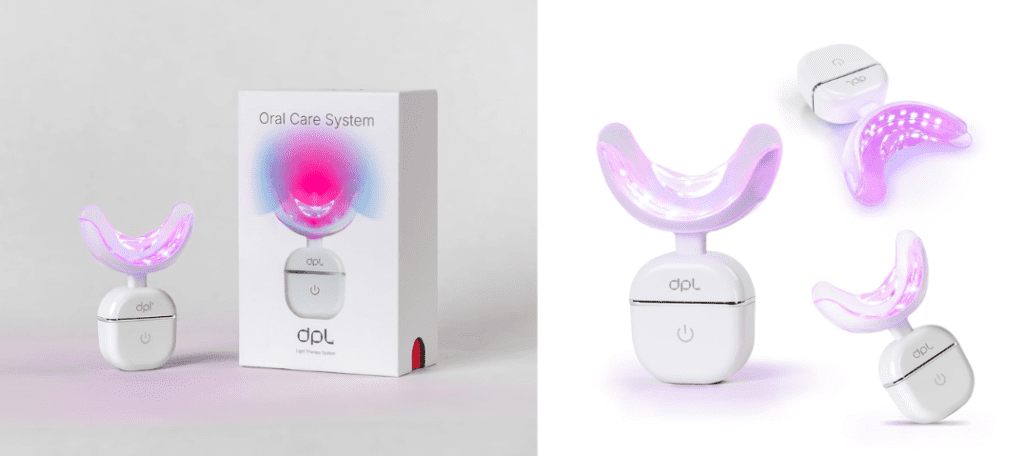
The dpl is one of the few oral therapy devices that includes 880 nm infrared along with red and blue light. That added wavelength reaches deeper than what most at-home intraoral devices offer, targeting periodontal tissue where gum recession can affect the structures supporting the teeth.
The mouthguard style tray has 30 LEDs, runs cordless for 10 minutes, and is FSA and HSA eligible.
Key Specifications:
- 660nm red, 880nm infrared, and 415nm non-UV blue across 30 LEDs
- 880nm infrared for deeper periodontal tissue coverage
- 10-minute cordless sessions, rechargeable via USB
- Compatible with crowns, dentures, implants, and bridges
- FSA and HSA eligible
- Soft silicone mouthguard tray for daily intraoral use
Best for: People who want infrared depth alongside red light for gum health, particularly those with tooth sensitivity at the root level or who have had scaling and root planing and want daily support between visits.
Good to Know: Some users with wider dental arches find the tray slightly narrow, and this red light mouthguard may not reach the back molars fully. It may be better suited for front and mid-arch gum coverage.
Best for Brushing: SPARX Electric Toothbrush
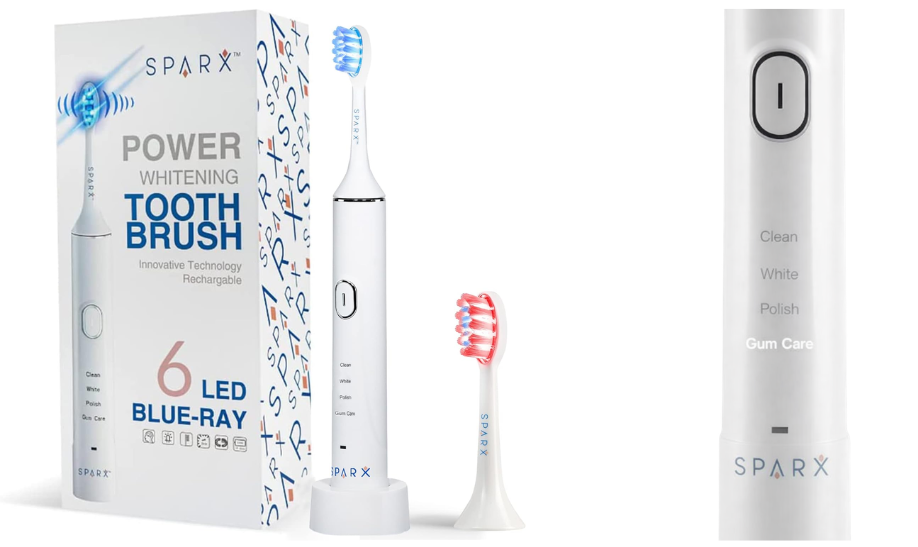
The SPARX delivers LED light therapy during your brush, not after it. The red LED brush head works with the ultrasonic motor in Gum Care mode to improve gum health and circulation during cleaning, while the blue LED head is used for whitening.
Four modes and a built-in smart timer cue you to move sections every 30 seconds, covering your full mouth in two minutes.
Key Specifications:
- Red LED brush head for gum circulation support during brushing
- Blue LED brush head for whitening mode
- Ultrasonic motor with four modes: Clean, Whiten, Polish, Gum Care
- Built-in smart timer for even coverage across all mouth sections
- Soft DuPont bristles for sensitive gum lines
- Rechargeable with induction charging base
Best for: People who want to add oral light therapy to a step they already do, without adding a separate device or session to their day.
Good to Know: The brush heads are proprietary to the SPARX system, so factor in replacement costs over time. A handful of durability reviews are worth noting, so keep track of the warranty period.
Best Precision Tip Device: Hooga Red Light Therapy Torch
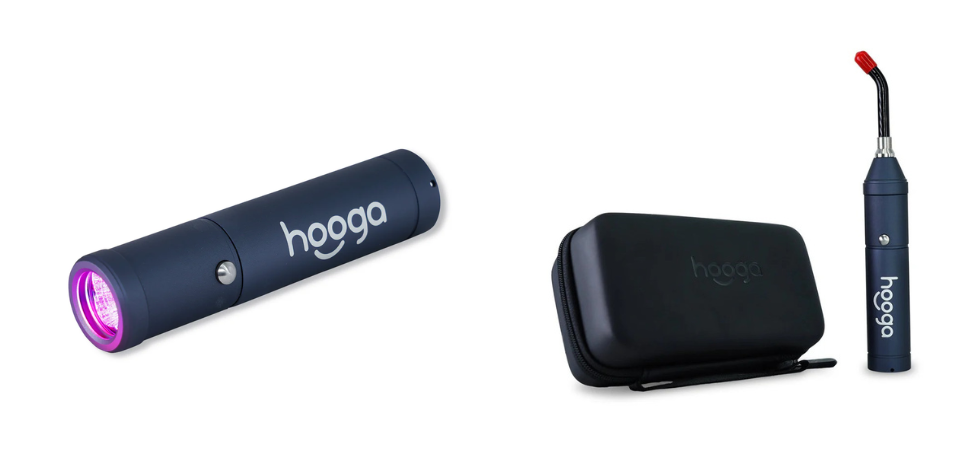
The Hooga Torch is built for people who want to target one specific problem area instead of treating the whole mouth.
It uses five LEDs across five wavelengths, including 460nm blue, 630nm and 660nm red light plus 850nm and 940nm near-infrared, all directed through a removable precision tip at a single tooth or gum area.
It also has three light modes, a 10Hz pulse setting, and a built-in 3-minute timer, which makes sessions straightforward to manage.
Key Specifications:
- 460nm blue, 630nm and 660nm red, 850nm and 940nm NIR
- 120 mW/cm² irradiance at the surface for high-output spot treatment
- Removable precision tip for targeted intraoral application
- Three light modes plus 10Hz pulse option
- Built-in 3-minute session timer
- Rechargeable lithium-ion battery, compact enough for travel
Best for: Anyone dealing with recession at a specific site, such as a single tooth with exposed root or pocket, who wants precise control over where the LED light therapy lands.
Good to Know: Sessions run 1 to 3 minutes per area, so treating several spots in one sitting takes more time than a full-mouth tray. This precision-tip device works well alongside one of the tray-style picks rather than as a standalone full-gum care routine.
Best Hands-Free Mouthpiece: BioLight Guardian
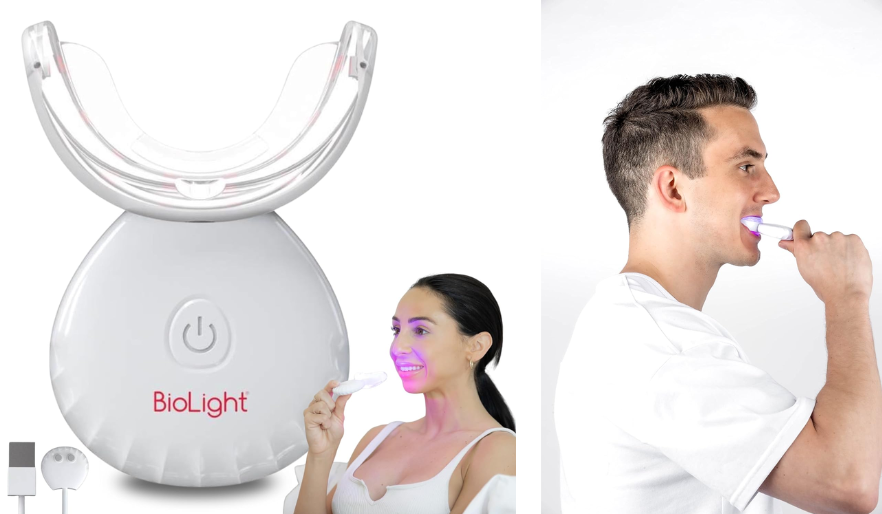
The BioLight Guardian runs a full 16-minute session on its own and shuts off automatically.
The BPA-free silicone mouthpiece holds 15 red LEDs at 630nm and 10 near-infrared LEDs at 850nm, covering surface gum tissue and deeper periodontal layers in the same session.
Press the button, put it in, and this hands-free mouthpiece handles the rest.
Key Specifications:
- 15 red LEDs (630nm) and 10 NIR LEDs (850nm) for layered gum coverage
- 20 mW/cm² irradiance with 120° Beam Angle, designed for gentle daily use
- Hands-free 16-minute auto-timer session
- BPA-free silicone mouthpiece, IPX-rated waterproof tray
- Magnetic USB charging with 2.5+ hours runtime per charge
- Compact travel case included, designed and independently tested in the USA
Best for: People who want to fold gum light therapy into time they are already spending, reading, meditating, or winding down, without holding anything or watching the clock.
Good to Know: At 20 mW/cm², the irradiance is moderate rather than high, so this device is better suited to regular full-session use than short, high-intensity spot treatment. It also has a smaller review base than some of the more established options on this list.
How to Choose the Right RLT Device for Your Gums
Device Type and Where Your Recession Is
Full-mouth trays and mouthguards, like the NovaaLab and dpl, cover the entire gum line in one session. That can work well when gingival recession is spread across multiple teeth or when you’re dealing with active periodontal disease and want broader coverage across the whole arch.
Precision tip devices like the Hooga Torch are better for one specific area your dentist has picked up on. A hands-free mouthpiece like the BioLight Guardian falls somewhere in between, giving you more coverage than a torch without treating the whole mouth like a tray.
If your recession is early and spread out, a full mouth intraoral device is usually the more practical place to start. If you have one or two teeth with visible root exposure or measured pocket depth, a precision tip device gives you more control over where the LED gum therapy is applied.
It’s always a good idea to check with your dentist before starting, especially if you have active gum disease, deep pockets, or a treatment plan already in place.
Wavelengths: Red Light vs. Near-Infrared for Gum Health
Red light in the 630 to 660nm range works on the surface of the gums. It’s often used for the inflammation and bacterial buildup linked to gingivitis and early periodontal disease.
Near infrared light at 810 to 880nm goes deeper, reaching the connective tissue and alveolar bone that are more involved in gum recession.
For mild gingival recession or general gum inflammation, a red-only device can be a reasonable starting point. For anyone with measured pocket depth, bone involvement, or sensitivity at the root level, a device pairing red with near-infrared gives coverage at both depths.
Blue light around 415 to 450nm can add antibacterial support against the oral bacteria linked to periodontal disease, and several at home intraoral devices on this list include it along with the photobiomodulation wavelengths.
Tips for Better Results with At-Home Gum Therapy
With at-home gum light therapy, staying consistent usually does more than higher intensity, and a few sessions a week over time can produce better results than using it only now and then.
- Use your intraoral device after brushing and flossing, not before; clean tissue absorbs light more effectively
- Keep sessions at the manufacturer’s recommended length; more time does not always mean better results
- Many people use these devices a few times a week rather than daily, especially once a baseline is established
- Keep your regular professional cleaning and periodontal maintenance schedule alongside any at-home LED gum therapy
- Rinse intraoral trays and mouthpieces after each use and store them in their cases to preserve the silicone
When At-Home RLT Devices Are Not Enough
Using red light therapy at home is a support tool, not a substitute for professional periodontal care. There are situations where it should come second to a dentist visit, not alongside one.
If you have 4-5 mm or deeper pockets, bleeding, bone loss, or signs of active periodontitis, your dentist may recommend professional periodontal treatment such as scaling and root planing before any home device is considered.
At-home photobiomodulation can support healing after that treatment but is not a replacement for the treatment itself.
These devices are also not appropriate as a primary response to sudden gum changes, new swelling, or pain that has appeared recently. Any unexplained shift in your gum health warrants a dental exam before you start a home protocol.
If your recession is mild to moderate, stable, and your dentist is monitoring it, that is typically the right window for an at-home oral light therapy device to be a useful daily add-on.
The Bottom Line on Red Light Therapy for Receding Gums
Receding gums usually need ongoing care, not a one time fix. At-home oral light therapy can play a useful role between dental visits, especially if you want something you can keep up with at home.
What you choose should match the way you’ll use it. If you want broad coverage without adding much to your routine, the NovaaLab Oral Care Pro is a good option because it treats the whole gum line at once.
It’s still a support tool, not a replacement for professional care, especially if you have deeper pockets, active gum disease, or ongoing bone loss. Used alongside good oral hygiene and regular checkups, it can be a positive step that helps you feel more proactive about your gums.
FAQ: Red Light Therapy for Receding Gums
Can red light therapy actually help receding gums?
Photobiomodulation has been studied mainly as an adjunct to periodontal care and may help support healing and reduce inflammation in some settings, but it is not a proven stand-alone treatment for reversing gum recession.
How often should I use a red light therapy device on my gums?
Most manufacturers recommend daily or near-daily use in the early weeks, then maintaining several sessions per week over time. Session length varies by device, ranging from 3 minutes with a precision-tip torch to 16 minutes with a hands-free mouthpiece. Following the guidelines for your specific intraoral device is the most reliable approach.
Is it safe to use red light therapy devices inside your mouth?
The devices on this list use low-level LED light with no UV, no ionizing radiation, and minimal heat. Intraoral devices are built with food-grade or medical-grade silicone and designed specifically for mouth use. If you have active oral infections, recent dental surgery, or take photosensitizing medications, check with your dentist before starting any at-home oral light therapy.
What wavelength is best for gum health?
Red light in the 630–660nm range targets surface gum inflammation and is the most commonly studied wavelength for gingivitis and periodontal disease. Near-infrared at 810–880nm penetrates deeper into periodontal tissue and alveolar bone, making it relevant for people with more advanced gingival recession. A device combining both wavelengths gives coverage at multiple depths. Blue light around 415–450nm adds antibacterial support against the oral bacteria linked to periodontal disease.
Do I still need to see my dentist if I use red light therapy?
Yes. These devices are designed to complement professional periodontal care, not replace it. Regular cleanings, professional exams, and any treatment your dentist recommends all remain essential. At-home LED light therapy for gums is one additional tool in your oral health routine, not a substitute for professional gum disease management.
Can red light therapy help with other gum problems besides recession?
Research into photobiomodulation suggests it may also support reduced gum bleeding, lower inflammation associated with gingivitis, faster healing after scaling and root planing, and decreased discomfort around dental implants. Some people also report improvements in tooth sensitivity, which often accompanies gingival recession. The biological processes involved in tissue repair and gum inflammation reduction apply to several periodontal conditions, not just recession alone.
How much should I expect to spend on a quality device?
Devices range from LED electric toothbrush options at a lower price point to full multi-mode intraoral systems at the higher end. Purpose-built intraoral trays and mouthguards occupy the mid-range, while multi-wavelength physician-designed devices with several treatment modes sit at the top. When weighing cost, consider how many wavelengths the device covers, whether it is FSA or HSA eligible, and how many modes you will realistically use on a regular basis.
Health Disclaimer: This information is for educational purposes only and isn’t a substitute for professional medical advice, diagnosis, or treatment. Red light therapy is not intended to diagnose, treat, cure, or prevent any disease. Check with a dentist or healthcare professional before starting treatment, especially if you have gum disease, pain, bleeding, or tooth sensitivity.