Red Light Therapy for Acne: Benefits, Research, and Safe Use
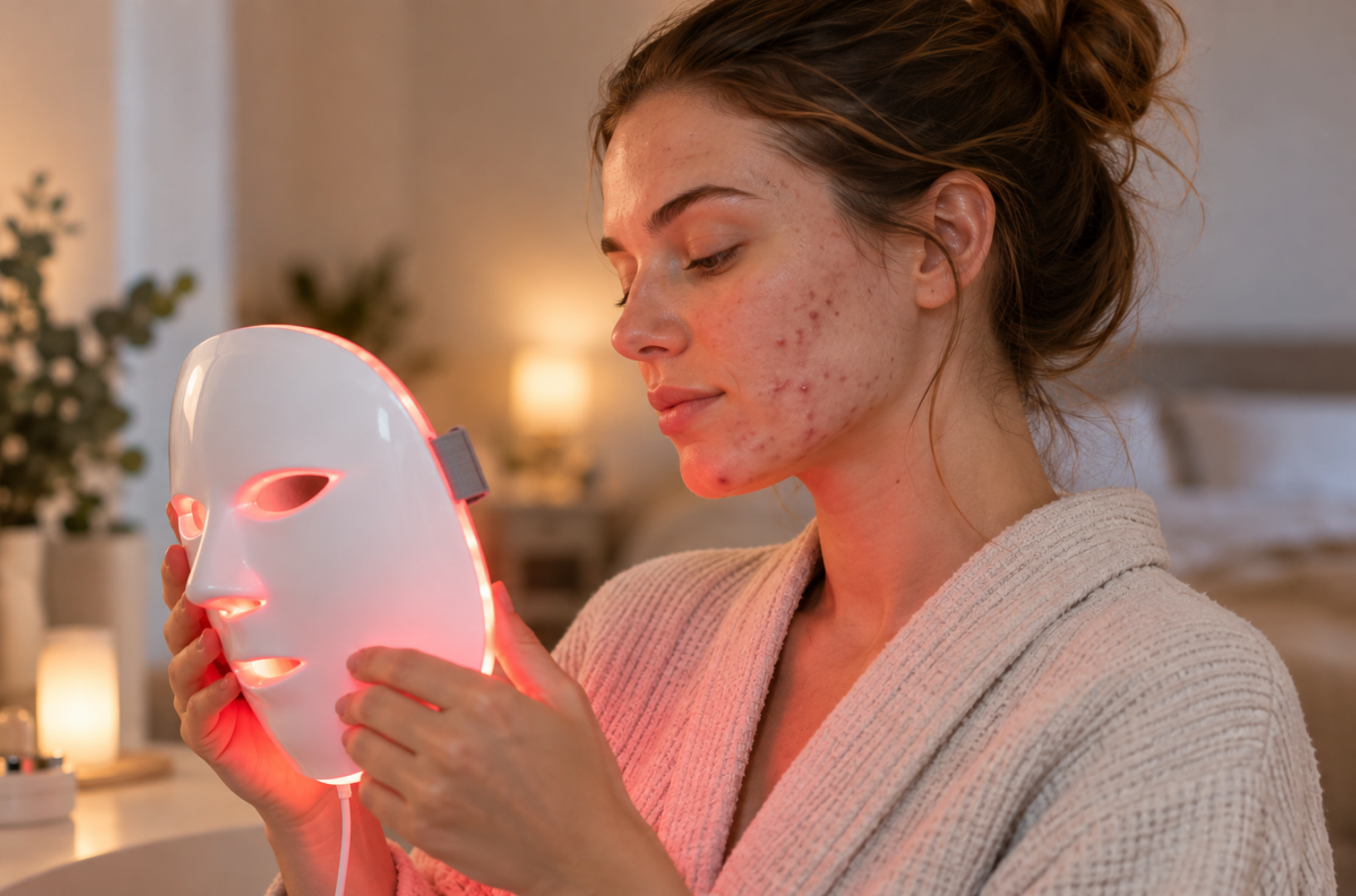
Red light therapy for acne may help reduce inflammatory breakouts, but it works differently from blue light. Red light is mainly studied for its effects on inflammation, while blue light more directly targets Cutibacterium acnes, the bacteria associated with acne. That is why many at-home acne devices combine both wavelengths.
A 2025 systematic review of six randomized trials found that at-home red, blue, and combination LED devices improved acne outcomes compared with control treatments in people with mild to moderate acne. Improvements were typically reported after four to 12 weeks.
If you’re comparing devices, our guide to the best LED face masks for acne focuses on masks designed for breakout-prone skin.
How Does Red Light Therapy Help Acne?
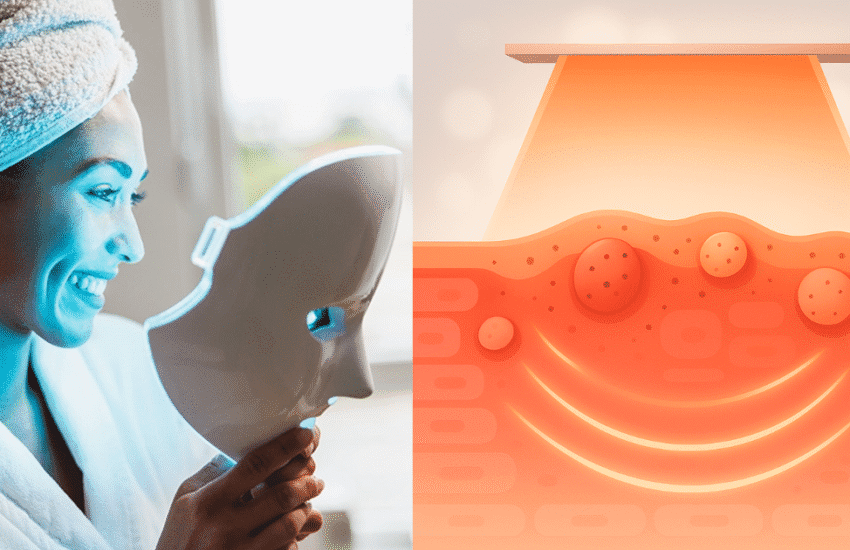
Red light therapy, also called photobiomodulation or low-level light therapy, exposes the skin to selected wavelengths of visible red light. Acne studies have used red wavelengths around 630 to 670 nanometers, although wavelength is only part of the picture. The amount of light delivered to the skin and the treatment schedule also affect results.
Researchers propose that red light interacts with light-sensitive structures in cells, including those associated with mitochondria.
This can influence cellular energy production and signaling involved in inflammation and tissue repair. For acne, the main interest is its potential to calm inflammation around clogged follicles, which may reduce the redness and swelling of inflammatory pimples.
Red Light vs. Blue Light Therapy for Acne
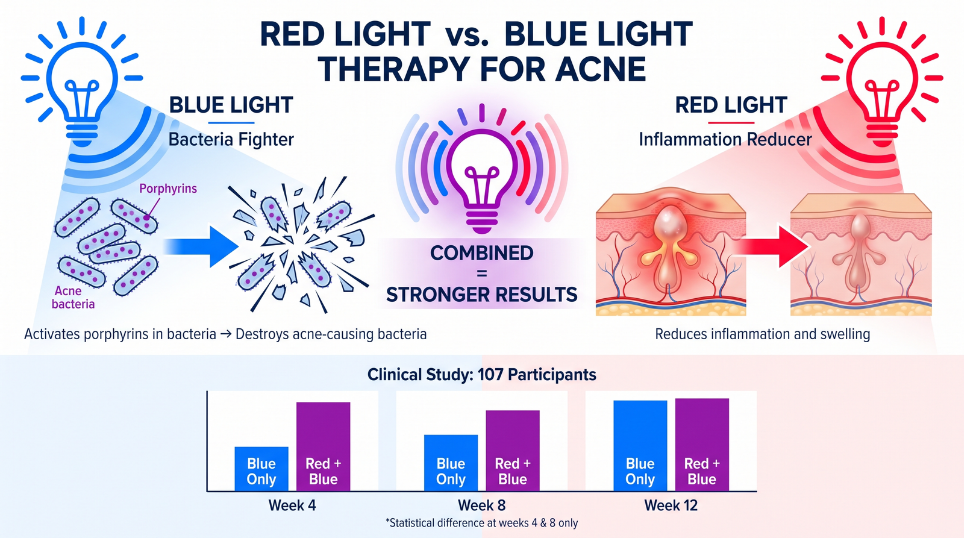
Red and blue light target acne in different ways. Blue light acts more directly on acne-associated bacteria by activating naturally occurring compounds called porphyrins within the bacteria, which triggers reactions that can damage them.
Red light is mainly studied for its anti-inflammatory effects. Because these mechanisms differ, acne devices often combine both colors. In a randomized trial involving 107 people, combined red and blue light produced greater improvement in inflammatory acne than blue light alone at weeks four and eight, although the difference was no longer statistically clear at week 12.
What Does the Research Say About Red Light Therapy for Acne?
The strongest recent evidence for at-home LED acne treatment comes from a 2025 systematic review of six randomized trials involving 216 people with mild to moderate acne. Across the studies, red, blue, and combination LED devices improved inflammatory lesions, noninflammatory lesions, and investigator-rated acne outcomes compared with controls.
The devices used different wavelengths, doses, and treatment schedules, so the findings don’t mean every LED mask will work equally well. The American Academy of Dermatology’s 2024 acne guidelines also found insufficient evidence to broadly recommend laser and light procedures.
Those guidelines came before the 2025 review, while treatments such as benzoyl peroxide and topical retinoids still have stronger guideline support.
A 2026 randomized trial also found that an at-home 660 nm red and 415 nm blue LED device reduced inflammatory and total acne lesions over eight weeks. However, it wasn’t significantly better than blue light alone for lesion-count reductions, so the study doesn’t prove that adding red light always produces better results.
Research Results on Acne Lesions
In the 107-person trial, the group using combined blue and red light for 15 minutes daily had an average 76% reduction in inflammatory lesions after 12 weeks. That result applies to one treatment protocol using both wavelengths, not red light alone or every home device.
Can Red Light Therapy Reduce Oil Production?
Evidence for oil control is more limited. A small randomized study of 35 people found reduced sebum output and smaller sebaceous glands after combined blue and red light treatment. Because both wavelengths were used, the study doesn’t show that red light alone reliably reduces oil production.
How Long Does Red Light Therapy Take to Work for Acne?
In the 2025 review, improvements were typically reported after four to 12 weeks. Follow the schedule for your specific device rather than extending sessions or adding extra treatments to try to speed up results.
If your acne is becoming painful, worsening, or starting to scar, see a dermatologist instead of relying on a longer trial of home light therapy.
Professional vs. At-Home Light Therapy for Acne
At-home LED devices are generally intended for mild to moderate breakouts. Persistent, painful, or scarring acne is better assessed by a dermatologist, who can also explain whether LED therapy, laser treatment, or another procedure fits your treatment plan.
One important difference is photodynamic therapy, or PDT, which uses a photosensitizing medication followed by light exposure. Because PDT involves medication and separate aftercare, its results shouldn’t be used to predict what a standard home LED mask can do.
Red Light Therapy Devices for Home Use
For home treatment, look for a device intended for acne and check the labeling for the exact model. A mask cleared for wrinkles doesn’t automatically have clearance for acne, and FDA documents can list different intended uses for individual light modes within the same device.
Before choosing a mask or other LED device, check:
- Acne indication: Look for FDA clearance that covers the type of acne you want to treat.
- Treatment schedule: Check the session length and recommended weekly frequency.
- Coverage and fit: Make sure the design reaches the areas where you usually break out and is comfortable enough to use consistently.
- Safety instructions: Review age limits, medication warnings, contraindications, and eye-protection requirements.
FDA registration isn’t the same as FDA clearance. Registration alone doesn’t mean the FDA has reviewed a device for treating acne.
What Types of Acne Respond Best to LED Light Therapy?
Home visible-light devices are generally aimed at mild to moderate inflammatory acne, including papules and pustules. Deep, painful cysts and nodules need medical assessment, especially when they recur or cause scarring.
Some studies have also reported improvements in blackheads and whiteheads. However, if clogged pores are your main concern, topical retinoids and salicylic acid have more established roles in acne treatment.
How to Use Red Light Therapy for Acne Safely
Use the instructions for your exact device rather than copying the schedule from another mask or panel. Treatment times, skin preparation, and eye-protection requirements can vary between models.
- Prepare your skin as directed. Many devices are used on clean, dry skin, while others may allow specific compatible products.
- Stay within the recommended exposure time. Longer or more frequent sessions don’t necessarily improve results and may increase irritation.
- Clean the device as instructed. Focus on surfaces that come into contact with your face.
- Stop if your skin reacts. Persistent irritation, a rash, or worsening breakouts should be assessed before you resume treatment.
Because instructions can differ even within one brand’s range, use the user guide for your specific device.
Protecting Your Eyes
Follow the eye-protection instructions supplied with your device. If goggles or inserts are required, wear them throughout the session.
For more on when eye protection may be needed, see our guide to glasses for red light therapy. Closing your eyes doesn’t replace required protection, and you shouldn’t stare directly into the LEDs.
When to Check With a Clinician First
Speak with a clinician before using a light therapy device if you have a light-sensitive condition such as lupus or take medication that can increase light sensitivity.
Also review the manufacturer’s restrictions for pregnancy and breastfeeding, since some acne devices haven’t been studied in these groups. After a cosmetic procedure, ask the treating clinician when it is safe to restart your specific device because recovery times vary.
Where Red Light Therapy Fits Into an Acne Treatment Plan
LED therapy can be added to an acne treatment plan, but it shouldn’t replace prescribed medication without medical advice. The AAD notes that light treatments don’t reliably clear acne for everyone, so persistent or scarring breakouts may still need established topical or oral treatments.
Keep the rest of your skincare gentle while testing a new device. The AAD recommends avoiding scrubbing and choosing noncomedogenic products, since extra washing or exfoliation can irritate acne-prone skin without improving breakouts.
Conclusion
Red light may help calm inflammatory acne, while blue light more directly targets acne-associated bacteria. For mild to moderate breakouts, at-home red, blue, and combination LED devices have supportive evidence, but results usually take several weeks and depend on the specific device and treatment schedule.
Frequently Asked Questions
Is Red Light Therapy Safe for Every Skin Tone?
Red light therapy shouldn’t be described as risk-free for every skin tone. The AAD advises people with darker skin to consult a dermatologist before home red light therapy because visible light can contribute to hyperpigmentation in some people.
If you have melasma or tend to develop persistent dark marks after breakouts, mention this before choosing an acne device, especially one that also uses blue light.
How Often Should You Use Red Light Therapy for Acne?
Follow the schedule specified for your device. There is no single session length or weekly frequency that applies to every mask and panel. If you miss a treatment, follow the manufacturer’s instructions rather than doubling the next session.
Can Red Light Therapy Help with Back Acne?
There’s limited research specifically on red light therapy for back acne. Light therapy may help mild to moderate inflammatory acne, but most studies have focused on facial acne. Widespread, painful, or scarring back acne should be assessed by a dermatologist.
How Long Does it Take for Red Light Therapy to Clear Acne?
Red light therapy may start improving acne within 4 to 12 weeks with consistent use. Results vary by device, treatment schedule, and acne severity, and it may not completely clear acne on its own.
Disclaimer: This article is for informational purposes only and isn’t a substitute for professional medical advice, diagnosis, or treatment. Speak with a dermatologist or healthcare professional if you have persistent, severe, or scarring acne, or before using light therapy with medications or medical conditions.