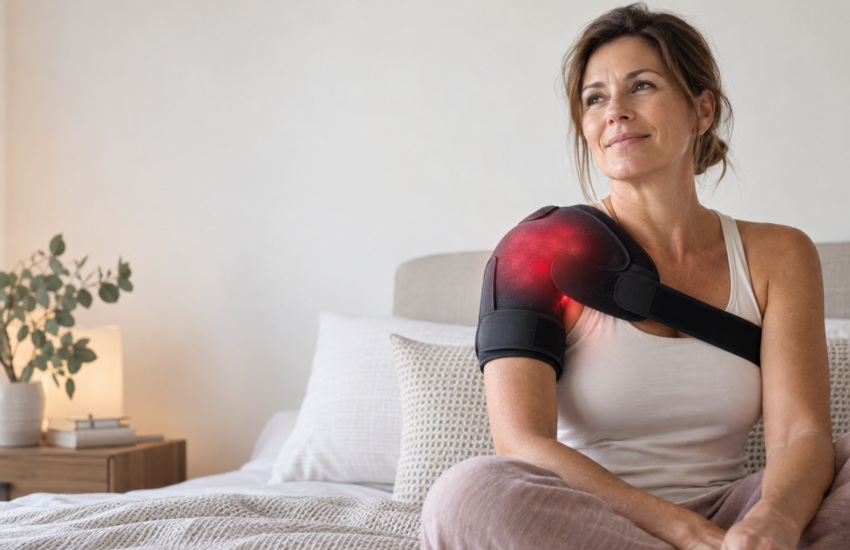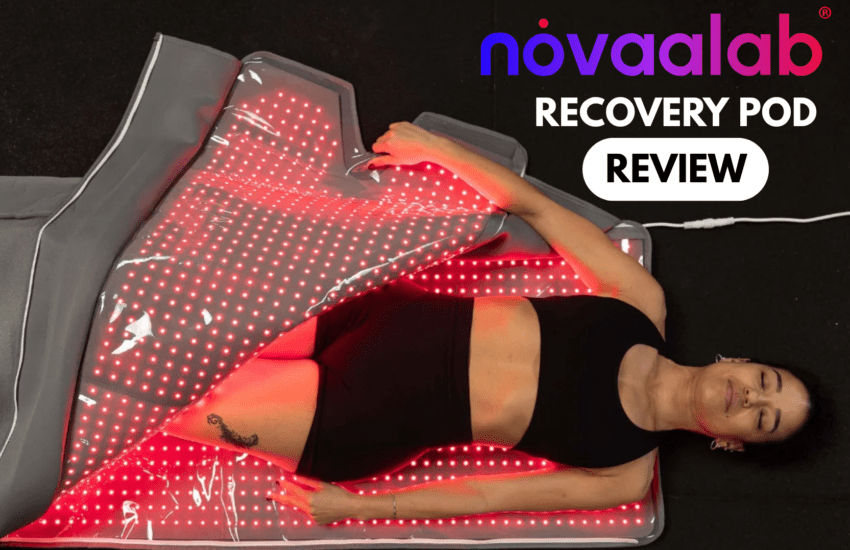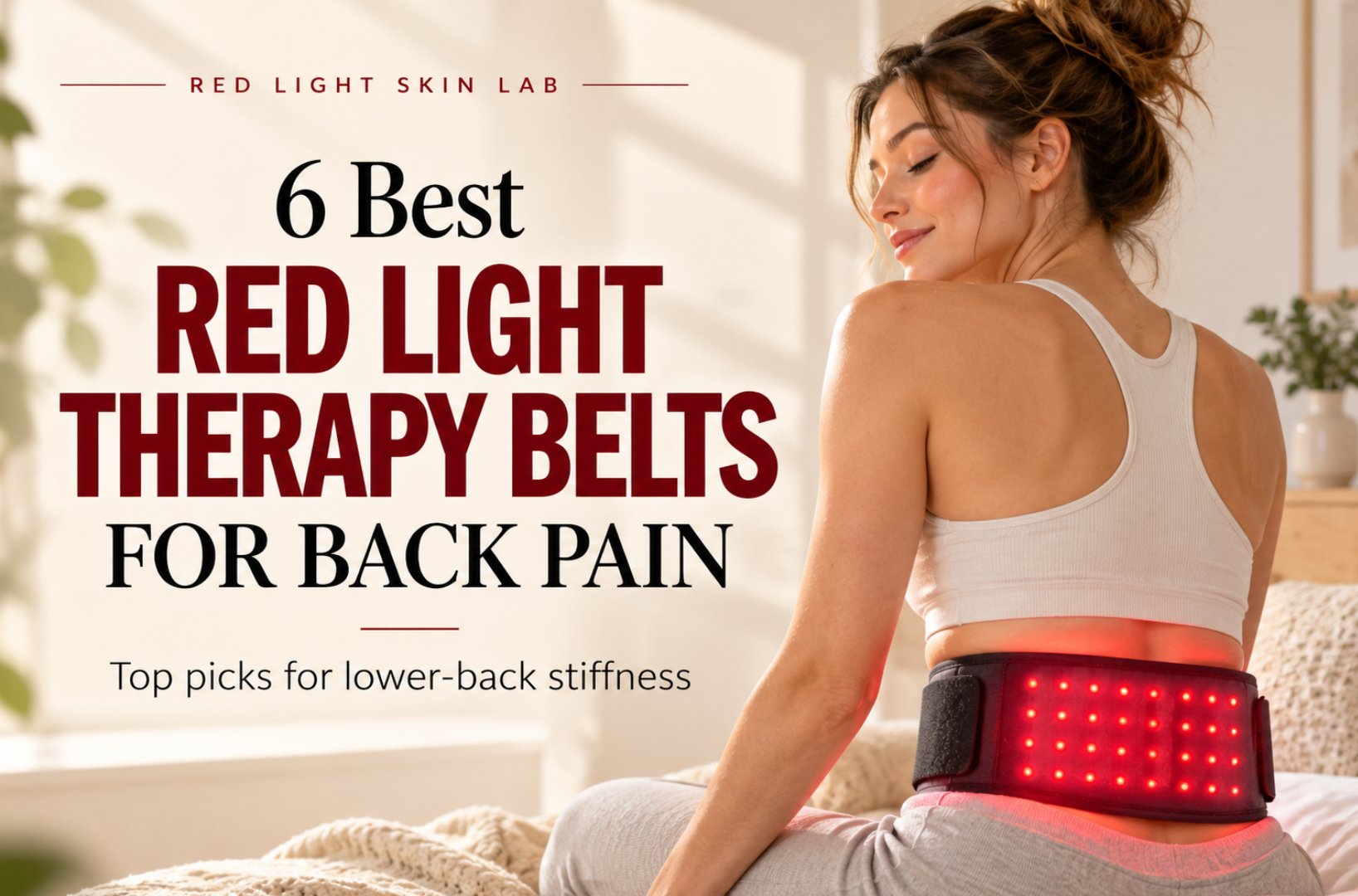
6 Best Red Light Therapy Belts for Back Pain and Stiffness
Lower back pain and tightness can stick around long after you’ve left your desk, sometimes lingering into the next morning. The best red light therapy belt for back pain gives you a convenient way to manage discomfort at home while you read, answer emails, or relax on the couch.
If you’ve already tried stretching, physical therapy, or walking more without much relief, red light therapy may be another option to consider. These wearable belts use red and near-infrared light to target the lower back, rather than relying on heat alone. Some research suggests this type of light therapy may help reduce pain, although results vary from person to person.
Below, we’ve picked out red light therapy belts for different needs, from larger wraps that cover the full lower back to smaller pads designed for specific sore spots.
Top 6 Red Light Therapy Belts for Back Pain & Stiffness – Comparison Chart
| Product | Wavelengths | Coverage | Power Style | Check Price |
|---|---|---|---|---|
| NovaaLab Novaa Back Pad | 660nm + 850nm | Wraps lumbar, spine and waist | Cordless with battery remote | Check Price on NovaaLab |
| Hooga Red Light Therapy Wrap | 660nm + 850nm | Reaches around the torso | Cordless, large battery pack | Check Price on Hooga |
| MitoQUAD Wavelength Belt | 630nm, 660nm, 810nm + 850nm | Lower back, abdomen or thighs, compact enough for travel | Corded, optional battery pack | Check Price on Mito Red Light |
| Glokore Red Light Therapy Wrap | 660nm + 850nm | Compact pad for one area | Corded with remote | Check Price on Glokore |
| Novaa Light Pad XL | 660nm + 850nm | Covers the full back in one placement | Corded to wall power | Check Price on NovaaLab |
| Comfytemp Red Light Belt | 660nm + 850nm | Wide panel across the lumbar area | Cordless | Check Price on Amazon |
How Red Light Therapy Belts for Back Pain Work
A red light therapy belt wraps around your waist and sits against your skin, delivering two wavelengths of light to the tissue underneath. The 660nm red light works closer to the surface, while the 850nm near-infrared light can reach deeper into the muscles.
Unlike infrared lamps for back pain that need to be positioned at a distance, these belts sit against your back for hands-free use.
- Wraps around your waist so you can use it hands-free
- Covers the lower back and lumbar area in one placement
- Uses 660nm red light and 850nm near-infrared light
- Runs sessions lasting roughly ten to twenty minutes
- Fastens with an adjustable strap to fit your torso
Many people choose to use a red light therapy belt while sitting or lying down, a few times a week. A snug fit helps keep the belt in place and maintain contact with your skin throughout the session.
Best Overall Red Light Therapy Belt for Back Pain: NovaaLab Novaa Back Pad
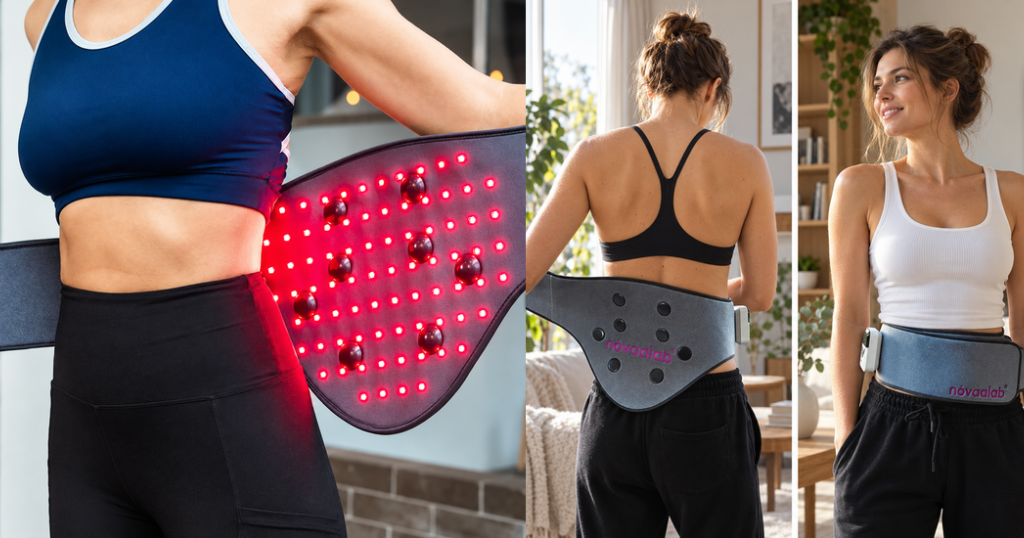
The Novaa Back Pad combines red light therapy, near-infrared light, warmth, and vibration massage in a cordless belt for lower back pain and muscle stiffness. It wraps around your waist, allowing you to move around during treatment without being plugged into an outlet.
Key Specifications:
- 660nm red light and 850nm near-infrared light: Combines surface-level and deeper-reaching light wavelengths
- 80 LEDs: Provide broad coverage across the lumbar area
- Eight vibration points: Offer three pulse modes for massage and muscle relaxation
- Rechargeable battery: Delivers up to five 15-minute sessions per charge
- Adjustable waist wrap: Keeps the pad positioned for hands-free treatment
Best for: Daily lower-back therapy without being tied to an outlet, especially if you want vibration massage to ease muscle tightness.
Good to Know: NovaaLab lists adjustable irradiance of up to 150 mW/cm² at skin contact.
Best Cordless Red Light Therapy Belt: Hooga Red Light Therapy Wrap
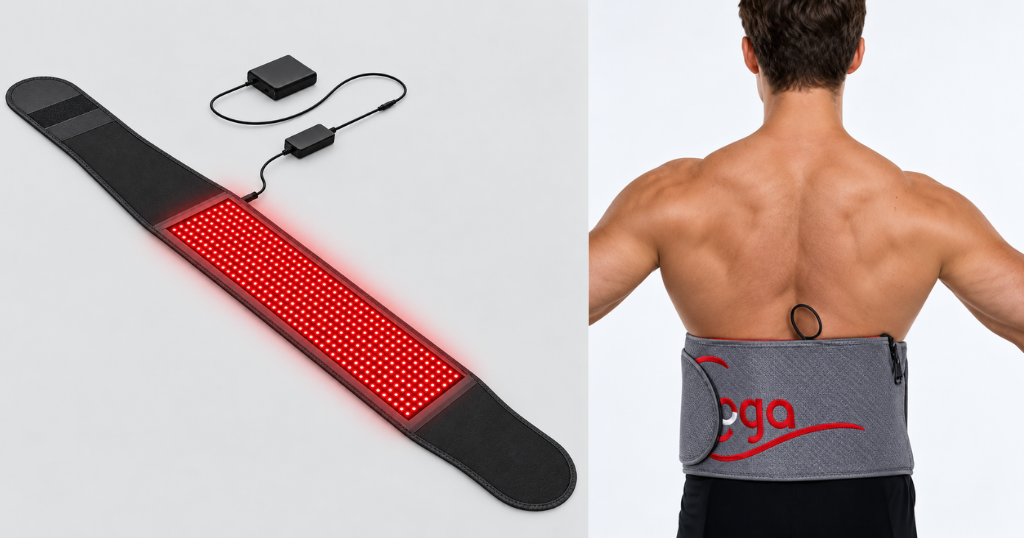
The Hooga Red Light Therapy Wrap combines broad lower-back coverage with over 70 mW/cm² surface irradiance. Its 51-inch adjustable wrap accommodates larger waists, while the rechargeable battery provides up to 150 minutes of cordless use.
Key Specifications:
- 405 triple-chip LEDs (1,215 chips) across a 21 × 5-inch treatment area
- 660nm red light and 850nm near-infrared light for surface and deeper tissue exposure
- Over 70 mW/cm² irradiance at the surface at full brightness
- 15,000 mAh rechargeable battery with up to 150 minutes of use
- Adjustable brightness, 10Hz pulse mode, and 1–20 minute timer for controlled sessions
- 51-inch neoprene wrap with adjustable fastening for different body sizes
Best for: Anyone who wants a cordless red light therapy belt for lower-back pain and stiffness, with published irradiance figures, adjustable intensity, and longer battery life.
Good to Know: The illuminated area measures 21 × 5 inches, not the full wrap length. The external battery pack also adds bulk compared with slimmer lumbar belts.
Want to save? Check the latest Hooga discount code for 12% off eligible orders before buying.
Best Four-Wavelength Red Light Therapy Belt: MitoQUAD Wavelength Belt
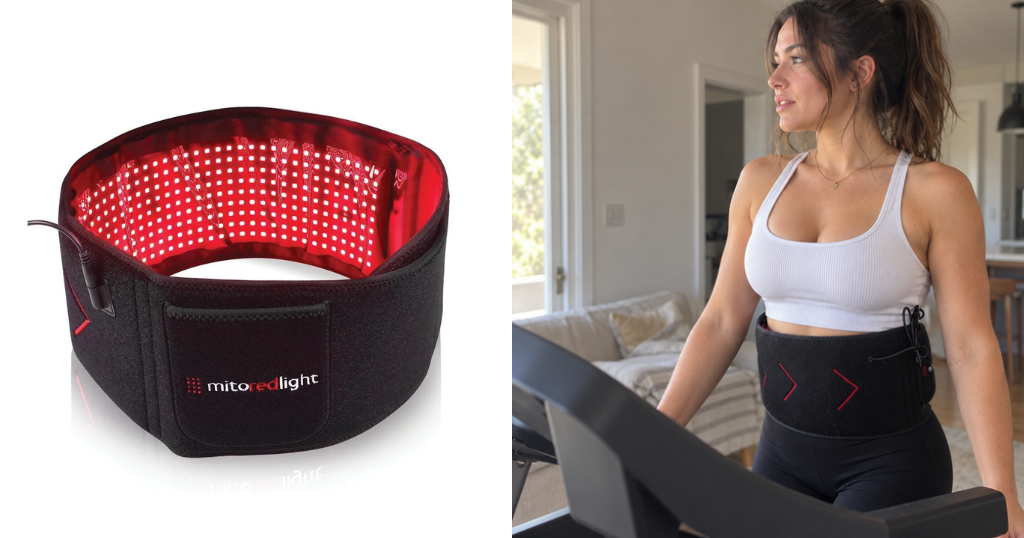
The MitoQUAD Wavelength Belt uses four wavelengths (630nm, 660nm, 810nm, and 850nm) instead of the usual two.
With 67% of its LED chips emitting near-infrared light at 810nm and 850nm, the MitoQUAD is designed for deeper tissue exposure during lower-back and muscle recovery sessions.
You can select red light, near-infrared, or both, with five adjustable intensity levels.
Key Specifications:
- Four wavelengths (630nm, 660nm, 810nm, 850nm) for light exposure at different tissue depths
- 405 tri-chip diodes (1,215 LED chips) for dense, even coverage
- 67% of LED chips emit near-infrared light at 810nm and 850nm
- 22 × 5-inch treatment area covers the lower back and waist
- Five intensity levels with separate red, near-infrared, and combined modes
- 18 mW/cm² irradiance measured at skin contact
- IEC 60601 certification for medical electrical equipment safety standards
Best for: Buyers wanting a four-wavelength red light therapy belt with 810nm near-infrared light, adjustable intensity, and targeted lower-back coverage.
Good to Know: The MitoQUAD runs on wall power. A separate battery pack is required for cordless use. Its 18 mW/cm² irradiance is measured at skin contact, so compare it with other belts using the same measurement distance.
Best for Broad Back Coverage: Novaa Light Pad XL
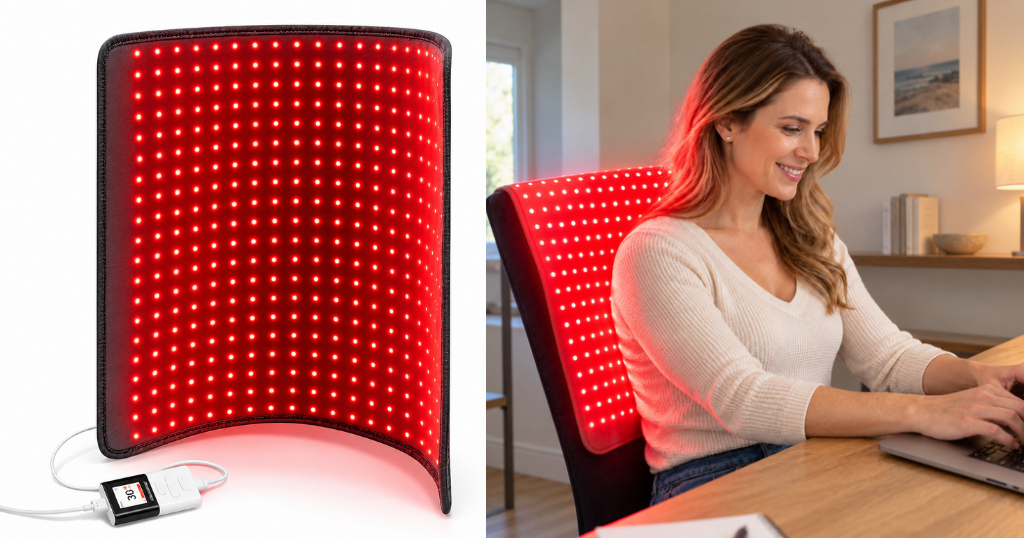
The Novaa Light Pad XL covers a 19.7 × 23.6-inch treatment area, allowing you to target most or all of your back without repeatedly repositioning a smaller pad. Its flexible design also works across the shoulders, hips, and legs, while the remote lets you adjust intensity and pulse settings during treatment.
Key Specifications:
- 400 triple-chip LEDs (1,200 light chips) for broad, even light coverage
- 660nm red light and 850nm near-infrared light for surface and deeper tissue exposure
- 19.7 × 23.6-inch treatment area covers large sections of the back in one session
- Up to 200 mW/cm² irradiance at skin contact, according to NovaaLab
- Remote-controlled intensity and pulse modes for adjustable sessions
- Adjustable fastening strap for hands-free placement across different body areas
- 20-minute sessions with wall-powered operation
Best for: People with widespread back stiffness or muscle soreness who need more coverage than a standard red light therapy belt provides.
Good to Know: The Novaa Light Pad XL requires a power outlet, making it less portable than cordless belts. However, its larger treatment area reduces the need to reposition the pad when targeting multiple sore spots.
Best Compact Wrap for Lower Back Sessions: Glokore Red Light Therapy Wrap
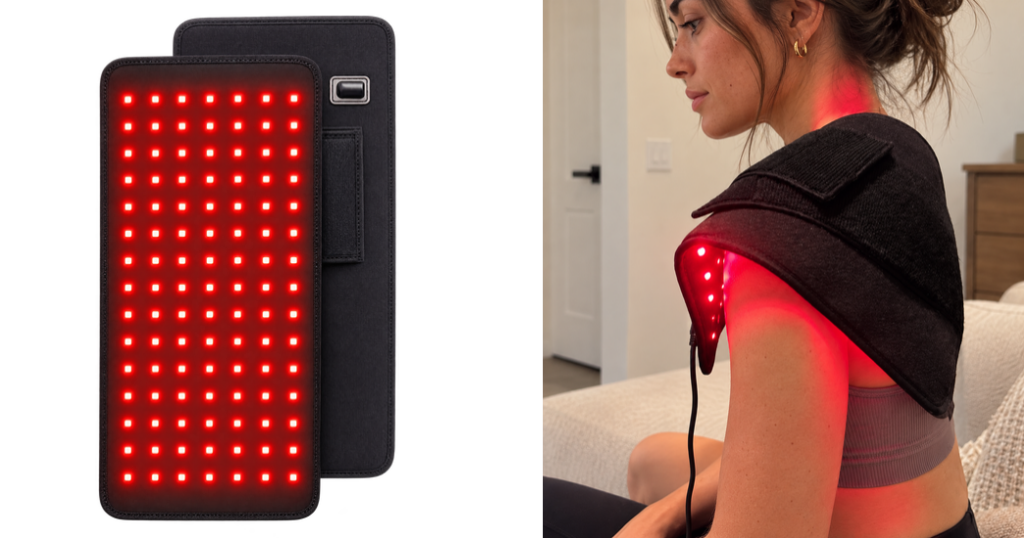
The Glokore Red Light Therapy Wrap targets specific areas of lower-back discomfort without the bulk of a full lumbar belt. Its 17.7 × 8.3-inch flexible pad combines 660nm red light and 850nm near-infrared light, with an adjustable strap that also allows use on the knees, shoulders, and neck.
Key Specifications:
- 120 red LEDs (660nm) for surface-level light therapy
- 120 near-infrared LEDs (850nm) for deeper tissue exposure
- 17.7 × 8.3-inch treatment pad for localized coverage
- Adjustable fastening strap to secure the pad around different body areas
- 1.3 lb weight for portable, targeted sessions
Best for: Targeting a specific area of lower-back stiffness or muscle soreness, especially if you want a compact red light therapy wrap that also works on other joints.
Good to Know: The smaller treatment area may require repositioning for widespread back discomfort. For broader coverage, consider the Novaa Light Pad XL, which covers a larger area in one session.
Best Affordable Red Light Therapy Belt: Comfytemp Red Light Belt
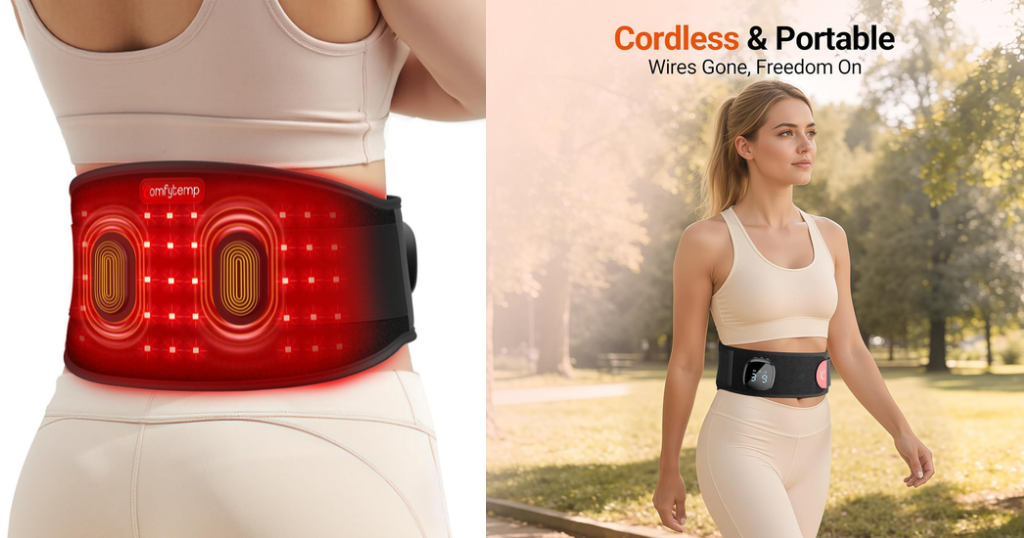
The Comfytemp Red Light Therapy Belt combines 660nm red light, 850nm near-infrared light, and vibration massage for targeted lower-back comfort at a budget-friendly price.
Unlike cheaper corded belts, its rechargeable battery lets you move freely during treatment. Two massage points target the lower-back muscles, making it particularly useful after prolonged sitting or exercise.
Key Specifications:
- 660nm red light and 850nm near-infrared light for surface and deeper tissue exposure
- 9.7–82.8 mW/cm² irradiance at skin contact, depending on intensity
- Two vibration massage points with three adjustable massage modes
- Rechargeable 2,500 mAh battery providing up to 4.9 hours on the lowest setting
- 50 × 7-inch adjustable wrap with an extension strap fitting waists up to 70 inches
- Cordless design for hands-free use at home, at work, or while travelling
Best for: Anyone wanting an affordable, cordless red light therapy belt for lower-back stiffness, with added vibration massage for muscle relaxation.
Good to Know: The advertised 4.9-hour battery life applies to the lowest setting. Higher intensity drains the battery faster.
How to Choose the Best Red Light Therapy Belt for Back Pain
If your lower back feels stiff after sitting at a desk all day, comfort is one of the first things to consider when choosing a red light therapy belt.
A good red light therapy belt for back pain should fit comfortably around your waist and keep the light therapy pad in place without needing frequent adjustments.
Start by checking how much of your lower back the belt covers. Then look at the light wavelengths and the manufacturer’s published light output. These details can help you compare red light therapy belts without getting distracted by extra settings you may not need.
Red and Near-Infrared Light: Understanding 660nm and 850nm
660nm red light and 850nm near-infrared light are commonly used together in red light therapy belts. Red light is absorbed closer to the skin’s surface, while near-infrared light can reach deeper into tissue. How far the light penetrates depends on the device, its output, and the tissue it passes through.
This type of light therapy is called photobiomodulation (PBM). When choosing a belt for back pain, look for clearly listed red light therapy wavelengths.
Check whether the belt uses red and near-infrared light at the same time or lets you select each one separately. Near-infrared light is invisible, so a bright red glow doesn’t mean both wavelengths are working. Having more light colors doesn’t necessarily mean a belt will provide better lower back pain relief.
Irradiance and LED Count Explained
Irradiance measures how much light power reaches a specific area, expressed in milliwatts per square centimeter (mW/cm²). Electrical wattage tells you how much power a device uses, not how much light it delivers to your skin.
When comparing red light therapy belts, check whether the listed irradiance includes the measurement distance and brightness setting. A reading taken directly at the surface is appropriate for a belt worn against the skin, but you can’t directly compare it with a light therapy panel measured several inches away.
LED count is also worth checking. A product may list triple-chip LEDs, but the number of LED housings isn’t necessarily the same as the total number of light-emitting chips inside them.
Look for manufacturers that explain how they measure light output. Higher irradiance doesn’t always mean better back pain relief, since treatment time and total light dose can also affect how your body responds.
Coverage and Fit: Finding a Comfortable Red Light Therapy Belt
A belt’s total length tells you how far it wraps around your waist, but the illuminated treatment area determines how much of your back receives light. Check both measurements before buying.
For lower back stiffness, look for a flexible pad that covers your lumbar area and follows the curve of your back. A taller pad can cover more of your lower back, while a smaller one may be easier to position over a specific spot.
Along with coverage, you’ll want to make sure the belt fits comfortably. Measure your waist where you plan to wear it, leaving enough room to fasten it without feeling too tight. The wrap should stay in place while you’re sitting without digging into your waist or bunching up behind you.
Once you’ve checked the fit, consider how you’ll use the belt during treatment. A cordless red light therapy belt gives you more freedom to move around or change seats, provided the manufacturer allows it.
If you prefer a cordless model, check how long the battery lasts at your preferred intensity and whether it’s included. For a corded belt, make sure the cable is long enough to reach from the outlet to where you usually sit.
How to Use a Red Light Therapy Belt for Back Pain
Start by choosing a time when you can get comfortable and stay in position for the full session. How often you use the belt depends on the device, so follow its recommended red light therapy schedule.
- Position the red light pad carefully. Follow the manufacturer’s placement instructions. If direct skin contact is recommended, avoid placing clothing between the LEDs and your back, as fabric reduces the amount of light reaching your skin.
- Let the timer guide the session. Stay within the recommended duration and frequency. Longer sessions don’t necessarily provide more pain relief, so there’s no need to extend the time beyond what’s recommended.
- Notice changes beyond the session. Pay attention to how your back feels between sessions. For example, you might track morning stiffness or how comfortably you can stand after sitting for a while.
- Continue your existing care plan. Keep up prescribed physical therapy and exercises, and stop using the belt if it irritates your skin or worsens discomfort.
Research on photobiomodulation for chronic lower back pain has shown mixed results. For now, it’s best to use a red light therapy belt alongside your existing care plan and pay attention to any changes in your pain, stiffness, and movement over time.
Which Red Light Therapy Belt Is Best for Your Back?
The Novaa Back Pad is our top pick for a cordless red light therapy belt for lower back pain. It’s a convenient choice if you want to use light therapy while reading, watching TV, or relaxing without staying close to a power outlet.
If you prefer to compare light output before buying, Hooga is worth considering for its published specifications. Meanwhile, the Novaa Light Pad XL may suit those dealing with stiffness across a larger area of the back.
If you’re exploring red light therapy for sciatica or persistent lumbar pain, keep your expectations realistic. These belts aren’t proven to treat the underlying causes of sciatic nerve pain, and they shouldn’t replace medical care.
If you’re considering red light therapy for back pain, a comfortable belt with good coverage can be a welcome addition to your existing care, giving you a simple way to try light therapy at home.
Health Disclaimer: This information is for educational purposes only and isn’t a substitute for professional medical advice, diagnosis, or treatment. Red light therapy is not intended to diagnose, treat, cure, or prevent any disease. Individual results vary.