Red Light Therapy for Tendonitis: Does It Help Tendon Pain and Healing?
Tennis elbow that flares every time you grip a racket or Achilles pain that hits with your first steps in the morning can hinder everyday movement.
If you’re looking into red light therapy for tendonitis at home, the best device depends on where the discomfort is and how easily the light can reach the tendon. An elbow can work well with a wearable wrap, while a sore shoulder may need a panel with stronger near-infrared coverage.
This guide compares the best red and near-infrared light therapy devices for tendonitis, including options for elbow, Achilles, knee, and shoulder pain, so you can see which designs are easiest to use and whether paying more gets you better coverage.
Top Picks: Best Red Light Therapy Devices for Tendons
| Product | Form Factor | Wavelengths | Session Length | Best For | Link |
|---|---|---|---|---|---|
| MitoPRO 300X | Tabletop panel with stand | 590, 630, 660, 810, 830, 850nm | About 10 min per area | Elbow, shoulder, and Achilles | Check Price on Mito Red Light |
| Hooga HG300 | Compact panel with kickstand | 660, 850nm | 10–15 min per area | One sore tendon at a lower price tier | Check Price on Hooga |
| Kineon MOVE+ Pro | Cordless strap, skin contact | 660nm LED + 808nm laser | 10–15 min daily | Pickleball and tennis elbow | Check Price on Kineon |
| Novaa Light Boot | Slip-on boot, full foot and ankle | 630, 660, 830, 850nm | 20 min per foot | Achilles and heel | Check Price on NovaaLab |
| Novaa Light Pad XL | Flexible pad with straps | 660, 850nm | 5–20 min | Achilles, knee, and shoulder | Check Price on NovaaLab |
| Celluma SPORT | Flexible battery-powered pad | 465, 640, 880nm | Up to 30 min | Longer seated sessions | Check Price on Celluma |
| PlatinumLED BIOMAX 300 | Targeted panel, stand sold separately | 480, 630, 660, 810, 830, 850, 1060nm | 10–20 min per area | Shoulder and other deeper tendons | Check Price on PlatinumLED |
How Red Light Therapy for Tendinopathy Works
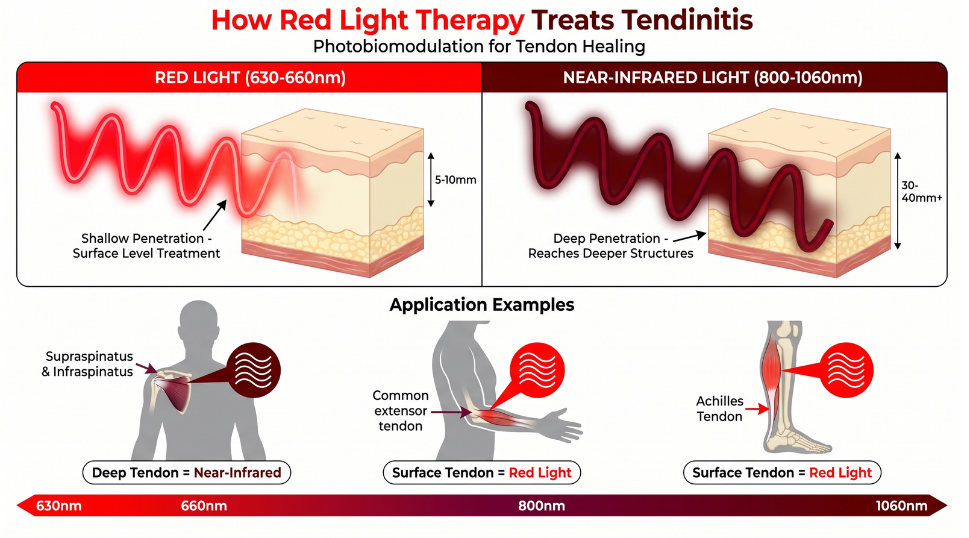
Red light therapy for tendons uses photobiomodulation with red light around 630 to 660nm and near-infrared light from roughly 800 to 1060nm.
Red light works closer to the skin, while near-infrared penetrates deeper into tissue.
For deeper tendons, such as shoulder tendons, near-infrared light may be the more practical option. For tendons closer to the skin, including the elbow and Achilles tendon, red light may reach the target tissue more easily.
Best Red Light Therapy Devices for Tendonitis in 2026
Best Overall: MitoPRO 300X
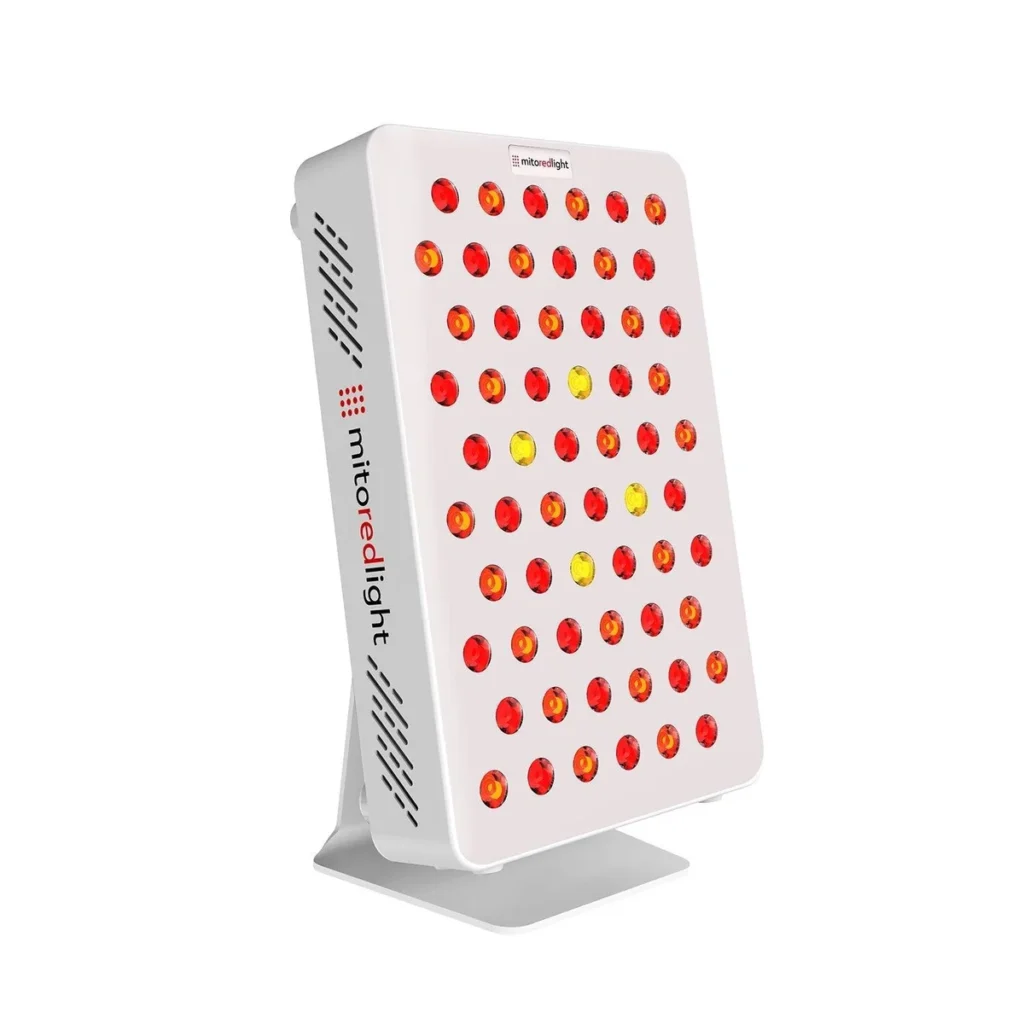
The MitoPRO 300X is a compact red light panel that rests on its own tabletop stand and tilts toward an elbow, shoulder, or Achilles. It mixes red and near-infrared light across a wide spread of wavelengths, so lifters and active adults dealing with tendon pain in more than one spot can cover each area with one device.
Key Specifications:
- Six wavelengths from 590nm to 850nm for broad coverage
- Added 810nm near-infrared for deeper tendons like the shoulder
- Tabletop stand included to aim light without holding it
- Touchscreen and app to set and track sessions
- Separate red and near-infrared modes for flexible sessions
- About 10 minutes per area to fit busy days
Best for: Lifters, climbers, and active adults managing more than one sore tendon. Six wavelengths with deeper near-infrared, a tilting stand, and short sessions make it the easiest panel to aim at an elbow one day and a shoulder the next.
Good to Know: This tabletop panel is used from a short distance rather than directly on the skin, so treating the Achilles may require propping your foot up near the stand. Its wavelength mix also differs from the MitoADAPT, which adds more wavelength choices and preset light modes.
Best Affordable Red Light Panel for Tendonitis: Hooga HG300
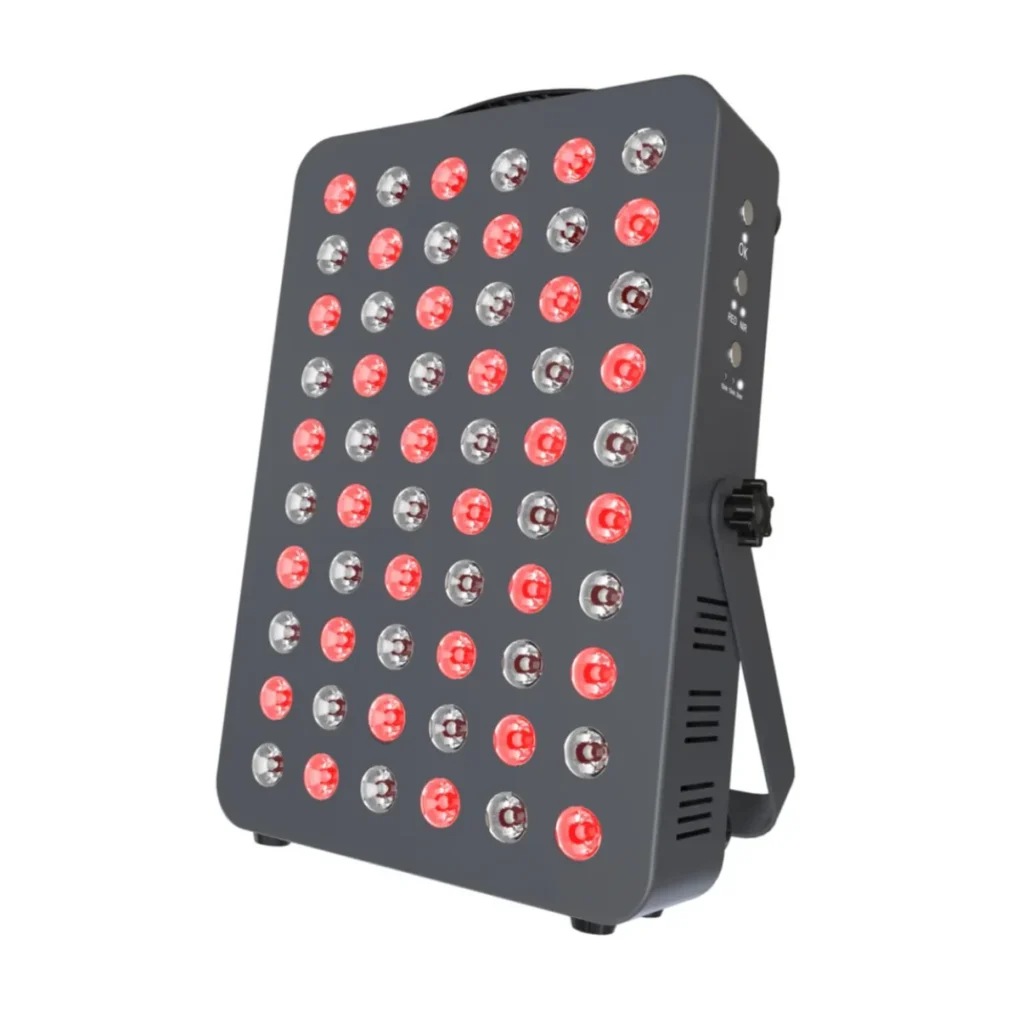
The Hooga HG300 is a compact red and near-infrared light panel with a fold-out kickstand and built-in timer. Its small size makes it easy to set up on a desk or nightstand and direct the light at one tendon at a time, making it a practical starting point if you want to try red light therapy for tendonitis at home without buying a larger panel.
Key Specifications:
- 660nm red and 850nm near-infrared for the standard pair
- Separate red and near-infrared switches to customize each session
- Built-in timer with preset lengths for easy session control
- Fold-out kickstand to set up on a desk or table
- Lightweight build to move between rooms or pack for trips
Best for: Desk workers and weekend players dealing with one stubborn elbow, wrist, or knee. With 660 and 850nm wavelengths, a built-in timer, and a kickstand, it gives you the basics for targeted red light therapy at a lower price.
Good to Know: This compact red light panel uses only two wavelengths, so it skips the extra near-infrared options found on pricier panels. It also needs propping for awkward spots like the back of the shoulder. If price is the main reason you’re considering the HG300, the current Hooga discount can bring the direct price down further.
Best for Pickleball and Tennis Elbow: Kineon MOVE+ Pro
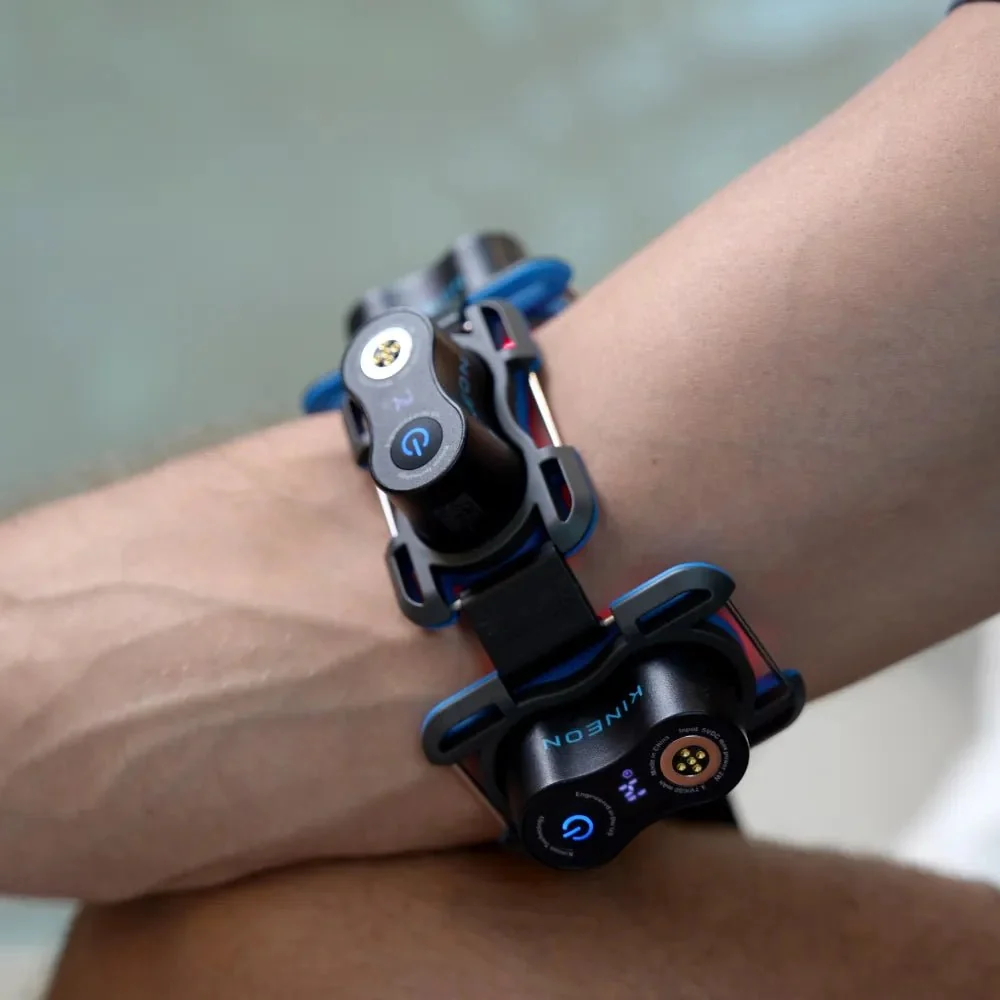
The Kineon MOVE+ Pro is a cordless wearable with small light modules that clip onto an adjustable strap and rest directly on the skin. For pickleball and tennis players with a sore elbow, the hands-free design fits between games or at a desk, with no panel to position or hold.
Key Specifications:
- 660nm red LEDs for tissue near the surface
- 808nm laser diodes to add deeper near-infrared light
- Three clip-in modules to cover the elbow from several angles
- Cordless rechargeable design to wear courtside or at work
- Daily sessions of 10 to 15 minutes for quick use
- Travel case included for gym bags and trips
Best for: Pickleball and tennis players who want to keep playing while working through elbow flare-ups. Skin-contact modules, a mix of LEDs and lasers, and a strap that stays put make it simple to use after play without giving up court time.
Good to Know: This wearable laser device covers a smaller area than a panel, so larger spots like the thigh need several placements. The laser components also push it into a pricier tier for its coverage size.
Best Full-Coverage Option for Achilles Tendons: Novaa Light Boot
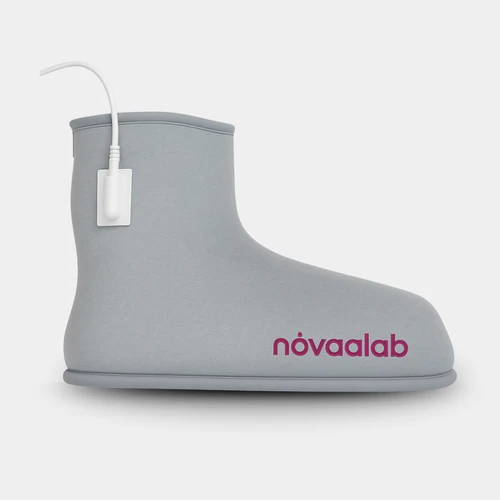
The Novaa Light Boot is a soft, slip-on boot lined with red and near-infrared LEDs that surround the whole foot and ankle. Runners with Achilles pain get light on the back of the heel, the sides of the tendon, and the arch at once, with no straps to adjust or panel to aim.
Key Specifications:
- Four wavelengths from 630nm to 850nm for layered coverage
- Full-wrap LED lining to cover heel, Achilles, and arch together
- Slip-on design to skip straps and sizing charts
- Remote control to adjust intensity and pulse settings
- 20-minute sessions per foot for a simple schedule
- Lightweight build to wear on the couch or at a desk
Best for: Runners and court players with Achilles or heel pain who want full coverage without fiddling with placement. Red and near-infrared light wrapped around the entire heel and ankle, plus a slip-on fit and remote, make it simple to cover the heel and ankle in one session.
Good to Know: This red light boot fits feet and ankles only, so an elbow or shoulder needs a separate device.
Best Flexible Pad for Achilles and Knee Tendons: Novaa Light Pad XL
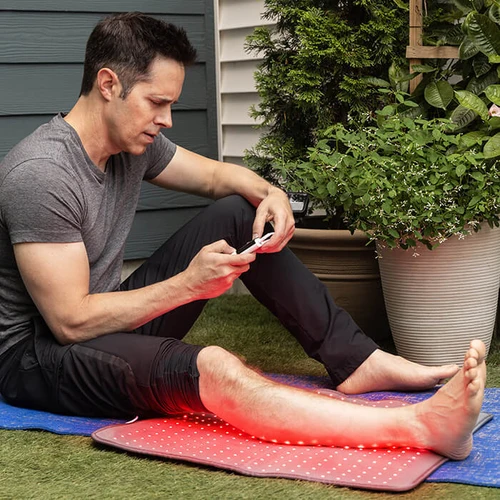
The Novaa Light Pad XL is a lightweight, flexible LED pad that wraps around a joint with two straps. It stays in contact with the skin at awkward angles, which suits runners with Achilles or knee tendon pain who want light on the back of the heel without balancing a panel.
Key Specifications:
- 660nm red and 850nm near-infrared for layered coverage
- Flexible pad to contour around ankles, knees, and shoulders
- Two straps included to hold the pad in place
- Large surface to cover the full tendon and nearby muscle
- Remote control to adjust sessions without unstrapping
Best for: Runners dealing with Achilles or patellar tendon pain who want the light right on the tendon. The flexible shape, strap fit, and wide surface let it wrap (or leave unwrapped) the heel or knee while sitting with a leg up.
Good to Know: This contact pad is less suitable on a small joint like the wrist or thumb.
Best Hands-Free Option for Longer Sessions: Celluma SPORT
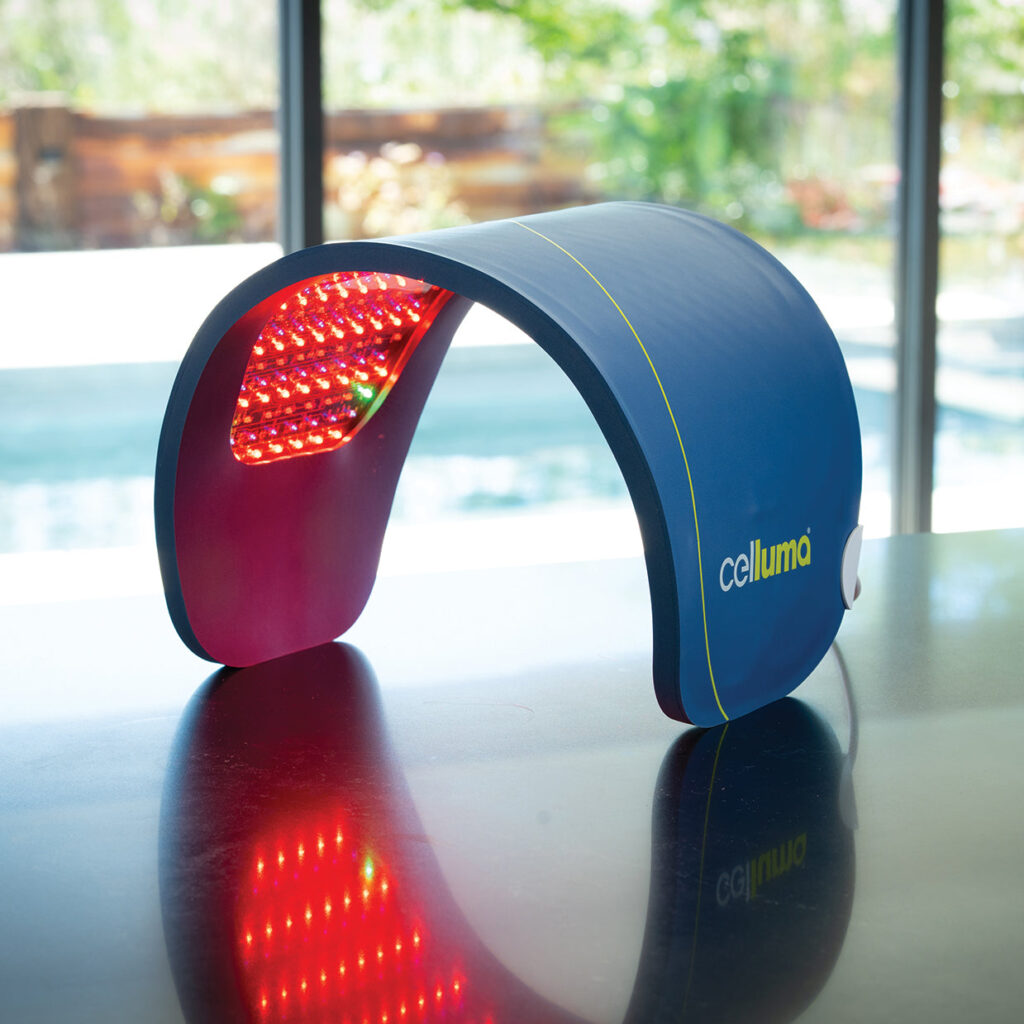
The Celluma SPORT is a thin, flexible LED panel that shapes over a shoulder, knee, or elbow and runs on a rechargeable battery. It suits active older adults who prefer a single-mode setup and a longer, relaxed session on the couch over adjusting settings.
Key Specifications:
- Single preset mode for simple, no-guesswork sessions
- Blue, red, and near-infrared LEDs for mixed-depth coverage
- Shape-taking panel to wrap the shoulder, knee, or elbow
- Rechargeable battery for cordless use around the house
- Built-in timer with pause to handle interruptions
- Sessions up to 30 minutes for longer seated use
Best for: Active adults with a sore shoulder, knee, or elbow who want something easy to use with no settings to learn. The single mode, cordless battery, and flexible shape let it rest on the joint during a TV show or phone call.
Good to Know: Sessions on this flexible LED pad run longer than on most panels, so it suits relaxed evenings more than quick breaks. It also sits in a pricier tier than the wearables and contact pads.
Best for Deeper Near-Infrared Coverage: PlatinumLED BIOMAX 300
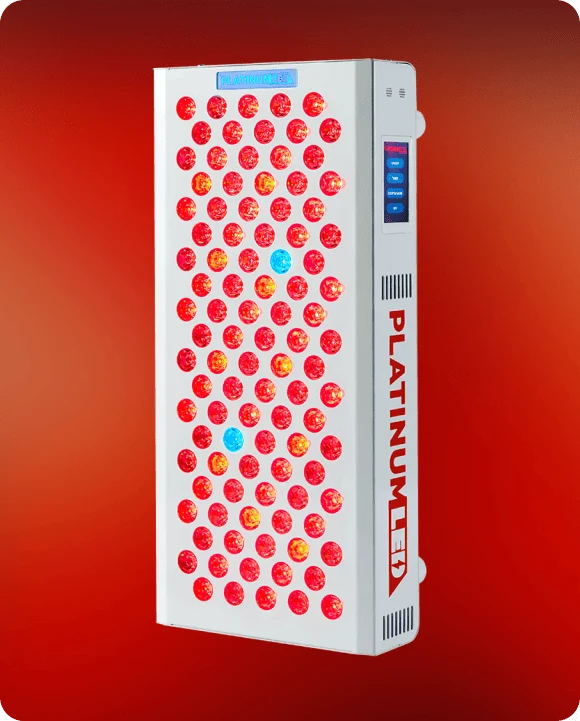
The PlatinumLED BIOMAX 300 is a targeted red light panel with a wide spread of red and near-infrared wavelengths, including longer near-infrared options aimed at deeper tissue. Lifters and climbers with shoulder or biceps tendon pain get deeper-reaching light without moving up to a full-body panel.
Key Specifications:
- Seven wavelengths from 480nm to 1060nm for broad coverage
- 1060nm near-infrared to add a longer reach
- Separate red and near-infrared dimming to adjust intensity
- Touchscreen and included remote for easy control
- Third-party output testing to check stated irradiance
- Modular design to add panels for larger areas later
Best for: Lifters and climbers dealing with shoulder, biceps, or rotator cuff tendon pain who want more control over treatment. Seven wavelengths, third-party output testing, and separate red and near-infrared dimming give you more ways to target deeper tendon areas and fine-tune each session.
Good to Know: Stands are sold separately, so a tabletop or floor stand adds to overall setup cost. This near-infrared panel also runs heavier than compact options and sits in a pricier tier.
How to Choose the Best Red Light Therapy Device for Tendonitis
Contact Pads vs Red Light Panels for Tendon Pain
Tendons sit in awkward places, and a device only helps if it stays aimed at the sore spot every session. Panels cover more area quickly, while pads and straps hold contact on joints that are hard to face toward a flat light.
- Tennis or golfer’s elbow: A wearable strap can stay in place without forcing you to hold your arm in one position.
- Achilles tendonitis or heel pain: A boot can cover the heel, ankle, and arch at the same time.
- Patellar or shoulder tendonitis: A flexible pad can wrap around the knee or shoulder and stay close to the target area.
- Several sore spots: A panel can cover more area and may be easier to use if you want one device for different parts of the body.
Before choosing, picture how you’d use it for each session. If a panel would leave you balancing your foot or holding your arm awkwardly for ten minutes, a wrap or pad may be easier to use consistently.
Red and Near-Infrared Wavelengths for Tendonitis (660nm vs 810nm vs 850nm)
Red wavelengths near 660nm reach tissue closer to the skin, while near-infrared wavelengths such as 810nm, 830nm, and 850nm can reach deeper tissue. Elbow and Achilles tendons sit fairly close to the surface, while the rotator cuff sits under more muscle.
- For the elbow, wrist, or Achilles, a 660 and 850nm combination covers both red and near-infrared light.
- For deeper areas such as the shoulder, wavelengths around 810nm or 830nm may be worth looking for alongside 850nm.
- Extra wavelengths give you more options, but wavelength alone doesn’t determine how much light reaches the tissue.
Also check the device’s stated output and testing. Brands that publish independent irradiance measurements make it easier to compare how much light the device delivers at a given distance.
Red Light Session Length and Dose for Tendons
Red light dose depends on both the device’s output and how long you use it. A higher-output device may need less time, while a lower-output device may call for a longer session.
- Around 10 minutes can be easier to fit in before work or after exercise
- Sessions of 20 to 30 minutes may suit people who prefer using the device in the evening
- Contact devices sit directly against the skin, so you don’t have to account for treatment distance
- Follow the manufacturer’s recommended session time and distance rather than extending sessions on your own
Choose a session length you can stick with during a normal week. A shorter routine that fits around work, exercise, and other commitments may be easier to maintain than a longer session you can only manage on quiet days.
Tips for Getting the Most from Red Light Therapy for Tendonitis
Red light fits best as one piece of a recovery plan that includes smart loading and a break from the moves that set off pain. You may choose to use red light therapy for tendon pain a few times a week or daily, depending on the device and the manufacturer’s instructions.
- Pair sessions with strengthening exercises from a physical therapist
- Use the device after play or training, then note how the tendon feels the next day
- Watch simple markers like grip strength, stairs, or first steps in the morning
- Avoid ramping up activity just because pain eases after a session
- Use the included goggles during close panel sessions for eye comfort
Pay more attention to how the tendon responds the next day than to how it feels immediately after a session. That can give you a better sense of whether your routine is helping.
The Bottom Line on Red Light Therapy for Tendonitis
Tendon pain that keeps coming back can make every game, run, or workday feel uncertain. Red light therapy for tendonitis offers a home option that fits alongside rehab, with no appointments to schedule.
The right pick depends on where the tendon sits and how sessions fit the day. Wearables, boots, and flexible pads hold contact on elbows, knees, and Achilles tendons, while panels cover more ground and add near-infrared range for deeper spots like the shoulder.
Start with the sore spot, then choose a device that stays positioned over that area and fits into a normal weekday.
FAQ: Red Light Therapy for Tendonitis
Will Red Light Therapy Help with Tendonitis?
Red light therapy may help reduce tendon pain and improve comfort during movement, especially when it’s used alongside a strengthening program. Research is still mixed, and results can vary by tendon, wavelength, dose, and treatment schedule.
For tendonitis, red light therapy is best viewed as a support tool rather than a replacement for rehab. Evidence is more limited for Achilles tendonitis, so strengthening exercises and a structured recovery plan should remain the foundation of treatment.
How Long Should I Do Red Light Therapy for Tendonitis?
Most home devices call for sessions of about 10 to 20 minutes per area, used a few times a week or daily. Contact pads and wearables often run 10 to 15 minutes, while panel sessions depend on distance from the skin. Follow each manufacturer’s time and distance guidance for red light therapy for tendonitis.
How Long Does It Take for Red Light to Ease Tendon Inflammation?
How quickly red light eases tendon discomfort varies widely from person to person. Some users notice a difference soon after starting, while others see gradual changes over time. Tracking grip strength, stairs, or morning stiffness gives a clearer read on progress than how a tendon feels after any single session.
Which Red Light Therapy Device Works Best for Tendon Pain?
It’s generally best to choose a red light therapy device that stays in place over the sore spot. Wearable straps suit elbows, flexible pads suit Achilles and knee tendons, and panels with extra near-infrared suit deeper areas like the shoulder. Fit and session length shape how often a device actually gets used.
Is It Possible to Overdo Red Light Therapy for Joints?
Overdoing red light therapy for joints is possible, and more time does not always mean better results. Research suggests light follows a dose curve, where too much can blunt the effect. Following the manufacturer’s session length, spacing sessions out, and skipping extra rounds on the same area keeps use in a sensible range.
Health Disclaimer: This information is for educational purposes only and isn’t a substitute for professional medical advice, diagnosis, or treatment.