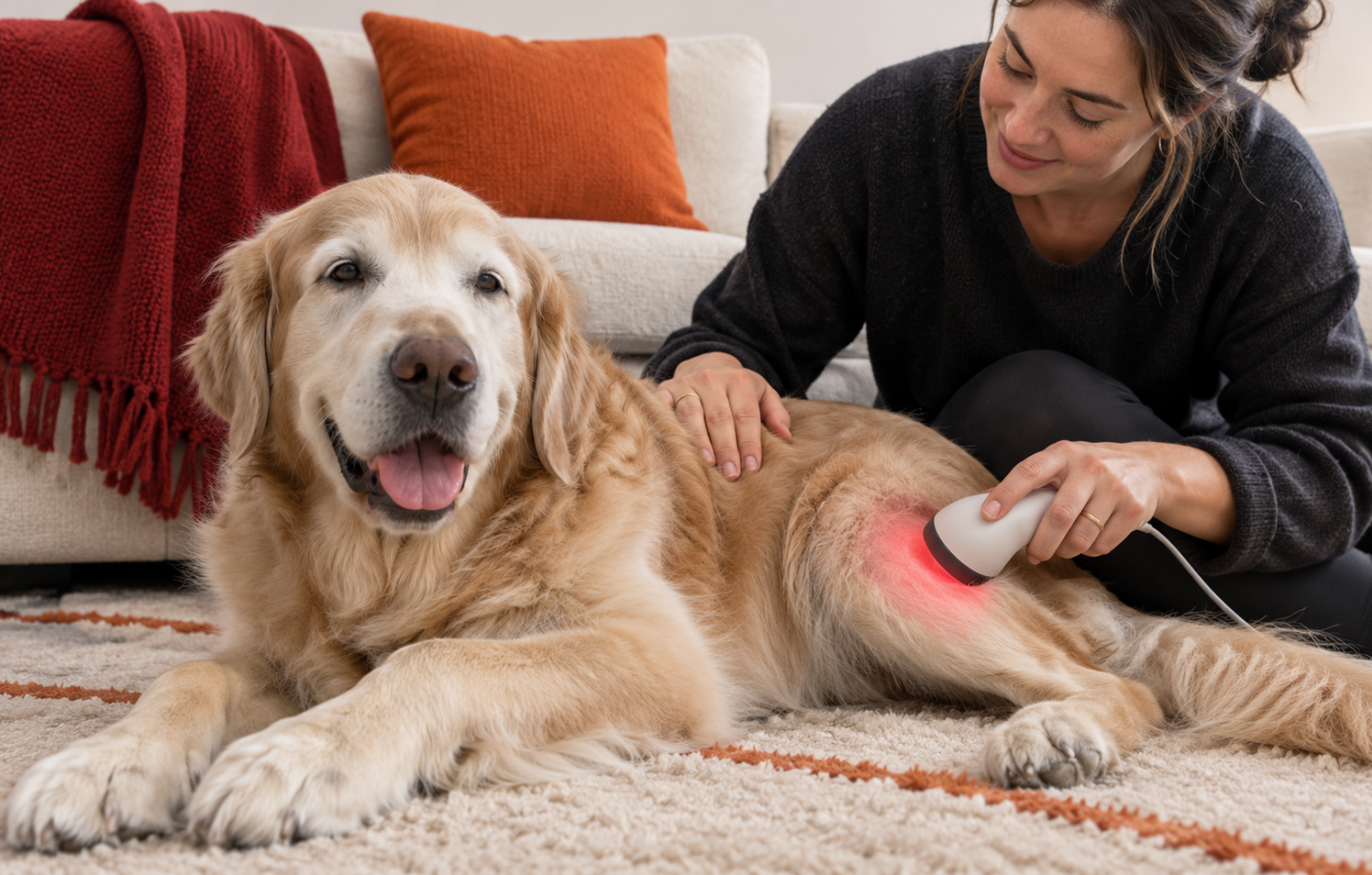
Best Red Light Therapy for Dogs: 5 At-Home Devices for Stiff Joints and Sore Hips
If your dog is taking longer to get up after a nap, slowing down on walks, or finding vet visits stressful, you may be considering red light therapy for dogs at home. Handheld devices and wearable wraps can make regular sessions more convenient, especially when clinic treatments are becoming expensive.
But choosing the right device takes more than checking the price. Wavelengths, treatment coverage, ease of use, and how comfortably your dog tolerates each session all matter.
I’ve compared five of the best red light therapy devices for dogs, including what manufacturers disclose about their specifications and where supporting evidence is limited, to help you make an informed choice with your vet.
At a Glance – Red Light Therapy for Dogs Comparison Chart
| Product | Best For | Format | Wavelengths | Where to Buy |
|---|---|---|---|---|
| LumaSoothe 2 | Clinic-to-home routines | Handheld LED with deep and surface modes | 940, 650, 520 nm (deep); 650, 520, 470, 590 nm (surface) | Check Price |
| MitoPETS Pad and Coat | Hands-Free Pad and Wrap | Pad in two sizes or wearable coat in three sizes | 660, 850 nm (pads); 633, 660, 810, 830, 850 nm (coats) | Check Price |
| MedcoVet Luma | Vet-guided home care | Handheld with fur-parting optical comb | 635, 850 nm | Check Price |
| HelioPet | Anxious dogs, quick sessions | Handheld with three power settings | 660, 850 nm | Check Price |
| Photizo Vetcare | Targeted Spots | Compact handheld LED | 633, 850 nm | Check Price |
1. Top Pick – LumaSoothe 2
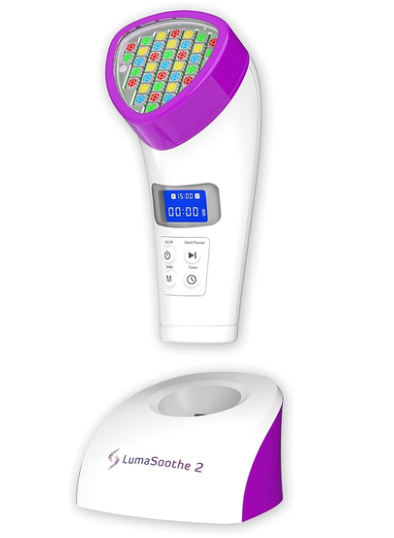
The LumaSoothe 2 is a compact handheld red light therapy device for dogs, designed for targeted treatment of stiff hips, elbows, sore muscles, and skin concerns. At just 5.1 ounces, it’s easy to hold against your dog’s coat during a 5-, 10-, or 15-minute session.
It offers five wavelengths across two treatment modes:
- IR Deep Treatment: 940 nm infrared, 650 nm red, and 520 nm green light for joints and muscles.
- Surface Treatment: Red, green, blue, and yellow light for skin and coat concerns.
The treatment head covers roughly 2 inches, making it a practical option for targeting individual joints and smaller problem areas. For larger areas, such as both hips or a longer section of the spine, you’ll need to reposition the device several times to get full coverage.
Owner feedback is encouraging, with many reporting that their dogs relax or even fall asleep during treatment. Some also notice improvements in mobility, although it’s hard to know how much of that improvement comes from light therapy, especially when dogs are receiving medication or other treatments.
The LumaSoothe 2 also comes with a USB-C charging base and a two-year warranty covering manufacturing defects. You’ll need to register the device to receive full warranty coverage.
2. Best Red Light Therapy Pad and Wrap for Dogs – MitoPETS
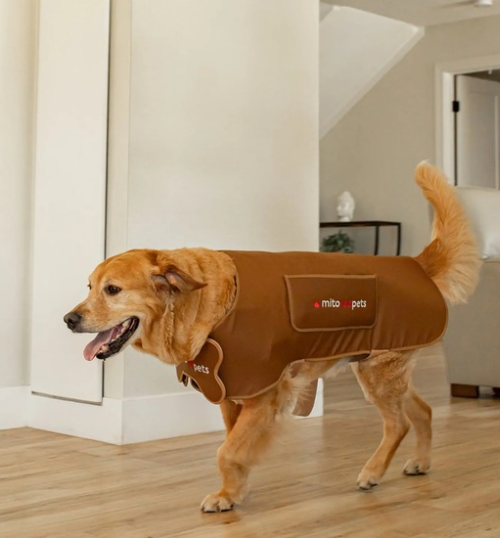
The Mito Red Pets Large Coat is a wearable red light therapy device designed for large dogs. It covers the back, shoulders, and hips at the same time, allowing multiple areas to be treated in one session. The hands-free design makes it a practical option for Golden Retrievers, Labradors, German Shepherds, and other large breeds.
The coat features 540 LEDs with five therapeutic wavelengths:
- Red light: 633 nm and 660 nm
- Near-infrared light: 810 nm, 830 nm, and 850 nm
The rechargeable battery pack sits inside a zippered pocket, so your dog can rest during cordless red light therapy sessions. The coat also has four brightness settings, automatic shutoff, heat protection, and adjustable Velcro straps for a secure fit.
If your dog doesn’t like wearing a coat, MitoPETS red light therapy pads are another option. They use 660 nm red light and 850 nm near-infrared light, with five brightness levels and an adjustable timer from 1 to 20 minutes.
| MitoPETS Size | Dimensions | LEDs | Sized For |
|---|---|---|---|
| Regular Pad | 20 × 20 in | 400 | Cats and small-to-medium dogs |
| Large Pad | 40 × 20 in | 700 | Medium-to-large dogs |
| Small Coat | 22 in long, 21 in chest | 280 | Cats and small dogs |
| Medium Coat | 26 in long, 24 in chest | 360 | Dogs 40–65 lb |
| Large Coat | 33 in long, 29 in chest | 540 | Large breeds, including Labs and Shepherds |
The main advantage is full-back coverage in one session, which may be helpful for older dogs with stiffness in several joints.
Before ordering, measure your dog from the base of the neck to the tail. If your dog falls between two sizes, choose the larger one. Always supervise your dog during treatment.
MitoPETS devices come with a one-year warranty and a 60-day money-back trial, so you have time to check the fit and see how comfortable your dog is with the red light therapy sessions.
3. Best Vet-Guided Red Light Therapy for Dogs – MedcoVet Luma
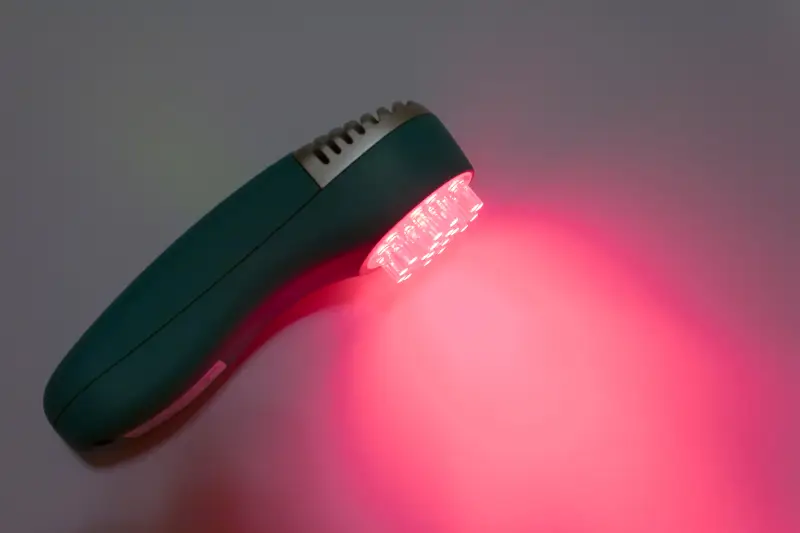
The MedcoVet Luma is a handheld red light therapy device for dogs with arthritis, joint stiffness, hip dysplasia, and recovery needs. It includes a free 30-minute consultation with a licensed veterinary clinician, who creates a personalized treatment plan you can follow through the MedcoVet app.
It uses two wavelengths for targeted treatment:
- Red light (635 nm): For skin, wounds, and surface-level inflammation.
- Near-infrared light (850 nm): For deeper tissues, including joints and muscles.
Unlike many home devices, MedcoVet publishes detailed output specifications: 1,010 mW average power and 70 mW/cm² irradiance across a 1.7-inch treatment area.
The patent-pending optical comb helps separate thick fur so more light can reach the skin, which is especially helpful for double-coated breeds. The companion app makes treatment easier by showing you where to position the device and how long to use it. You can also track your dog’s progress over time, including changes in mobility and comfort.
MedcoVet also reports Class 1 eye safety, so protective goggles aren’t required during normal use.
The biggest drawback is the price. However, you can rent or buy the device, with no subscription required. Purchases include a two-year warranty and a seven-day money-back guarantee.
Best for: Owners managing ongoing joint problems who want veterinarian-guided home red light therapy with measurable output specifications.
4. Best for Adjustable Strength Settings– HelioPet
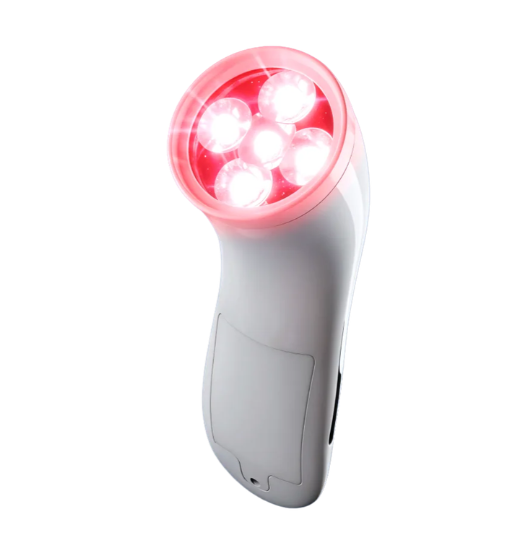
The HelioPet is a handheld red light therapy device designed for dogs with joint stiffness, arthritis, and sore muscles. It has three adjustable power settings and short treatment times, which may help if your dog gets restless during longer sessions or feels anxious during vet visits.
The device uses five diodes with two wavelengths:
- Red light: 660 nm
- Near-infrared light: 850 nm
HelioPet recommends 2- to 5-minute sessions for specific areas, including the hips, elbows, and lower back. It also has a built-in prism to help prevent heat buildup and comes with protective goggles. You can see how its features compare with LumaSoothe in our HelioPet vs. LumaSoothe comparison.
You can choose between two versions:
- Regular: Made for smaller pets under 30 lb with mild aches and stiffness.
- Max Strength: Offers higher light output and adjustable power settings for small and large dogs.
Some owners like being able to treat their dogs at home. However, one owner reported seeing less improvement compared with veterinary laser therapy. HelioPet also states that most of its featured testimonials came from customers who received compensation.
One limitation is that HelioPet doesn’t publish irradiance measurements, so it’s difficult to tell how much light reaches the treatment area.
The device comes with a one-year warranty and a 30-day money-back guarantee. Keep in mind that returning a used device comes with a 15% fee.
5. Best for Targeted Spots and Small Injury Sites – Photizo Vetcare
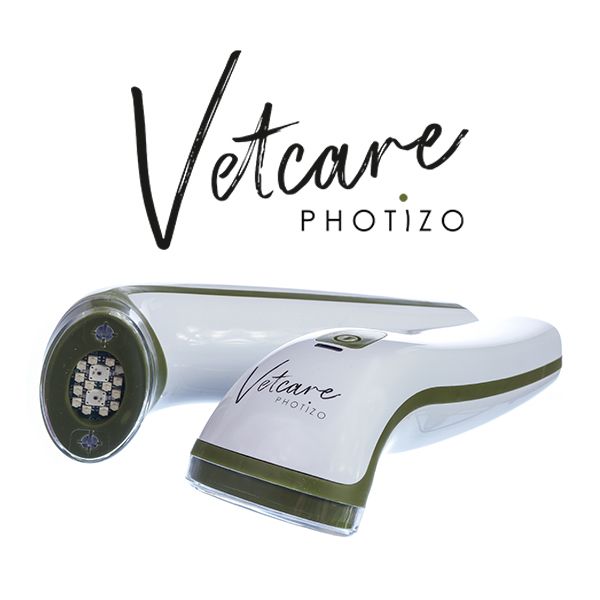
The Photizo Vetcare is a rechargeable handheld red light therapy device for dogs with arthritis, joint pain, ligament injuries, and skin conditions. Its small treatment head makes it particularly suitable for treating individual joints, paws, and localized problem areas.
It uses 16 LEDs across two wavelengths, delivered simultaneously:
- Red light (633 nm): For surface tissues and skin concerns.
- Near-infrared light (850 nm): For deeper tissues, including muscles and joints.
Photizo provides clear light output specifications, reporting 194 mW/cm² average irradiance, 340 mW/cm² peak irradiance, and a stated dose of 6 J/cm². These figures give you a better idea of the light being delivered during each treatment.
Each treatment takes just 31 seconds, making it convenient for dogs that struggle to sit still. Place the treatment head against your dog’s skin, press the button, and wait for the automatic shutoff before moving to the next spot. If you’re treating an open wound, keep the lens from touching the affected skin.
The biggest drawback is the small treatment area. At just 4.7 cm² (0.73 sq in), the device works best for targeting specific spots. Treating larger areas or several joints takes more time because you’ll need to repeat the cycle at each location.
Photizo USA also provides a one-year warranty and a 60-day return window, giving buyers some flexibility if the device doesn’t meet their needs. Returns are subject to the company’s conditions.
Best for: Owners who want short, targeted red light therapy sessions for a specific joint or injury site, with published output specifications to discuss with their vet.
How to Choose Red Light Therapy for Dogs: Fur, Wavelength and Eye Safety
Your dog’s coat thickness and the size of the area you’re treating are two of the most helpful factors to consider when choosing a red light therapy device.
Home Red Light Devices vs Veterinary Laser Therapy
Veterinary clinics use Class IIIb and Class IV therapeutic lasers, with power levels and treatment protocols that vary by device. Higher-powered systems can deliver considerably more light energy than typical home LED devices.
A 2022 randomized trial in 20 dogs with hip osteoarthritis found that three weeks of Class IV laser therapy led to better pain and mobility scores than a 21-day course of meloxicam.
The study used veterinary laser equipment, so its findings can’t be applied directly to home red light therapy pads or handheld devices.
If your older dog has arthritis, a home red light therapy device may be an option to discuss with your vet as part of their treatment plan. Check with your vet before changing any prescribed medication or clinic treatments.
Red vs Near-Infrared Wavelengths for Dog Joints
Red light in the 630 to 660nm range is mainly used for skin and wound care because it doesn’t reach as deeply into tissue. Near-infrared light in the 810 to 850nm range can penetrate deeper, making it a common choice for devices designed to treat areas such as the hips and elbows.
All five devices pair red with near-infrared light, so wavelength alone won’t separate them. Light output and how well the light gets past fur make the bigger difference.
Fur, Coat Thickness and Skin Contact
Fur can scatter or block part of the light before it reaches skin, and thick or double coats make that more likely. Parting the fur and placing the device flat against the skin can help more light reach the treatment area. MedcoVet’s Luma has an optical comb designed to help with this.
Red light therapy pads and coats sit over your dog’s fur. If you have a large dog with a thick coat, some of the light may be blocked before it reaches deeper tissue. Check how closely the LEDs sit against your dog’s skin before choosing a device.
Published Irradiance and the Specs to Ask For
Irradiance measures light power per unit area, expressed in mW/cm². It helps estimate treatment dose, but the published figure may be measured at the device’s surface or a specified distance. Fur and positioning can affect how much light actually reaches your dog’s skin.
Some vets may want to see light output specifications and third-party testing results before recommending a home red light therapy device. If you’re buying online, checking for published specifications and clear return policies can help you assess your options.
Handheld, Pad or Coat for Dogs
Handheld red light therapy devices work well for treating one or two specific areas, such as a sore elbow or hip. They’re also practical if your dog is happy to rest beside you, although you’ll need to hold the device throughout the session.
Pads and coats can cover larger areas while your dog rests. They may be easier to use with dogs that struggle to stay still during handheld treatments.
If you’re considering a red light therapy coat, measure your dog carefully before ordering. Some owners have found that wraps run large, so checking the sizing guide can help you avoid problems with the fit.
Eye Safety and Goggles for Dogs
Eye precautions vary by device, so check each manual before the first session. MedcoVet rates the Luma as Class 1 eye-safe without goggles, while HelioPet includes protective goggles with its device.
Mito recommends keeping your dog’s eyes away from the surface of its therapy pads. Whichever device you choose, avoid shining the light directly at your dog’s face. Stop the session if your dog turns away, becomes restless, or shows signs of discomfort.
Questions to Ask Your Vet Before Starting
Before starting red light therapy, show your vet the device’s specifications and ask whether it’s suitable for your dog’s condition and current medications. For additional precautions, see our guide to red light therapy safety for pets. Continue any prescribed treatments unless your vet advises otherwise.
Follow the treatment schedule in the device manual or the one recommended by your vet. Avoid relying on session times suggested in online reviews or forums.
Keeping a short weekly record of your dog’s mobility can help you track changes. Note how easily your dog climbs stairs, gets up after resting, or shows signs of weakness in their back legs. This can be especially helpful if your dog is receiving other treatments at the same time.
If you don’t notice any improvement within the timeframe your vet recommends, or your dog seems uncomfortable or stressed during sessions, stop using the device and speak with your vet.
Conclusion
The best red light therapy device for your dog depends on their treatment needs and comfort. For targeted joint pain or stiffness, the LumaSoothe 2 works well for specific areas. Larger dogs with stiffness across the back and hips may benefit from the hands-free coverage of a MitoPETS pad or coat.
If you want veterinary guidance, the MedcoVet Luma includes a consultation and treatment plan. HelioPet offers short at-home sessions for anxious dogs, while Photizo Vetcare is designed for smaller areas like paws and individual joints.
Whichever device you choose, check with your vet first to see whether red light therapy could help manage your dog’s arthritis symptoms and support their mobility.
FAQ
Does Red Light Therapy Work for Dogs?
Red light therapy may help some dogs, especially with arthritis pain, although the evidence is mixed and results vary from dog to dog. A 2023 systematic review of laser and LED therapy in dogs, cats and horses found the studies varied widely in quality, with too little evidence to confirm benefits for many conditions.
Some owners notice their dog moving more easily, while others see no change, and light therapy won’t work for all dogs. Agreeing on a check-in point with your vet makes it easier to decide whether to continue.
Is Red Light Therapy Safe for Senior Dogs?
Red light therapy is generally considered low risk for senior dogs when used as the manufacturer directs and kept away from the eyes. Higher-powered lasers need more care, since they can burn skin if used incorrectly. Check with your vet first if your dog has a tumor or is pregnant, since light therapy is usually avoided in those cases.
Is a Home Red Light Device the Same as Veterinary Laser Therapy?
No, a home device isn’t the same as clinic laser therapy. Veterinary clinics use Class IIIb and Class IV lasers, with output levels and treatment protocols that differ from home LED devices. A home device can be part of your vet’s plan, although there’s no evidence it reproduces clinic results.
Does My Dog’s Coat Affect Red Light Therapy?
Yes, a thick or double coat can scatter some of the light before it reaches the skin. Parting the fur and keeping the device flat against the skin helps, and a fur-parting comb like the one on the MedcoVet Luma is designed for exactly this.
How Often Should My Dog Use a Home Red Light Device?
Follow the session length and frequency in your device’s manual, or the schedule your vet sets. Output differs a lot between models, so a schedule from one device doesn’t carry over to another.
Can I Use My Own Red Light Panel on My Dog?
It’s possible, but check with your vet first. Human panels are set up for human sessions, and those settings don’t establish a safe or useful protocol for a dog, particularly around the eyes.
Does My Dog Need Goggles During Red Light Therapy?
It depends on the device. HelioPet includes protective goggles, while MedcoVet rates the Luma as Class 1 eye-safe without them. Follow the manufacturer’s eye safety instructions and avoid directing light into your dog’s eyes.
Health Disclaimer: This information is for educational purposes only and isn’t a substitute for professional veterinary advice, diagnosis, or treatment. Red light therapy is not intended to diagnose, treat, cure, or prevent any disease.