5 Best Glasses for Red Light Therapy: Protect Your Eyes Without Blocking Skin Benefits
Red light therapy delivers impressive skin rejuvenation and recovery benefits, but the brightness can be overwhelming with many users worrying about long-term eye safety from invisible near-infrared wavelengths.
The right eye protection for red light therapy lets you use your device comfortably and consistently without blocking the therapeutic light your skin needs.
Here’s how to choose glasses or goggles that fit your device, your sensitivity, and your budget.
Top Red Light Therapy Glasses: Comparison Chart
| Product | Best For | Key Specs | Session | Standout |
|---|---|---|---|---|
| Hooga Red Light Therapy Protective Glasses | Professional use, premium quality | 200-1000nm, 10% transmittance, 13g weight | 15-30 min | Hard-shell case, durable polycarbonate |
| Mito Red Light IR5 Glasses (Extra Dark) | Lightweight glasses-style protection (especially if goggles leave marks) | IR3 or IR5 tint options; IR5 marketed as ~95% reduction; targets common RLT wavelengths ~600–900nm | 10-20 min | Easy to wear during sessions without strap lines |
| LifePro Red Light Therapy Glasses | Daily comfort, reliability | Lightweight, HSA/FSA eligible | 10-20 min | Comfortable for extended wear |
| JILERWEAR Professional Laser Safety Glasses | Laser-grade protection | 200-1200nm, 60% light transmittance | 10-30 min | Professional certification, side coverage |
| ULTREMA Red Light Therapy Glasses | Sensitive eyes, full spectrum | 200-2000nm, OD3+, <10% transmittance | 10-20 min | Comprehensive wavelength blocking |
Disclosure: As an Amazon Associate and affiliate partner I earn from qualifying purchases at no extra cost to you.
Eye Protection for Red Light Therapy: Fit & Wavelength Coverage
Finding comfortable eye protection can mean the difference between consistent use and abandoned devices. Here’s what to look for when shopping:
- Coverage: Full-spectrum blocking (600-900nm minimum) protects from both visible red and invisible NIR wavelengths. Professional-grade options extend to 200-2000nm for comprehensive protection across all therapy types.
- Fit and comfort: Lightweight glasses prevent pressure marks during longer sessions. Well-designed frames wrap comfortably without gaps that let light leak through.
- Device compatibility: High-powered panels need stronger protection (90%+ reduction) while handheld wands may work with lighter tints. Verify your device’s specific wavelengths before choosing.
- Portability: Compact glasses with protective cases travel easily and maintain lens integrity between sessions.
- Visibility needs: Some protection allows enough light transmission to read or watch TV, while darker options create near-blackout conditions for maximum comfort.
Let’s look at how each option performs for different needs and therapy types.
Top Picks: Red Light Therapy Glasses
1. Best Overall – Hooga Red Light Therapy Protective Glasses
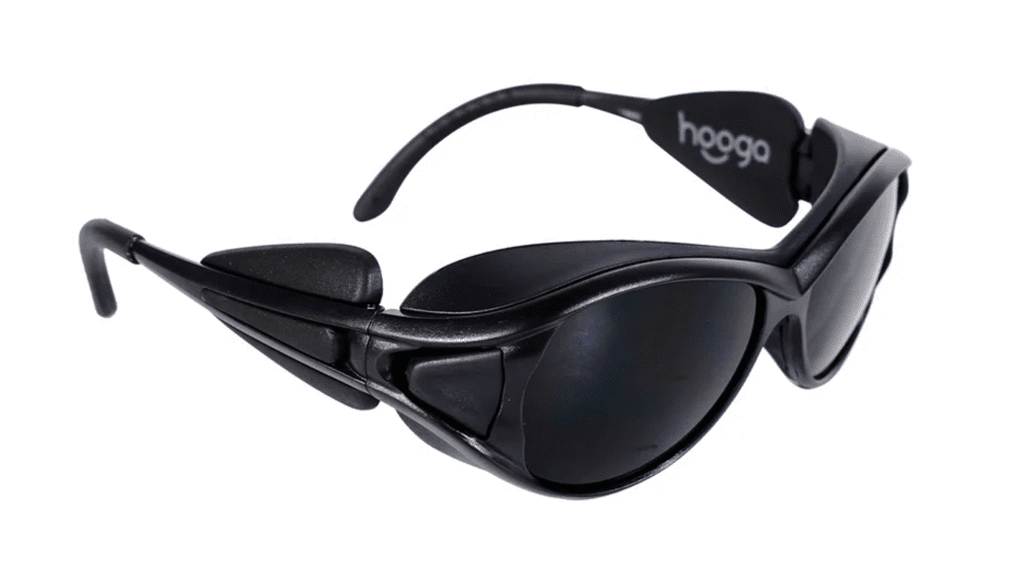
Hooga’s protective glasses sits on the premium tier of red light therapy eyewear.
The 200-1000nm wavelength coverage handles everything from standard red light therapy (660nm) through near-infrared (850nm) and beyond, making these genuinely device-agnostic.
At just 13 grams, they’re lighter than most alternatives while maintaining durable 1.8mm polycarbonate lenses that resist scratches session after session.
The 10% light transmittance strikes a great balance. It’s dark enough to reduce eye strain from high-powered panels, yet light enough to maintain spatial awareness during treatment. The frame design wraps closely to block side light without creating uncomfortable pressure points.
Hooga’s red light therapy eyewear work equally well with masks, panels, and handheld devices without requiring adjustment or secondary protection.
Blocks: 200-1000nm wavelengths
Design: Lightweight (13g) polycarbonate
Best for: High-powered LED panels, multi-device users, professionals
2. Lightweight Option: Mito Red Light Therapy IR5 Red Light Therapy Glasses
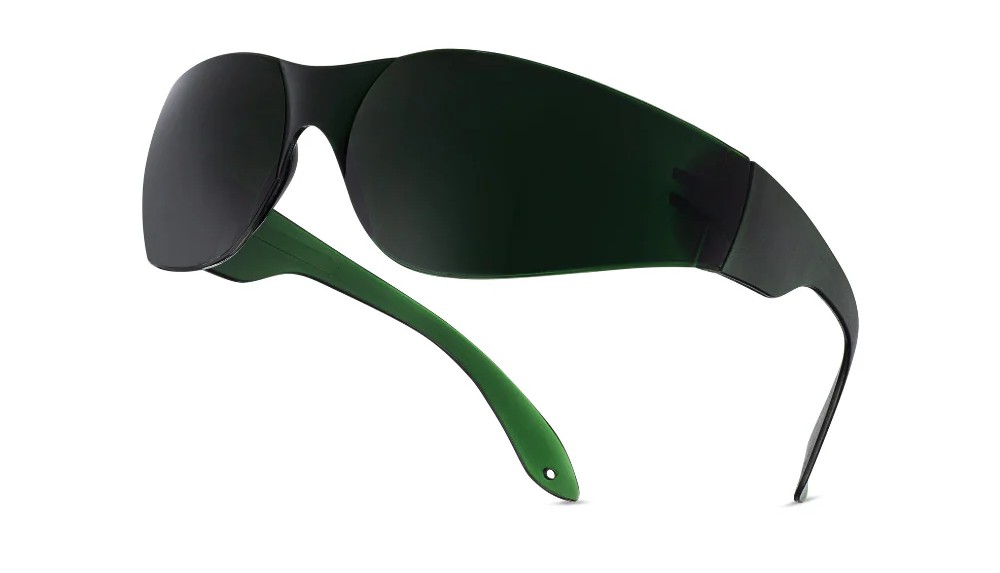
If bulky wraparound goggles feel uncomfortable or leave pressure marks, Mito’s IR5 glasses offer a streamlined alternative. The glasses-style frame weighs less than traditional red light goggles and sits more naturally on your face during 10-20 minute sessions.
The IR5 version (Extra Dark) option provides about a 95% reduction in light intensity/brightness and is designed to attenuate commonly used red and near-infrared wavelengths (about 600–900nm) used in LED therapy. This significantly reduces the intensity and brightness that can cause eye strain during regular red light use.
The curved polycarbonate lenses include anti-scratch coating, addressing a common complaint about budget eye protection breaking or degrading quickly.
Priced affordably, these lightweight RLT glasses offer practical protection without the cost of specialized optical equipment. The trade-off is build quality—some users report they feel lightweight in construction, not just weight.
But for regular home red light therapy sessions where you need eye protection that’s comfortable and won’t break the bank, they cover the basics.
Blocks: 600-900nm wavelengths
Design: Curved lens glasses-style
Best for: Budget buyers, first-time users, lightweight alternative to goggles
3. Best for Comfort: LifePro Red Light Therapy Glasses
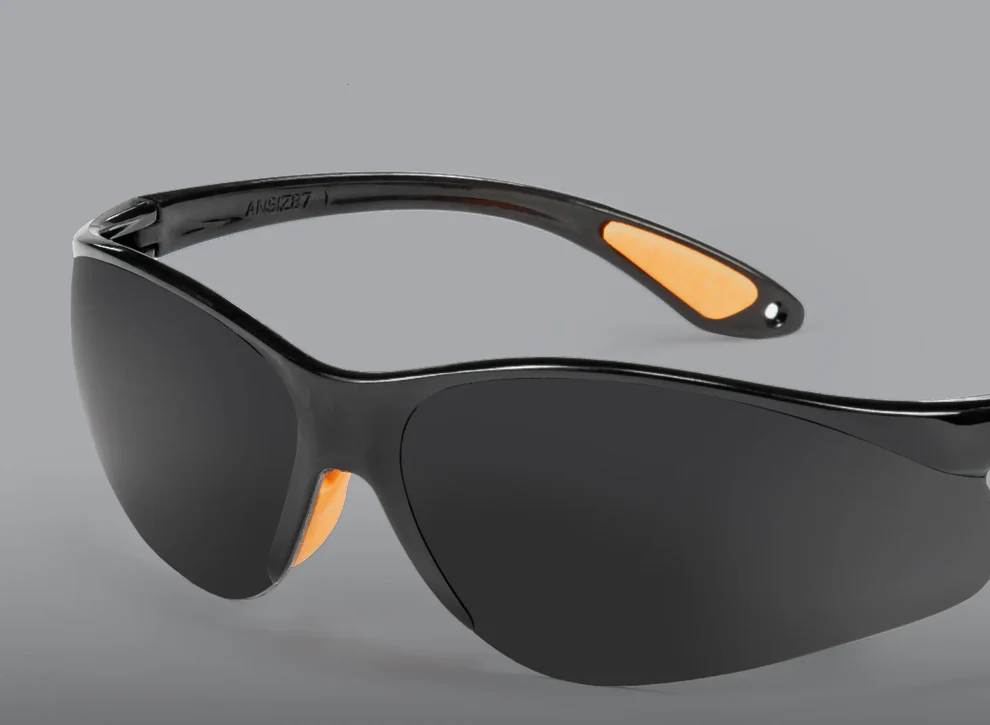
If you’ve found red light therapy sessions uncomfortable because bundled goggles dug into your ears or left marks on your face, LifePro’s protective RLT eyewear focuses specifically on extended wearability.
The lightweight construction and ergonomic design accommodate 20-30 minute LED panel sessions without the ear discomfort that can occur during prolonged treatments.
Reviewers name comfort as the reason they can finally use their red light therapy devices consistently. The fit accommodates various face shapes without gaps that leak bright near-infrared light, addressing concerns about inadequate side protection.
LifePro’s red light therapy glasses work with standard red light panels and LED face masks for phototherapy. It’s also FSA/HSA eligible.
Blocks: Standard 660nm red/850nm NIR wavelengths
Design: Ergonomic lightweight frame
Best for: Users that need comfort during treatments, especially longer sessions
4. Best for Professional Use: JILERWEAR Professional Laser Safety Glasses
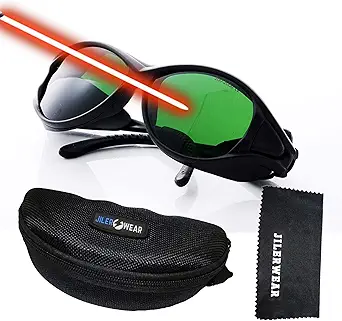
JILERWEAR’s professional laser safety glasses covers 200-1200nm—broader than many therapy-specific glasses. This handles everything from UV through near-infrared, making them versatile for clinics offering multiple light-based treatments from acne blue light through pain management NIR.
The wraparound design with side coverage prevents peripheral light exposure which is important when positioning isn’t perfectly head-on and the included hard case protects them between sessions.
The 60% visible light transmittance means operators can see clearly during treatments rather than working in near-darkness. However some users find them heavy for extended personal use.
Blocks: 200-1200nm (professional spectrum)
Design: Wraparound with side protection
Best for: Clinics, spas, multi-treatment phototherapy use
5. Best for Sensitive Eyes: ULTREMA Red Light Therapy Glasses
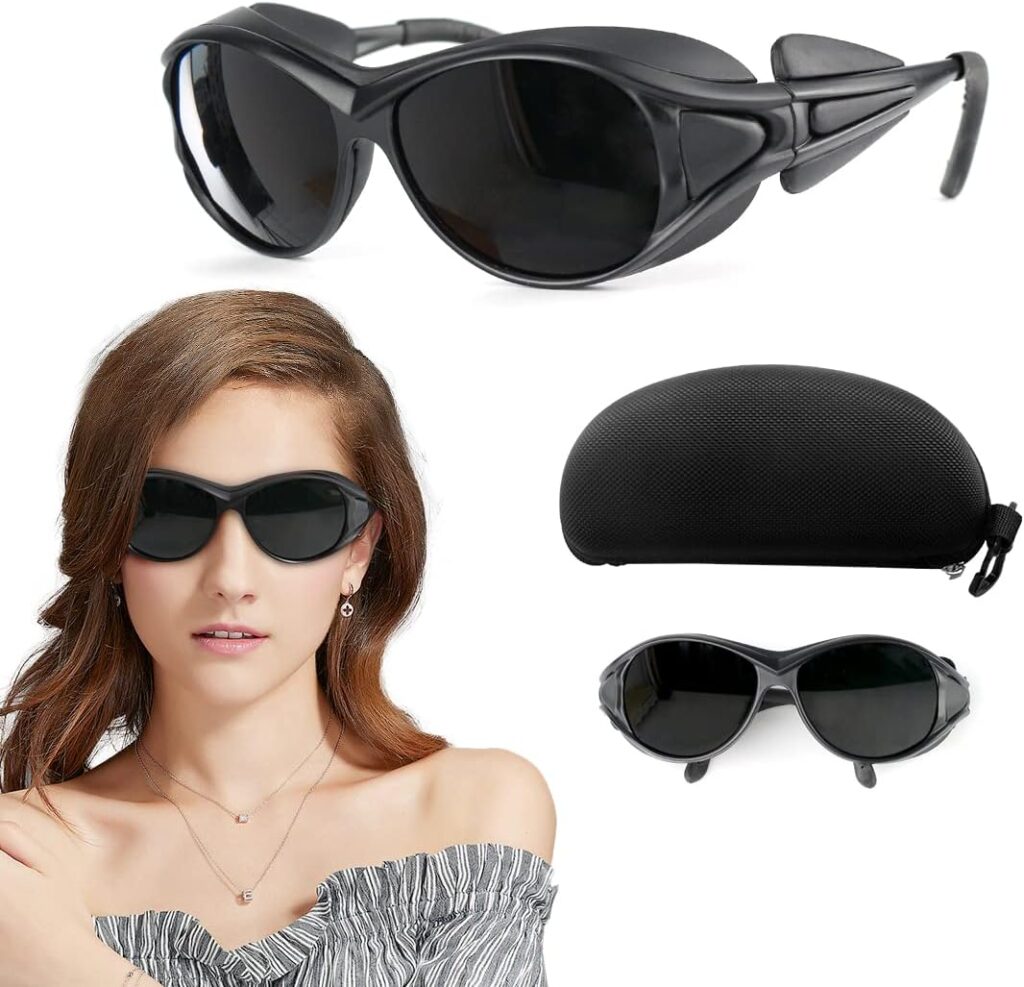
If brightness triggers migraines or you’ve abandoned LED therapy because the light was unbearable, ULTREMA’s comprehensive 200-2000nm coverage with OD3+ rating is worth a look. The less than 10% visible light transmittance creates near-blackout conditions that may help with light sensitivities.
The soft natural rubber side baffles provide 360-degree eye protection which is unusual in glasses-style options that typically leave peripheral gaps where bright near-infrared light leaks through.
The very dark tint means you won’t be able to read or watch TV during use – these red light therapy glasses prioritize maximum protection from overwhelming brightness over visibility. The included case and cleaning cloth support long-term lens clarity.
These glasses work across all LED light therapy applications—tanning, face masks, red light panels, infrared saunas—making them versatile for multiple phototherapy devices.
Blocks: 200-2000nm (full spectrum), OD3+
Design: Soft rubber baffles, very dark tint
Best for: Migraines, photophobia, maximum NIR protection
How to Use Red Light Therapy Glasses in Your Routine
- Start by identifying your device’s wavelengths—most panels use 660nm (red) and 850nm (near-infrared), while masks may include blue (415nm) for acne. Match your glasses to cover your device’s full spectrum rather than just the visible light.
- Put glasses on before activating your device to avoid the initial brightness spike when LEDs power on. Position yourself according to device guidelines—typically 6-12 inches for masks, 6-36 inches for panels. If using a handheld device, maintain consistent distance to keep intensity predictable.
- During sessions, relax your eyes rather than squinting or keeping them tightly closed, which can create unnecessary strain. If you notice halos, visual disturbances, or continued discomfort even with protection, stop the session and verify your glasses match your device’s wavelength output.
- Clean lenses after sessions with provided cloths to remove oils and maintain protection effectiveness. Store glasses in cases rather than leaving them on counters where scratches can compromise protective coatings.
Tips for Comfortable Red Light Therapy Sessions
- Match protection to device intensity. High-powered panels (1000W+) need darker protection than lower-powered masks or wands. Check your device specifications before choosing.
- Consider session duration. Lightweight glasses work better for 20-30 minute panel sessions; any well-fitting protection suffices for 10-minute mask treatments.
- Test visibility preferences. Some users prefer near-blackout darkness for relaxation; others want enough light transmission to maintain activities during treatment.
- Verify wavelength compatibility. Not all glasses block all wavelengths. Match your protection’s coverage range to your device’s output specs, especially for near-infrared above 900nm.
- Prioritize consistency over perfection. Comfortable protection you’ll wear every session beats theoretically superior options you’ll skip half the time.
The Bottom Line on Red Light Therapy Glasses
The best red light therapy glasses balance wavelength coverage, comfort, and compatibility with your specific LED devices.
Professional-grade options covering 200-1000nm work across all phototherapy applications, while budget-friendly 600-900nm protection handles standard red light panels effectively.
It’s recommended to choose lightweight frames that eliminate pressure marks during 20-30 minute sessions, since wearing uncomfortable eye protection is the main reason people abandon consistent use.
Remember to match your glasses to your device’s specific wavelengths (660nm red, 850nm near-infrared light) and power output. Comfortable, properly rated eye protection for LED therapy means reduced strain, brightness headaches, and sustainable long-term results from your red light therapy routine.
Health Disclaimer: Red light therapy glasses provide comfort and general eye protection during LED therapy sessions. If you have existing eye conditions, photosensitivity, or take medications that increase light sensitivity, consult a healthcare provider before use. This information is educational, not medical advice.