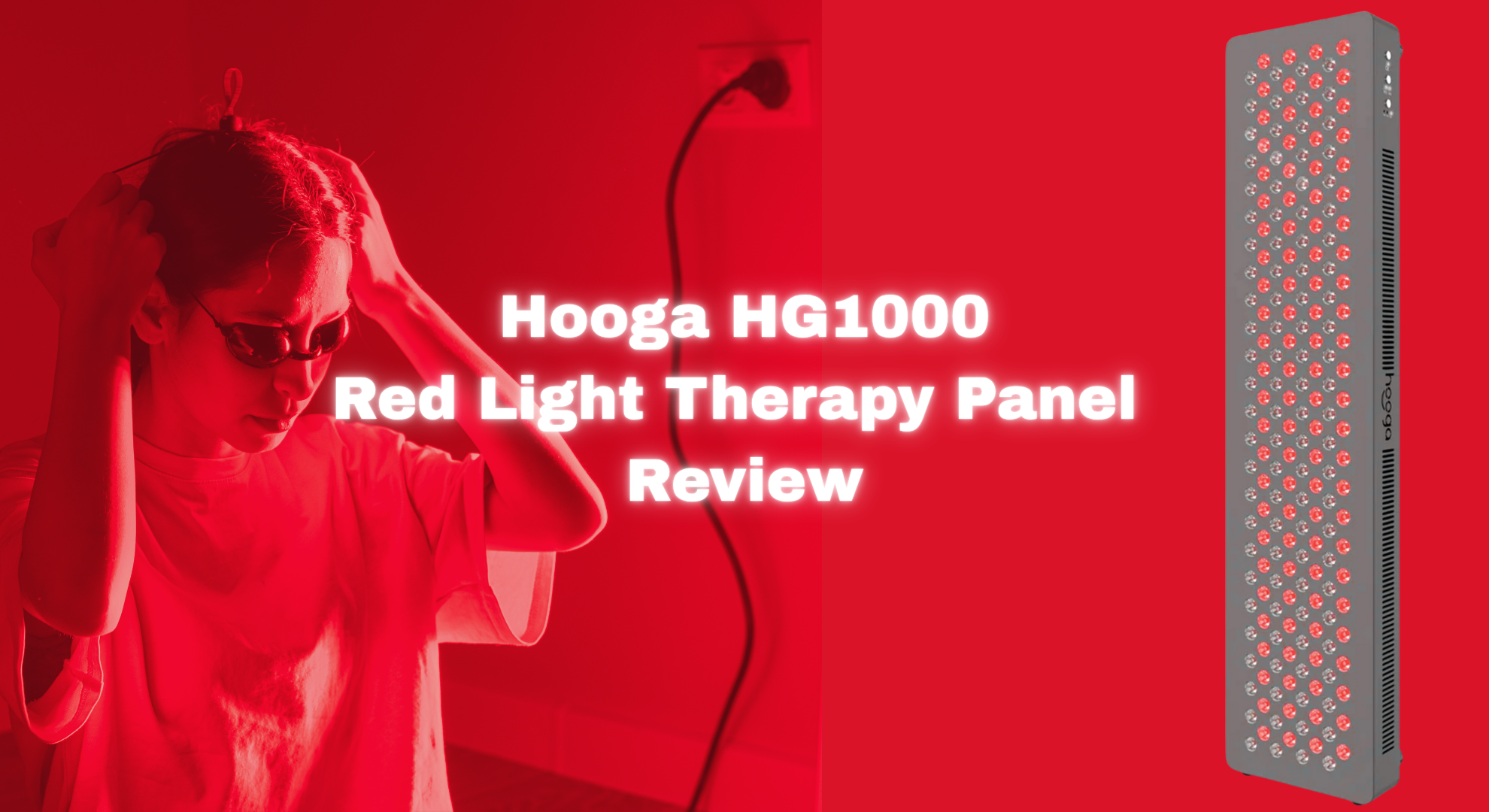
Hooga HG1000 Review: Is This Red Light Therapy Panel Worth It?
Red light therapy devices come in all sizes, but smaller panels often mean extra repositioning (or extra sessions) to cover more of your body. The Hooga HG1000 is built to solve that, with coverage designed to handle full-body routines in one or two passes.
As a photobiomodulation panel, it’s a high-output, at-home light therapy device with a wider coverage area, so you can typically treat larger zones like your back or legs without constantly moving around. Here’s how it performs in real-world use.
What is the Hooga HG1000?
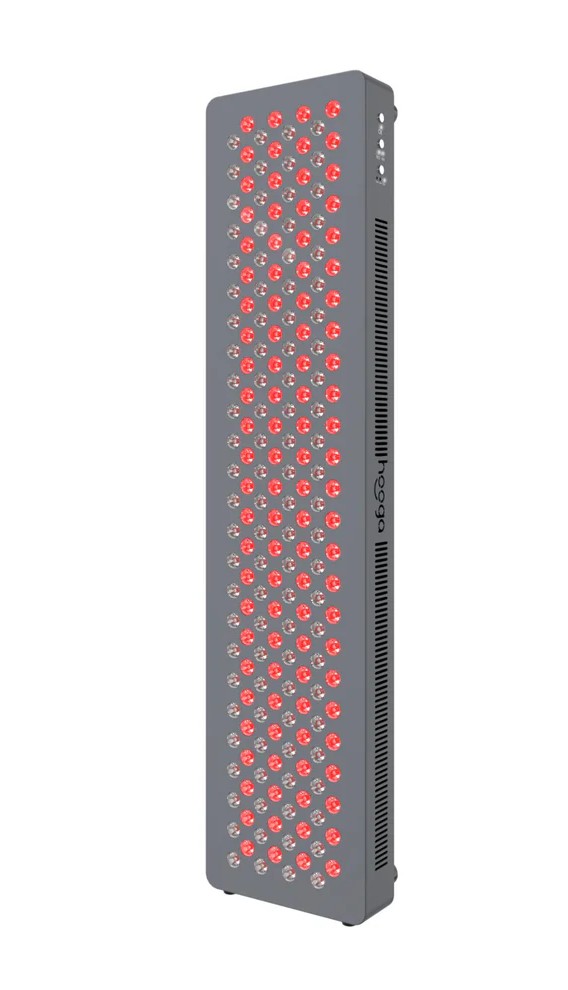
The Hooga HG1000 is a full-body red light therapy panel that uses 660nm red light and 850nm near-infrared light to reach the skin and underlying tissues. These wavelengths are used in a process called photobiomodulation, which may help cells produce energy.
Research suggests red and near-infrared light therapy may improve skin health, support muscle recovery, and help reduce inflammation. Some studies also show potential benefits for joint pain, although results vary.
The Hooga HG1000 delivers high-intensity light over a large treatment area, allowing you to cover more of your body during 10-15 minute sessions.
If you’re looking to improve skin appearance, manage joint discomfort, or recover after workouts, the HG1000 lets you use red light therapy at home without booking regular clinic appointments.
>> Check Price & Availability of the Hooga HG1000 Here <<
Hooga HG1000 Review: Pros & Cons
Pros:
- High irradiance (98mW/cm² at 6″) for optimal 10-15 minute sessions
- Dual wavelength control (660nm/850nm separate or combined)
- Full-body coverage (35.8″ panel) at a great price
- 60-day trial plus 3-year warranty
Cons:
- Heavy (17.6 lbs) limits portability
- May require some distance/duration experimentation for optimal dosing
- Less powerful than clinical-grade RLT beds or the HG1500 panel
Hooga HG1000 Review: Build Quality and Design Features
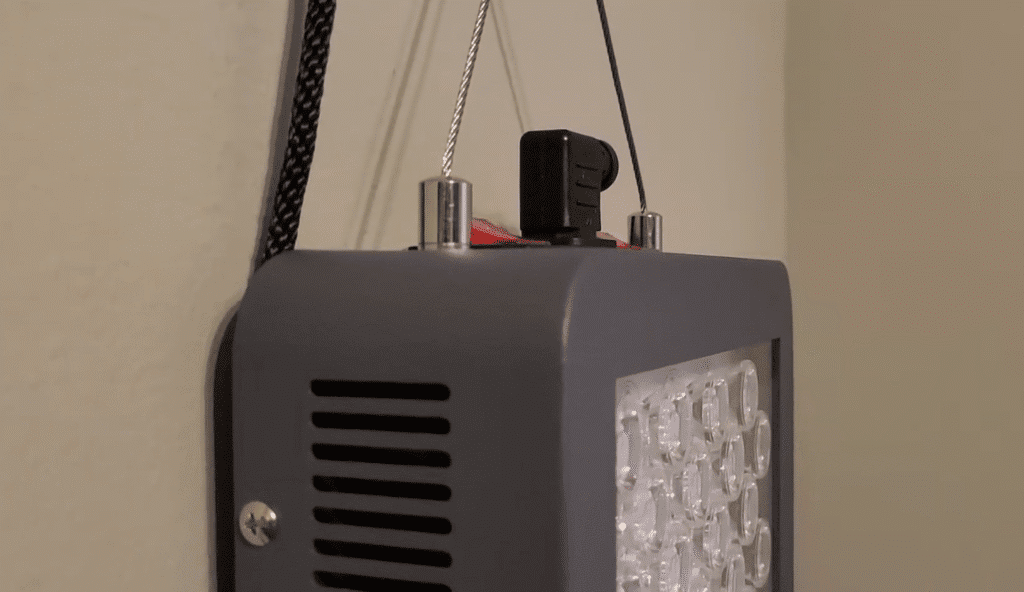
At 17.6 pounds, the HG1000’s got some heft to it, which matches the sturdy metal housing. Hooga rates it for 50,000 hours of use and backs it with 3 year warranty, which tells you something about their confidence in their product.
Measuring 35.8″ x 8.2″ x 2.7″, this is a full-sized LED red light panel that needs a dedicated spot in your home. The included hanging kit and door mount make installation straightforward and there’s a handle on the back for moving it around if needed.
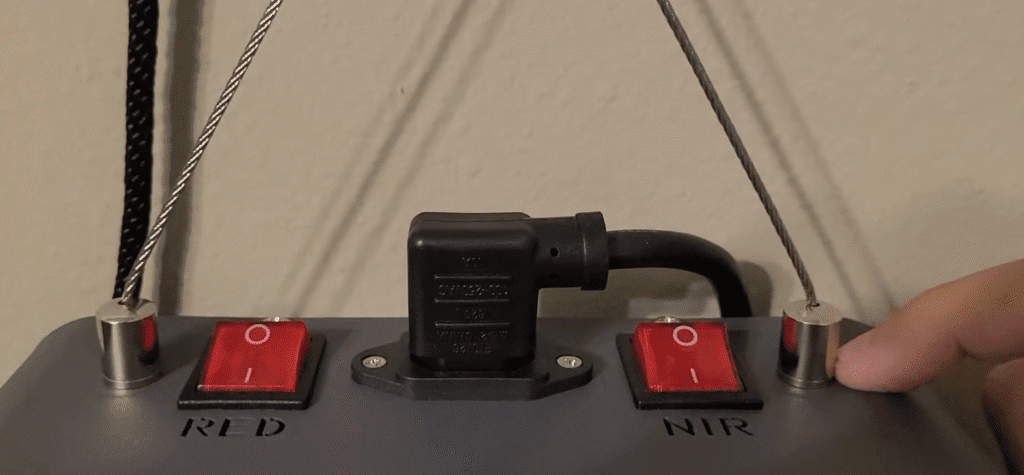
Controls are simple and located at the top. Two top switches let you run red light and near infrared separately or together. Nothing to fiddle with, just plug in and go.
HG1000 Red Light Therapy Performance and Treatment Results
Hooga’s HG1000 packs 200 single-chip LEDs delivering 660nm red light and 850nm near-infrared wavelengths—two wavelengths commonly used in photobiomodulation research and popular in at-home light therapy devices.
The irradiance hits over 98mW/cm² at 6 inches, which puts it near the top of the power curve for home devices.
What does that mean in practice? You can get an effective infrared light therapy session in just 10 minutes. The separate power switches for red and NIR let you customize treatments depending on what you’re targeting, whether that’s muscle recovery, skin rejuvenation, or nagging aches.
The high irradiance means shorter sessions, which is huge when you have limited time in your day.
How to Use the Hooga HG1000 Red Light Therapy Panel
Using the HG1000 is actually really simple. Mount it, plug it in, and flip the switches. The built-in fans keep everything cool during treatment, and the EMF output is low enough (0.0 μT @ 6”) that you don’t need to worry about where you’re standing.
Hooga includes protective goggles, which is nice since you’ll want eye protection when you’re this close to such powerful LEDs. The built-in timer takes the guesswork out of session length, and once you’ve found your spot for it, the whole thing becomes a seamless part of your routine.
Hooga HG1000 Review: Pricing
At over $900, the HG1000 isn’t an impulse buy. But for a full-body red light therapy device with this kind of power and coverage, the pricing is competitive. The trial period gives you two months to decide if it’s working for you, and that 3-year warranty adds peace of mind.
When you break down the cost per treatment compared to clinic sessions or cheaper panels that require longer exposure times (and are more likely to suddenly stop working), the HG1000 works out to be the better investment.
Hooga Series Comparison: Which Model Is Right for You?
If you’re choosing between Hooga panels, start with coverage and session time.
Smaller units (HG200–HG500) suit faces, joints, and upper-body work but require more passes. The HG1000 is the sweet spot for one-pass full-body at home, while the HG1500 widens coverage and shortens sessions if you have the space and a fixed spot to mount it.
Other things you might want to consider is: available wall/door space, weight (moving it often vs leaving it set up), power draw on your circuit, and budget for accessories.
| Model | LED Power | Power Draw | Weight | Dimensions | LEDs | Irradiance at 6″ |
|---|---|---|---|---|---|---|
| HG200 | 200W | 55W | 2.5lb | 9.5″x 6″ x 1″ | 40 Single Chip | 90 mW/cm² |
| HG300 | 300W | 80W | 5.5lb | 12.2″x 8.2″ x 2.5″ | 60 Single Chip | 73 mW/cm² |
| HG500 | 500W | 150W | 8.8lb | 18.8″x 8.2″ x 2.7″ | 100 Single Chip | 94 mW/cm² |
| HG1000 | 1000W | 380W | 17.6lb | 35.8″x 8.2″ x 2.7″ | 200 Single Chip | 98 mW/cm² |
| HG1500 | 1500W | 585W | 33lb | 35.8″x 11″ x 2.7″ | 300 Single Chip | 115 mW/cm² |
Final Verdict: Should You Buy the Hooga HG1000?
The Hooga HG1000 is a good choice if you want a high-output red light therapy panel for home use that covers large areas of your body at once.
Its 660 nm red and 850 nm near-infrared LEDs provide options for improving skin appearance, supporting muscle recovery, and managing everyday aches. The large treatment area also means less repositioning than with smaller panels, although you’ll still need to turn around to treat both sides of your body. If you want more coverage, the HG1500 panel is another option.
The trial period and warranty offer some reassurance if you’re investing in a home red light therapy device. If you plan to use red light therapy regularly and want a panel that can treat several areas during one session, the HG1000 is well worth considering.
Frequently Asked Questions on the Hooga HG1000
Do You Need Eye Protection With the Hooga HG1000?
Hooga recommends wearing protective goggles during facial and scalp treatments with the HG1000. Although the product manual says eye protection isn’t required, wearing the included goggles is the safer choice. Avoid looking directly at the LEDs, including when using invisible near-infrared light.
How Long Does It Take to See Results From the Hooga HG1000?
Results from the Hooga HG1000 depend on your treatment goals, frequency, and exposure time. Improvements in skin appearance may take several weeks to become noticeable, while muscle recovery and pain-related outcomes vary. Consistent use is important, but there’s no guaranteed timeline for results.
Can You Wear Clothes During Hooga HG1000 Treatments?
Yes, you can wear clothes during Hooga HG1000 red light therapy sessions, but the treatment area should be uncovered. Clothing can block or reduce red and near-infrared light, making exposure less predictable. For more consistent treatment, position the panel toward clean, bare skin.
Should You Use Red Light, Near-Infrared, or Both on the Hooga HG1000?
Hooga recommends using both 660 nm red and 850 nm near-infrared light for most HG1000 treatments. Red light primarily targets superficial tissues, while near-infrared light penetrates deeper. Hooga recommends red-only mode for people with melasma, although anyone treating a pigmentation condition should consult a dermatologist first.
How Often Should You Use the Hooga HG1000?
Hooga recommends 3–5 red light therapy sessions per week with the HG1000. Daily treatments are also permitted, with a maximum of two sessions per treatment area per day, spaced between morning and evening. Follow the recommended exposure times of 3–5 minutes for skin treatments or 10–15 minutes for deeper tissues.
Can You Wear Makeup During Hooga HG1000 Red Light Therapy?
Yes, you can wear makeup during Hooga HG1000 treatments, but clean, bare skin is recommended. Makeup, sunscreen, and heavy skincare products may affect how much light reaches your skin. Remove makeup before facial treatments for more consistent exposure.
Disclaimer: This content is for educational purposes only and is not medical advice. Red/near-infrared light devices are not intended to diagnose, treat, cure, or prevent any disease. Talk to your healthcare professional before use.