Glokore LED Mask Review: My Honest Take on This 7-Mode, Wireless LED Face Mask
Fine lines, adult acne, and uneven skin tone rarely respond to the same treatment. Most people end up layering product after product, or booking expensive in-office LED sessions that add up fast.
The Glokore LED mask targets all three concerns in a single 10-minute session at home. Seven light modes including red light for fine lines, blue light for breakouts, and green light for dark spots mean you’re not choosing between anti-aging and acne control. You get both, wirelessly, and from the couch.
This light therapy mask review covers what each mode does, what customers are actually seeing after consistent use, and how it stacks up against Omnilux and CurrentBody.
Disclosure: This article is reader-supported and contains affiliate links.
What Is the Glokore LED Mask?
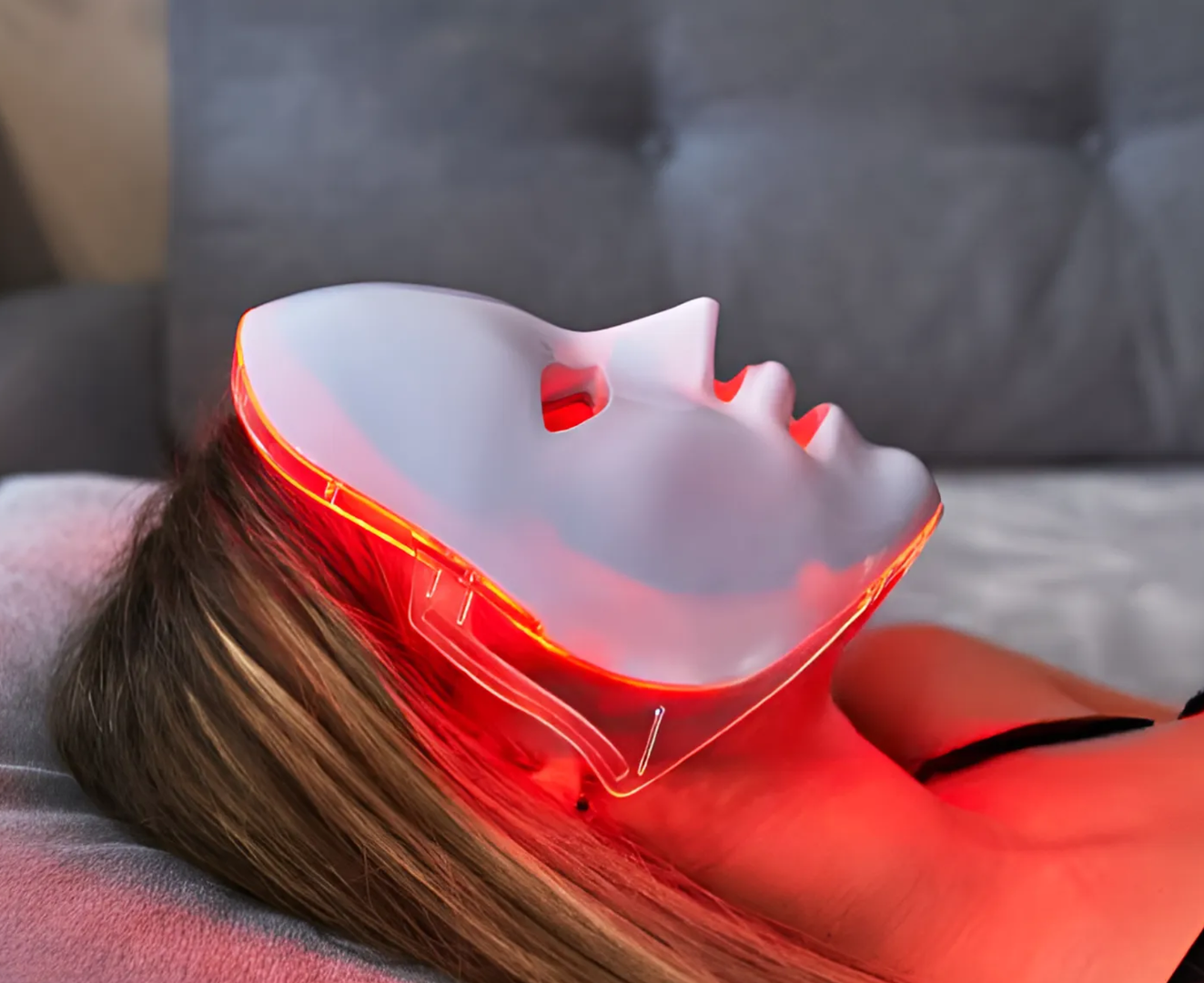
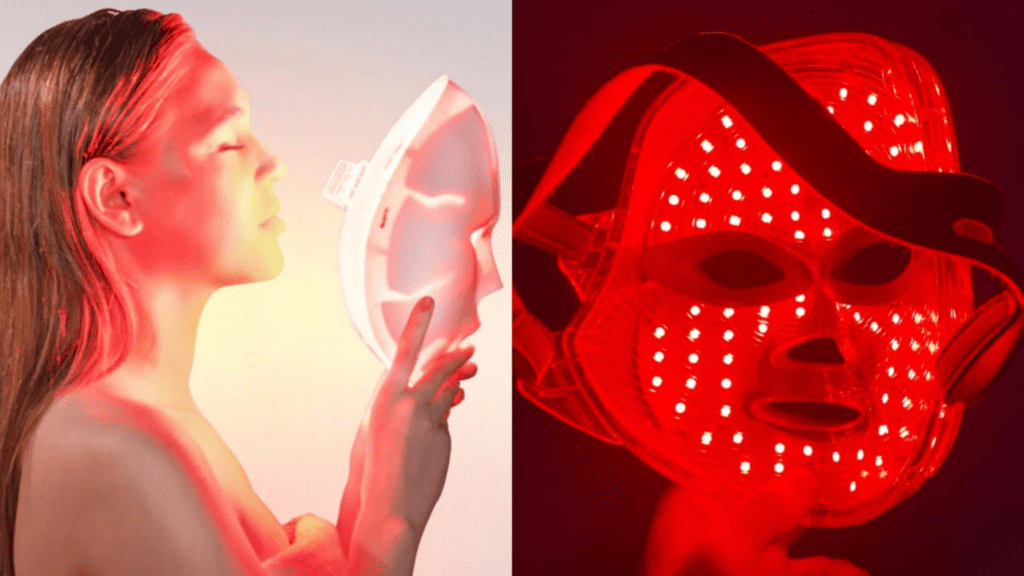
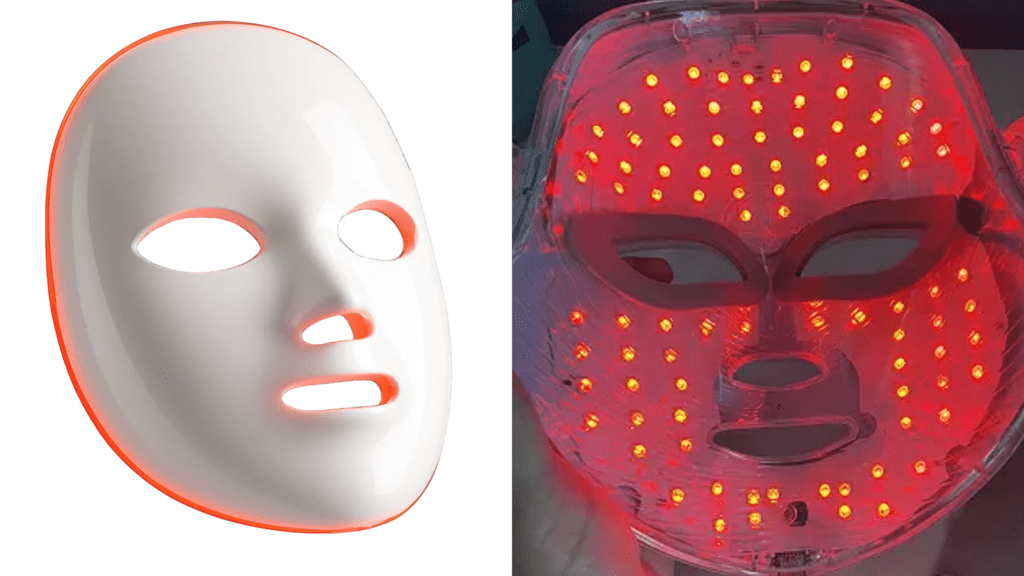
The Glokore is a wireless, seven-mode LED face mask built for at-home use. It targets fine lines, breakouts, dark spots, and redness using different wavelengths of light. It’s ultimately an all-in-one light therapy device, without the appointments or the cost of in-office treatments.
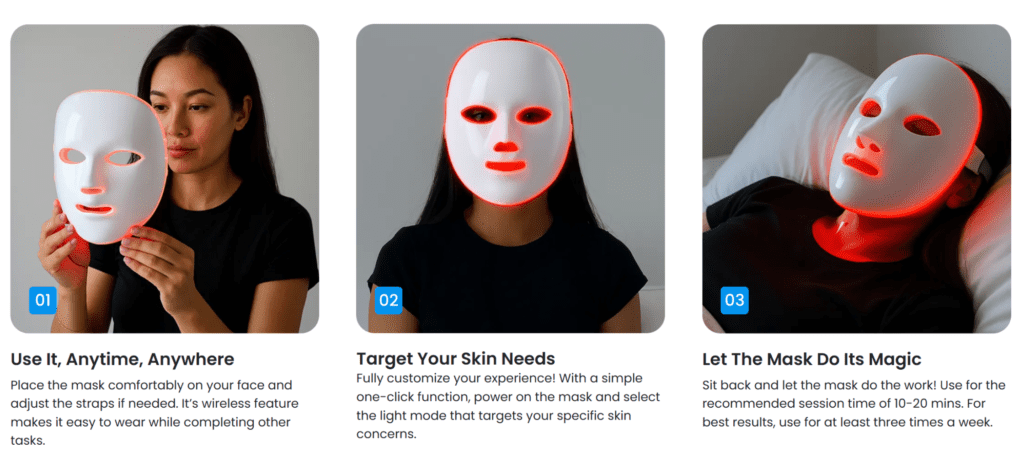
Using it is simple, with sessions taking 10 to 20 minutes, three to four times a week.
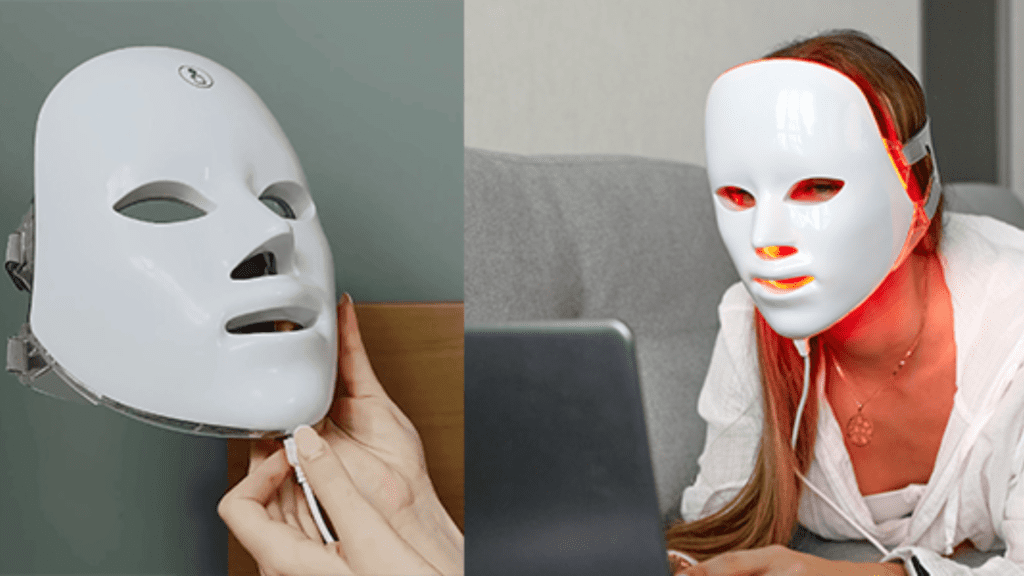
Unlike corded devices that keep you planted next to an outlet, the Glokore is fully wireless, so you can wear it while catching up on your favorite Netflix show, scrolling on your phone, or winding down before bed.
This helps with staying consistent with your light therapy, and improves your likelihood of seeing results. A good check-in point is around the 4 week mark to see how your skin is responding.
Glokore also positions itself as a professional-grade alternative to in-office LED treatments, which can cost a lot more per session and usually require repeat clinic visits.
For comfort, it weighs under 290 grams and has adjustable straps, so it sits comfortably without feeling heavy or restrictive on most face shapes.
It’s FDA-cleared, CE certified, and dermatologist recommended, which helps it stand out from the unbranded masks flooding the market.
How Does Glokore’s LED Light Therapy Work?
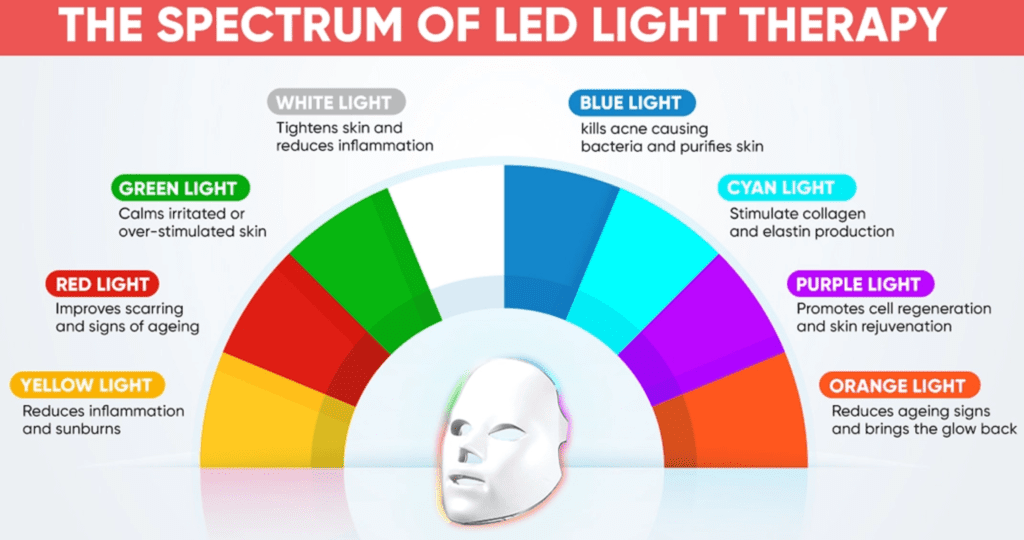
Think of each light mode as a different signal sent to your skin.
- Red light tells your skin cells to produce more collagen.
- Blue light targets the bacteria behind breakouts.
- Green light works on the pigment cells responsible for dark spots and uneven tone.
Each wavelength penetrates at a different depth and triggers a different response, which is why Glokore’s singular device can work on multiple concerns at once.
At-home devices work on the same principles as the LED equipment used in dermatology offices. The difference is that clinic devices typically deliver more power per session, which is why building a regular home routine over several weeks is a lot more important than just using your LED device just once.
Want to see how each mode looks on real skin? Check out Glokore’s before and after photos here.
Glokore’s 7 LED Light Modes and What Each One Does for Your Skin
Most LED masks on the market offer two, maybe three wavelengths. Glokore gives you seven options, each targeting a different skin concern, so you can adapt your sessions to what your skin actually needs that week rather than being locked into a one-size-fits-all treatment.
Here’s what each color delivers:
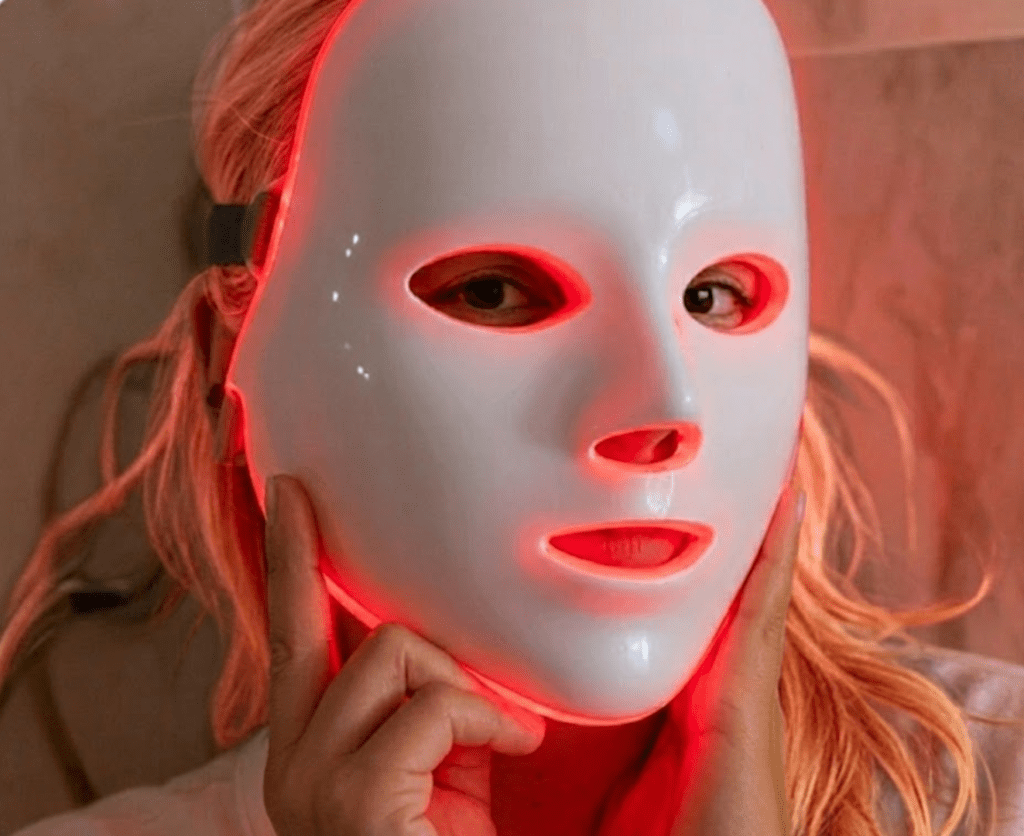
Red (630nm) boosts collagen production so your skin can visibly reduce fine lines and wrinkles over time. It’s the most researched wavelength in LED therapy and the best starting point for anyone focused on anti-aging.
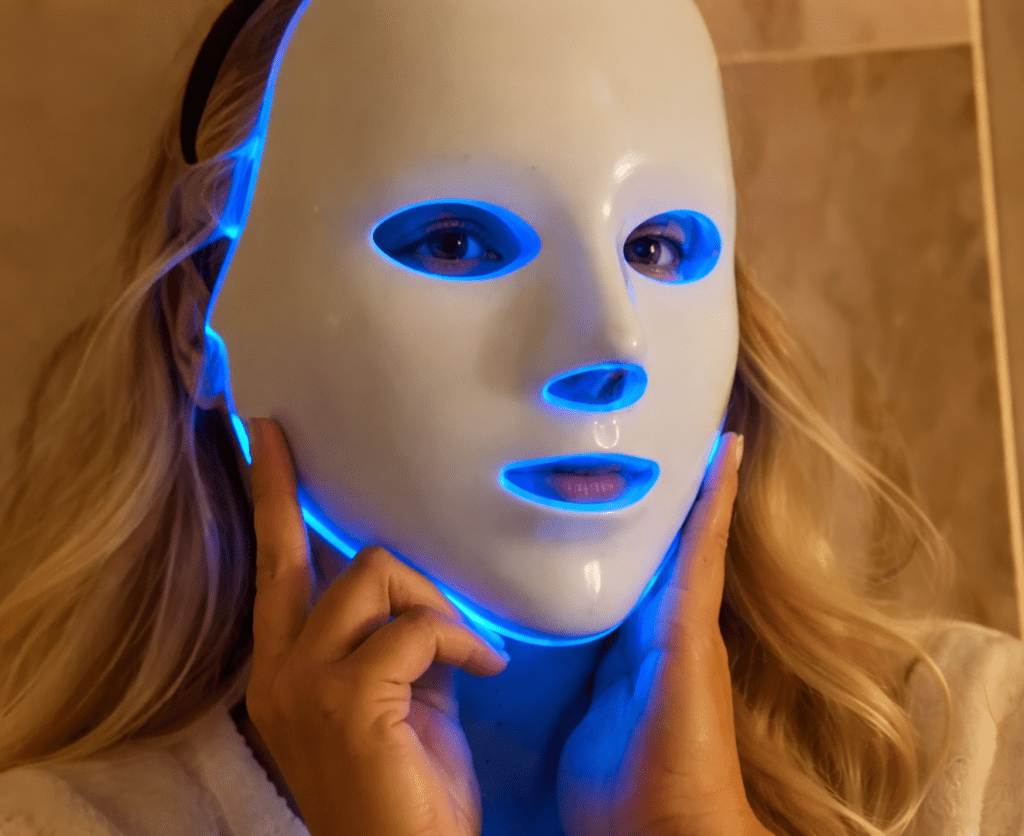
Blue (470nm) kills the bacteria that cause breakouts and dials down the inflammation around active pimples, so you can get ahead of a flare-up instead of dealing with the aftermath. If you tend to get hormonal breakouts along your chin or jawline, this is the mode to reach for when you feel one coming on.
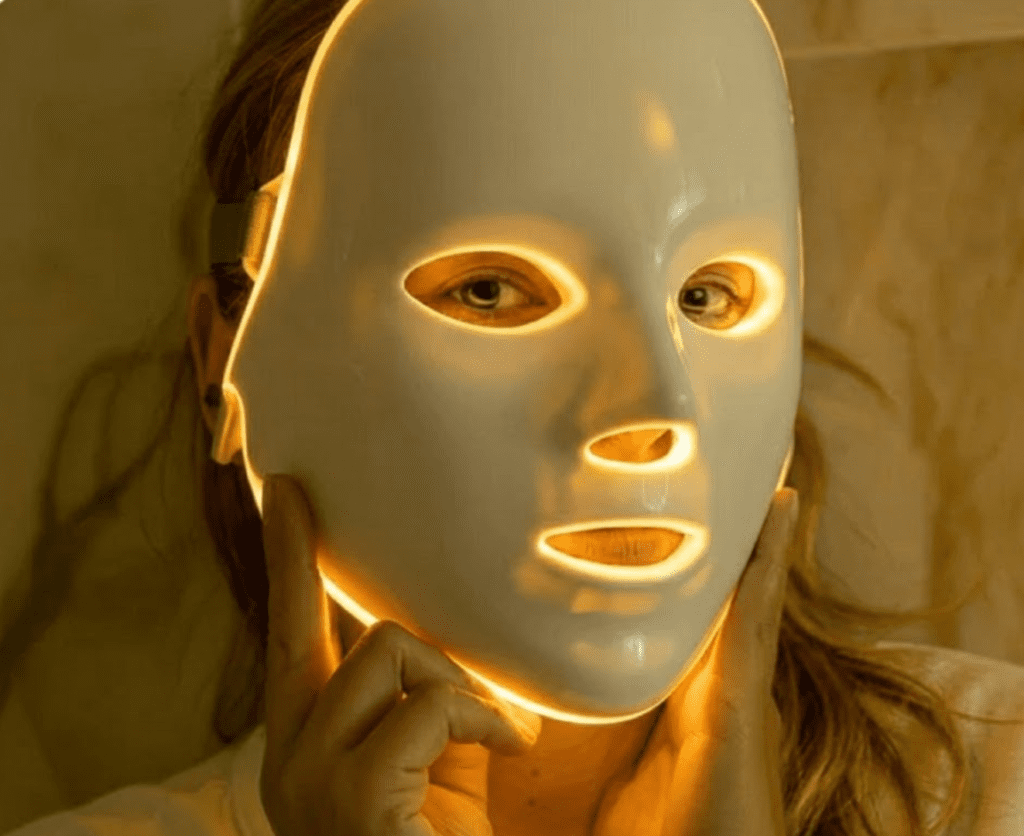
Yellow (590nm) is the recovery mode. It calms visible redness, soothes flushing, and helps reactive skin settle down. It works well on its own for sensitive days, and it’s especially useful the morning after a retinol night when your skin needs gentle support rather than stimulation.
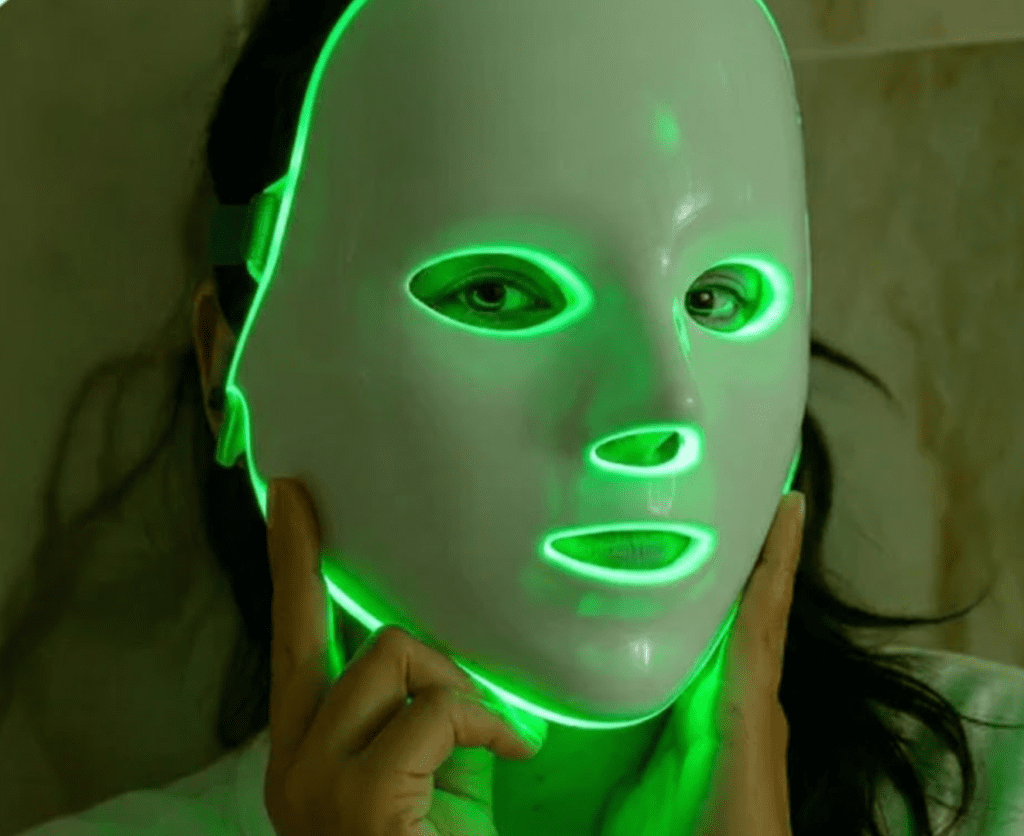
Green (520nm) fades dark spots, melasma, and sun-induced discoloration so your skin looks more even, even on a makeup-free day.
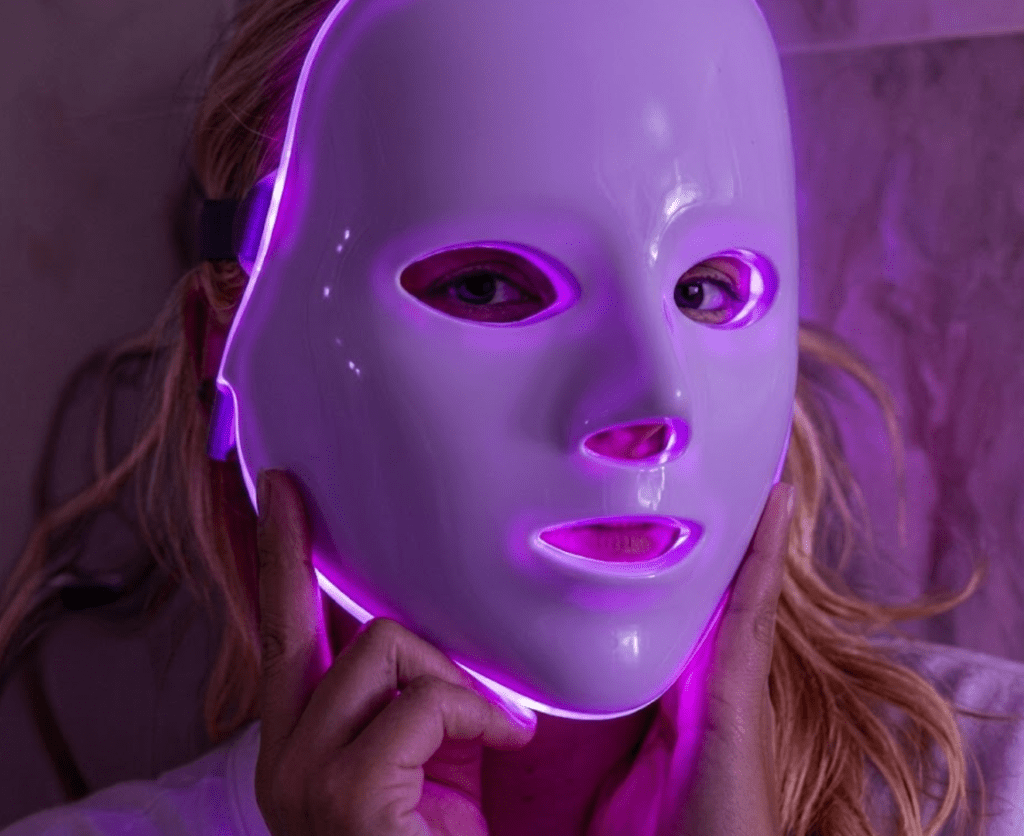
Purple (600nm) combines red and blue in one session, so you get acne control and collagen support at the same time. A good pick for anyone dealing with both active breakouts and the early signs of aging.
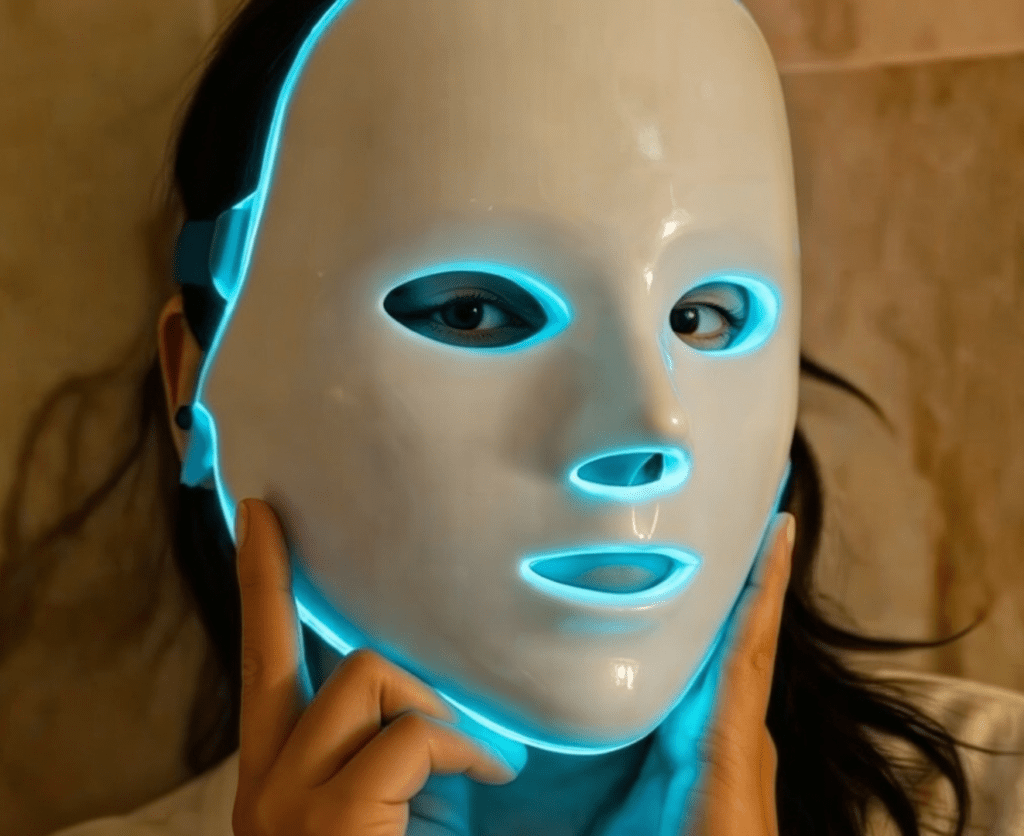
Cyan focuses on skin renewal and calming inflammation deeper in the skin, making it a good option for skin that looks tired or congested rather than just reactive on the surface.
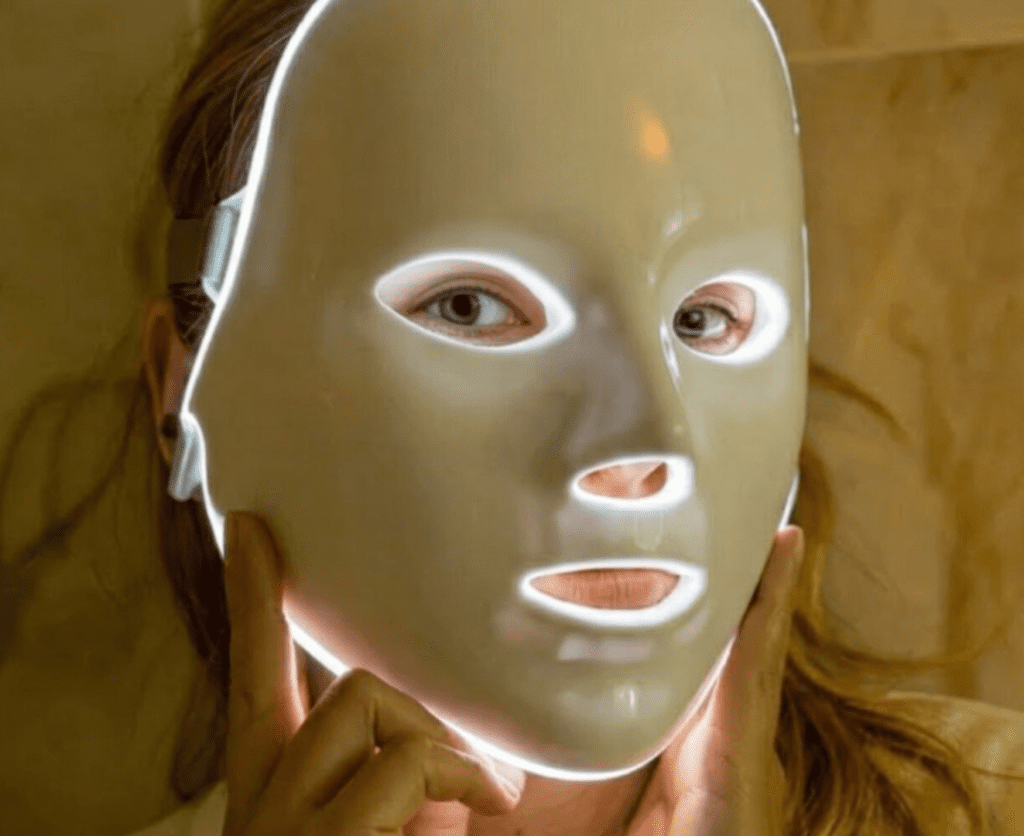
White (full spectrum) combines all wavelengths at once, so every layer of skin is being worked on in a single session. It’s the mode to use when you want to cover everything at once, on days when you’d rather not pick.
That’s seven different ways to treat your skin depending on what it needs on any given day.
Monday might be a red light session for fine lines. Wednesday you’re on blue because a breakout is brewing along your jawline. Friday you just want the full spectrum white mode because you’re tired and don’t feel like thinking about it.
The ability to match the mode to the moment is rare in LED masks at this price point. Most give you three modes and call it a day. The Glokore actually lets you respond to your skin instead of just running the same treatment on repeat and hoping for the best.
👉 Check Today’s Deal on the Glokore LED Mask
Glokore LED Mask Pros and Cons
Pros
- Multiple wavelengths in one wireless device so you can treat acne, fine lines, dark spots, and redness without juggling multiple products or devices
- Fully cordless so you can use it anywhere in your home, during the part of your evening when you’re already relaxing
- Under 290g with adjustable straps so it sits comfortably on most face shapes without needing to hold it in place
- FDA cleared, CE certified, and dermatologist-recommended
- 60-day money-back guarantee so you can test it properly before committing
- Rated 4.8 out of 5 across 5,127 customer reviews on the official Glokore page
Cons
- Cyan and white modes have no published wavelength values
- Some users with smaller faces or higher nose bridges report needing to adjust the fit for comfort
- Results build over several weeks of consistent use, not overnight
Glokore LED Mask: What Customers Are Saying
Most of the reviews come from women over 35, and the results they describe follow the same pattern.
- Beatrice, 65, noticed her skin looking “more radiant and youthful” with the wrinkles around her eyes visibly softened.
- Ashley, in the 55 to 64 age bracket, said she noticed a reduction in her wrinkles after just a few uses.
- Ariella described her skin as “refreshed and glowy” and said her wrinkles had visibly reduced.
- Laura, in her late 20s to early 30s, wrote that her skin feels smoother and her crow’s feet have started to disappear.
The ease of use comes through just as strongly as the results. Selene put it best:
“Three times a week, I relax with my mask on for half an hour. Then I go on with my day looking luminous, relaxed, and rejuvenated.”
That’s the experience most reviewers describe, fitting it into an evening they were already spending on the couch, and seeing their skin change gradually over the following weeks.
Rated 4.8 out of 5 across more than 5,000 reviews, with 98.4% saying they’d recommend it, the feedback reflects a device people are actually sticking with.
Dr. Marisa Garshick, a US dermatologist featured on the Glokore page, states that light therapy can treat acne, reduce wrinkles, improve skin tone and texture, and minimize swelling and discoloration.
Click here to Read the Reviews →
Glokore vs Omnilux vs CurrentBody
| Feature | Glokore LED Mask | Omnilux Contour Face | CurrentBody LED Mask (Series 2) |
|---|---|---|---|
| Wavelengths | Red 630 nm, Blue 470 nm, Yellow 590 nm, Green 520 nm, Purple 405 nm | Red 633 nm, Near-infrared 830 nm | Red 633 nm, Near-infrared 830 nm, Deep near-infrared 1072 nm |
| Wireless | Yes | No, uses a controller | No, uses a clip-on controller |
| Modes | Blue, green, yellow, red, purple, white, cyan | Red + NIR | Red + NIR + deep NIR |
| Best For | Multiple skin concerns in one device | Anti-aging | Anti-aging |
Omnilux and CurrentBody are well-regarded devices designed specifically for anti-aging. Both focus on red and near-infrared wavelengths (Omnilux: 633nm + 830nm; CurrentBody Series 2: 633nm + 830nm + 1072nm) to support collagen, firmness, and the look of fine lines. If anti-aging is your only goal, either is a solid pick.
Where they’re more limited is versatility. Omnilux and CurrentBody are purpose-built around red and near-infrared light, rather than multi-color modes like blue or green. If you’re trying to address breakouts or uneven tone at the same time, you may prefer a device that offers those additional wavelengths.
Glokore is also the only one that is positioned as fully wireless. Omnilux and CurrentBody use a rechargeable controller you plug in to charge, and your session runs through that controller.
When you are deciding between them, the real question is simple: which one will you actually keep using? For a lot of people, having fewer pieces to deal with makes consistency much easier.
👉 Check Price & Availability of Glokore’s LED Mask
Who the Glokore LED Mask Is Best For
Worth trying if you:
- Are managing adult acne alongside fine lines, dark spots, or redness and want one device that handles all of it without multiple steps
- Already use retinoids or other actives and want to add an LED therapy step so you can skip the repeat clinic visits
- Want something wireless you can use during the part of your evening while relaaxing
- Are looking for steady, visible improvement over several weeks rather than an overnight result
Less of a fit if you:
- Are expecting drastic overnight results rather than gradual skin improvement over several weeks
- Only have one skin concern and want a device built exclusively around that single goal
- Prefer a softer, flexible mask that molds directly to the contours of your face
How to Use the Glokore LED Light Therapy Mask
Getting Your Skin Ready
- Start with a freshly washed face so the light can reach your skin cleanly.
- Apply any lightweight serums first and give them a minute to absorb before you put the mask on.
- Skip heavy creams or facial oils right before your session since those go on after, along with your SPF.
If bright light is uncomfortable for your eyes, keep them closed during the session.
Picking the Right Mode for Your Skin
Rather than cycling through all seven modes, use the one that matches what your skin needs most right now.
- Red (630nm) is your everyday default for texture and fine lines.
- Reach for blue (470nm) when a breakout is already showing or you feel one coming on.
- Switch to green (520nm) when dark spots or uneven tone are your main focus.
- Use yellow (590nm) when your skin feels reactive or you’ve recently used a stronger active like retinol and need a gentler session.
- Purple (600nm) is the mode to choose when both acne and aging are on your radar, so you can address both in one session without switching.
Building a Light Therapy Routine That Fits Your Life
Three to four sessions a week is the sweet spot with the Glokore LED mask. Keep each session to 10 to 20 minutes, and if you are trying to stay consistent long term, 10 minutes is often the easiest length to maintain.
Because it’s wireless, you can wear it while you are already doing something like watching a show, folding laundry, or reading in bed. It slips into your evening instead of turning into another task you have to remember to do.
Pairing sessions with a basic skincare routine including a cleanser, moisturizer, and daily SPF can also help with long-term results.
The Bottom Line: Is the Glokore LED Mask Worth It?
If you want an at-home LED face mask that tackles more than one skin concern, the Glokore LED mask can be an efficient way to get in multiple light modes in a single wireless device.
You can use red light therapy for fine lines and firmness, blue light for acne-prone skin, and green or yellow style modes for dark spots, uneven tone, and redness, without juggling separate tools.
The cordless design makes it easy to get your light therapy in as you move around the house, fold laundry, watch TV, or relax in bed. This simplifies getting your light therapy in for long enough and consistently enough to start seeing results.
Just keep expectations grounded and think in weeks, not days. You’re unlikely to see drastic improvements in skin texture overnight but with 10-20 minute sessions a few times a week, noticeable skin improvements could start popping up sooner than you’d expect.
If you’ve been looking for an easy-to-use LED light therapy mask for skin texture, fine lines, acne, or anti-aging without being tethered to your nearest power outlet, and without expensive clinic visits, Glokore is one worth picking up.
Frequently Asked Questions
Is the Glokore LED mask FDA approved?
The Glokore LED mask is FDA-cleared, meaning it passed the safety standards required for a consumer health device. It also carries CE and RoHS certification. FDA clearance is the correct term here. FDA approval is a separate, higher-bar designation that most consumer LED masks, including established premium brands, do not hold.
Can the Glokore mask help with acne and post-acne marks?
Glokore’s blue mode at 470nm targets the bacteria behind active breakouts and reduces inflammation around them, so breakouts can clear faster and with less residual redness.
The green mode at 520nm fades dark spots, melasma, and the post-acne discoloration that can linger long after a breakout clears.
The purple mode at 600nm combines red and blue in one session for acne control and skin repair at the same time.
Published research supports blue light in the 415 to 470nm range for reducing inflammatory acne lesions with consistent use (Papageorgiou et al., 2000, PubMed).
Is the Glokore mask safe for sensitive skin?
The Glokore LED mask is non-invasive and safe for all skin types including sensitive, dry, oily, and combination. It emits a gentle light with a mild warming sensation, so sessions feel more like a relaxing wind-down than a treatment. There’s no downtime and no post-session irritation. Anyone taking prescription photosensitizing medications or managing a specific skin condition should check with a dermatologist before starting.
Disclosure: The information in this article is for educational purposes only and is not medical advice. LED light therapy results vary from person to person based on skin type, sensitivity, consistency, and other factors, so nothing here should be taken as a promise of specific outcomes. If you are pregnant, taking photosensitizing medications, have a medical condition affecting your skin, or are under dermatology care, check with a qualified healthcare professional before starting LED light therapy.