Mito Red Light vs Joovv: Benefits, Comparison & Analysis
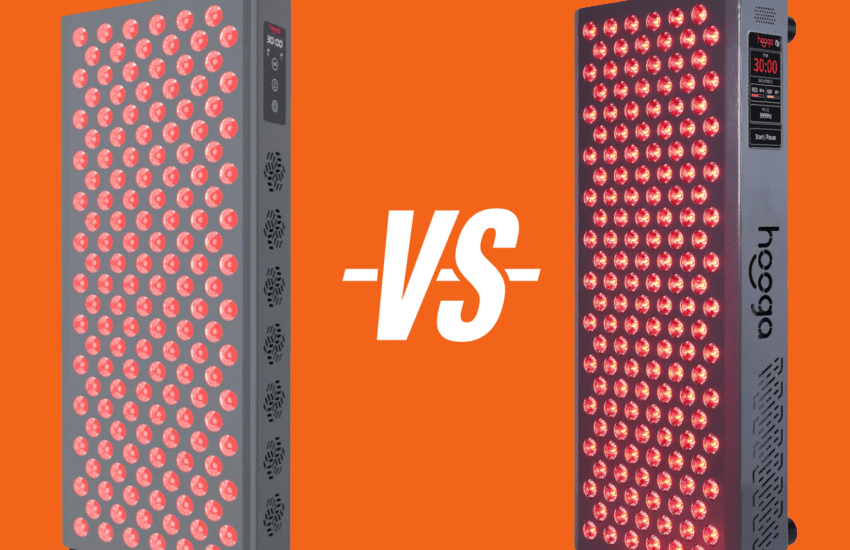
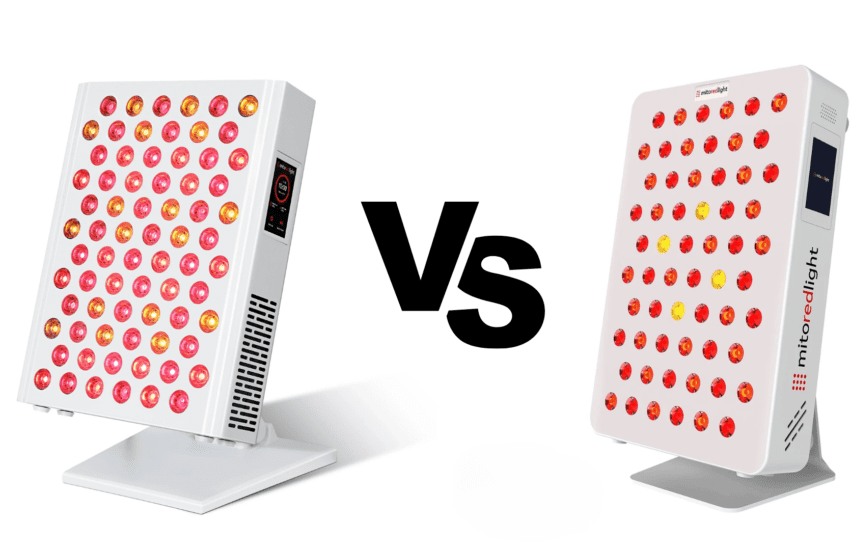
The red light therapy market can get confusing fast, especially when you’re deciding between big brands like Mito Red Light and Joovv.
Both sell red and near infrared light panels designed for at home photobiomodulation sessions. The real differences come down to price, the way each lineup is built, and how much control you want over your sessions.
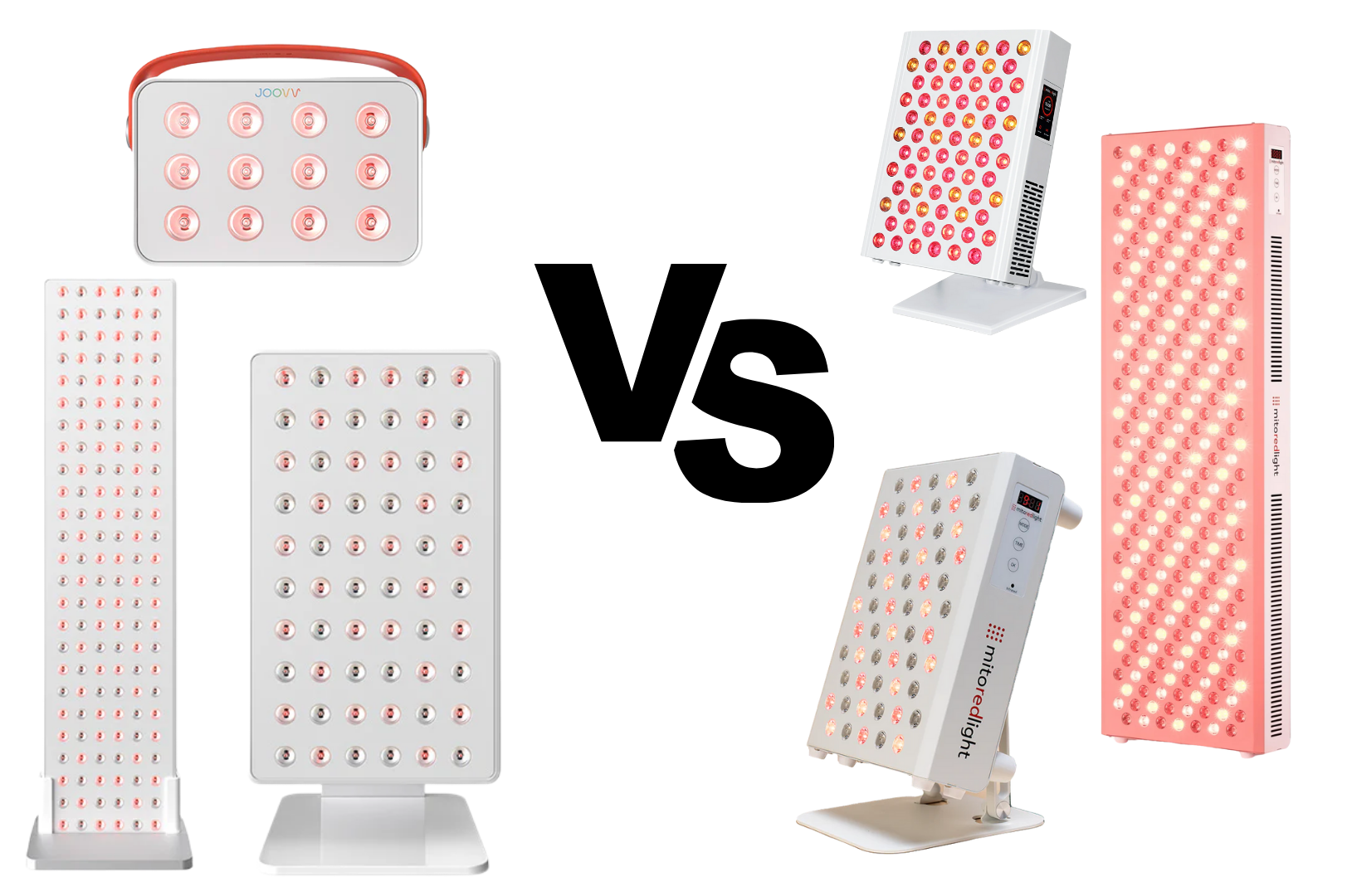
This guide compares Mito Red Light vs Joovv in the areas people care about most including cost, panel size and coverage, modular expandability, and available control features.
Key Takeaways
- Mito Red Light devices are usually priced lower than Joovv, while still delivering strong consumer-grade output and the core red and near-infrared wavelengths these panels are known for
- Joovv devices feature modular designs allowing for expandable coverage, while Mito Red Light offers standalone units with varying sizes to suit different treatment needs.
- Both brands deliver the scientifically-backed benefits of red and near-infrared light therapy, including improved skin health, faster recovery, and enhanced cellular function.
- Mito Red Light provides better value with more LEDs per dollar spent, while Joovv emphasizes premium features
Disclosure: This article is reader-supported and contains affiliate links.
Mito Red Light: Features and Benefits
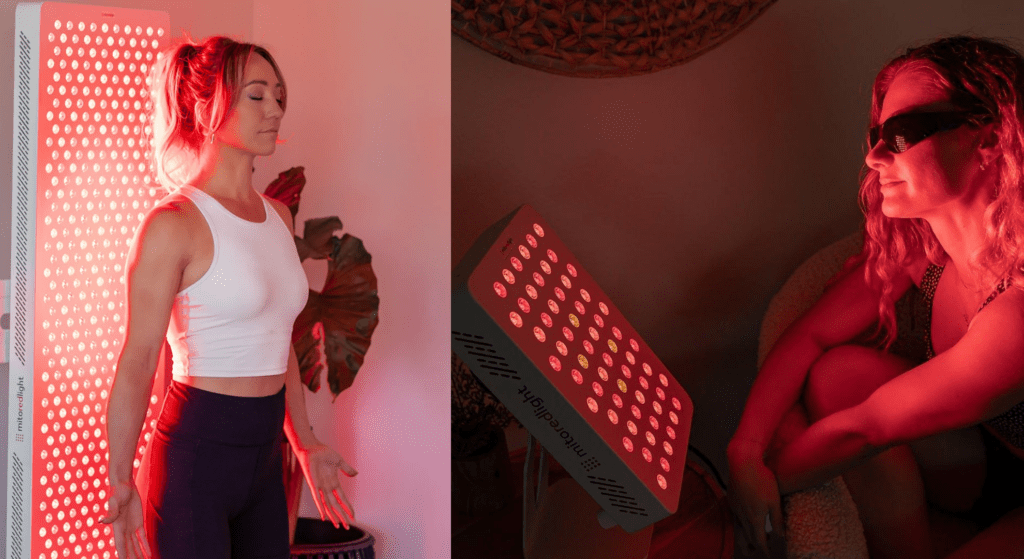
Mito Red Light has gained popularity as a more accessible alternative to some of the pricier options on the market without compromising on quality or effectiveness.
Their panels are backed by published third-party lab testing for power and spectrum, so you’re not relying on vague output claims.
Mito Red Light Series Comparison
A quick way to choose the series. Coverage per session is mostly about panel size, not the series.
| Series and wavelengths | Best for | Standout features | Starting price |
|---|---|---|---|
| The classic 660 and 850 setup for people who want simple red and near infrared sessions without extra controls. Pick the model based on coverage per session. |
MIN for targeted areas
MID for a larger zone
MAX or MEGA for full body
|
From $249 | |
|
630, 660, 830, 850nm
|
A straightforward setup for consistent daily use when you want core red and near infrared light therapy without extra controls or advanced modes. |
Set and go daily
Red only NIR only Combo
Best value entry pick
|
$369 |
|
6 peak wavelengths
|
Easier session setup and tracking when you want more wavelength coverage and a smoother control experience. |
Touchscreen and app
More wavelength coverage
Easier repeatable sessions
|
$449 |
|
8 wavelengths, 11 modes
|
Maximum flexibility if you like dialing in sessions and switching between different wavelength mixes over time. |
Most customization
Most modes
For testing mixes
|
$549 |
Coverage guide: small panels suit face and joints, mid size panels cover one large zone per pass, and large panels reduce repositioning for full body routines.
Mito Red Light sells several red light therapy panels across two main product lines, which makes it easier to choose based on coverage and controls.
The Original 2.0 Series is the simpler lineup. It includes MitoMIN 2.0, MitoMID 2.0, MitoMAX 2.0, and MitoMEGA 2.0. These models list 660nm red and 850nm near infrared, so the main decision is size.
A smaller panel is better for one area at a time while a larger panel reduces repositioning when you want more coverage per session.
The newer panel series lineup includes MitoPRO+ Series, MitoPRO X Series, and MitoADAPT 4.0 Series.
These are best compared by control level and wavelength options shown for each series. If you are comparing Mito Red Light vs Joovv, the useful takeaway is that targeted versus full body is mostly about panel size, while the series name tells you how much control and flexibility the device is built to offer.
Mito is positioned as the more affordable option compared to Joovv’s equivalent models.
See Mito Red Light’s Full Range Here
Wavelength Technology and Coverage
Mito Red Light panels use a red and near-infrared wavelength mix that aligns with common photobiomodulation research. Depending on the model, that may be 660nm and 850nm, or a four-wavelength setup such as 630nm, 660nm, 830nm, and 850nm.
Mito’s newer series offers more wavelength options than the basic red and near infrared setup:
- MitoPRO+ v2 adds extra peak wavelengths beyond the Original 2.0 Series
- MitoPRO X expands the set further with 590nm and 810nm wavelengths
- MitoADAPT 4.0 offers the widest range, including additional peak wavelengths such as 590nm, 670nm, and 940nm.
The beam angle of Mito’s LEDs is engineered to provide optimal depth penetration while maintaining energy efficiency.
With a 60° beam angle on most models, these devices deliver concentrated therapy without excessive light scatter, ensuring that more of the emitted energy reaches your tissues effectively.
This is especially important if your goal is muscle and joint applications rather than surface level skin exposure.
Power Output and Effectiveness
Mito Red Light publishes power-output specs and backs key models with independent third-party performance testing, which makes it easier to dose sessions with real numbers instead of guesswork.
On the MitoPRO+ line, listed irradiance at a 6-inch distance ranges from over 130 mW/cm² to over 170 mW/cm² depending on the panel size.
Higher irradiance can deliver the same light dose in a shorter session, but outcomes still depend on your distance from the panel, total session time, and keeping the dose in a sensible range since photobiomodulation can follow a biphasic response. For practical guidance, see how often to use red light therapy.
Mito also fits a high LED count into relatively compact panels. Their panels pack more LEDs per square inch than many competitors, ensuring more consistent coverage without “hot spots” or gaps in treatment.
The MitoPRO 300, for instance, contains 60 individual LEDs in its compact frame, providing uniform light distribution across the treatment area.
Effectiveness ultimately comes down to consistent irradiance delivery, which Mito achieves through careful engineering and quality components. Independent testing has confirmed that their output remains stable throughout the device’s lifespan, maintaining therapeutic levels even after years of regular use.
Joovv Devices: Features and Benefits
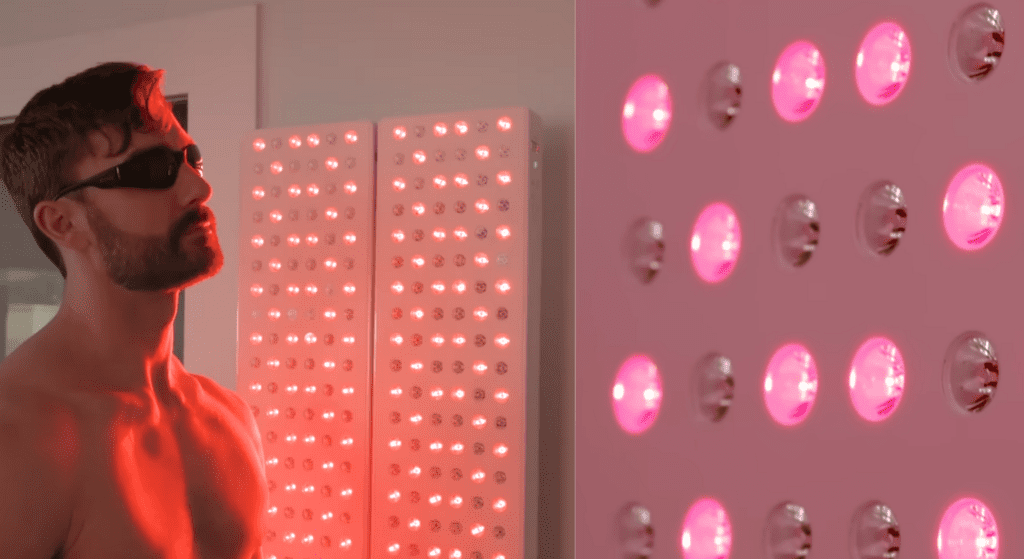
Joovv is widely positioned as a premium option in the red light therapy category.
The brand places a strong emphasis on testing, safety, and clinical style positioning, which can be reassuring if you want a more established name. Joovv devices also show up in some clinics and wellness studios, largely because the modular design makes it easier to build a larger setup over time and keep everything in one system.
Joovv Series Comparison
Joovv is a premium modular system. Most coverage comes down to panel size and how far you stand from it.
| Device and light type | Best for | Standout features | Starting price |
|---|---|---|---|
|
Red plus near infrared
|
Targeted sessions when you want a premium build and a compact panel for face, joints, or one area at a time. |
Modular upgrade path
App based session control
Red and NIR plus extra modes
|
$1,099 |
|
Red plus near infrared
|
Daily full body sessions with fewer repositioning steps. |
Full body friendly size
Recovery plus and Ambient modes
Accessory mounting options
|
$1,699 |
|
Red plus near infrared
|
Faster full body sessions when you want maximum coverage per pass and a modular path into larger multi panel kits. |
Largest single device coverage
Built for kit expansions
Mode options via Joovv app
|
$5,999 |
Available Models and Cost Structure
Joovv’s product lineup is built around a modular concept, with the Solo 3.0 serving as their foundational unit at approximately $1699.
Their portfolio extends to include the Mini 3.0 for targeted treatments, and expandable configurations like the Duo 3.0 and Quad 3.0 for fuller body coverage. The company also offers the Go 2.0, a portable option for travel or spot treatments.
Joovv’s pricing matches its premium positioning. The upfront cost is typically higher than comparable Mito Red Light panels, but Joovv leans on build quality and a modular system that can be expanded over time to justify the difference.
Light Spectrum and Treatment Area
Recovery+ mode is a Joovv setting that keeps red light continuous while pulsing near infrared light at 10 Hz. Joovv positions Recovery+ as a mode aimed at supporting recovery, healing, and regeneration.
Wavelengths
Joovv devices are built around two core wavelengths: 660 nm red light and 850 nm near infrared (NIR).
Coverage and Panel Size
Your treatment area depends mostly on the panel size and how close you stand or sit to it.
- Joovv Mini 3.0 is listed at 14.75 in x 8.75 in (compact coverage)
- Joovv Solo 3.0 is listed at 36 in x 8.75 in (more coverage per session)
If you want to start smaller and expand later, Joovv is built around a modular system that lets you add devices over time and pair multiple units together.
The uniformity of light delivery is a notable strength of Joovv’s design. Their panels maintain consistent irradiance across the entire treatment surface, avoiding the drop-off at edges that can occur with less sophisticated designs. This ensures that every square inch of exposed skin receives the intended dose.
Irradiance Levels and Therapeutic Potential
Joovv lists optical irradiance above 100 mW/cm² in the tech specs for its Generation 3.0 panels such as the Solo 3.0 and Mini 3.0.
In practical terms, irradiance determines how quickly you can deliver a target light dose to the skin.
Higher output at a given distance can shorten session time, but real-world intensity still changes based on distance from the panel, treatment mode (for example Recovery+), and how much of the body you are trying to cover. Joovv’s own guidelines commonly reference 4 to 6 inches for more intense, targeted sessions and a farther distance for standard use
Therapeutic potential is not only about peak power. It is also about whether the panel makes it easy to use consistently at the recommended distance and for the right session length.
A larger panel can reduce repositioning and make full-body sessions faster, which tends to improve long-term adherence.
Mito vs Joov: Warranty and Returns
Warranty and return policies are worth checking before you buy, because coverage can vary by model and it affects the real long term cost of ownership.
Mito Red Light generally includes a multi-year limited warranty on many of its panels, and it also offers a 60 day trial period so you can return the device within that window if it is not the right fit. Always confirm the exact warranty length on the product page for the model you are considering, since terms can differ across product lines.
Joovv offers a limited warranty that varies by device, with many modular panels covered for 2 years and certain portable models covered for a shorter period. Joovv also offers a 60 day return window on eligible purchases, with return conditions and fees depending on how and where you buy.
Before purchasing either brand, it is smart to verify the warranty length, what counts as a covered defect, and who pays return shipping, because those details can differ by product and retailer.
Mito Red Light vs Joovv: Which Should You Choose?
Choose Mito Red Light for Best Value
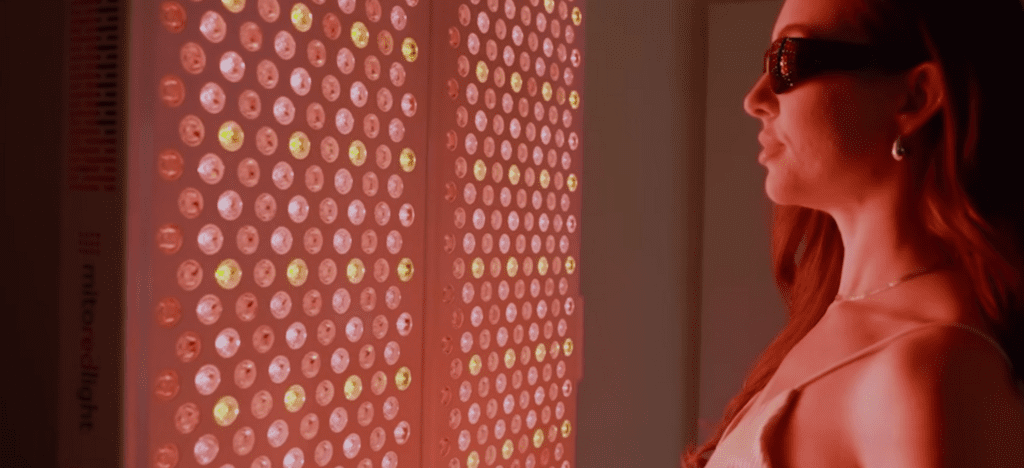
Mito is the better pick for most home buyers who want strong performance at a lower price.
It is a common choice for people shopping for a red light therapy panel for home use who want good coverage without paying a premium.
This is the best fit if you care about:
- Lower cost for similar at home use cases
- Bigger coverage for the money
- A simple buy once setup without planning a modular build
Choose Joovv for its Premium Modular System
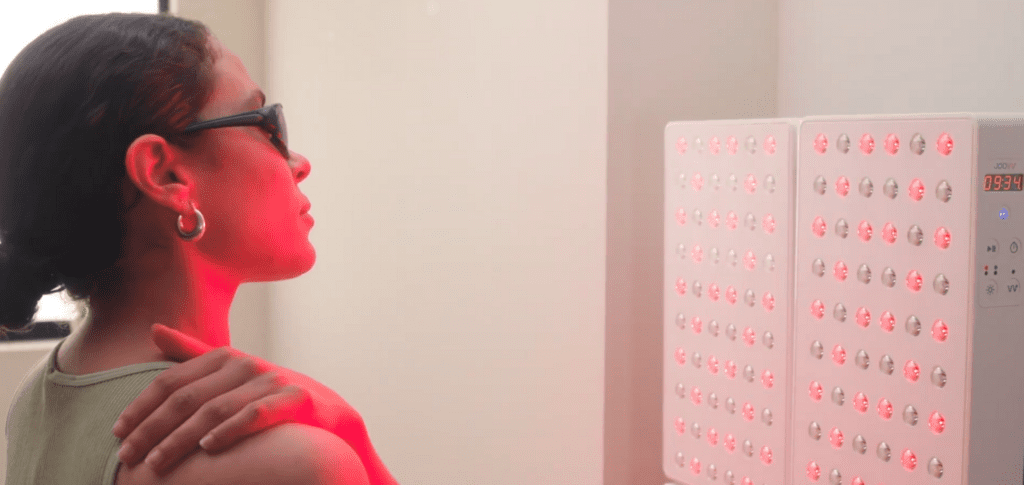
Joovv is the better pick if you want a premium build and a system designed to expand cleanly over time.
The modular design is the main reason to pay more, especially if you want to scale from one panel to a larger wall style layout.
This is the best fit if you care about
- A modular system you can build over time
- A more premium look and finish
- Starting small and expanding later
The Bottom Line
No matter which brand you choose, results come from using your red light therapy device consistently. The best red light therapy panel is the one you can afford, fits your space, and matches your goals so it actually gets used week after week.
Both Mito Red Light and Joovv deliver the key red and near infrared wavelengths and the power output needed for effective photobiomodulation at home. The bigger differences usually come down to price, design, and extra features, not the core light therapy function.
Disclaimer: This content is for informational and educational purposes only and is not medical advice. Red light therapy and photobiomodulation devices are not intended to diagnose, treat, cure, or prevent any disease. Results vary based on the individual, the device used, and how consistently it is used. Always follow the manufacturer’s instructions, use appropriate eye protection, and consult a qualified healthcare professional before starting any new wellness routine, especially if you are pregnant, have a medical condition, are taking prescription medications, or have light sensitivity.