6 Best Portable Infrared Saunas for Indoor Use (Pods, Tents and Blankets Ranked by Real Heat and Price)
The best portable infrared saunas make it possible to enjoy a sauna at home without giving up much space.
Some fold small enough to store in a closet, and many plug into a standard wall outlet. Prices range from about $200 for a basic sauna tent to around $3,000 for a cabin you can lie down in.
I’ve narrowed the list to six indoor models, looking at how hot they get, how much electromagnetic radiation (EMF) they produce, how easy they are to clean, and what you get for the price.
If you’re looking for a wood-fired sauna tent that can reach over 200°F, check out our Sweat Tent review instead. This guide covers indoor infrared saunas that plug into a standard outlet and can be packed away after use.
Quick Picks
- Best Overall Portable Infrared Sauna – Therasage Thera360 Plus
- Best Value Sauna Blanket – Hooga Infrared Sauna Blanket
- Best Sauna Blanket – Nicebeam Infrared Sauna Blanket Pro
- Best Low-EMF Infrared Tent – Durherm DIF-5000
- Best-Selling Starter Tent – SereneLife Full Size Portable Sauna
- Best Premium Lie-Down Sauna Dome – Sunlighten Solo System
Best Portable Infrared Saunas for Home: Comparison Chart by Type, Heat and Price
| Product | Format | Heat type | Rated max temp | EMF | Where to buy |
|---|---|---|---|---|---|
| Therasage Thera360 Plus | Seated tent, head out | Full-spectrum infrared + red/NIR panel | 170°F | Low, with EMF/RF remediation | Check Today’s Price |
| Hooga Infrared Blanket | Lie-down blanket, head out | Far infrared | 176°F | Low, shielded wiring | Check Today’s Price |
| Nicebeam Sauna Blanket Pro | Lie-down blanket, head out, arm holes | Far infrared, 600W | 176°F | Low (figure not published) | Check Today’s Price |
| Durherm DIF-5000 | Seated tent, head out | Far infrared carbon panels | 150°F | Low | Check Today’s Price |
| SereneLife Full Size | Enclosed seated tent, head inside | Far infrared carbon panels | Up to 140°F or 150°F, depending on version | Not published | Check Today’s Price |
| Sunlighten Solo System | Lie-down dome, head out | Far infrared carbon, 3 zones | 150°F | Low | Check Today’s Price |
Maximum temperatures are manufacturer-rated settings. Sauna blanket temperature settings aren’t directly comparable with the air temperatures inside infrared sauna tents.
Best Portable Infrared Saunas for Home Use in 2026
1. Best Overall Portable Infrared Sauna – Therasage Thera360 Plus
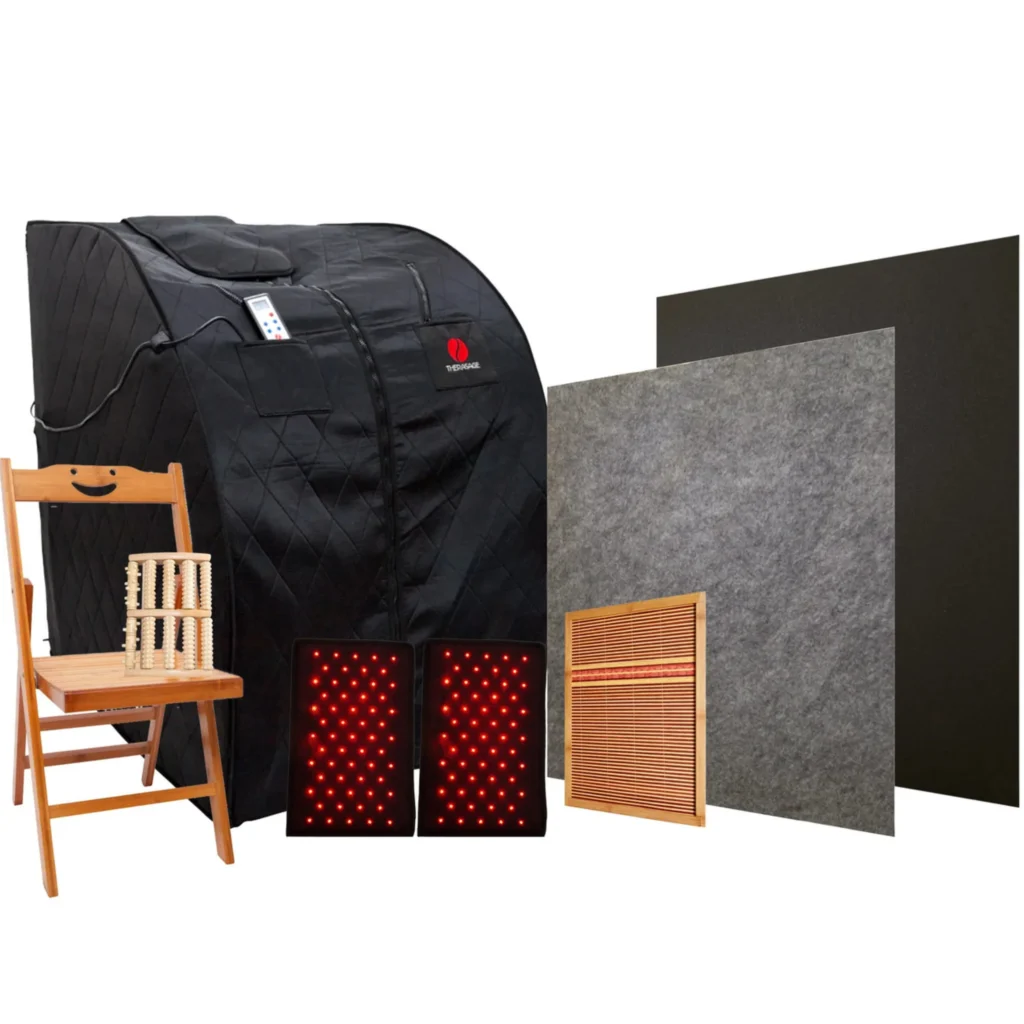
The Therasage Thera360 Plus brings near, mid and far infrared together in one foldable sauna. Unlike most portable saunas that only offer far infrared, you get all three wavelengths in the same session.
Authorized retailers list temperatures around 170°F, with some owners reporting heat-up times of about 20 minutes and heavier sweating than with standard far-infrared tents. The heaters have a 98% emissivity rating, while the built-in Tri-Lite panel technology adds red light and near-infrared exposure.
Therasage also puts a strong focus on EMF reduction, with EMF, ELF and RF remediation, a grounding mat beneath your feet and tourmaline gemstone panels designed to release negative ions. You also get a bamboo chair instead of a basic folding seat.
For anyone who wants full-spectrum infrared, low-EMF features and seated comfort in a portable sauna, the Thera360 Plus offers considerably more than a basic $250 tent.
If you want full-spectrum infrared heat with low-EMF features and prefer sitting upright to lying down in the Sunlighten Solo, the Thera360 Plus is a strong contender.
2. Best Value Sauna Blanket – Hooga Infrared Sauna Blanket
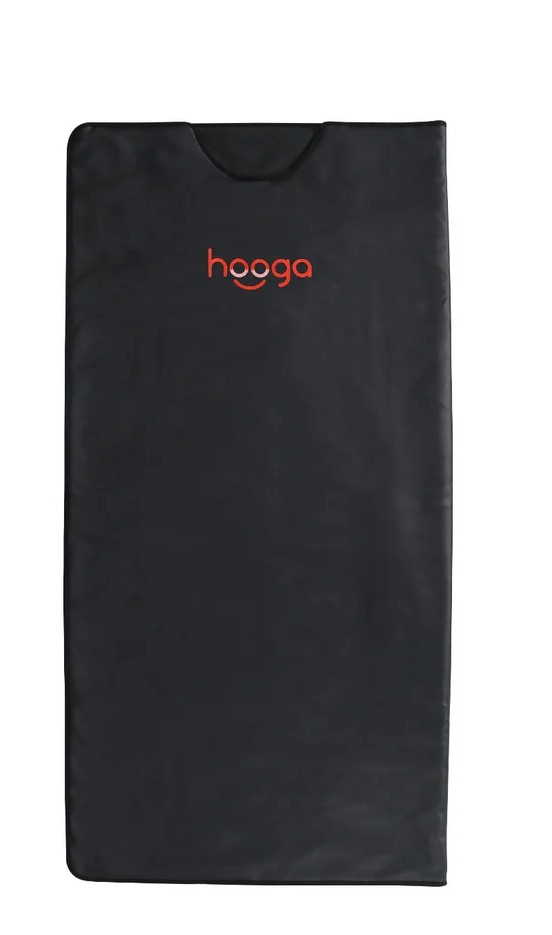
The Hooga sauna blanket is a great choice if you want infrared heat without paying premium prices or finding space for a sauna tent. It offers adjustable heat from 86°F to 176°F, giving you plenty of control over your sessions.
Hooga uses shielded heating wires and lists EMF levels at 0 to 0.08 microteslas. The waterproof interior wipes clean after each session, and the whole blanket folds flat for easy storage in a drawer or suitcase.
It’s also backed by the same US brand behind the red light panels and belts covered on this site, with customer support and warranty service that help make it a popular choice.
If you’re buying your first infrared sauna blanket for sore muscles, relaxation or winding down before bed, Hooga gives you adjustable heat, low-EMF features and easy storage without the premium price.
Use code REDLIGHTSKINLAB for 12% off at checkout.
3. Best Sauna Blanket with Arm Holes – Nicebeam Infrared Sauna Blanket Pro
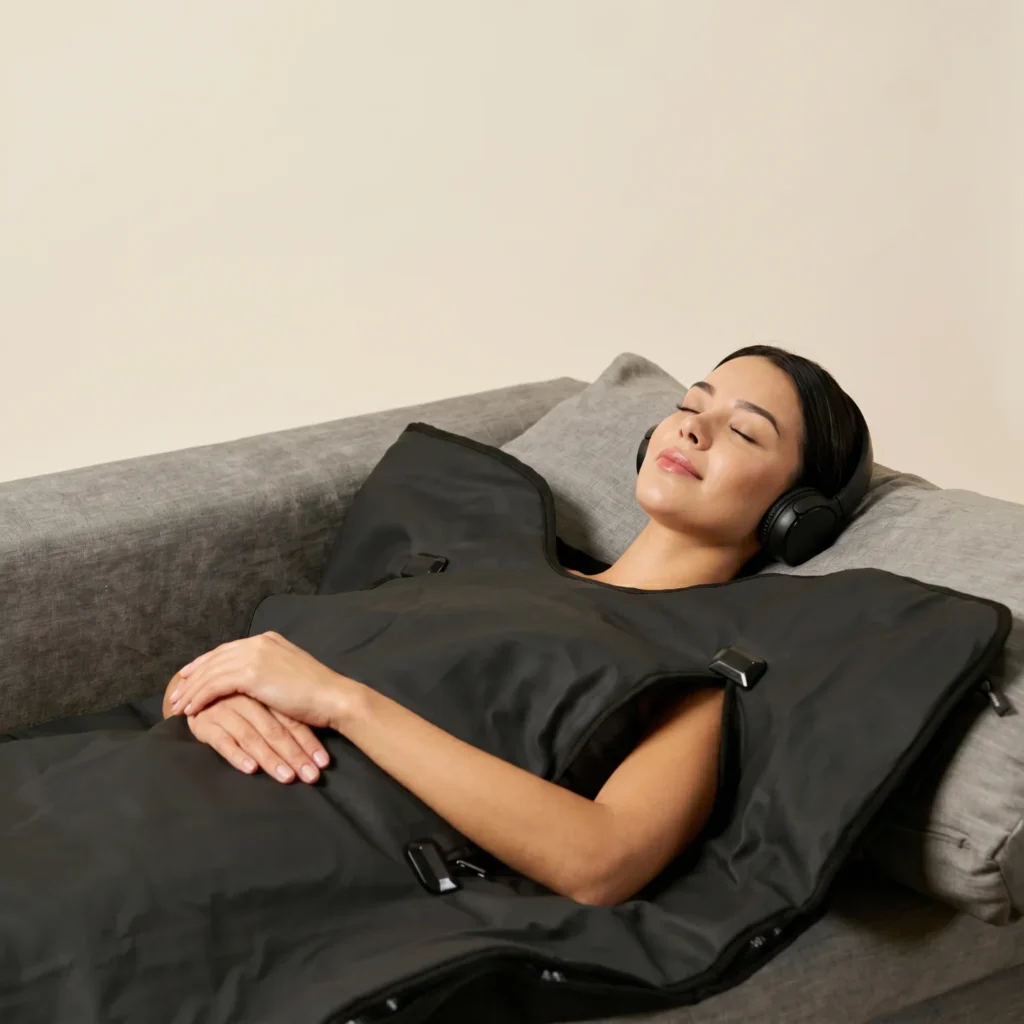
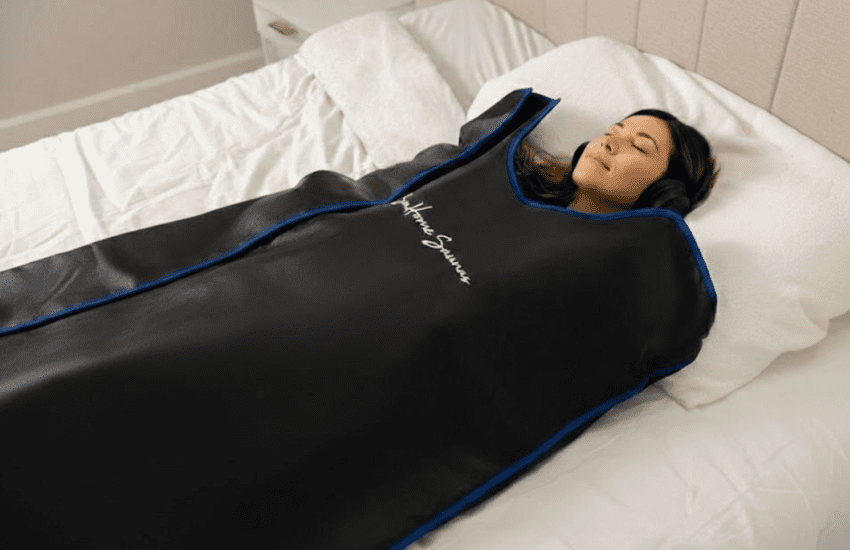
The Nicebeam Sauna Blanket Pro is a great choice if you want infrared heat without feeling trapped inside a sealed blanket. Its built-in arm holes let you read, scroll on your phone or relax comfortably while the rest of your body stays wrapped in heat.
The 600W carbon fiber heating system offers temperatures from 77°F to 176°F, with a 5 to 60-minute timer controlled by remote. Nicebeam recommends a ten-minute preheat, and the maximum temperature matches some of the hottest sauna blankets on this list.
The fire-resistant PU exterior and waterproof PVC interior make cleanup easy. Just wipe away sweat with a damp cloth and fold the blanket into its included storage bag.
You can choose the standard single-zone model or an advanced version with three independent heating zones, letting you adjust the temperature around your feet, legs and core. Nicebeam also describes its heating system as low EMF.
If you want the benefits of a lying-down sauna session while keeping your hands free, the Nicebeam Sauna Blanket Pro combines high heat, adjustable controls and easy cleaning with the added reassurance of a money-back window.
4. Best Low-EMF Infrared Tent – Durherm DIF-5000 Low EMF Portable Sauna
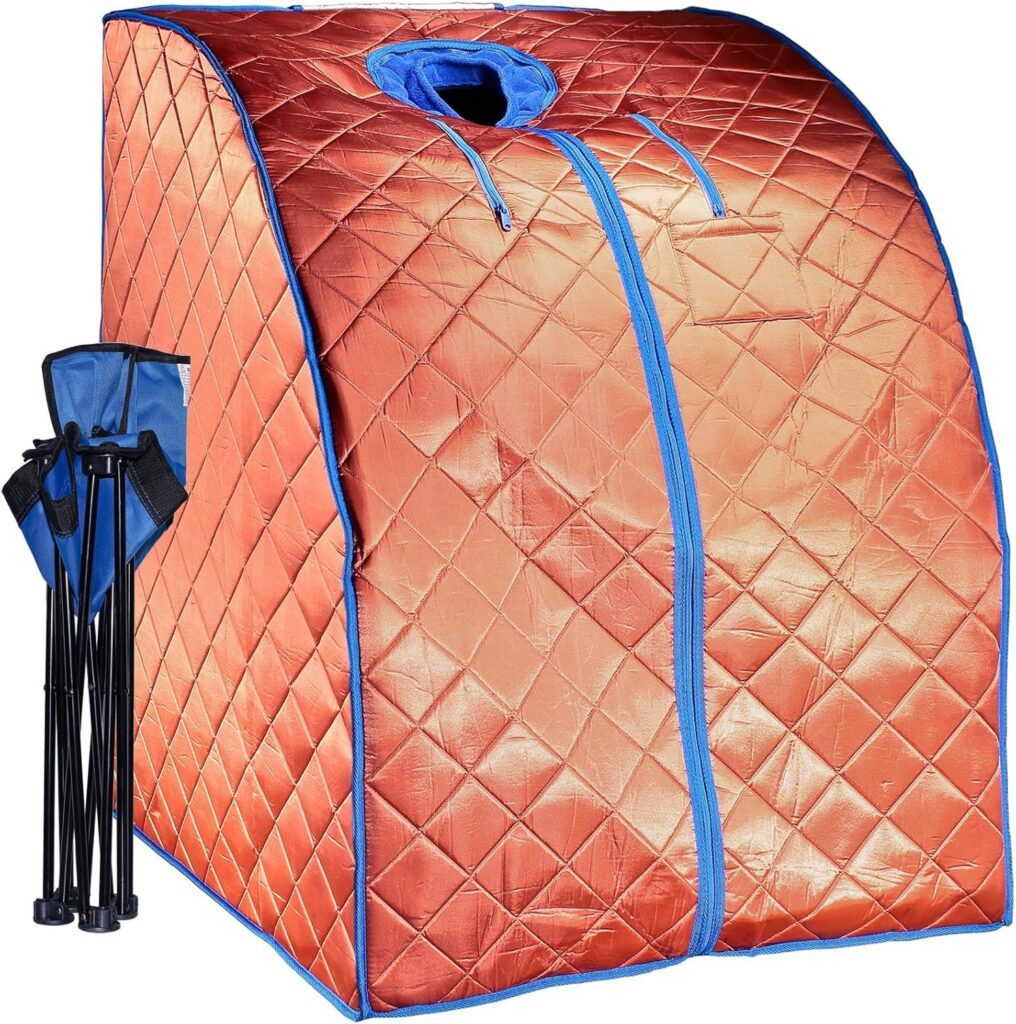
The Durherm infrared sauna is a good option if you want low EMF exposure and straightforward heating.
Its four carbon-fiber heaters provide far-infrared warmth, while a heated foot pad keeps your feet comfortable. Your head stays outside the tent, and zippered openings let you read or use your phone during a session.
Setup takes around ten minutes without tools, and the tent folds into its included carrying case for easy storage. The controls are straightforward, with adjustable heat and a timer.
Durherm lists a heating panel temperature of 140°F, with air temperatures around 110°F or slightly higher inside the tent. That’s enough for a 30-minute sweating session, while keeping the heat more manageable.
If you’re looking for a low-EMF infrared sauna with simple controls, a heated foot pad and a track record of years of regular use, Durherm is an excellent choice without paying for features you may never need.
5. Best Starter Tent – SereneLife Full Size Portable Infrared Sauna
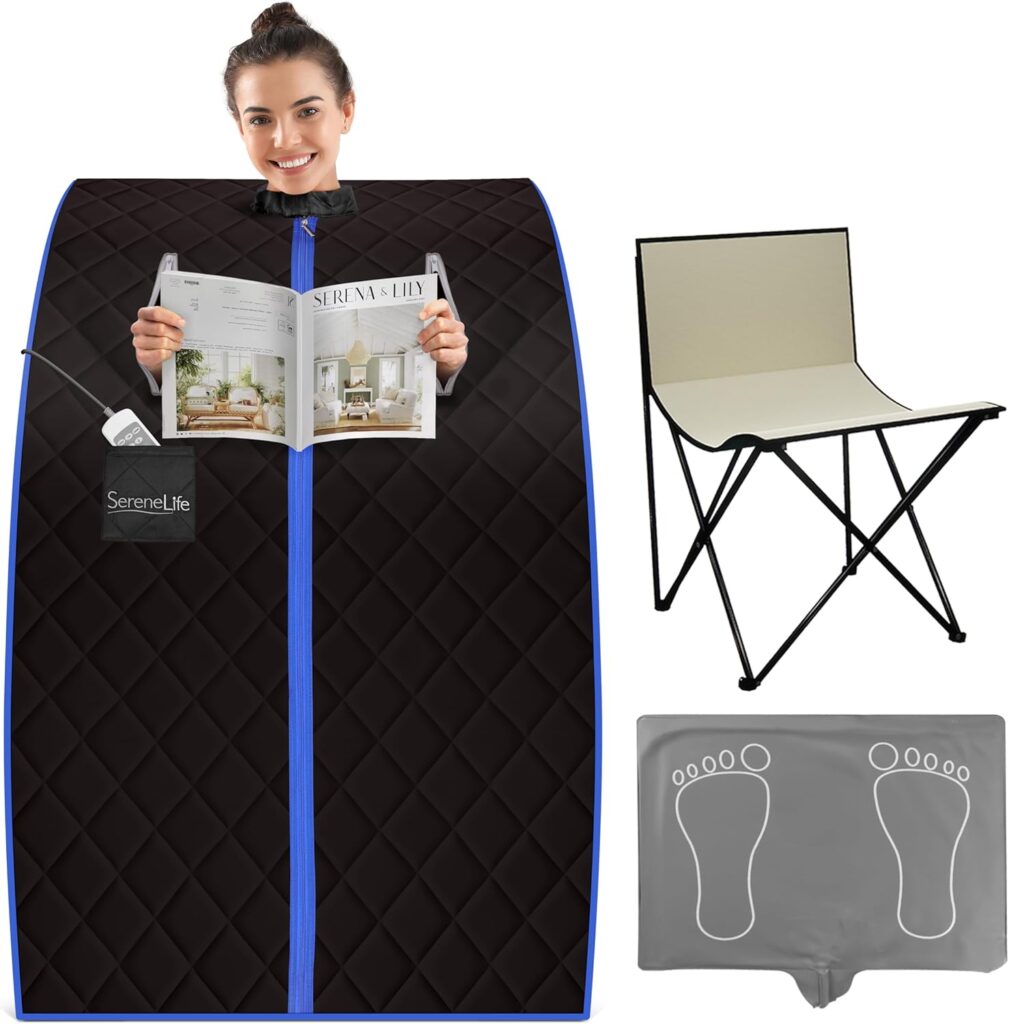
The SereneLife infrared sauna is a great starting point if you want an affordable way to enjoy infrared heat at home. Unlike smaller head-out sauna tents, this model encloses your entire body, giving you a more traditional seated sauna experience without the cost or space requirements of a permanent cabin.
Its 1,300W carbon fiber heating panels deliver far-infrared warmth, with a manufacturer-rated maximum temperature of 140°F. A heated foot pad adds extra comfort, while the included folding chair lets you settle in for a relaxing session.
The wired controller makes it easy to adjust the temperature and timer, and zippered hand openings let you read or use your phone without leaving the sauna.
At 35.4 by 35.4 by 70.9 inches, the full-size enclosure provides room to sit upright while maintaining a relatively small footprint. The lightweight frame and fabric tent can be disassembled for storage, and the interior wipes clean after use.
If you’re buying your first portable infrared sauna, SereneLife delivers full-body coverage, adjustable heat, and the essentials for comfortable home sessions at a much more accessible price than premium sauna cabins.
6. Best Premium Lie-Down Sauna – Sunlighten Solo System
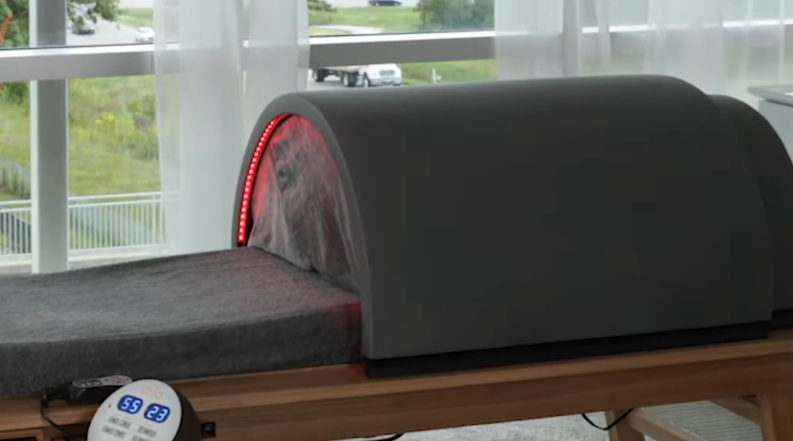
The Sunlighten Solo is a strong option if you want a home infrared sauna built for regular use without committing to a permanent cabin. Its two-piece dome fits over a padded SoloPad, with nine SoloCarbon far-infrared heaters delivering heat from above and below while separate temperature controls let you adjust each dome.
It reaches up to 150°F, giving you full-body infrared heat while lying down. The adjustable heating zones let you control warmth around different parts of your body, and built-in chromotherapy lighting adds several color options to your sessions.
The two-piece design packs away when needed, while the padded base makes it suitable for regular lying-down sessions.
If you’ve been using infrared saunas for a while and want a dedicated home setup with separate heat controls, a padded lying-down design and long warranty coverage, the Sunlighten Solo is built with regular use in mind.
How to Choose the Best Portable Infrared Sauna for Your Space
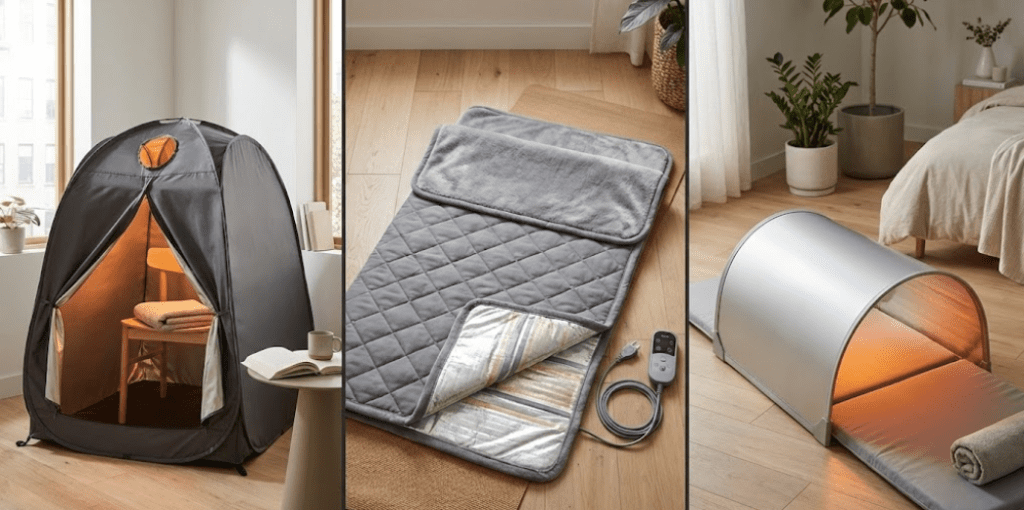
Portable Infrared Sauna Types: Tent vs Blanket vs Dome
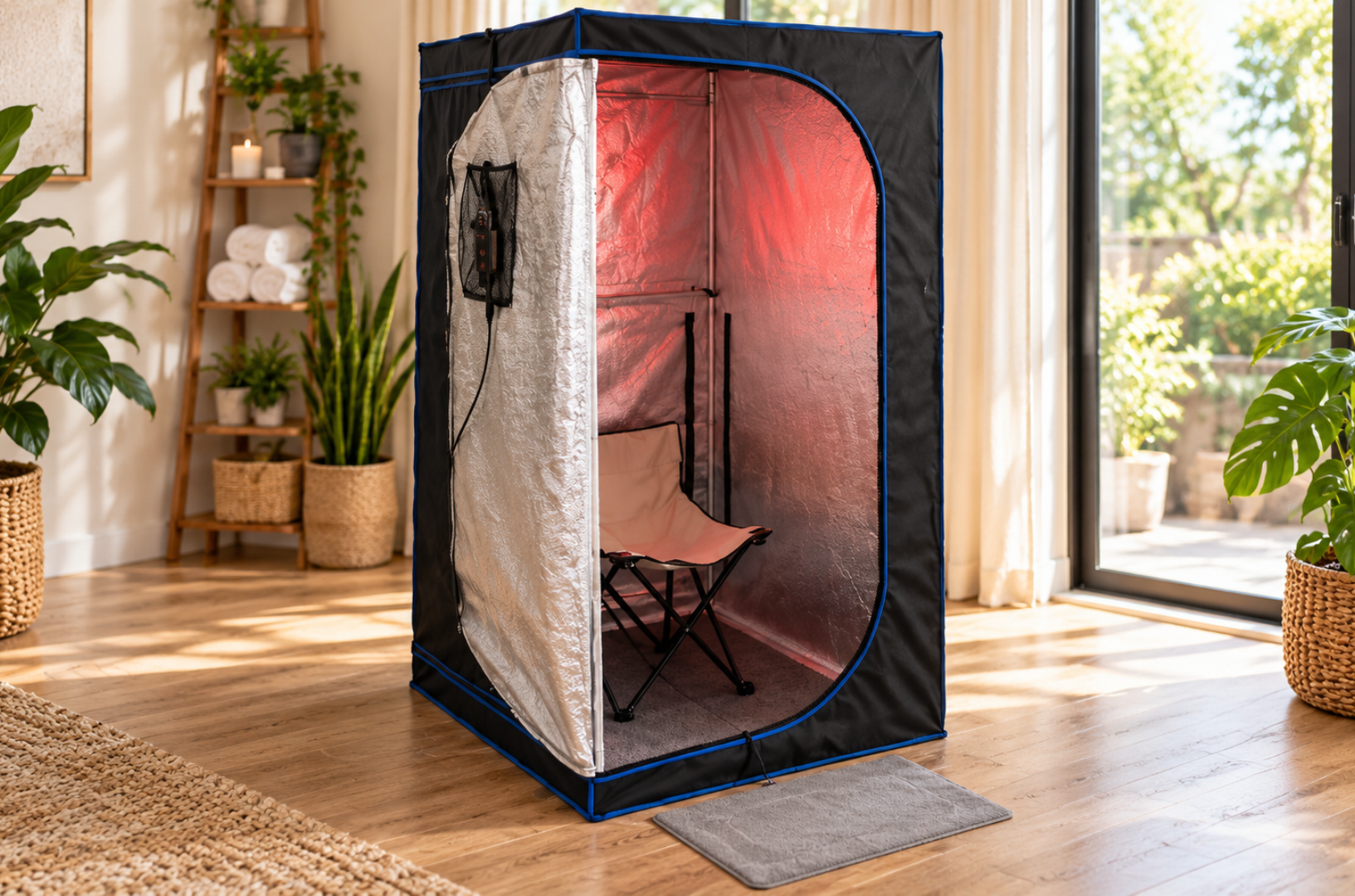
Tent-style portable saunas give you an enclosed cabin experience where you sit inside on a folding chair during sessions. This format works well if you prefer sitting upright or if you want a more traditional sauna feel.
Most portable infrared sauna tents need around 8–9 square feet of floor space, plus a little clearance around the enclosure. Setup generally takes 5–15 minutes, depending on the model.
Sauna blankets require the least dedicated space since you can use them on your bed or floor and roll them up for drawer storage afterward. The lying-down position suits people with back issues or those who find it easier to relax horizontally during heat therapy. Setup takes just a couple minutes, though getting in and out feels more awkward than walking into a tent.
Dome systems split the difference by letting you lie down while keeping your head fully outside. Half-domes like the 1Love feel less restrictive than blankets, while full domes like the Sunlighten Solo provide more comprehensive coverage. These tend to be bulkier to store than blankets but still more compact than most tent frames.
Temperature Capacity and Heat Distribution
Portable infrared sauna tents and domes typically have maximum temperature ratings around 140–170°F, while sauna blankets can offer settings up to 176°F. These figures aren’t directly comparable because blankets measure heating settings rather than the surrounding air.
Infrared heaters warm your body directly, allowing you to enjoy sauna sessions at lower air temperatures than traditional saunas.
Higher temperature settings give you more flexibility, but the positioning of the heating elements also affects how evenly the warmth reaches your body. Adjustable heat controls are particularly helpful when you’re starting with shorter sessions or prefer a gentler temperature.
EMF Levels and Safety Concerns
Electromagnetic field (EMF) levels vary between portable infrared saunas depending on their heating elements, wiring, and shielding. Some manufacturers advertise low-EMF designs, but there’s no universal certification that establishes a specific milligauss threshold for sauna equipment. Published measurements provide a clearer comparison, particularly when the testing distance is specified.
If minimizing EMF exposure is a priority, consider models like the Hooga Infrared Sauna Blanket or Durherm DIF-5000, which advertise low-EMF designs.
If EMF exposure concerns you, look for models that provide actual milligauss readings instead of vague “low EMF” marketing language. Third-party testing adds credibility, though it’s less common in the portable sauna market than in permanent cabin installations.
Power Requirements and Operating Costs
Most portable infrared saunas sold in the US plug into standard 120V household outlets. The models in this guide range from approximately 600W for a sauna blanket to 1,560W for the Sunlighten Solo System. Check the manufacturer’s power requirements before purchasing, especially for higher-powered models.
If you’re in an older building with limited circuit capacity, running the sauna alongside other high-draw appliances might trip your breaker. Try using it on a circuit that’s not also powering air conditioners, space heaters, or multiple kitchen appliances.
Portable infrared saunas are relatively inexpensive to operate. At an electricity rate of 18 cents per kilowatt-hour, a 650W sauna blanket costs approximately 6 cents for a 30-minute session, while a 1,300W infrared tent costs about 12 cents. Actual running costs depend on your local electricity rate, preheating time, and session length.
Tips for Getting the Most from Your Portable Infrared Sauna
Start with 10–15-minute sessions at a comfortable temperature, then gradually increase the duration as your body adjusts. Always follow the manufacturer’s recommended limits, as some portable infrared saunas support longer sessions while others, including the SereneLife Full Size, recommend a maximum of 30 minutes.
Hydration is also important when using infrared wellness saunas. Drink 16-20 ounces of water about 30 minutes before your session, and have water available to sip during and after.
Some users add electrolyte powder to help replace what they lose through sweating, especially if they’re doing longer or higher-temperature sessions for detoxification and recovery.
If you want targeted heat between full body sessions, an infrared heating pad is a solid add-on for areas like the neck, shoulders, or lower back. It uses the same infrared style heat in a smaller, more focused setup.
Using a towel inside the unit makes cleanup easier and more hygienic. Lay a towel on the chair or mat where you’ll be sitting or lying, and keep another handy to wipe your face during the session. After you’re done, wipe down the interior surfaces with a damp cloth and let everything air dry before folding it up for storage.
Timing your sessions around your routine can help you stay consistent with your at-home sauna practice.
Many people use their portable sauna in the evening after workouts or before bed, as some find the heat to be helpful for muscle recovery and better sleep. Morning sessions work well too if you want a warm, energizing start to your day.
Position the unit in a spot with adequate ventilation, especially if you’re using it in a small bedroom or bathroom. You don’t need a huge space, but having some air circulation helps the session feel more comfortable and prevents the room from getting too stuffy during longer heat therapy sessions.
The Bottom Line on Portable Infrared Saunas
Portable infrared saunas bring heat therapy into your home without the space, cost, or installation requirements of permanent cabins.
Infrared heaters warm your body directly, making it possible to enjoy sauna heat without the high air temperatures of a traditional sauna. Portable models also generally use less electricity than full-size sauna cabins.
Your choice mainly depends on which format you prefer and how much space you have available.
Sauna blankets work well if you have minimal room and prefer lying down, while tent-style units give you an enclosed experience where you sit inside during sessions. Dome systems split the difference with various levels of coverage and storage requirements.
Choose a model that suits your living space and how often you plan to use it for heat therapy. If you’re planning daily sessions, look for durable construction and a longer warranty. If you’re new to heat therapy, you can start with a more affordable option and upgrade later if you decide to use it regularly.
Many people start enjoying their heat therapy sessions within a couple of weeks of regular use, especially if they’re looking to ease muscle soreness, manage stress, or improve sleep. Finding the right session length and frequency can help you stick with a routine that works for you.
Choose a unit that’s easy to set up and store, so you’re more likely to use it regularly for relaxation and recovery rather than leave it sitting unused in a closet.
If you’re considering a larger sauna for shared use, our guide to 2-person saunas with red light therapy covers options that accommodate couples or families.
FAQ: Best Portable Infrared Saunas
How Hot Do Portable Infrared Saunas Get?
Portable infrared saunas typically have maximum temperature ratings between 140°F and 170°F, depending on the model. The Therasage Thera360 Plus is rated up to 170°F, while the SereneLife Full Size infrared sauna reaches a manufacturer-rated maximum of 140°F.
Infrared sauna blankets work differently. Models like the Hooga Infrared Sauna Blanket have adjustable settings up to 176°F, but this refers to the blanket’s temperature setting rather than the surrounding air or your body temperature.
What’s the Difference Between Infrared and Traditional Saunas?
Traditional saunas use heated rocks or electric heaters to warm the surrounding air, typically to 150°F–195°F. Water can be poured over hot rocks to increase humidity.
Infrared saunas use infrared heaters to warm your body more directly, allowing you to sweat at lower air temperatures. They also tend to require less space and electricity than traditional sauna cabins, making portable infrared models attractive for home use.
Can I Use a Portable Infrared Sauna Every Day?
Many healthy adults can enjoy infrared sauna sessions daily, provided they tolerate the heat well and follow the manufacturer’s instructions. However, there’s no need to use one every day to enjoy the relaxing warmth.
Start with 10–15-minute sessions at a comfortable temperature, two or three times per week. Increase the duration gradually, stay hydrated, and leave the sauna if you feel dizzy or overheated. Anyone with a heart condition or another medical concern should check with their doctor before regular use.
How Much Does It Cost to Run a Portable Infrared Sauna?
Portable infrared saunas are relatively inexpensive to operate. Most models use approximately 600–1,500 watts, depending on their heating system and size.
At an electricity rate of 18 cents per kilowatt-hour, a 650W sauna blanket costs approximately 6 cents to run for 30 minutes, while a 1,300W infrared tent costs about 12 cents. Actual costs depend on your local electricity rates, preheating time, and how often the heaters cycle on and off.
Do Portable Infrared Saunas Need a Special Electrical Outlet?
Most portable infrared saunas sold for the US market plug into a standard 120V household outlet, so electrical upgrades usually aren’t necessary.
Check the manufacturer’s voltage and amperage requirements before purchasing, particularly for higher-powered models. Plug the sauna directly into a suitable wall outlet rather than an extension cord or power strip, and avoid running other high-powered appliances on the same circuit.
How Do I Clean and Maintain a Portable Infrared Sauna?
Most portable infrared saunas are easy to maintain. After each session, let the unit cool, wipe down the interior with a soft damp cloth, and allow it to dry completely before folding it away.
A towel over the chair or inside your sauna blanket helps absorb sweat and reduces cleanup. Avoid harsh cleaning chemicals, and follow the manufacturer’s instructions for caring for heating panels and waterproof materials.
Which Portable Infrared Sauna Is Best for a Small Apartment?
An infrared sauna blanket is generally the best choice for small apartments because it doesn’t require a permanent floor space. Models like the Hooga Infrared Sauna Blanket fold into a storage bag and can be used on a suitable heat-safe surface.
For anyone who prefers sitting upright, the Therasage Thera360 Plus is another option. Its foldable enclosure measures approximately 33 by 33 inches when assembled and packs away between sessions.
Are Portable Infrared Saunas Safe to Use at Home?
Portable infrared saunas are generally safe for healthy adults when used according to the manufacturer’s instructions. The main precautions are preventing overheating, replacing fluids lost through sweating, and using the electrical equipment correctly.
Choose a model with adjustable temperature controls and an automatic shutoff timer. If low EMF exposure is a priority, look for published measurements rather than relying solely on low-EMF marketing claims. Pregnant women and people with cardiovascular conditions should seek medical advice before use.
Are Portable Infrared Saunas Effective?
Portable infrared saunas provide radiant warmth that can promote relaxation, encourage sweating, and help ease temporary muscle tension. They offer a convenient way to enjoy sauna heat at home without installing a permanent cabin.
Research into sauna bathing suggests potential benefits for cardiovascular health and general well-being, although much of the evidence comes from traditional saunas or larger infrared systems. Studies specifically testing portable infrared blankets and tents remain limited.
What Is the Best Type of Portable Infrared Sauna to Buy?
The best portable infrared sauna depends on whether you prefer sitting upright or lying down and how much storage space is available.
Infrared sauna tents, such as the Therasage Thera360 Plus and Durherm DIF-5000, provide seated heat with your head outside the enclosure. Infrared sauna blankets, including Hooga and Nicebeam, offer a full-body lying-down experience with minimal storage requirements.
For a more substantial home sauna, the Sunlighten Solo System combines overhead infrared heating with a heated pad and independently adjustable heating zones.
What Is the 200 Rule for Saunas?
The sauna 200 rule is a traditional guideline that combines air temperature in Fahrenheit with relative humidity as a percentage. For example, a sauna at 180°F with 20% humidity adds up to 200.
It’s an informal guideline for balancing heat and humidity in traditional saunas, not a scientifically validated safety standard. It doesn’t translate directly to portable infrared saunas, which use radiant heat and often operate at lower air temperatures.
For infrared sessions, follow the manufacturer’s recommended temperature and duration, starting with shorter sessions and adjusting according to your comfort.
Health Disclaimer: This article is for educational purposes only and isn’t a substitute for professional medical advice. Infrared saunas aren’t intended to diagnose, treat, cure, or prevent disease. Consult your healthcare provider before sauna use if you’re pregnant, have a cardiovascular condition, or have another health concern that may be affected by heat exposure.