Sweat Tent Review: Is This Portable Wood-Fired Sauna Worth It?
The Sweat Tent is a portable sauna that costs around $1,499, which immediately made me curious: What makes a tent sauna cost that much?
So I wanted to take you inside and look at it piece by piece. We’ll look at what comes with it, how the wood-burning stove works, how well the tent holds heat, and what separates it from a basic tent and stove.
It can reportedly reach temperatures above 200°F, but heat is only one part of it. There’s also how easy it is to put together, the materials, the space inside, and what it’s like to use. There are also a few things owners say they wish they’d known before buying.
So let’s take a closer look at the Sweat Tent and see what you’re actually getting for the money.
Wood-Fired Outdoor Sauna
Sweat Tent: Quick Verdict
Traditional wood-fired sauna heat, wherever your next session takes you.
Best for: Unwinding at home, warming up at the campsite, or pairing a sauna session with a cold plunge.
Check Today’s DealWhy It’s Worth It
A real wood-fired sauna you can bring to the cabin or campsite, with enough heat to rival a traditional sauna. Add water to the rocks and settle in while the rest of the world stays outside.
Before You Buy
You’ll need an outdoor spot where wood fires are allowed. The stove also needs to be seasoned before its first use, so your first session takes a little more preparation.
What Is the Sweat Tent?
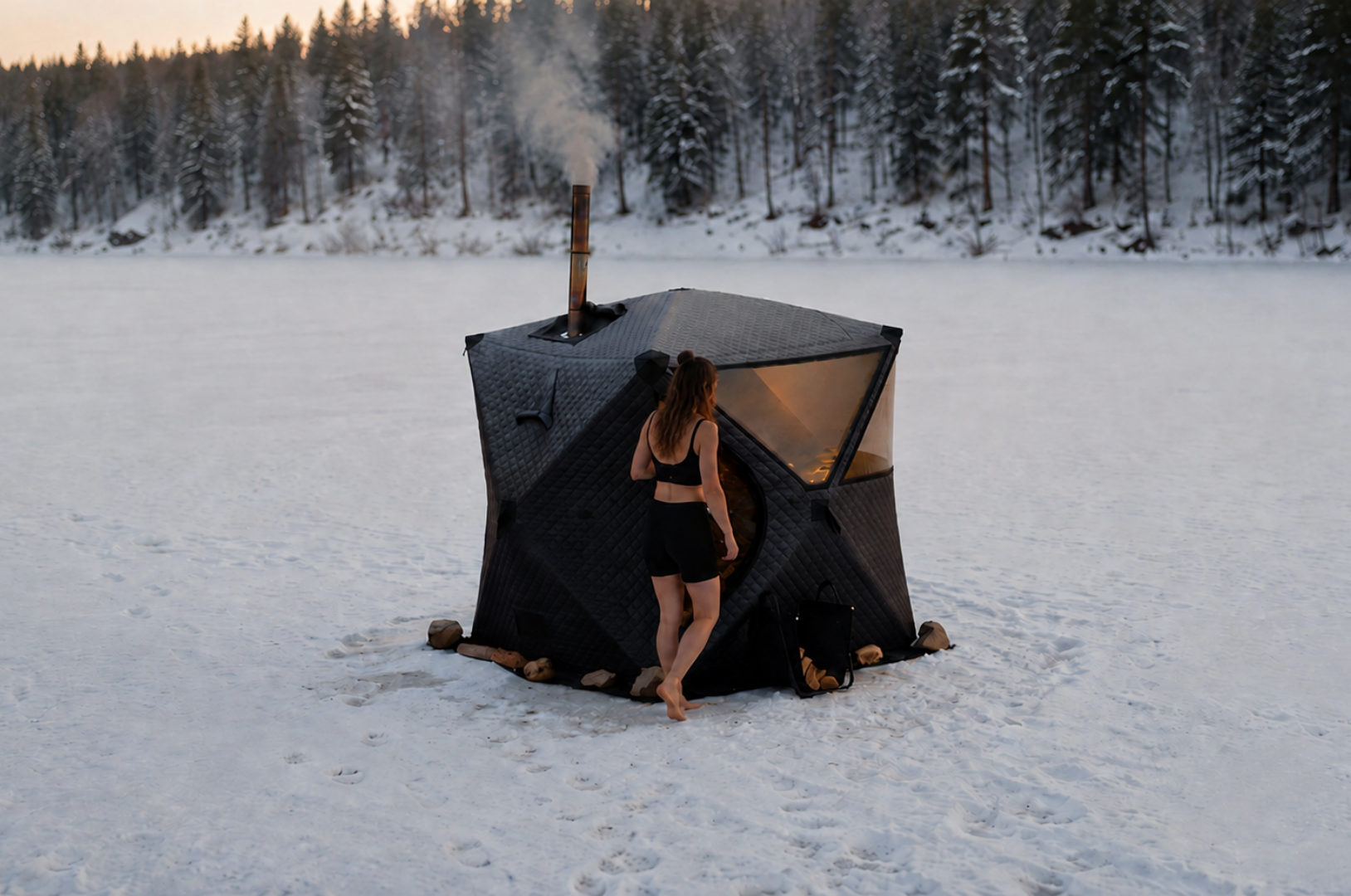
The Sweat Tent is a portable outdoor sauna heated by a wood-burning stove.
Its insulated walls pop into shape around a full-height interior, while the stove sits inside the enclosure with a chimney extending through the roof. Once the fire is going, the tent traps the warmth while the chimney directs smoke outside.
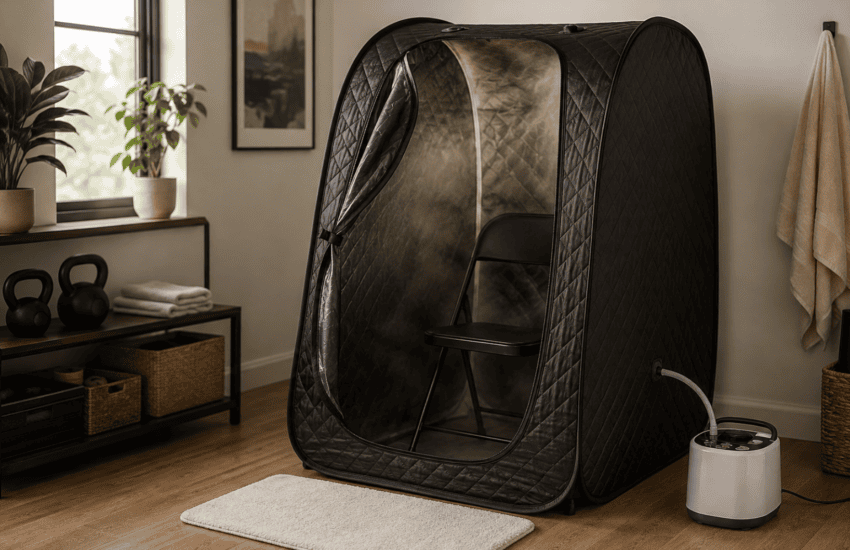
That makes it very different from the smaller steam sauna tents often sold for indoor use. Those usually rely on an electric steam generator and operate at much lower temperatures.
The Sweat Tent comes closer to the feel of a traditional sauna because the stove heats the surrounding air and the rocks above it. When you add a small amount of water to the stones, you get the familiar rush of steam associated with Finnish sauna bathing.
The difference is that this sauna doesn’t have to stay in one place. It can live in your backyard for the weekend, come along to a mountain cabin, or be packed into a vehicle for a camping trip where wood fires are allowed.
What Comes With the Sweat Tent?
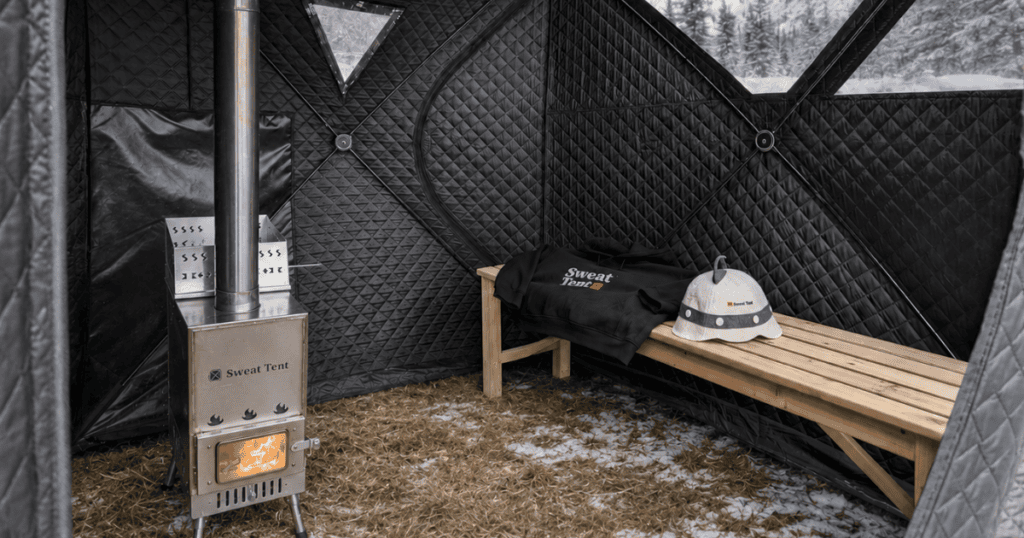
The main package includes the insulated tent and the wood-burning stove, along with the chimney components needed to vent it outside.
You also receive sauna rocks with a holder, a wooden thermometer, and a roof cover. Ground stakes and ropes help secure the tent, while the fire poker and heat-resistant gloves make it easier to manage the stove.
The tent and stove have separate carrying bags, which helps when moving everything between your yard and vehicle.
Exact inclusions can vary by package or promotion, so check the current product listing before ordering.
Sweat Tent Large vs. XL: Interior Space and Seating
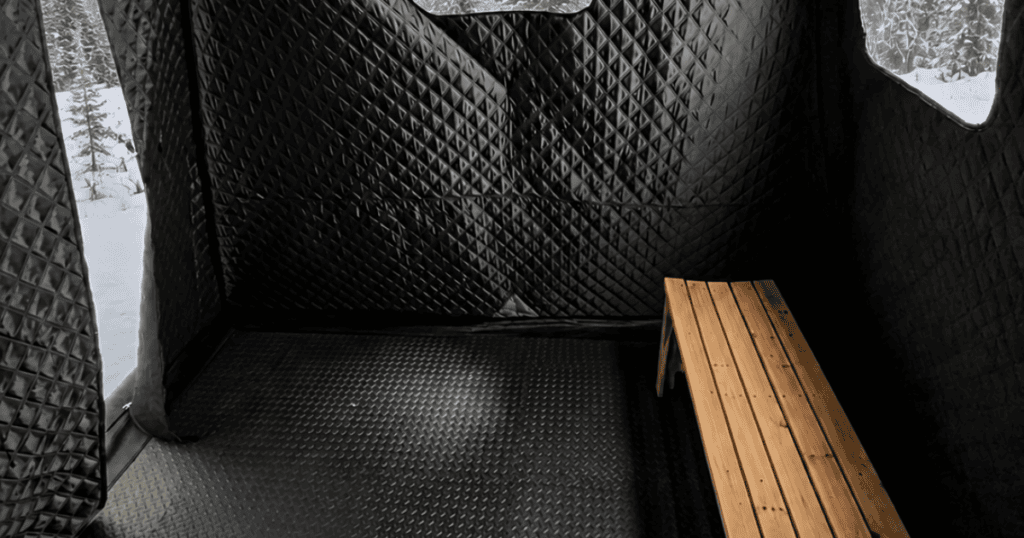
The Large Sweat Tent measures 6 feet long, 6 feet wide, and 7 feet high.
That gives you enough room to stand up inside and sit comfortably without feeling boxed into a one-person enclosure. It’s advertised as holding up to six adults, but that number depends heavily on the seating arrangement.
A single wooden bench is usually comfortable for two people. If there’s a second bench and enough space around the stove, three or four adults is a more realistic capacity.
The Sauna Tent XL expands to 10 by 10 feet while keeping the same 7-foot height. It’s advertised for up to 10 adults and offers considerably more space if you want to share the sauna with friends.
For solo use or couples, the Large should have plenty of room. The XL is a better choice if you plan to use it with a group or want more space to stretch out.
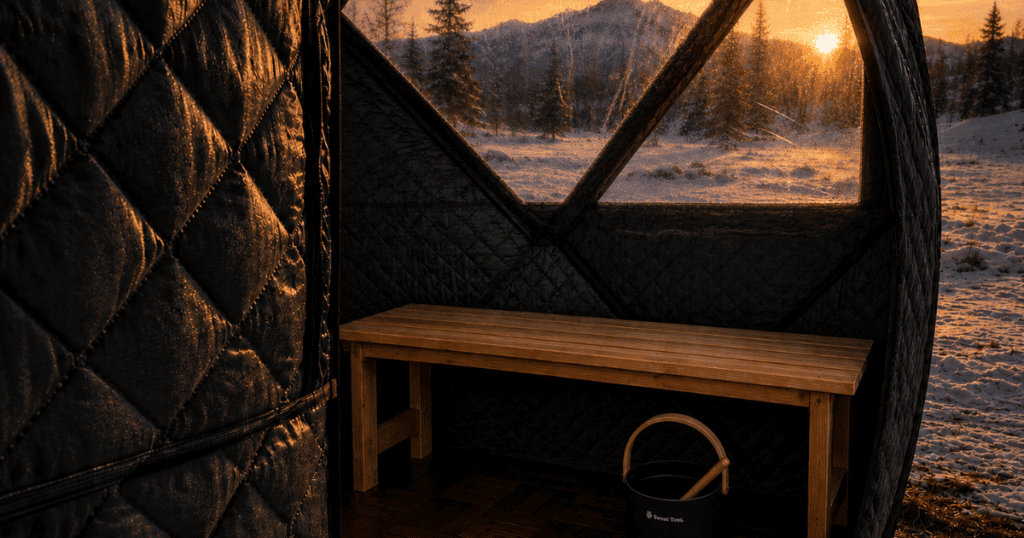
Inside either model, the clear plastic windows let in natural light without leaving you exposed to the weather. Depending on where you place the tent, you might be looking out over your yard, a wooded campsite, or snow collecting outside a cabin.
The insulated walls are made from Oxford polyester with cotton insulation between the layers. Once the fire is burning, the stove becomes the center of the space, with the glow behind its door replacing the hum you’d get from an electric heater.
Floorless Design and Optional Wooden Flooring
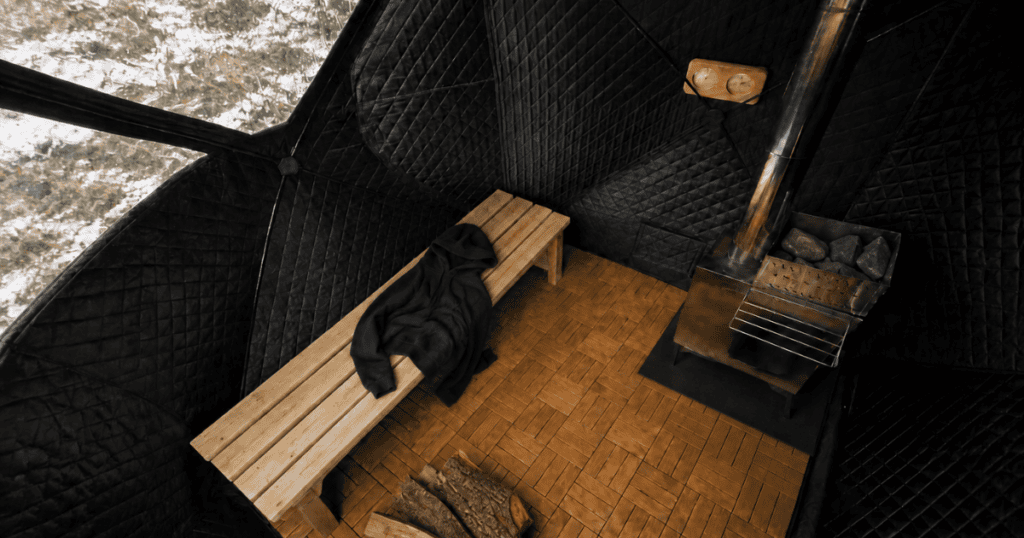
The Sweat Tent doesn’t have a built-in floor, so it sits directly over the surface beneath it.
That works well on stable grass or gravel, especially if you want water from the sauna rocks to drain naturally. It can also be placed on suitable outdoor hard surfaces when the stove has proper heat protection underneath it.
The downside becomes more obvious after rain. Muddy ground or melting snow can make the interior less comfortable, particularly if you’re walking barefoot.
Optional wooden flooring can give the space a cleaner finish and make the sauna feel more like a small cabin. However, that flooring needs to be purchased separately.
A heat-resistant stove mat is also important when the surface beneath the stove needs protection.
Sweat Tent Assembly and First-Time Use
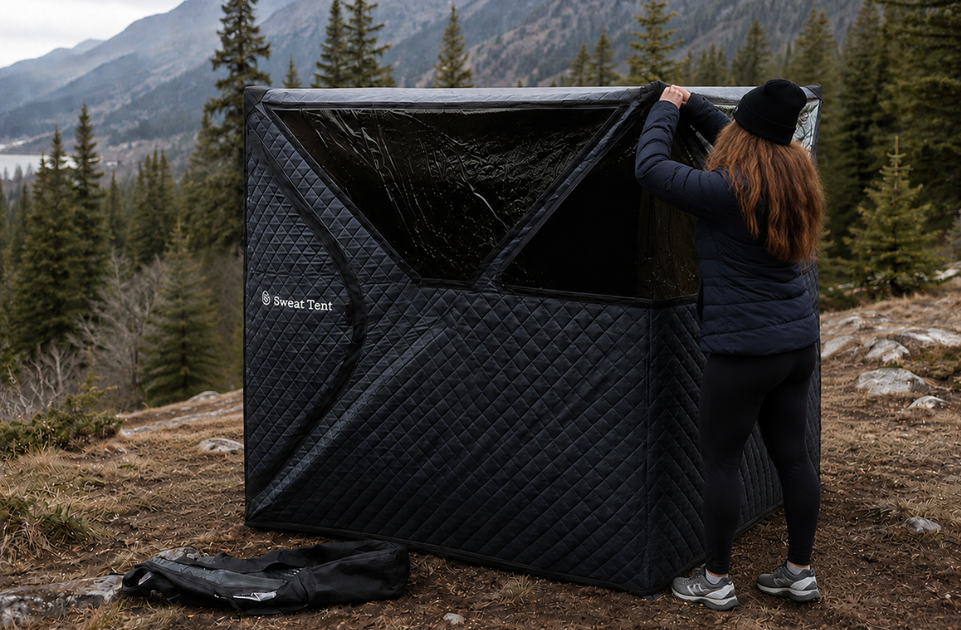
Once you know how the frame works, the tent itself can usually be assembled in about 15 minutes.
The walls use a pop-out design, so there’s no need to thread poles through fabric sleeves. After the sides are in place, the roof rises from the center and the tent can be secured to the ground.
The chimney sections connect above the stove and extend through the roof opening.
However, the first day takes longer because the stove needs to be seasoned before it goes inside.
Seasoning the Stove Before Your First Session
Before your first sauna session, the stove needs an initial burn outdoors.
This allows its coating to cure and helps burn off residues left from manufacturing. The recommended seasoning burn lasts approximately two to four hours, after which the stove needs to cool completely before you move it into the tent.
That means your first session isn’t something to squeeze in quickly after opening the boxes. It’s better to allow enough time for the stove to burn safely and cool down before you finish putting everything together.
Once that initial burn is done, you won’t need to repeat the same process before every session.
Outdoor Placement and Ventilation
The Sweat Tent should only be used outdoors because its wood-burning stove produces combustion gases.
The fresh-air vent near the bottom of the tent needs to remain open throughout the session. That airflow helps support combustion while reducing the chance of smoke building up inside.
The chimney should be securely connected before the fire is lit, and the stove needs enough space around it to avoid contact with the tent walls or bench.
Carbon monoxide is odorless, so a lack of visible smoke doesn’t mean ventilation can be ignored. The tent should never be used inside a garage, shed, or other enclosed building.
If you notice a strong chemical smell or visible smoke inside the tent, leave the enclosure and check the stove, chimney connection, and airflow before using it again.
Sweat Tent Sauna Temperature, Heat-Up Time, and Steam Performance
A wood-fired stove gives the Sweat Tent a very different feel from portable steam saunas that depend on an electric steam generator.
Instead of waiting for a small heater to fill an enclosure with mist, the stove warms the surrounding air while heating the rocks above it.
How Hot Does the Sweat Tent Get?
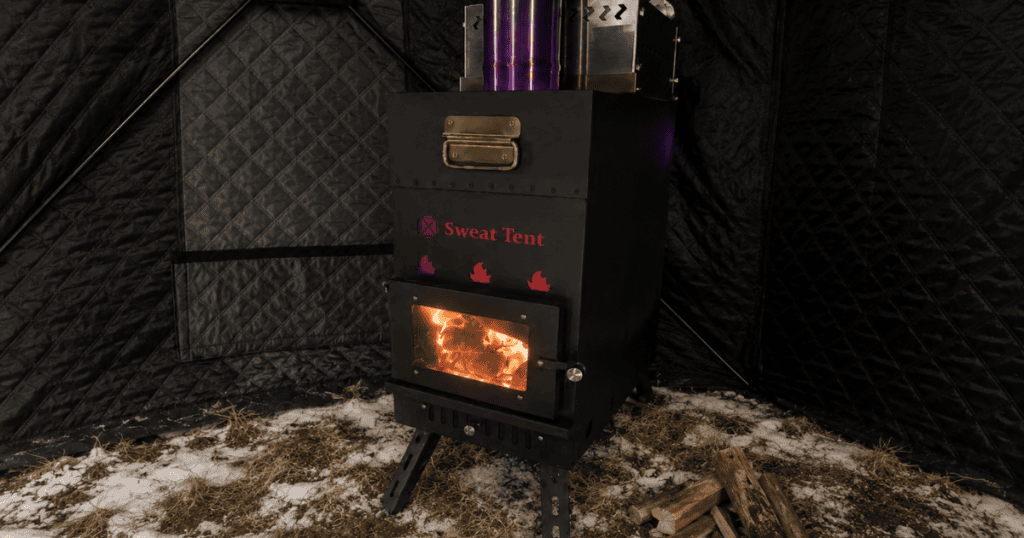
Sweat Tent says the sauna can reach around 176°F to 200°F within 20 to 30 minutes.
Independent reviews show that it can reach those levels, although the results aren’t identical in every location.
One hands-on reviewer reached around 170°F in less than half an hour. Another recorded approximately 180°F within 30 minutes and later pushed the temperature to 220°F after adding more wood.
That 220°F reading shows how much heat the stove can put out, but you do not need to run the sauna that hot. Temperatures around 170°F to 180°F can already be intense, especially once the stones are fully heated.
The size of the tent also plays a role. One XL owner reported difficulty getting above 165°F to 170°F during 30°F weather, even after keeping the stove going for about an hour.
That doesn’t mean the XL can’t reach higher temperatures. It just shows that colder conditions and the larger interior can affect how quickly the sauna heats up.
Sauna Rocks, Steam Output, and Bench Height
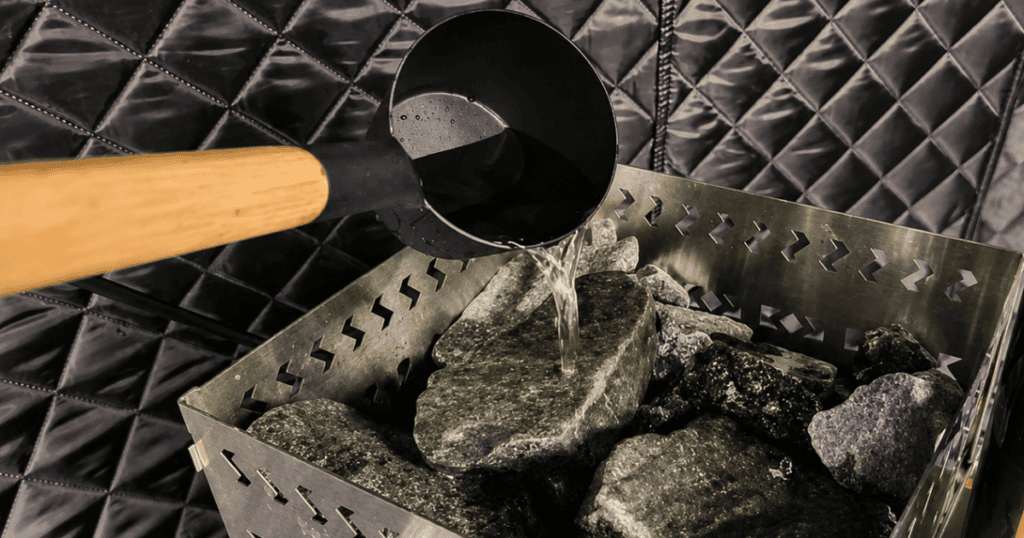
Once the sauna rocks are hot enough, you can slowly pour a little water over them to create a quick wave of steam.
That burst of warmth changes the feel of the session almost immediately. The windows fog slightly, and the heat feels more intense across your skin.
However, the rock basket is smaller than the heater in many permanent saunas. It won’t produce the same sustained humidity as a larger sauna heater or dedicated steam room.
The temperature can also feel different depending on where you’re sitting.
Heat rises, so a thermometer positioned high inside the enclosure may read hotter than the air around a low bench. This is one reason some people report a high temperature while still noticing cooler air around their legs.
The stove also gives off direct radiant heat. Placing the bench against the opposite wall creates more distance from the stove and usually makes the session more comfortable.
Sweat Tent Winter Performance and Portability
The Sweat Tent can be used during winter, and cold weather is where the experience can feel particularly inviting.
Its insulated walls help hold warmth inside the enclosure while the stove continues heating the air. Snow beyond the windows and the glow from the fire give the tent more of a mountain-cabin feel than a typical portable sauna.
The Large model may be easier to heat in freezing conditions because there’s less interior space to warm. The XL offers more room but may need additional time before the temperature climbs.
Outdoor Storage and Weather Exposure
The Sweat Tent can stay outdoors between sessions if it’s secured properly, but it shouldn’t be treated like a permanent outdoor building.
Prolonged exposure to sun and rain can wear down the fabric over time. Heavy snow or strong winds can also put pressure on the frame, especially if the roof cover isn’t pulled tight.
Some owners have reported rainwater collecting on the roof, which can cause the fabric to sag.
It’s safer to take the tent down before severe weather and store it somewhere dry.
The stove also needs protection from moisture because surface rust can develop if it remains outside in wet conditions.
Before packing the tent away, let the stove cool fully and allow the fabric to dry. That helps prevent trapped moisture from turning into mildew or a persistent musty smell.
Packed Weight and Camping Use
The tent weighs approximately 30 pounds, while the stove adds another 65 pounds. With around 20 pounds of sauna rocks, the full package comes to roughly 115 pounds before you add a cedar sauna bench or other accessories.
Separate carrying bags make the pieces easier to move, but this isn’t something most people would want to carry far from a vehicle.
It’s better suited to a cabin, a backyard, or a campsite where you can park nearby and wood fires are permitted.
That still gives it more freedom than a permanent sauna. If you move homes or want to take it away for the weekend, the entire enclosure can come with you.
However, if you need to pack everything away after every session, the extra work could become frustrating. It’s easier to enjoy when you have somewhere safe to leave it assembled or a nearby place to store it.
Sweat Tent Price and Ownership Costs
The Large Sweat Tent starts at around $1,499, while the XL begins at approximately $1,799.
That’s less than many permanent outdoor saunas, which can cost $5,000 or more before delivery and installation.
However, the purchase price isn’t the only expense to consider.
Firewood and Optional Accessories
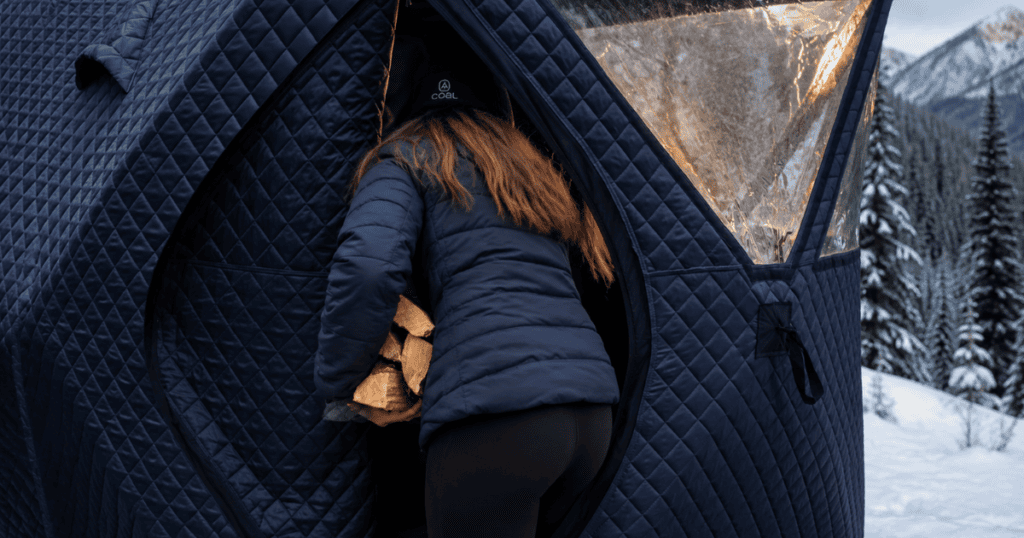
A typical session is estimated to use around one-fifth of a bundle of firewood.
The actual amount depends on how long the stove burns and how hot you want the tent to get. Cold weather can also increase wood use, especially if you choose the larger XL model.
Dry white birch is a popular option because it burns hot and produces less smoke than wet or poorly seasoned wood. Other dry hardwood can work as well, provided the pieces are small enough to fit inside the stove.
Locally sourced firewood will often cost less than branded bundles ordered online. If you plan to use the sauna several times a week, that difference can add up over time.
The fire also needs occasional attention. There’s no thermostat that automatically keeps the tent at a set temperature, so you adjust the heat by managing the firewood and airflow.
A bucket and ladle may cost extra if you want to create steam, while optional interlocking hardwood flooring can increase the total if you prefer a finished surface underfoot.
Warranty Coverage and Returns
The Sweat Tent comes with a one-year limited warranty for manufacturing defects.
Damage caused by storms, rust, fire, or normal wear generally isn’t covered.
Returns are advertised within 60 days, although a restocking fee may apply. Check the return terms before ordering, especially if you’re still deciding between the Large and XL.
>> Check Current Price of Sweat Tent
Sweat Tent vs. Infrared Sauna
The Sweat Tent and an infrared sauna create very different kinds of heat.
A wood-fired sauna heats the air around you, so the entire enclosure becomes hot. The stove and sauna rocks also create the atmosphere associated with traditional Finnish saunas.
An infrared sauna uses electric heating elements that warm the body more directly, usually at a lower air temperature. It’s often easier to use indoors and doesn’t require firewood or a chimney.
If you want high heat and the feel of a traditional sauna, the Sweat Tent is likely to be the better fit.
If indoor convenience is more important, a portable infrared sauna may be easier to use regularly.
Is the Sweat Tent Worth It?
The Sweat Tent is worth considering if you want the heat of a traditional sauna without building a permanent structure.
It can reach temperatures that smaller portable steam tents usually can’t match, and the wood stove gives the experience a very different feel from an infrared sauna blanket.
The full-height interior also gives you room to sit comfortably while looking outside. Whether that view is your backyard after sunset or snow-covered trees beside a cabin, the outdoor setting becomes part of the reason to use it.
However, it isn’t effortless. You need a safe place for the stove, enough time to manage the fire, and somewhere dry to store the equipment when the weather turns.
If those conditions work for you, the Sweat Tent offers something more personal than a crowded gym sauna. It creates a quiet place to slow down, warm up, and take the experience with you when you leave home.
Sweat Tent Review FAQs
Does the Sweat Tent Come With a Bench?
Some packages include a wooden bench, while others don’t. Check the specific bundle before ordering, especially if the product photos show accessories that may be sold separately.
Does the Sweat Tent Need Electricity?
No. The sauna is heated by a wood-burning stove, so it doesn’t need to be connected to an electrical outlet.
Can You Use the Sweat Tent With a Cold Plunge?
Yes. A cold plunge can be placed nearby if you want to alternate between sauna heat and cold water.
If you have a heart condition, blood pressure concern, or another relevant medical issue, speak with a healthcare professional before combining intense heat with cold exposure.
How Long Should a Sweat Tent Session Last?
Start with approximately 10 to 15 minutes, particularly if you’re new to high sauna temperatures. Leave sooner if you begin to feel dizzy, overheated, or uncomfortable.
Does the Sweat Tent Include Red Light Therapy?
No. The Sweat Tent is a wood-fired sauna, so it doesn’t include red light therapy panels or electric infrared heating elements.
You can use a separate red light therapy device before or after your sauna session if it’s operated in a suitable environment.
A red light panel shouldn’t be placed inside the tent unless it has been specifically approved for high temperatures and humidity.
If you want both features in one enclosure, these two-person saunas with red light therapy may be a closer fit.