5 Best Laser Caps for Hair Growth – Editor Picks for Thicker, Fuller Hair
Laser caps have become a popular non-drug option for people who want to support hair growth alongside topical treatments, but a large diode count doesn’t necessarily signal a better device. Many laser hair growth caps combine laser diodes and LEDs in one headline number, which can make two models appear more alike than they are.
Laser diodes produce coherent, directional light that can be focused into a narrower beam, while LEDs typically distribute light over a wider angle. Both may be used in low-level light therapy, so it helps to check how many of the stated diodes are lasers and how many are LEDs when comparing devices.
The picks below compare the best laser caps for hair growth based on laser technology, coverage of thinning areas, and comfort for regular use in the long term.
| Product | Light Source | Emitter Count | Session Length | Fit | Where to Buy |
|---|---|---|---|---|---|
| Capillus SPECTRUM | Laser only | 312 laser diodes | 6 minutes daily | Dome inside a sport cap shell. Fits head sizes up to 24″ | Check Price on Capillus |
| illumiflow 302 Flex Laser Cap | Laser only | 302 laser diodes | 6 minutes daily | Lightweight, flexible, fits 23.5-24″ head circumference | Check Price on illumiflow |
| Kiierr 272 MD Elite XL | Laser only | 272 laser diodes | 30 minutes every other day | Soft cap, hands-free | Check Price on Kiierr |
| HairMax PowerFlex 272 | Laser only | 272 laser diodes | 7 minutes, 3 times weekly | Flexible cap | Check Price on Amazon |
| The Original LaserCap HD+ | Laser only | 304 laser diodes | 30 minutes every other day | Flexible laser liner inside a baseball cap | Check Price on LaserCap |
How Laser Caps for Hair Growth Work
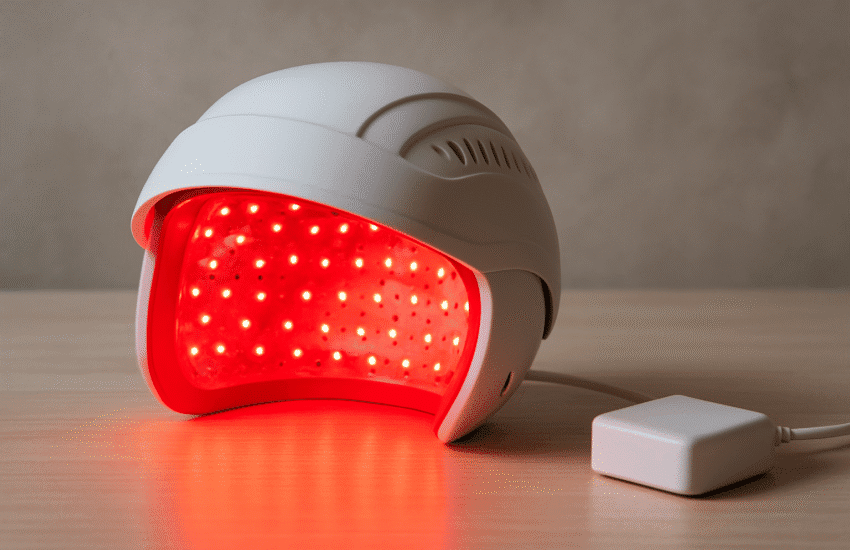
Laser caps use low-level light therapy (LLLT), also known as photobiomodulation, to deliver red light across the scalp. Most hair growth caps operate near 650 nm, although some models add near-infrared wavelengths.
Researchers believe this light may support energy production within still-active follicles and help keep hair in the anagen growth phase longer. LLLT may improve density in some cases of pattern hair loss, but it doesn’t block DHT or revive follicles in smooth, long-bald areas.
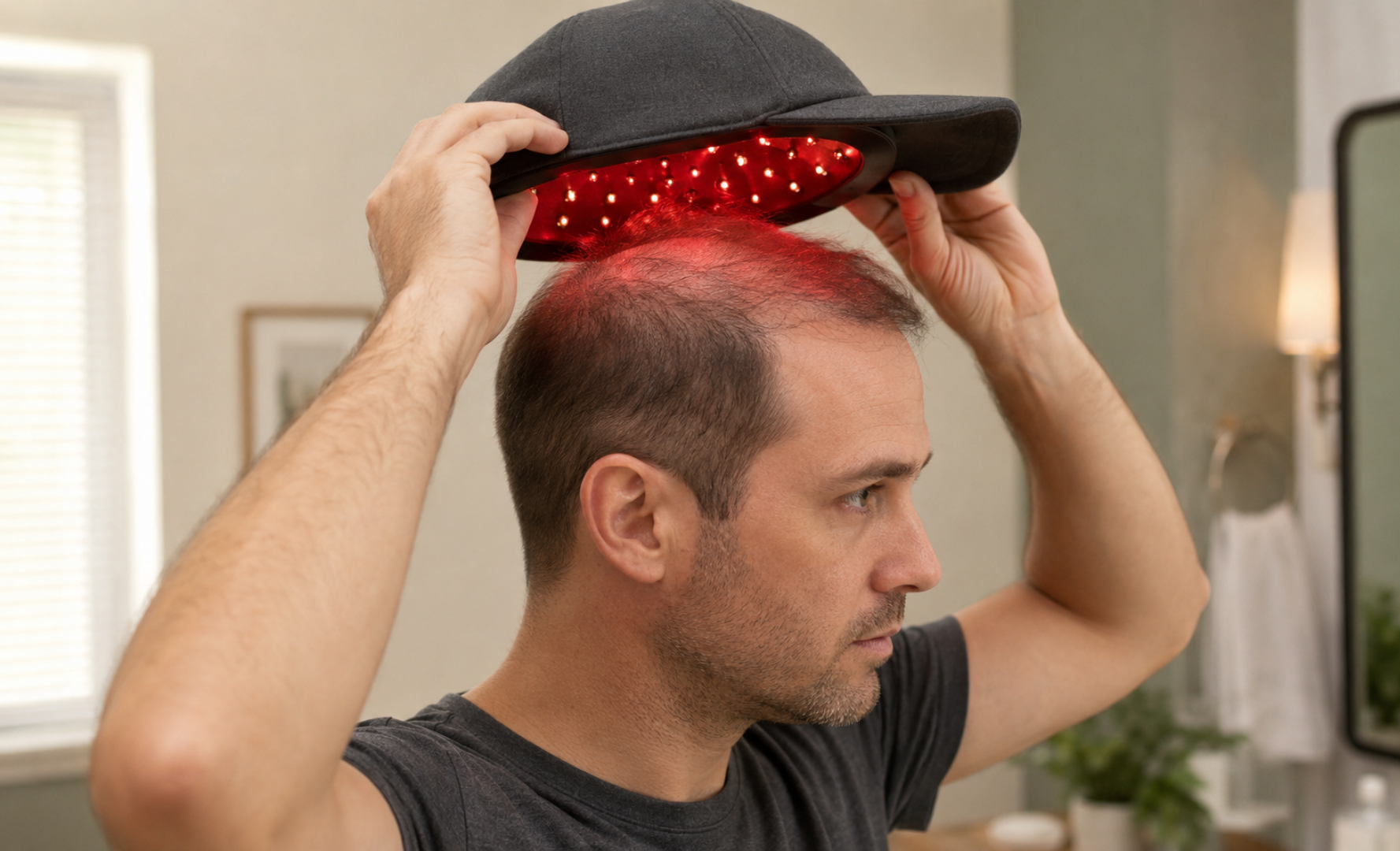
Most laser hair growth caps provide hands-free treatment and switch off automatically when each session ends. Treatment can range from a few minutes daily to 30 minutes every other day, so choose a schedule you can realistically maintain for several months to give yourself the best chance of seeing measurable progress.
Top Picks – Red Light Therapy Laser Caps for Hair Growth
Best Overall: Capillus SPECTRUM
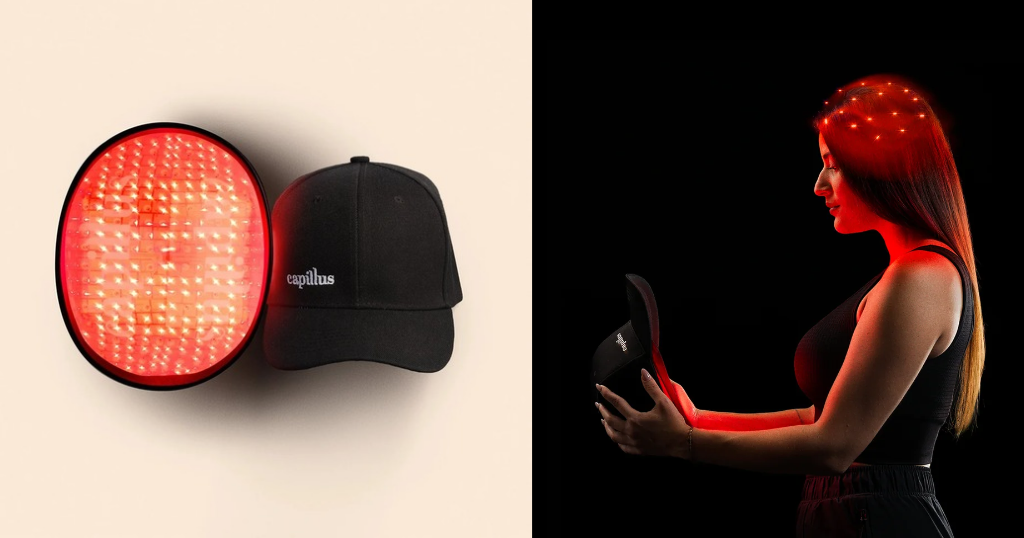
The Capillus SPECTRUM laser cap combines a six-minute daily treatment with automatic session tracking through the Capillus app. Its structured laser dome sits inside a fitted sport cap, while the rechargeable battery keeps treatment cordless around the house.
Key Features:
- 312 laser-only diodes for full-scalp coverage
- Dual 650nm and 808nm light
- Six-minute daily sessions to keep wear short
- Bluetooth app to track sessions and photos
- Rechargeable battery pack for cordless movement
- Includes fit cushions for personalized comfort
Best for: People who want a premium 312-laser cap with easy six-minute sessions, progress tracking, and both red and near-infrared light.
Good to Know: The battery provides approximately 4-5 treatments per charge, so daily use means charging it roughly once a week. Its structured dome also gives it a taller profile than an ordinary baseball cap.
Best Lightweight Laser Cap: illumiflow 302 Laser Cap
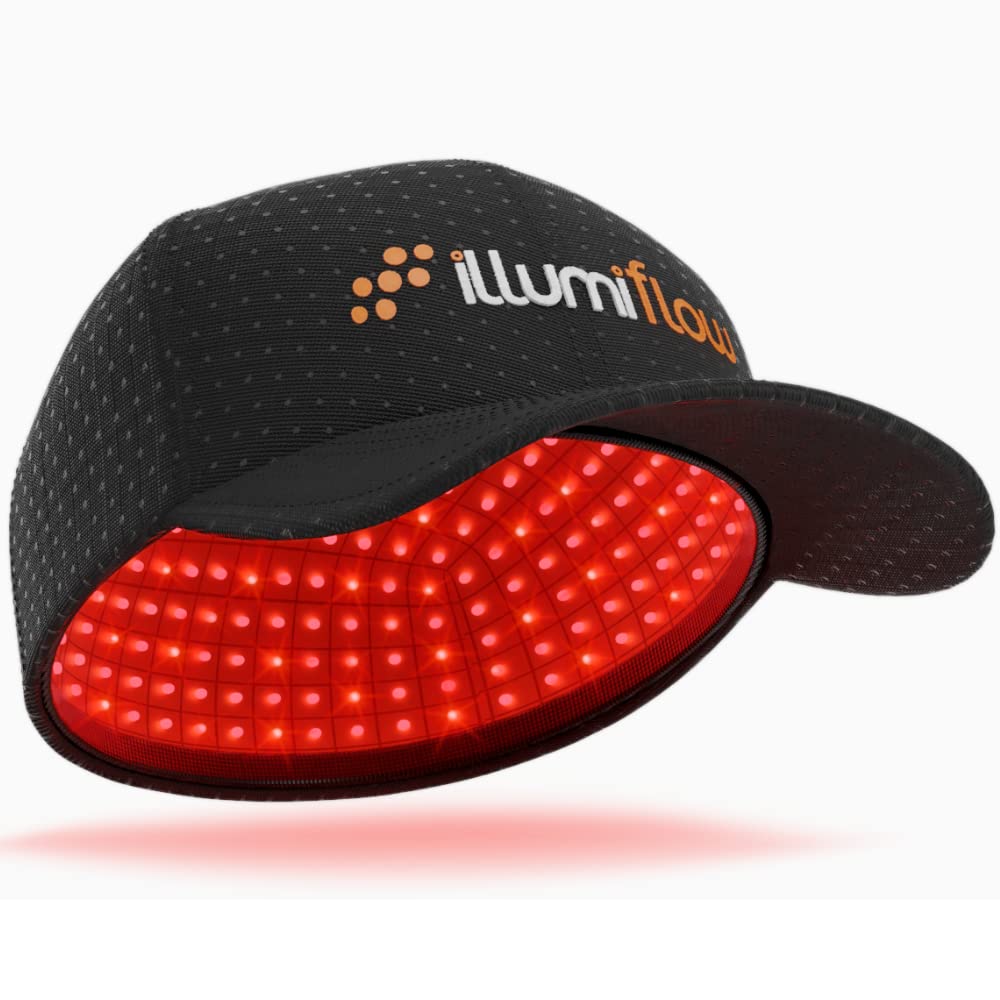
The illumiflow 302 Flex packs 302 lasers into a lighter, flexible shell that sits closer to the shape of the head. It’s less bulky than a rigid helmet and uses lasers rather than a mix of lasers and LEDs.
Key Features:
- 302 medical-grade laser diodes
- 650 nm red laser wavelength
- 1,510 mW total power output
- Six-minute daily treatments
- Head sensors and automatic shutoff
- Rechargeable battery and lightweight cover cap
Best for: A lighter, more flexible fit without moving to a lower diode count or a laser-LED blend.
Good to Know: The 302 Flex is designed for head circumferences of approximately 23.5 to 24 inches, so measuring before ordering is worthwhile. It uses one red-light wavelength and does not include app connectivity.
Best Laser Cap for Larger Heads: Kiierr 272 MD Elite XL
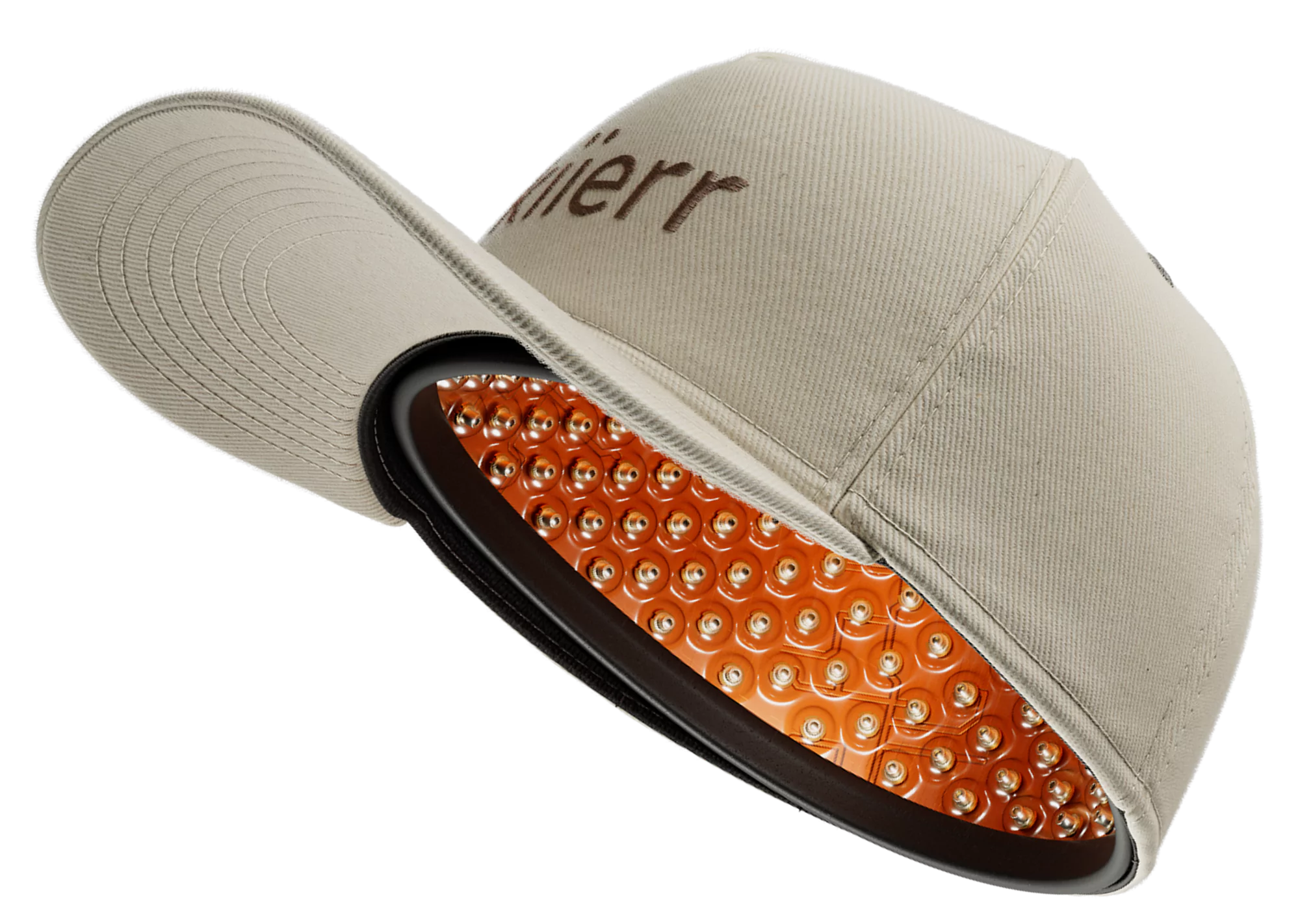
The Kiierr 272 MD Elite XL gives you the same high diode count as the popular 272 Premier but in a larger shell that fits head circumferences up to 24.5 inches. That extra room makes it a better Kiierr option if standard laser caps tend to sit too high or feel restrictive.
With 272 medical-grade 650 nm laser diodes and 1,360 mW of total output, it provides broad coverage across the scalp while keeping treatment to a 30-minute session every other day.
Key Features:
- 272 medical-grade laser diodes
- 650 nm laser wavelength
- 1,360 mW total power output
- Fits head circumferences up to 24.5 inches
- 30-minute sessions every other day
- Rechargeable battery for cordless treatment
Best for: Larger head circumferences and anyone who finds standard-size rigid laser caps too restrictive.
Good to Know: Kiierr’s standard 272 Premier fits heads up to 23.5 inches, while the 272 MD Elite XL increases the fit to 24.5 inches. If you’re comfortably within the standard size, the Kiierr Premier gives you the same 272-laser count and treatment schedule without needing the larger Elite shell.
Best for the Shortest Weekly Schedule: HairMax PowerFlex 272
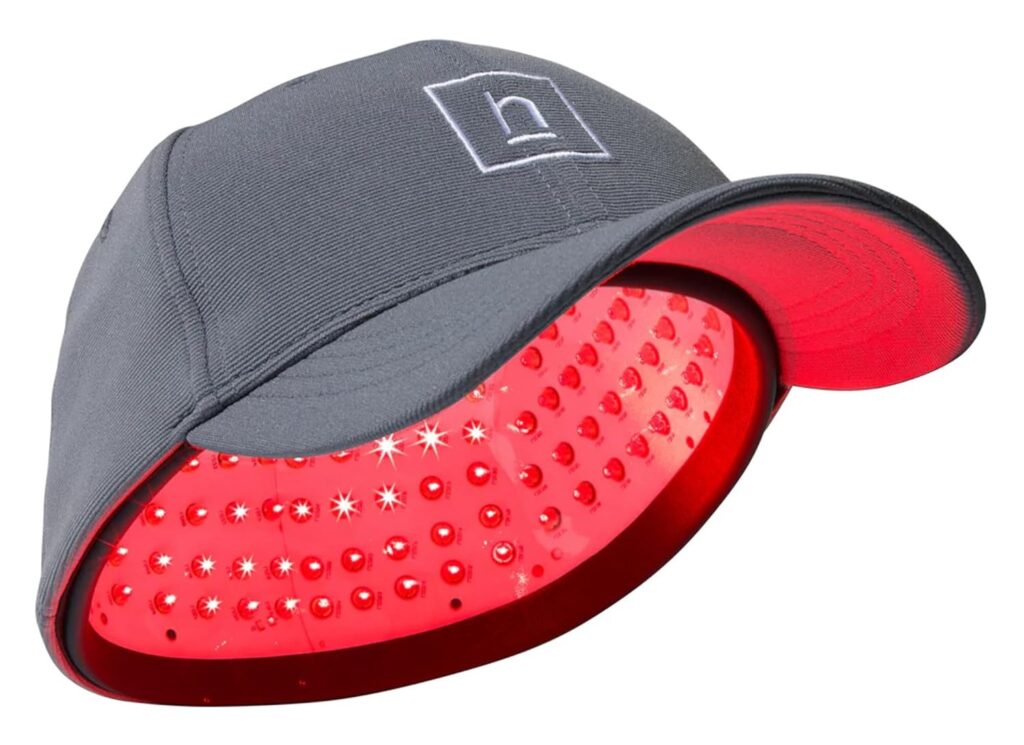
Daily treatment is a deal breaker for some people, even when each session is relatively short. HairMax reduces the schedule to just three 7-minute treatments a week, giving the PowerFlex 272 the lowest weekly time requirement in this roundup.
Key Features:
- 272 medical-grade laser diodes
- Red laser light at approximately 655 nm
- 1,360 mW total power output
- 7-minute treatments 3x weekly
- Lightweight, flexible, cordless design
- Sport cap and travel case included
Best for: Those who would rather fit LLLT into 3 fixed days instead of remembering to do daily treatment.
Good to Know: The rechargeable controller connects to the cap with a short cable, although no wall connection is needed during treatment.
Best High-Dose Laser Cap: The Original LaserCap HD+
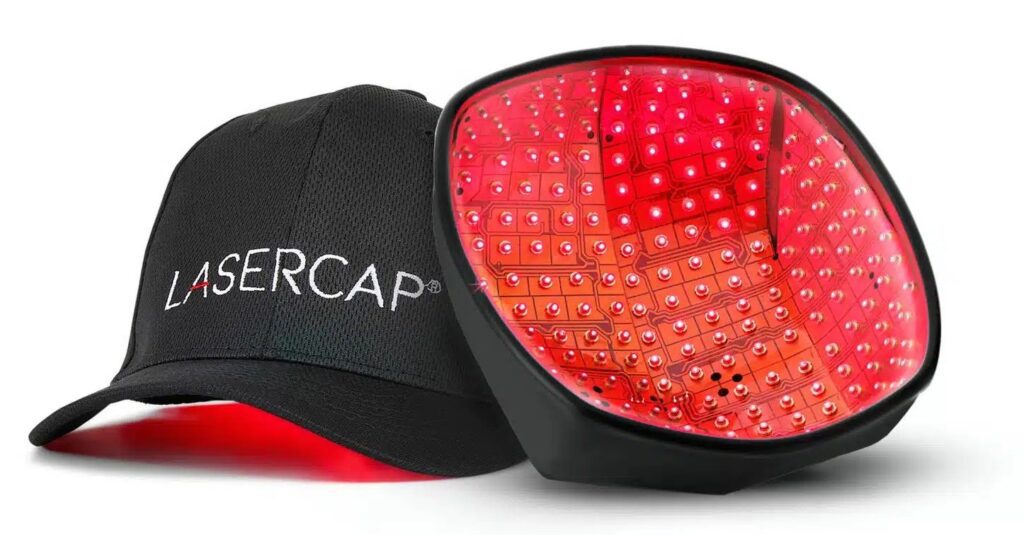
The LaserCap HD+ takes a high-dose approach, using 304 medical-grade 650 nm lasers to deliver a stated 3.93 J/cm² across the brand’s largest coverage area. It treats the hairline, crown, vertex, and diffuse thinning in one hands-free session, making it the top LaserCap model when hair loss spans several areas of the scalp.
Key Features:
- 304 medical-grade laser diodes with no LEDs
- 650 nm red laser wavelength
- Stated energy dose of 3.93 J/cm²
- Large treatment area for diffuse thinning
- Pulse-wave laser emission
- 30-minute sessions every other day
- Rechargeable battery with automatic shutoff
Best for: Diffuse thinning across more than one scalp area.
Good to Know: Each session lasts 30 minutes, so the HD+ requires more time per treatment than the shorter-session caps in this roundup.
How to Choose the Best Laser Cap for Thinning Hair
The best laser cap for thinning hair isn’t necessarily the model with the highest advertised diode count. Start by checking what that number includes, then consider how the cap delivers treatment and whether its design will be comfortable enough to use for several months.
Laser Cap Fit, Scalp Coverage, and Comfort
Treatment becomes harder to maintain when a laser hair growth cap fits poorly or misses the areas where thinning is most visible. Some devices concentrate light across the top and crown, while others extend farther toward the frontal hairline and temples.
Rigid helmets like the iRestore Elite hold their shape and keep the diodes in a fixed position, although they may feel bulkier to wear than a cap. Flexible silicone or fabric caps sit closer to the scalp and look more discreet, but they may shift more during use.
Sizing information is especially important when a device is sold as one size fits most. If two laser caps offer similar technology, the better-fitting model is more likely to remain comfortable throughout the treatment period.
Laser Cap Session Length and Treatment Schedule
Laser cap treatment times range from a few minutes each day to longer sessions several times a week. Weekly minutes alone don’t provide a fair comparison because each device has its own output and prescribed dose.
A six-minute session isn’t automatically stronger than a 30-minute session, and wearing a cap more often than directed hasn’t been shown to speed up results. Follow the manufacturer’s schedule and choose one that still feels manageable after the initial novelty wears off.
Since results are usually assessed over several months, a shorter session may suit someone who prefers daily use. A less frequent schedule may work better for anyone who would rather set aside time on specific days.
Compare Red and Near-Infrared Wavelengths
Red light around 650 nm is common in laser caps for hair growth, while some premium models add near-infrared light to broaden the wavelengths delivered to the scalp. Dual-wavelength technology may be worth paying for when the exact model has strong clinical evidence behind it.
Before paying more for it, check:
- Whether the brand clearly identifies each wavelength.
- Whether clinical evidence supports the exact laser cap.
- What else the upgrade adds, such as broader coverage or shorter sessions.
Compare the Money-Back Guarantee and Warranty
Hair growth takes time, so a generous money-back guarantee gives a laser cap a fairer trial than a standard 30-day return period. For anyone unsure about spending several hundred dollars on LLLT, the return policy can be as valuable as the cap itself.
Read the terms for:
- When the trial period begins
- Return shipping or service fees
- Photo and usage requirements
- Original packaging conditions
- Battery and charger coverage
Warranties may cover hardware faults after the return period ends, depending on the terms. A longer warranty can be useful for premium laser caps, where replacing the battery, controller, or diode array may be costly.
Tips for Getting the Most From a Laser Cap
1. Take Laser Cap Before-and-After Photos
Photograph the hairline, part, and crown before the first session, then repeat the photos monthly. Using the same lighting, distance, and hair position makes subtle changes in coverage easier to see.
2. Follow the Recommended LLLT Schedule
Use the laser hair growth cap for the prescribed session length and frequency. Adding extra sessions hasn’t been shown to accelerate hair regrowth.
3. Use the Cap as Directed
Most manufacturers recommend using their device on dry hair without styling products blocking the light. Instructions vary, so check the manual before applying minoxidil, serum, or another topical treatment underneath the cap.
4. Coordinate It With Other Hair-Loss Treatments
Laser caps are often used alongside minoxidil or finasteride rather than replacing them. Some research suggests that LLLT combined with minoxidil may improve hair density more than either treatment alone, although individual results still vary.
The Bottom Line on Laser Caps for Hair Growth
Laser caps offer a hands-free, non-drug way to support hair growth, either on their own or alongside topical treatments. A high diode count can be a useful starting point, but it becomes more informative once you know whether it refers to lasers, LEDs, or both.
The Capillus SPECTRUM earns Red Light Skin Lab’s best overall spot because all 312 of its diodes are lasers, it combines 650 nm red light with 808 nm near-infrared light, and the shorter six-minute daily sessions are likely to make the biggest difference in everyday use.
With app-based progress tracking, cordless power, and a trendy sport-cap design, the Capillus SPECTRUM is our top pick for anyone prepared to invest in a premium laser cap for hair growth.
Disclaimer: This article is for informational purposes only and isn’t a substitute for medical advice, diagnosis, or treatment. Hair loss can have many causes, so consult a qualified healthcare professional before using a laser cap, particularly if you have a scalp condition, take photosensitizing medication, or experience sudden or patchy hair loss. Results vary, and no device can guarantee hair regrowth.