8 Best Portable Infrared Saunas in 2026: Top Tents and Blankets for Home Use
Portable infrared saunas bring spa quality heat therapy into your home without the cost or space commitment of a traditional sauna. Options include infrared sauna blankets you lie in and tent style infrared sauna cabins you sit inside, and most fold up for easy closet storage.
Infrared panels heat your body directly rather than warming the surrounding air, which can mean faster warm-up times and lower electricity use.
This guide compares the main portable infrared sauna types by heat output, comfort, setup time, storage footprint, and operating cost, so you can choose the best portable infrared sauna for your space and goals.
Top Portable Infrared Saunas for Home Use: Comparison Chart
| Product | Format | Max Temp | Setup Time |
|---|---|---|---|
| Sunlighten Solo | Collapsible Dome | 150°F | 15-20 min |
| SAUNABOX Pulse Pro | Tent | 160°F | 5 min |
| Sun Home Blanket | Blanket | 167°F | 2-5 min |
| 1Love Dome | Half-Dome | 194°F | 3-5 min |
| Durherm Tent | Tent | 140°F | 10 min |
| Radiant Saunas | Tent | 150°F | 10-15 min |
| SereneLife Box | Tent | 140°F | 10 min |
| KASUE Tent | Steam + Infrared | 140°F | 10 min |
Disclosure: As an Amazon Associate I earn from qualifying purchases at no extra cost to you.
How Portable Infrared Saunas Work
Portable infrared saunas use carbon fiber or ceramic heating panels to emit infrared light waves that warm your body directly.
Unlike traditional steam saunas that heat the air to 180-200°F and produce humidity, infrared saunas for home use typically run between 130-170°F because the heat penetrates your skin without needing to raise the ambient temperature as high.
Some models offer full-spectrum infrared that combines near, mid, and far wavelengths for broader coverage, though many portable units focus on far-infrared only.
Most home infrared saunas include these features:
- Standard 110-120V plug (no special wiring required)
- Foldable or collapsible design for storage in closets or under beds
- Digital temperature controls with timers for session management
- Sessions typically lasting 20-45 minutes for muscle recovery and relaxation
- Operating costs around 20-50 cents per session based on average electricity rates
You’ll find three main formats in the portable sauna market: tent-style units where you sit inside fully enclosed, sauna blankets where you lie down with just your head exposed, and dome systems that position over your body while you recline.
People tend to use portable saunas 2-4 times per week, often fitting sessions into their evenings after workouts or before bed for better sleep quality. The compact footprint works well in bedrooms, bathrooms, or even walk-in closets when space is tight in small apartments or condos.
Best Portable Infrared Saunas for Home Use in 2026
Best Overall: Sunlighten Solo Portable Infrared Sauna
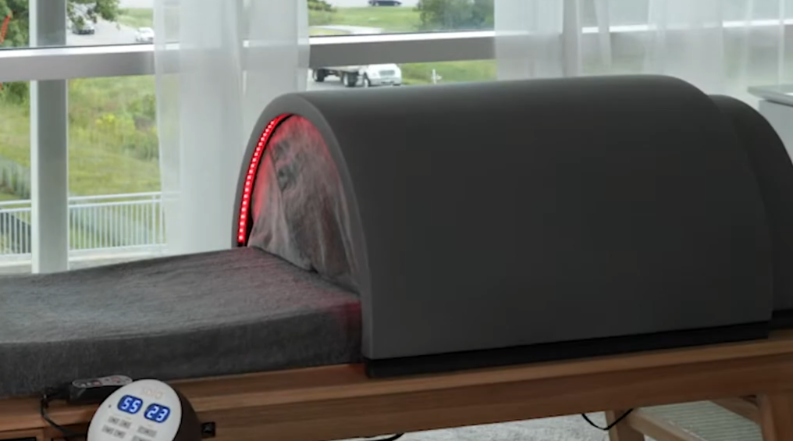
The Sunlighten Solo uses a two-piece dome structure that slides together over your body while you lie on an included pad. Carbon fiber heating panels are arranged in zones to target your feet, core, and upper body separately, giving you more control over where the heat concentrates during each wellness session.
The personal infrared sauna heats up to 150°F and includes optional chromotherapy lighting with multiple color settings.
Setup takes about 15-20 minutes initially, though you’ll get faster with practice. When you’re done, both dome pieces collapse and fit into a carrying bag that stores in a closet.
Key Specifications:
- Three-zone carbon fiber heating for targeted body coverage
- Collapsible double-dome design stores flat in carrying bag
- Digital controls with chromotherapy light options included
- Seven-year warranty on heating elements and three-year on controls
- 1,260 watts on standard 120V outlet for home use
Best for: People who want the closest experience to a permanent sauna cabin but need something that can fold away. The zone heating works well if you’re focusing on specific areas for muscle recovery during different sessions, and the long warranty suggests this portable sauna can handle daily use over several years.
Good to Know: The dome structure feels more substantial than tent-style portable units, which means it also takes up more storage space even when collapsed. You’ll need about 6 feet of floor length when it’s set up. The higher price point reflects the build quality and warranty coverage that comes with this home sauna system.
Best Tent-Style Sauna: SAUNABOX Pulse Pro
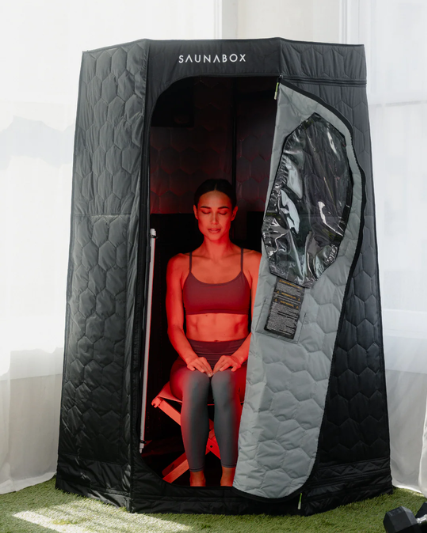
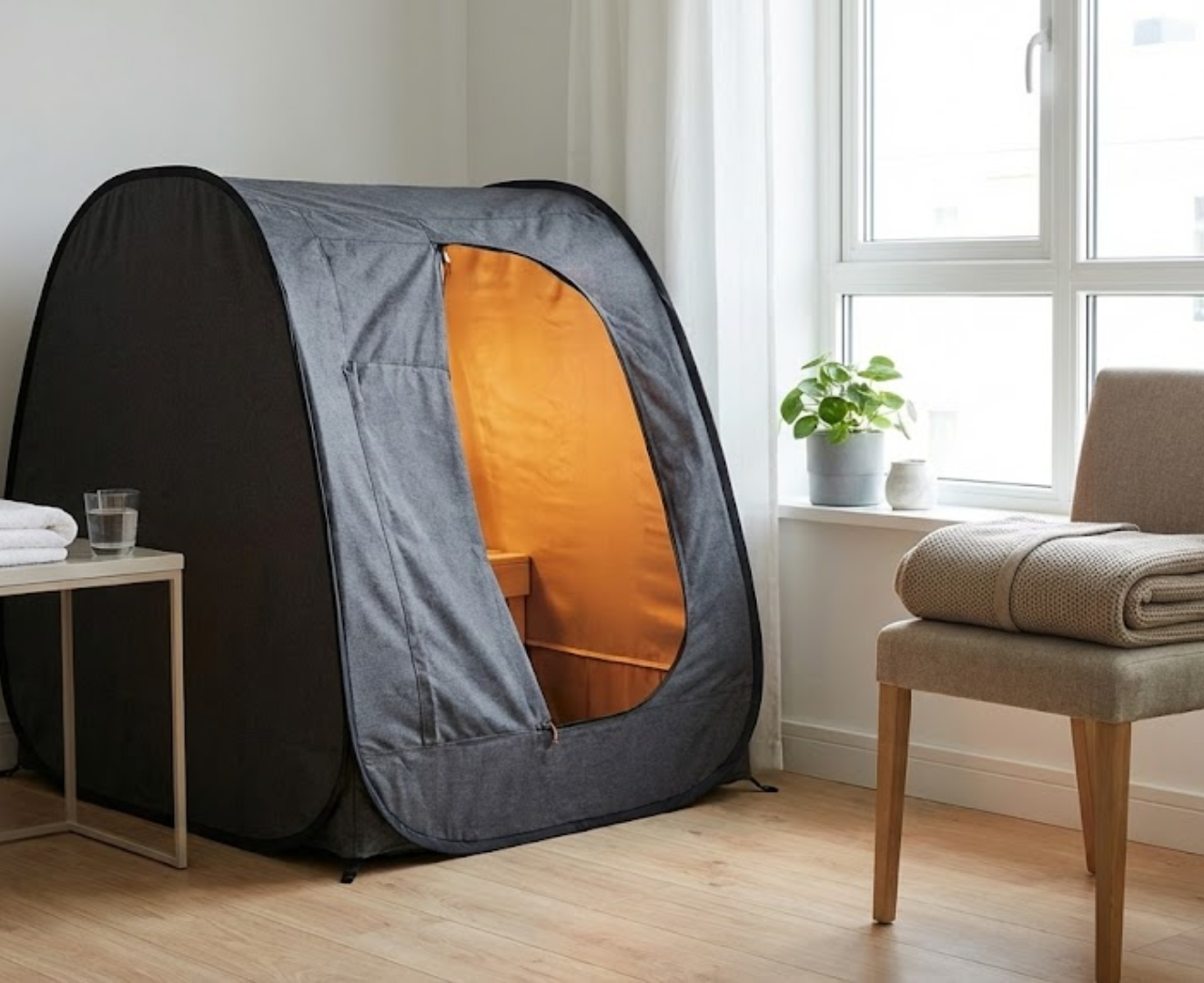
SAUNABOX Pulse Pro is a tent-style portable sauna with an internal heating box that pumps infrared heat into the fabric cabin. The pop-up sauna tent folds completely flat when you’re done, making it practical for sliding under a bed or standing in a closet between uses.
To use, sit inside on a folding chair during your session, fully enclosed in the heated space. The heating system reaches temperature quickly and recovers fast when you open the door to adjust your position or grab water.
The unit also includes dual red light therapy panels with 320 LEDs delivering 660nm and 850nm wavelengths.
Key Specifications:
- Internal ThermoCell heating box with ultra-low EMF panels
- Dual 660nm-850nm red light therapy with 320 total LEDs
- Full fold-flat design for under-bed or closet storage
- Setup time under five minutes after first assembly
- Reaches 160°F with Bluetooth remote control
Best for: Apartment dwellers who want both infrared heat and red light therapy in a single unit. The quick setup and teardown works well if you’re using this at-home sauna several times per week and don’t want to leave it standing between sessions for relaxation and recovery.
Good to Know: The fabric construction means you’ll want to wipe down the interior after sweaty sessions to prevent odor buildup. The tent is sized at 36″ x 36″ x 68″, so it fits most heights comfortably but can feel snug if you prefer more elbow room during longer sessions.
Best Infrared Sauna Blanket: Sun Home Infrared Sauna Blanket
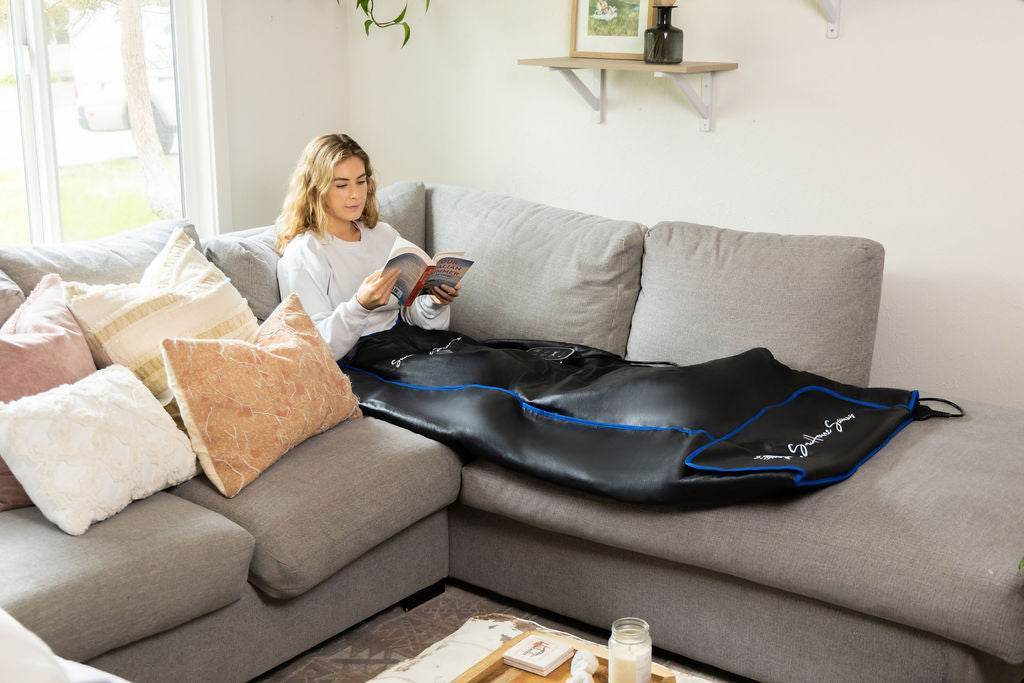
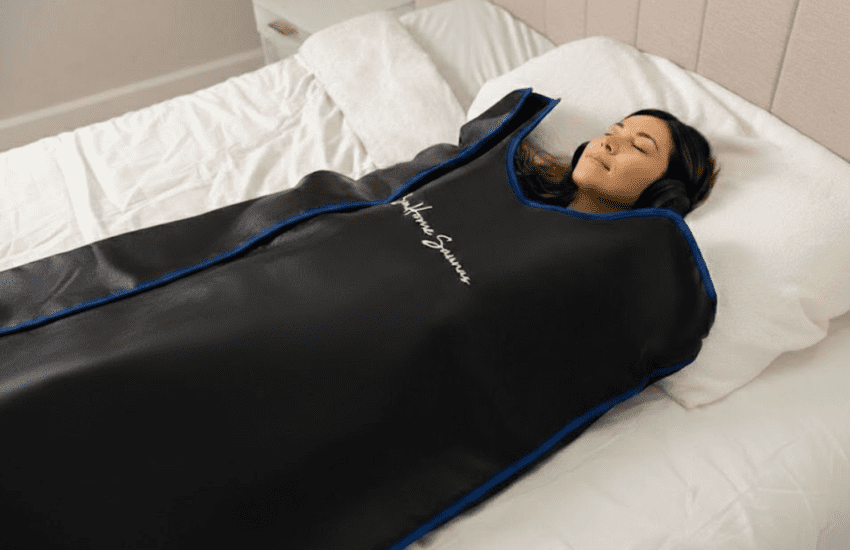
This sauna blanket uses far-infrared heating elements that run through the interior, reaching temperatures up to 167°F for deep tissue warmth. To use, simply unroll it on your bed or floor, lie down inside, and zip it around your body with just your head exposed.
The low-EMF design keeps electromagnetic field exposure minimal, which is important to people who are sensitive. Digital controls let you adjust temperature precisely, and the unit includes an automatic shutoff for safety during home use.
Key Specifications:
- Far-infrared heating reaches 167°F with digital control
- Low-EMF certified for reduced electromagnetic exposure
- Full-body coverage from neck to toes for comprehensive heat therapy
- Waterproof interior wipes clean after sessions
- Rolls up compact for drawer or closet storage
Best for: People who prefer lying down during heat sessions or who have back issues that make sitting upright uncomfortable. The blanket format works well in tight spaces since you can use it on your bed and store it completely out of sight between uses for muscle relaxation and stress relief.
Good to Know: Getting in and out requires some wiggling, especially if you’re using a towel insert to absorb sweat. The lying-down position feels more restrictive than sitting in a tent, so try it for shorter sessions first if you’re prone to feeling claustrophobic during enclosed wellness sessions.
Best Dome-Style Coverage: 1Love Infrared Sauna Dome
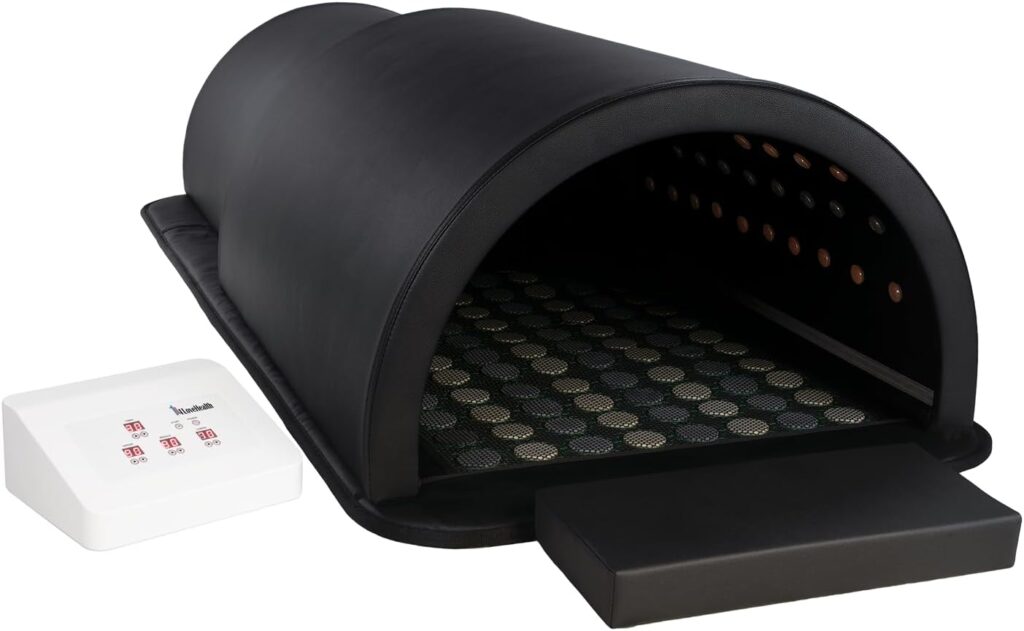
The 1Love dome uses a half-coverage design where you lie on a mat with the dome positioned over your torso while your head stays outside.
Infrared panels in the dome’s interior heat your body from above, reaching up to 194°F. The unit includes germanium and tourmaline stones that enhance far-infrared intensity during heat therapy.
This format feels less claustrophobic than full tents or blankets because your head, arms, and legs have more freedom to move. You can read or watch something on your phone more easily than you could while fully enclosed.
Key Specifications:
- Half-dome design covers torso while head remains outside
- Germanium and tourmaline stone elements for enhanced infrared
- Three independently controlled heating zones up to 194°F
- Near-zero EMF with copper lining for grounding
- Simple placement setup with no complex assembly
Best for: People who want heat therapy for muscle recovery but find full enclosures too restrictive. The open design works well if you tend to feel claustrophobic in tight spaces or if you want to stay somewhat active during sessions instead of lying completely still for relaxation.
Good to Know: The half-coverage means your head, neck, and extremities don’t get direct infrared exposure. That’s actually a benefit for some users who find full-body heat too intense, but it’s a trade-off to keep in mind if you’re specifically looking for comprehensive coverage during your home sauna sessions.
Best Value Portable Infrared Tent: Durherm Low EMF Portable Sauna
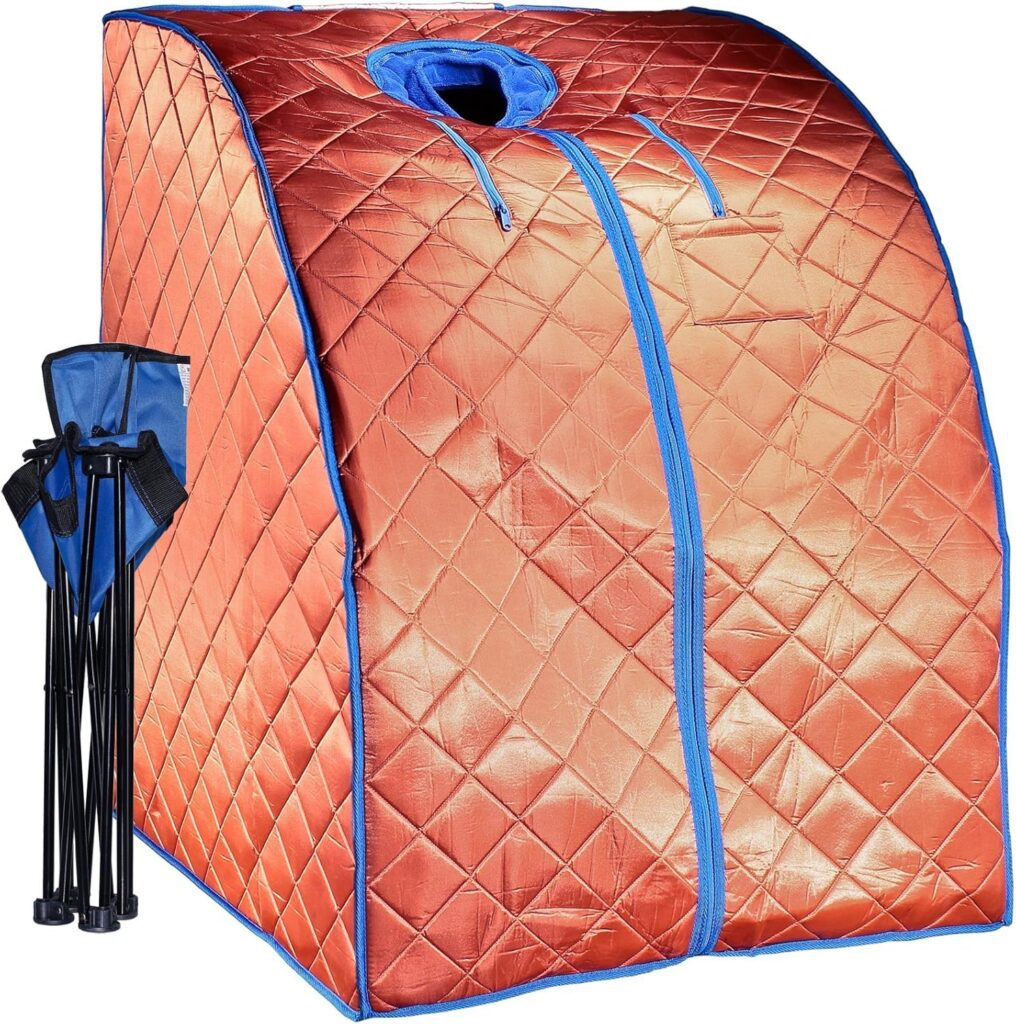
Durherm focuses on keeping electromagnetic field emissions low while staying in the budget-to-midrange price range. The tent includes three carbon fiber heating panels and a foot pad, all designed to minimize EMF levels for people who are concerned about that exposure during regular sauna use.
The pop-up tent design uses a collapsible frame that sets up without tools. You sit inside on the included folding chair during sessions, fully enclosed in the heated space. Controls are straightforward with basic temperature adjustment and a timer.
Key Specifications:
- Low-EMF carbon fiber heating panels
- Three-panel system plus foot pad for lower body warmth
- Collapsible frame fits in included carrying case
- Basic digital controls with timer function
- Standard 120V plug with moderate power draw
Best for: People who want to minimize electromagnetic exposure without paying premium prices. The straightforward design also works well if you’re new to home infrared saunas and want to test the concept for muscle recovery and stress management before investing more.
Good to Know: The tent interior feels smaller than some mid-range options, which can be tight if you’re taller than 6 feet or prefer more elbow room. Heat distribution is adequate but may not be as even as pricier models with more heating panels.
Best for Durability: Radiant Saunas Rejuvenator Portable Sauna
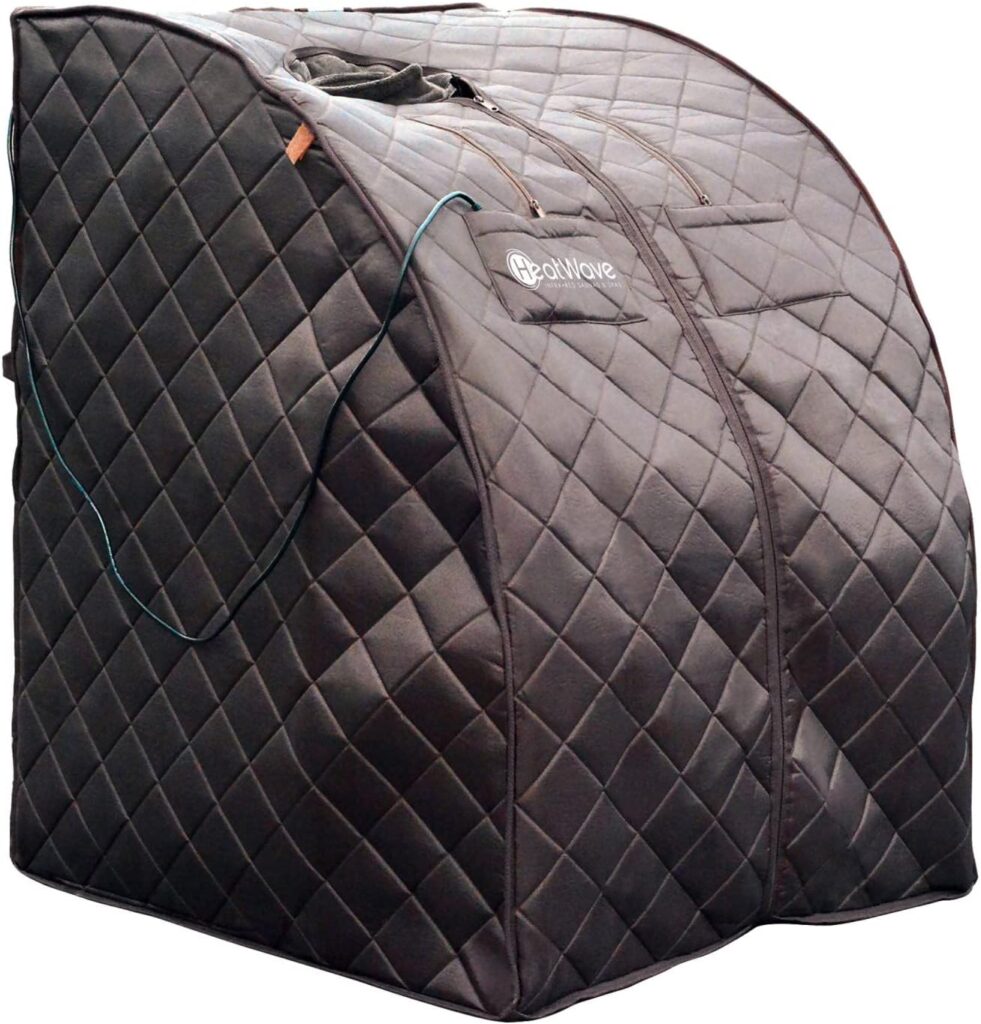
Radiant Saunas has been making portable sauna units for years, and the Rejuvenator reflects that experience with reinforced seams and more durable zipper construction. The tent uses four carbon heating panels arranged to provide even coverage while you sit on the included folding chair inside the enclosed space.
Temperature controls offer decent range and the unit reaches working temperature within 10-15 minutes.
Build quality sits above ultra-budget options, with heavier fabric and better-designed frame joints that hold up to frequent setup and teardown for regular home use.
Key Specifications:
- Reinforced seams and heavy-duty zipper construction
- Carbon panel heating with reliable temperature control
- Reaches 150°F within 10-15 minutes of warmup
- Established brand with available replacement parts
- Folding chair and foot pad included
Best for: People who plan to use their portable sauna frequently and want something that can handle regular wear without falling apart. The established brand also means you’re more likely to find replacement parts if something breaks after a couple years of heat therapy sessions.
Good to Know: he more robust construction makes this tent slightly heavier and bulkier to move and store compared to ultra-lightweight budget models. Setup is still straightforward, but it’s not quite as quick as simpler designs. The tent measures about 32″ x 33″ x 41″, accommodating most users up to 6’5″ comfortably.
Best Entry-Level Tent: SereneLife Portable Sauna Box for Home
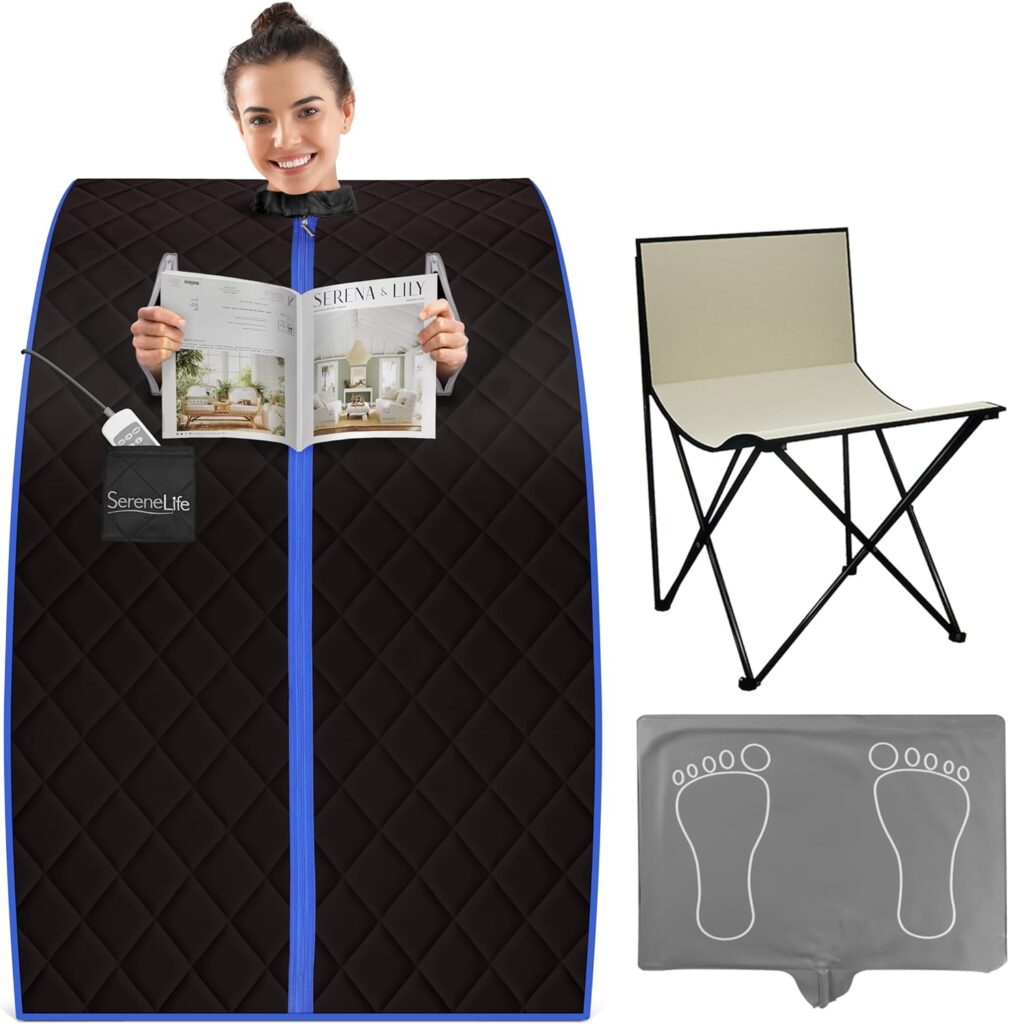
This SereneLife model offers better heating elements and more consistent temperature control than the most basic tents on the market. The pop-up design still assembles quickly without tools, and the included chair and foot pad provide a complete setup out of the box for home wellness use.
Interior space accommodates most body sizes comfortably if you’re under 6 feet tall. To use, sit inside on the folding chair during sessions, fully enclosed in the heated environment. Heating performance reaches 140°F reliably, and the fabric construction shows decent quality in the zipper and seam work.
Key Specifications:
- Three carbon fiber heating panels with digital display
- Pop-up tent with folding chair and heated foot pad
- Reaches 140°F with remote control operation
- Dimensions: 38″ x 32″ when assembled
- Standard assembly in under 10 minutes
Best for: People who want better performance than the cheapest options but aren’t ready to spend mid-range prices yet. The straightforward features make this accessible for testing whether regular home sauna sessions fit into your wellness routine without a major financial commitment.
Good to Know: This is still an entry-level unit despite the improvements over basic models, so fabric durability and heat consistency won’t match $500+ options. Treat the zippers gently and wipe down the interior regularly to extend its lifespan. Some users find the space feels slightly cramped for broader builds.
Best Budget Portable Infrared Tent: KASUE Waterproof Infrared Sauna
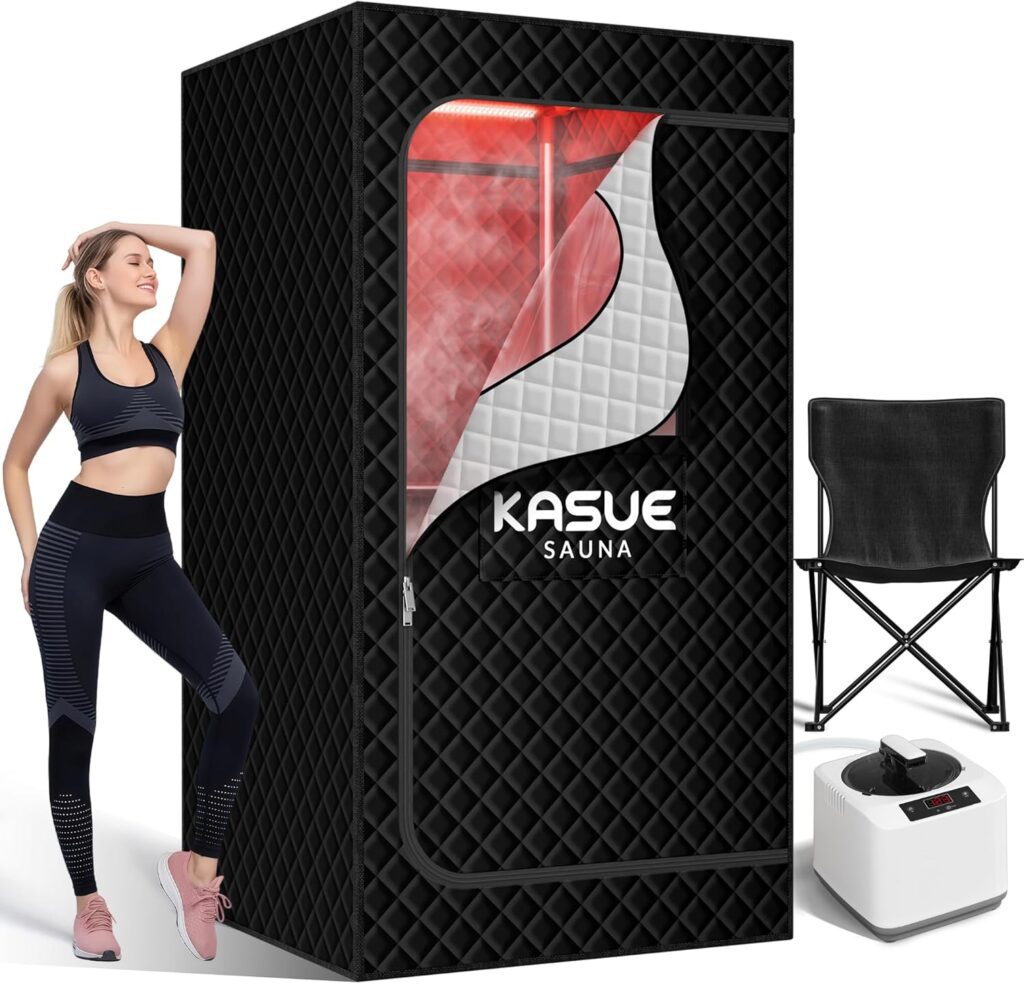
KASUE offers an accessible entry point with a hybrid approach that combines infrared heating panels with a steam generator. The tent includes waterproof construction that makes cleaning easier after sweaty sessions, and you get both infrared and steam heat options depending on what you prefer each time.
The XL steamer works with 360-degree steam nozzles to distribute heat evenly throughout the tent. To use, sit inside on the included folding chair during sessions. Temperature capacity reaches 140°F, and the 5-layer waterproof interior means you can wipe it down quickly without worrying about moisture damage to the fabric.
Key Specifications:
- Hybrid steam and infrared heating system
- 5-layer waterproof and heat-insulating construction
- XL steamer with 9 adjustable temperature settings
- Interior dimensions: 34″ x 34″ x 71″
- Remote control with timer up to 99 minutes
Best for: People who want to try both steam and infrared sauna experiences for home wellness without buying separate units. The waterproof construction also works well if you’re concerned about sweat management and cleaning maintenance. The hybrid format lets you experiment with different heat therapy approaches.
Good to Know: At this price point, the steam generator adds complexity compared to infrared-only tents. You’ll need to fill the water reservoir and manage moisture levels, which requires slightly more maintenance. The chair included is functional but on the smaller side. This is a good testing ground for heat therapy before upgrading to a premium model.
How to Choose the Best Portable Infrared Sauna for Your Space
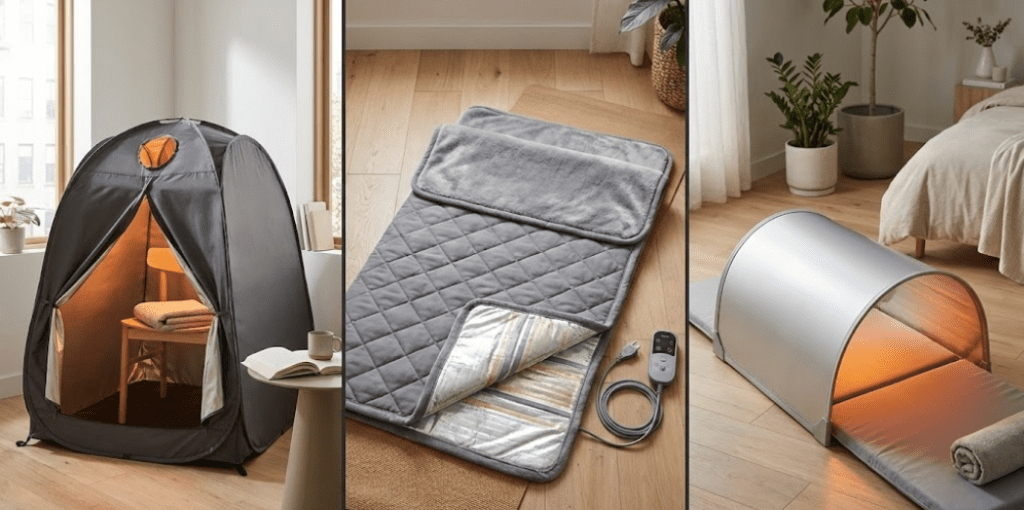
Portable Infrared Sauna Types: Tent vs Blanket vs Dome
Tent-style portable saunas give you an enclosed cabin experience where you sit inside on a folding chair during sessions. This format works well if you prefer sitting upright or if you want a more traditional sauna feel. Pop-up sauna tents typically need 4-6 square feet of floor space and take 5-15 minutes to set up depending on the model.
Sauna blankets require the least dedicated space since you can use them on your bed or floor and roll them up for drawer storage afterward. The lying-down position suits people with back issues or those who find it easier to relax horizontally during heat therapy. Setup takes just a couple minutes, though getting in and out feels more awkward than walking into a tent.
Dome systems split the difference by letting you lie down while keeping your head fully outside. Half-domes like the 1Love feel less restrictive than blankets, while full domes like the Sunlighten Solo provide more comprehensive coverage. These tend to be bulkier to store than blankets but still more compact than most tent frames.
Temperature Capacity and Heat Distribution
Most portable infrared saunas reach between 130-170°F, which is lower than traditional Finnish saunas but still plenty hot for therapeutic benefits. The infrared waves penetrate your skin directly, so you don’t need ambient temperatures as high as you would in a steam sauna for muscle recovery and relaxation.
Budget models often top out around 130-140°F, which can feel adequate for shorter sessions but may not produce heavy sweating if that’s your goal. Mid-range and premium units reaching 150-170°F give you more range to adjust based on what feels more comfortable in each session.
Heat distribution matters more than peak temperature for most people using home infrared saunas.
Units with multiple heating panels positioned around your body provide more even warmth than single-panel designs where one side gets noticeably hotter. Zone-based systems like the Sunlighten Solo let you adjust different areas independently, which helps if you’re targeting specific muscle groups during recovery sessions.
EMF Levels and Safety Concerns
Electromagnetic field exposure from heating elements varies significantly across models. Low-EMF certification means the unit emits minimal electromagnetic radiation during operation, typically under 3 milligauss at the surface.
People who are sensitive to electromagnetic fields or who use their portable sauna daily often prioritize low-EMF models like the Sun Home blanket or Durherm tent. Standard units without specific EMF testing or certification may emit higher levels, though most still fall within generally accepted safety ranges for home wellness equipment.
If EMF exposure concerns you, look for models that provide actual milligauss readings instead of vague “low EMF” marketing language. Third-party testing adds credibility, though it’s less common in the portable sauna market than in permanent cabin installations.
Power Requirements and Operating Costs
Nearly all portable infrared saunas run on standard 120V household outlets, drawing between 1,000-1,500 watts during operation. This is similar to a hair dryer or space heater, so most homes can handle it without electrical upgrades.
That said, if you’re in an older building with limited circuit capacity, running the sauna alongside other high-draw appliances might trip your breaker. Try using it on a circuit that’s not also powering air conditioners, space heaters, or multiple kitchen appliances.
Operating costs stay reasonable for daily use. At average US electricity rates around 12-15 cents per kilowatt-hour, a 30-45 minute session typically costs 20-50 cents. Running it every day for a month adds roughly $6-15 to your electric bill, which is substantially less than a gym membership with sauna access.
Tips for Getting the Most from Your Portable Infrared Sauna
Start with shorter sessions at moderate temperatures while your body adjusts to regular heat exposure.
Try 15-20 minutes at around 120-130°F for your first few sessions, then gradually increase the duration and temperature as you get comfortable. Most people settle into 30-45 minute sessions at their preferred temperature after a couple weeks.
Hydration is more important than many people realize when using infrared wellness saunas. Drink 16-20 ounces of water about 30 minutes before your session, and have water available to sip during and after.
Some users add electrolyte powder to help replace what they lose through sweating, especially if they’re doing longer or higher-temperature sessions for detoxification and recovery.
If you want targeted heat between full body sessions, an infrared heating pad is a solid add-on for areas like the neck, shoulders, or lower back. It uses the same infrared style heat in a smaller, more focused setup.
Using a towel inside the unit makes cleanup easier and more hygienic. Lay a towel on the chair or mat where you’ll be sitting or lying, and keep another handy to wipe your face during the session. After you’re done, wipe down the interior surfaces with a damp cloth and let everything air dry before folding it up for storage.
Timing your sessions around your routine can help you stay consistent with your at-home sauna practice.
Many people use their portable sauna in the evening after workouts or before bed, as some find the heat to be helpful for muscle recovery and better sleep. Morning sessions work well too if you want a warm, energizing start to your day.
Position the unit in a spot with adequate ventilation, especially if you’re using it in a small bedroom or bathroom. You don’t need a huge space, but having some air circulation helps the session feel more comfortable and prevents the room from getting too stuffy during longer heat therapy sessions.
The Bottom Line on Portable Infrared Saunas
Portable infrared saunas bring heat therapy into your home without the space, cost, or installation requirements of permanent cabins.
The technology uses infrared panels to warm your body directly at temperatures between 130-170°F, which means faster warmup times and lower electricity costs than traditional home steam saunas.
The main decision points come down to format preference and how much space you can dedicate.
Sauna blankets work well if you have minimal room and prefer lying down, while tent-style units give you an enclosed experience where you sit inside during sessions. Dome systems split the difference with various levels of coverage and storage requirements.
Look for models that match your living situation and how often you plan to use them for heat therapy sessions. Daily users benefit from more durable construction and longer warranties, while people testing whether heat therapy fits their routine can start with budget-friendly options and upgrade later if regular sessions become part of their wellness practice.
Most people notice they enjoy the sessions within a couple weeks of consistent use, particularly if they’re dealing with muscle soreness, stress, or sleep issues. Finding the right session length and frequency helps you build a sustainable routine.
The key is finding a unit that’s easy enough to set up and store that you’ll actually use it regularly for relaxation and recovery instead of letting it collect dust in a closet.
If you’re considering a larger setup for shared use, our guide to 2-person saunas with red light therapy covers options that accommodate couples or families.
FAQ: Best Portable Infrared Saunas
How hot do portable infrared saunas get?
Portable infrared saunas typically reach temperatures between 130-170°F depending on the model and format. Blanket-style units can hit the higher end of that range around 160-170°F because they wrap closer to your body, while tent-style saunas usually run between 140-160°F. Budget models often cap out around 130-140°F, which is still warm enough for therapeutic benefits even if it doesn’t produce as much sweating as higher temperatures.
What’s the difference between infrared and traditional saunas?
Traditional saunas heat the air around you to 180-200°F using steam or electric heaters, which then warms your body from the outside in.
Infrared saunas use light waves to heat your body directly without raising the ambient temperature as much, typically running 50-60 degrees cooler. This makes infrared units more energy-efficient and easier to use in smaller spaces, though some people prefer the intense heat and steam of traditional saunas.
Can I use a portable infrared sauna every day?
Most healthy adults can use a portable infrared sauna daily for 20-30 minute sessions without issues.
Start with 2-3 sessions per week and increase frequency gradually as you see how your body responds.
Stay well-hydrated before and after each session, and listen to your body if you start feeling lightheaded or overheated. People with heart conditions, pregnant women, or anyone with chronic health issues should talk to their doctor before starting regular sauna use.
How much does it cost to run a portable infrared sauna?
Portable infrared saunas use between 1,000-1,500 watts during operation, which translates to roughly 20-50 cents per 30-45 minute session at average US electricity rates. Using your sauna daily for a month would typically add $6-15 to your electric bill, depending on your local rates and how long your sessions run. This is substantially less expensive than a gym membership with sauna access.
Do I need special electrical wiring for a portable infrared sauna?
Nearly all portable infrared saunas plug into standard 120V household outlets without requiring any special wiring or dedicated circuits. That said, if you’re in an older building with limited electrical capacity, you might trip a breaker if you run the sauna while other high-draw appliances are operating on the same circuit.
Try to use a circuit that’s not also powering air conditioners, space heaters, or multiple kitchen appliances at the same time.
How do I clean and maintain a portable infrared sauna?
After each session, wipe down the interior surfaces with a damp cloth to remove sweat and let everything air dry completely before folding it up for storage. Using a towel inside during sessions cuts down on how much sweat gets directly on the unit.
For tent-style saunas, some models have removable, washable interior liners that make cleaning easier. Blankets typically have waterproof interiors that wipe clean quickly. Avoid harsh chemicals that might damage heating elements or waterproof coatings.
Which portable sauna is best for small apartments?
Blanket-style saunas like the Sun Home Infrared Sauna Blanket need the least dedicated space since you can use them on your bed and roll them up for drawer or closet storage afterward.
If you prefer sitting upright, the SAUNABOX Pulse Pro folds completely flat to slide under a bed or stand in a closet between uses. Half-dome designs like the 1Love also store more compactly than full tent frames while still giving you a lying-down session format.
Are portable infrared saunas safe?
Portable infrared saunas are safe for most healthy adults when used as directed.
Choose models with automatic shutoff timers and stay hydrated before and after sessions. Low-EMF certified units minimize electromagnetic field exposure if that’s a concern for you.
The main safety considerations are avoiding overheating by keeping sessions to reasonable durations and temperatures, and checking with your doctor if you have heart conditions, are pregnant, or have other health concerns that might be affected by heat exposure.
What is the best infrared portable sauna?
The Sunlighten Solo Portable Infrared Sauna stands out as the best overall option for most people. It uses a collapsible dome design with carbon fiber zone heating that reaches 150°F, and the seven-year warranty on heating elements suggests it can handle daily use over several years. The combination of even heat distribution, compact storage, and build quality makes it worth the higher price if you’re planning to use it regularly.
Are portable infrared saunas effective?
Portable infrared saunas can be helpful for people looking to add regular heat therapy to their routine without installing a permanent cabin.
Many users notice improvements in muscle recovery, stress levels, and sleep quality within a couple weeks of consistent use. The infrared technology heats your body directly at temperatures between 130-170°F, which means you get therapeutic warmth without needing the extreme ambient heat of traditional saunas.
That said, they work best as one part of a broader wellness routine rather than a standalone solution for specific health concerns.
What is the best type of infrared sauna to buy?
The best type of infrared sauna depends on your space and how you prefer to use it.
Tent-style saunas work well if you want to sit upright with your head outside during sessions and have room to set up a 4-6 square foot enclosure. Blankets suit people who prefer lying down and need minimal storage space between uses. Dome systems offer a middle ground with less claustrophobic coverage than blankets but more comprehensive heating than half-domes.
For features, look for low-EMF certification if electromagnetic exposure concerns you, and aim for models that reach at least 140-150°F for adequate therapeutic heat.
What is the 200 rule for saunas?
The 200 rule suggests that your sauna temperature in Fahrenheit plus your session time in minutes should add up to around 200 for an effective session.
For example, 20 minutes at 180°F or 40 minutes at 160°F both equal 200. This guideline comes from traditional Finnish sauna culture and helps people balance intensity with duration. That said, portable infrared saunas typically run cooler than traditional steam saunas, so you might find that 30-45 minutes at 130-150°F feels just as beneficial even though it doesn’t hit that exact number.
Start with shorter sessions at moderate temperatures and gradually work up to what feels comfortable for your body.
Health Disclaimer: This information is for educational purposes only and isn’t a substitute for professional medical advice, diagnosis, or treatment. Red light therapy is not intended to diagnose, treat, cure, or prevent any disease.