7 Best Red Light Therapy Devices for Frozen Shoulder Pain and Stiffness
Frozen shoulder can make basic movements painful, from getting dressed and washing your hair to reaching overhead or sleeping on your side. If the stiffness has been hanging around for months, you’re probably looking for something you can use at home between physical therapy sessions.
Red light therapy for frozen shoulder is one option worth considering. Red and near-infrared wavelengths are used in photobiomodulation, where they’re being studied for their effects on pain, inflammation, circulation, and tissue recovery.
For home use, wraps and flexible pads are usually the easiest fit. They can sit around the shoulder joint while you relax, work, or wind down, so there’s no need to hold a device in place.
Below, we’ve rounded up the best red light therapy devices for frozen shoulder pain and stiffness, focusing on coverage, wavelengths, comfort, power, and how easy each one is to use consistently at home.
| Product | Type | Wavelengths | Power | Best For | |
|---|---|---|---|---|---|
| NovaaLab Deep Healing Pad XL | Large flexible LED pad | 660nm + 850nm | Corded | Overall pick for broad shoulder coverage | Shop on NovaaLab |
| Glokore Therapy Wrap | Flexible LED wrap | 660nm + 850nm | Corded w/ remote | Hands-free sessions | Shop on Glokore |
| Lumy Health Shoulder Wrap | Ergonomic shoulder wrap | 660nm + 850nm | Rechargeable | Shoulder and neck stiffness | Shop on Lumy Health |
| Viconor Shoulder Wrap | Shoulder-shaped wrap | 660nm + 850nm | Corded or USB | Shoulder warmth and light in one | Shop on Amazon |
| Kineon Move+ Pro | Laser + LED pods | 660nm + 808nm | Rechargeable | Active rehab and PT pairing | Shop on Kineon |
| Hooga Red Light Therapy Belt | Flexible LED wrap | 660nm + 850nm | Rechargeable | Portable, multi-joint use | Shop on Hooga |
| Lifepro AllevaRed Pro | Flexible LED belt | 660nm + 850nm | Corded / 5V power bank | Shoulder and upper back coverage | Shop on Amazon |
How Red Light Therapy for Frozen Shoulder Works
Red light therapy uses red and near-infrared wavelengths, commonly around 660nm and 850nm, to deliver light into the tissue around the shoulder. That light is absorbed by mitochondria inside cells, where it may help support cellular energy production, circulation, and normal recovery processes.
For frozen shoulder, place the light as close as possible to the stiff or painful area around the shoulder joint and nearby muscles.
Wraps and flexible pads can work well for the shoulder because they stay in place and cover a wider area without needing to be held.
Red light therapy won’t physically loosen a frozen shoulder on its own, but it may help alongside stretching, mobility work, and physical therapy when pain and stiffness make movement harder.
Best Red Light Therapy Devices for Frozen Shoulder
Best Overall: NovaaLab Deep Healing Pad XL
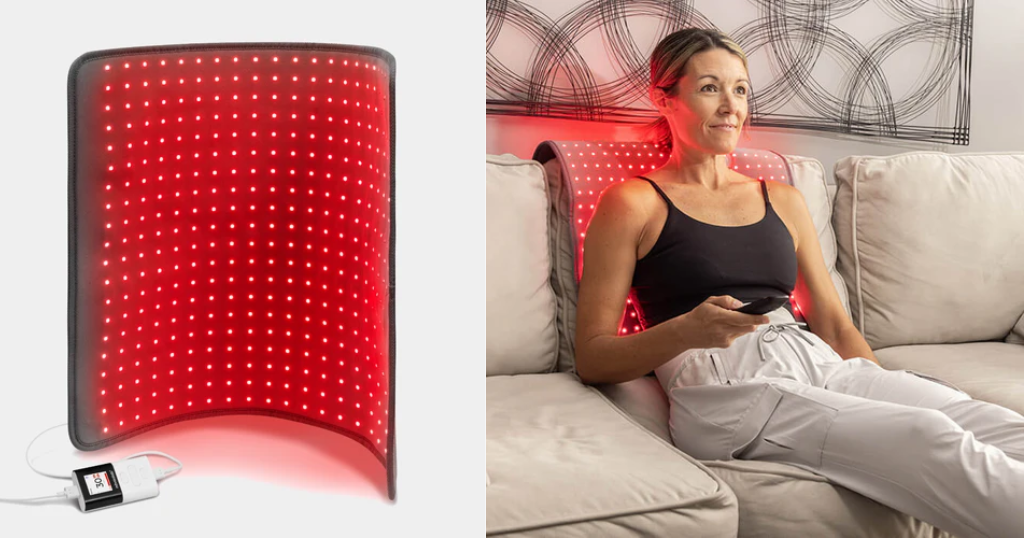
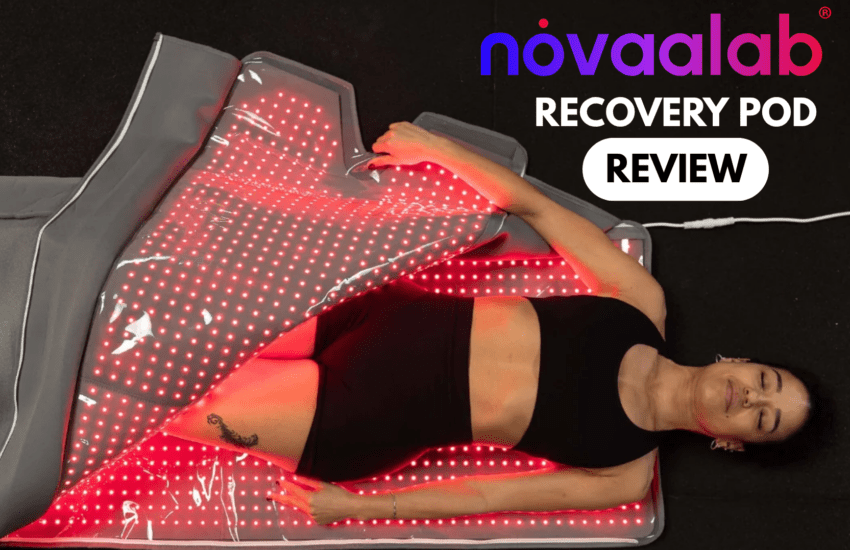
The NovaaLab Deep Healing Pad XL takes our top spot because its larger treatment area can cover the shoulder joint along with more of the upper arm and upper back in one session. That extra coverage is useful when stiffness and discomfort aren’t limited to one small spot.
The flexible pad measures 19.7 x 23.6 inches and combines 660nm red light with 850nm near-infrared light. NovaaLab lists 1,200 light chips in total and an irradiance of 200 mW/cm² at contact.
Key Specifications:
- 400 red 660nm light chips
- 800 near-infrared 850nm light chips
- 1,200 light chips total
- 19.7 x 23.6-inch treatment area
- Up to 200 mW/cm² at contact
- Adjustable straps included
- Corded power
Best for: Anyone who wants generous coverage across the shoulder, upper arm, and surrounding muscles rather than treating one small area at a time.
Good to Know: The XL is considerably larger than NovaaLab’s standard pad, so it gives you more coverage but is less compact. It also needs to stay plugged in during use. Straps are included to help secure the flexible pad around the treatment area.
Best Hands-Free Shoulder Wrap: Glokore Therapy Wrap
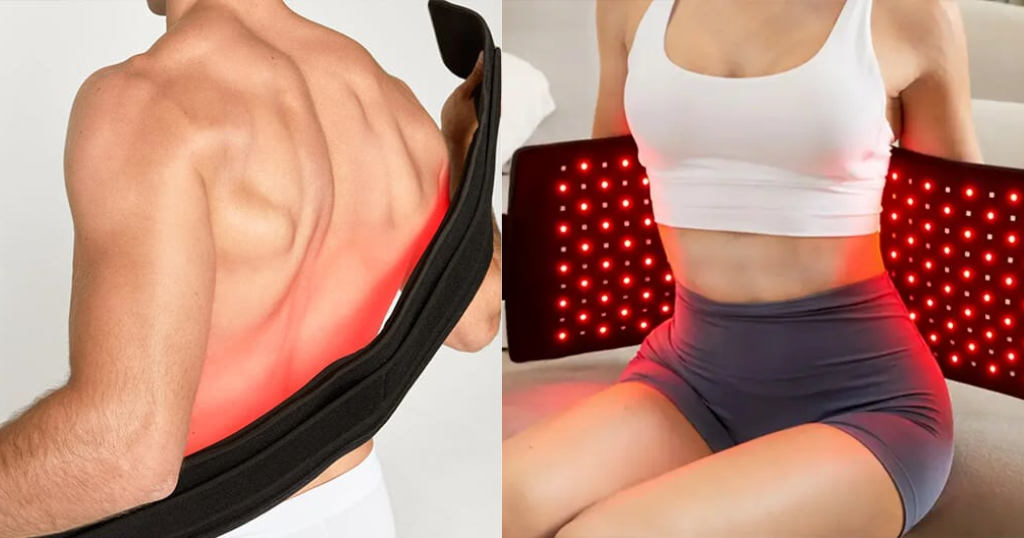
If reaching, fastening clothing, or lifting your arm is already uncomfortable, you probably don’t want to spend a session holding a light against your shoulder. The Glokore Therapy Wrap is designed to secure around the treatment area, making it one of the easier options for hands-free use.
Its flexible shape can contour around the shoulder rather than sitting several inches away like a panel. Glokore recommends short 10-minute sessions, which also makes it easier to work into your day consistently.
Key Specifications:
- Red and near-infrared light
- 240 LEDs
- Flexible wrap design
- Adjustable straps
- Hands-free positioning
- 10-minute recommended sessions
- Designed for shoulders, back, knees, and other joints
Best for: Anyone who values simple, hands-free red light therapy for shoulder pain and stiffness and doesn’t want a bulky device or complicated controls.
Good to Know: A flexible wrap gives you more positioning freedom than a rigid device, but you may need to adjust the strap slightly to keep the LEDs sitting flat against the curve of your shoulder.
Best for Shoulder and Neck: Lumy Health Shoulder Wrap
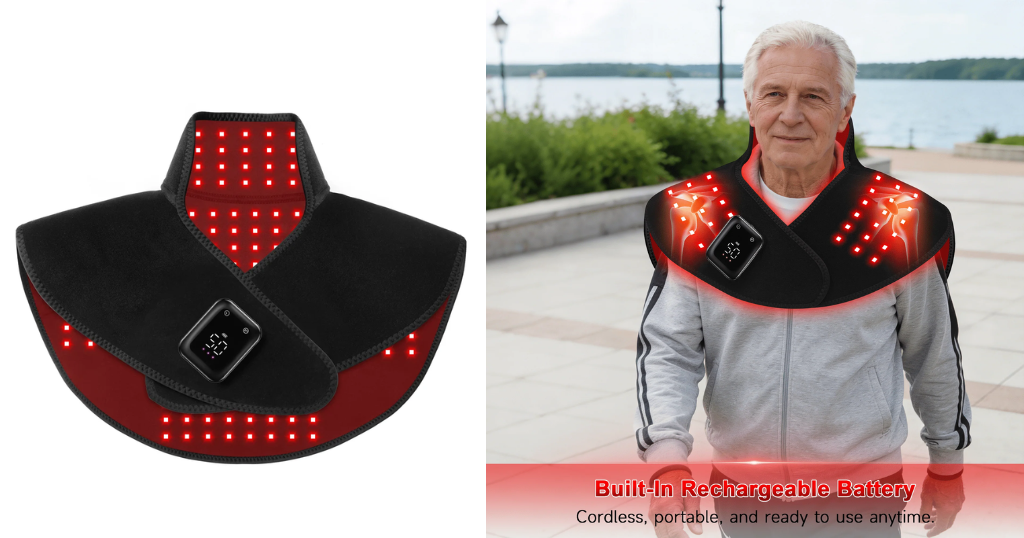
Frozen shoulder can leave more than the joint feeling tight. When you start protecting one arm, the muscles around your neck, upper back, and traps can end up taking extra strain.
The Lumy Health Shoulder Wrap is shaped to cover the shoulder and base of the neck together. Alongside 660nm red and 850nm near-infrared light, it adds heat and gentle massage, giving you three functions in one wearable device. A rechargeable 5,000mAh battery also means you’re not tied to an outlet.
Key Specifications:
- 88 LEDs
- 660nm red and 850nm near-infrared light
- Built-in heat
- Gentle massage function
- 5,000mAh rechargeable battery
- Neoprene wrap
- Cordless operation
Best for: People dealing with shoulder stiffness plus neck or upper-back tension who want light therapy, warmth, and massage from one wrap.
Good to Know: It has fewer LEDs than the larger pads in this guide, but some may prefer its shoulder-specific shape instead.
Best Heated Shoulder Wrap: Viconor Shoulder Wrap
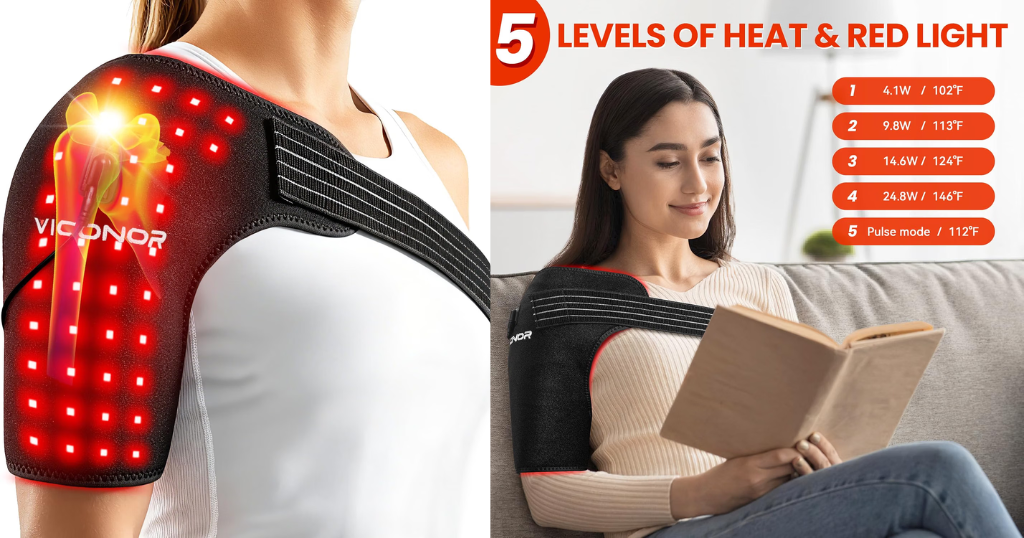
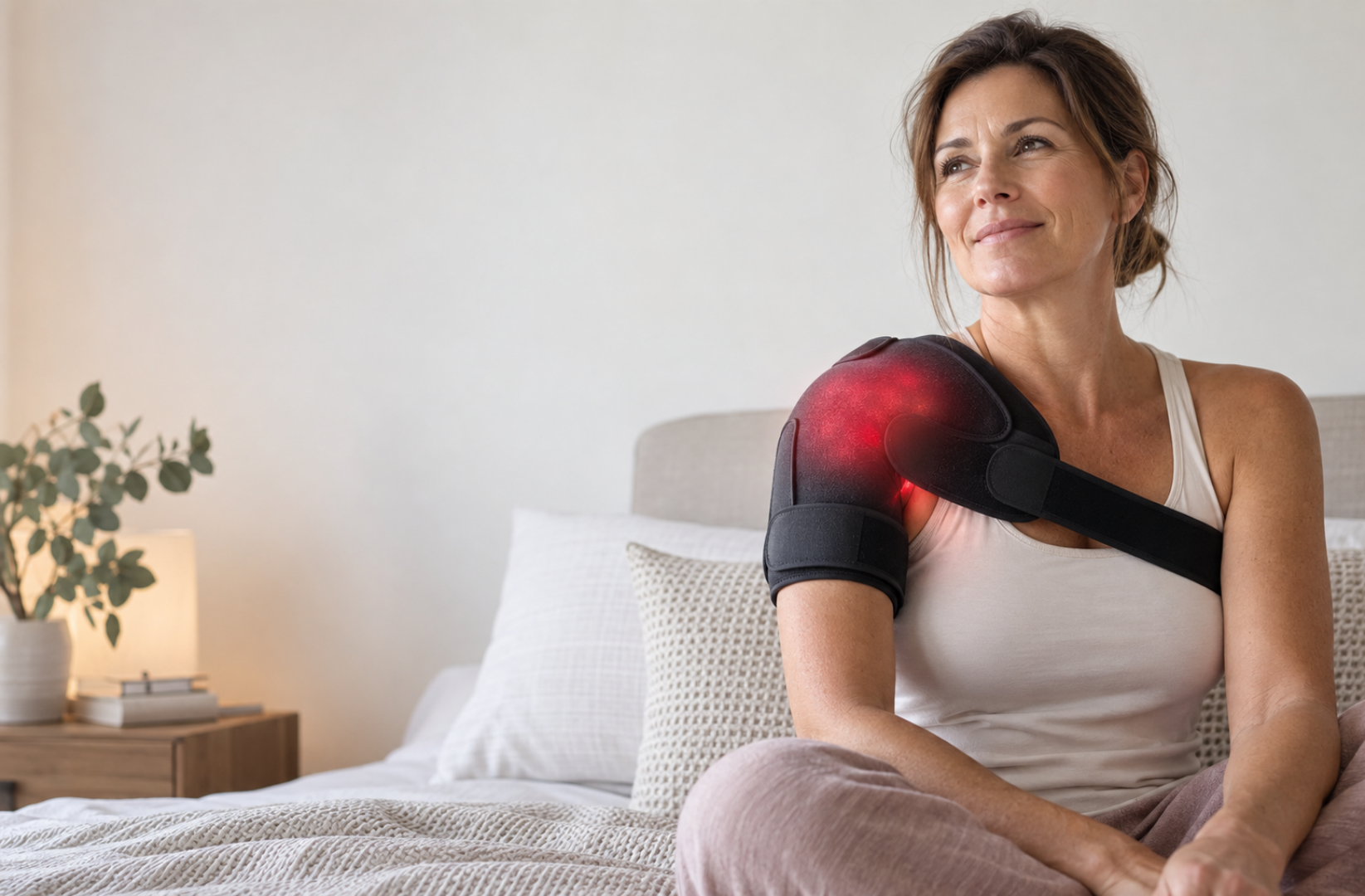
The Viconor Shoulder Wrap combines red light therapy, near-infrared light, and heat in a shoulder-shaped device. It may be a good option for frozen shoulder stiffness if warmth helps make shoulder movement more comfortable.
Instead of trying to fold a rectangular belt around the joint, this wrap sits over the shoulder and upper arm much like a brace. Its 80 LED units each contain two 660nm red chips and one 850nm near-infrared chip. It also offers five operating modes and shuts off automatically after 30 minutes.
Key Specifications:
- 80 LED units
- 660nm red and 850nm near-infrared light
- Built-in shoulder heating pad
- Five operating modes
- 30-minute automatic shutoff
- Fits the left or right shoulder
- Wall outlet or USB power-bank operation
Best for: Anyone looking for a heated red light therapy shoulder wrap that combines targeted light with the soothing feel of a warm compress.
Good to Know: The higher heat settings get considerably warmer, so starting low gives you more control over what feels comfortable. It can run from a USB power bank, which also gives you more freedom than a wall-only wrap.
Best for Targeted Joint Coverage: Kineon MOVE+ Pro
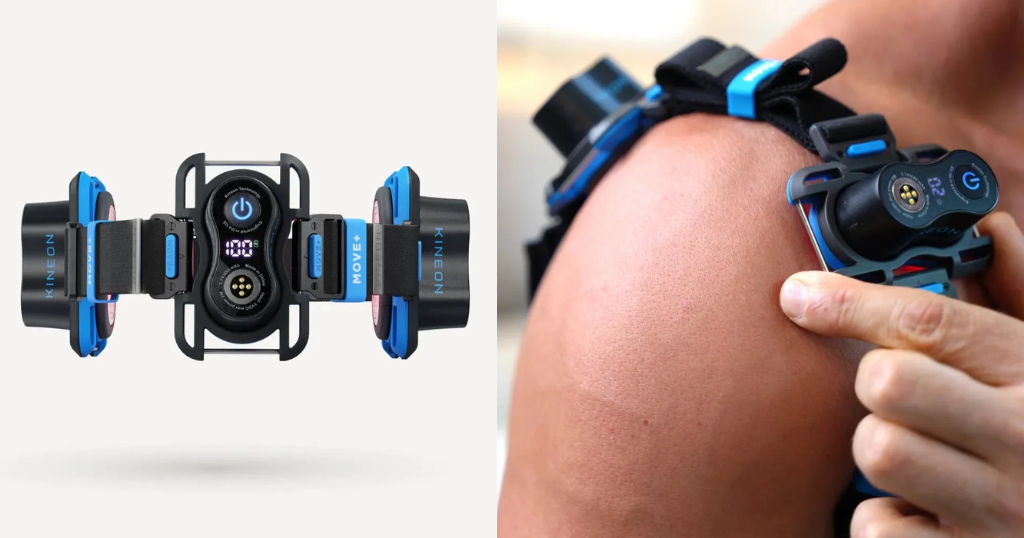
The Kineon MOVE+ Pro takes a different approach from a full-size LED pad. Three compact modules combine 660nm red LEDs with 808nm Class 1 near-infrared laser diodes, allowing you to position the light around different sides of the shoulder rather than treating only the surface facing a flat pad.
The modules attach to an adjustable strap and run wirelessly, making this one of the easier options to position around the front, side, and back of a stiff shoulder.
Key Specifications:
- Three adjustable light modules
- Eight 660nm red LEDs per module
- Ten 808nm Class 1 laser diodes per module
- LED and laser light combined
- Rechargeable modules
- Charging case included
- Adjustable wearable strap
Best for: People who want targeted red and near-infrared light around the shoulder joint, especially if portability and precise placement matter more than covering a very large area.
Good to Know: The MOVE+ costs more than a basic LED wrap, but you’re paying for a modular LED-and-laser design rather than a larger sheet of LEDs. The standard MOVE+ package doesn’t include the extender strap, so factor that in if you need more room around the shoulder.
Best Portable Red Light Wrap: Hooga Red Light Therapy Belt
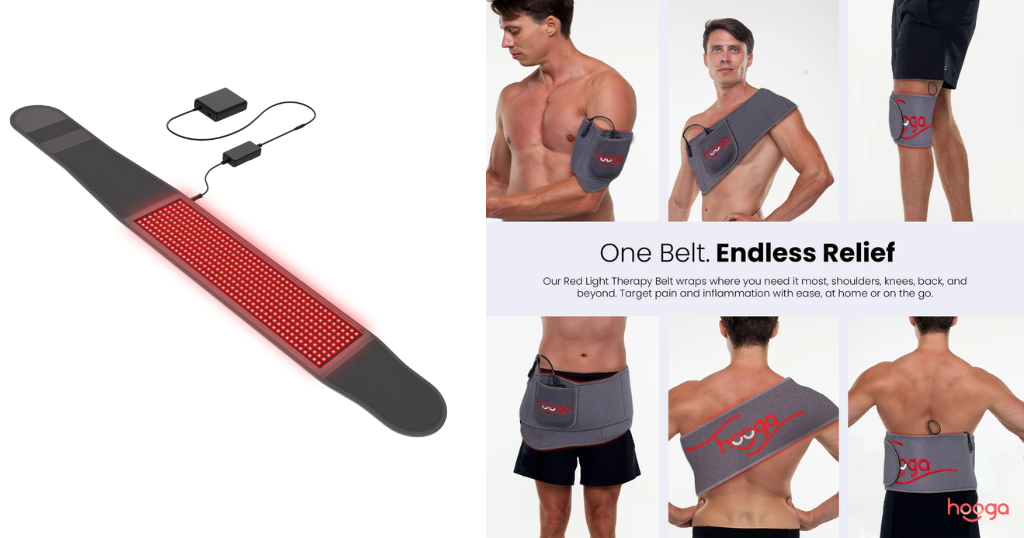
The Hooga Red Light Therapy Belt is the pick for anyone who doesn’t want their shoulder session dictated by the nearest outlet. It comes with a 15,000mAh rechargeable battery that provides up to 150 minutes of use at maximum power, while still giving you the option to plug it in at home.
The 52-inch flexible belt has a 21 x 5-inch active treatment area and uses 405 triple-chip LED sets, giving you 1,215 individual diodes across the array. You can choose red, near-infrared, or both, then adjust the brightness and session length from there.
Key Specifications:
- 405 triple-chip LED sets with 1,215 individual diodes
- 660nm red and 850nm near-infrared light
- Over 70mW/cm² surface irradiance
- 15,000mAh rechargeable battery
- Up to 150 minutes of battery use
- 20% to 100% adjustable brightness
- 10Hz pulse mode
- 1 to 20-minute timer
Best for: Anyone who wants a cordless red light therapy wrap for the shoulder that can also be used on the back, hips, thighs, and other larger areas.
Good to Know: It’s a long belt rather than a shoulder-shaped brace, so positioning takes a little more effort. In return, you get far more flexibility if you want one device for several areas of the body.
Best for Shoulder and Back Coverage: Lifepro AllevaRed Pro
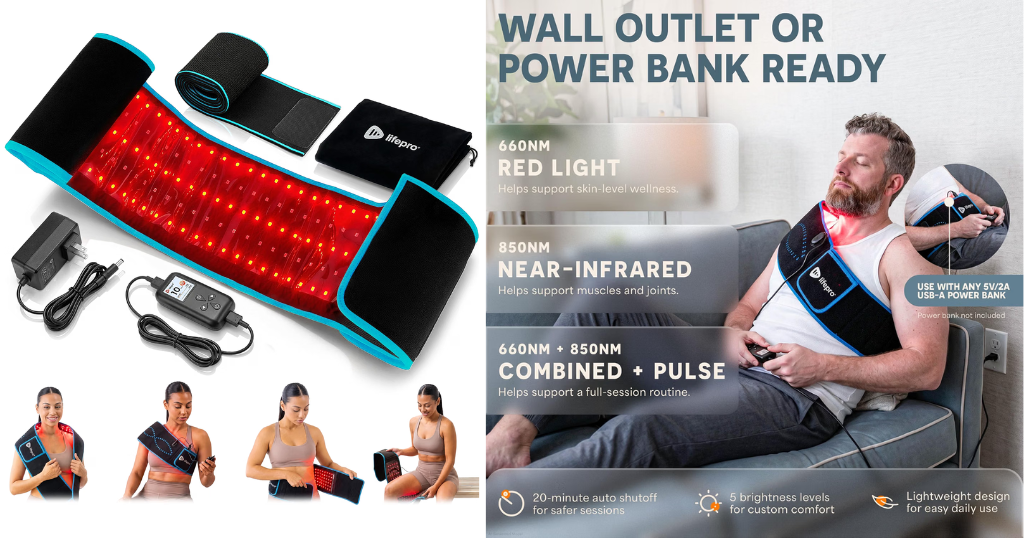
Months of guarding a painful shoulder can leave the surrounding upper-back muscles feeling tight too. The Lifepro AllevaRed Pro gives you a wider treatment area than a small joint device, so you can drape or secure it across the shoulder, upper back, or other sore areas.
It uses 105 triple-chip LED sets with 660nm red and 850nm near-infrared light. You can select red, near-infrared, or both, adjust brightness, and set sessions up to 30 minutes. It also includes adjustable vibration if you like a massage-like sensation while you use it.
Key Specifications:
- 105 triple-chip LED sets
- 660nm red and 850nm near-infrared wavelengths
- Over 96.8 W/m² listed irradiance
- Red, near-infrared, or combined modes
- Adjustable brightness
- Pulsed-light settings
- Five vibration levels
- Timer up to 30 minutes
- Power-bank compatible
Best for: People who want broader red light therapy coverage across the shoulder and upper back rather than concentrating on one small point.
Good to Know: The AllevaRed Pro doesn’t have a built-in rechargeable battery. It must stay connected during use, either to a wall outlet or a compatible 5V power bank.
How to Choose a Red Light Wrap for Frozen Shoulder
The best device is one that fits comfortably around your shoulder, stays in place, and is easy to use consistently. Focus more on wavelength, coverage, fit, and output than on LED count alone.
Wavelengths
Most home wraps combine red light around 660nm with near-infrared light around 850nm.
Red light is absorbed more near the skin’s surface, while near-infrared light can reach deeper into tissue. For a shoulder device, using both can give you broader coverage at different depths.
Some devices also use laser diodes, but that doesn’t automatically make them better than LEDs. The dose also depends on the device’s output, treatment time, and how well it covers the shoulder.
Fit and Coverage
The shoulder has a curved shape, so a device that works well on the back or stomach may not fit as closely around the joint.
- Shoulder-shaped wraps are easier to secure around the joint.
- Flexible pads and belts cover more area and can be used elsewhere on the body.
- Modular devices let you position smaller light sections around different parts of the shoulder.
For frozen shoulder, good contact and even coverage are more useful than simply choosing the device with the most LEDs.
A shoulder-shaped wrap is usually easier to position around the joint. A larger pad may be more practical if you also want to use it on your back, knees, or hips.
Irradiance and Session Time
Irradiance tells you how much light reaches a given area and is usually measured in mW/cm². It’s a handy figure when comparing red light therapy devices, but it needs to be read alongside the recommended treatment time.
A device with more LEDs isn’t necessarily more powerful. The same goes for high output, which may simply mean the recommended sessions are shorter.
Choose a red light therapy device that gives clear information about its wavelength and irradiance. The brand should also provide specific guidance on how long each session should last.
Corded or Rechargeable
The choice between a corded and rechargeable red light therapy wrap mostly comes down to convenience.
A corded model can be a good option if you usually use it while sitting or lying down near an outlet. Rechargeable wraps are easier to move around in and can be more practical if you don’t want to stay in one spot during a session.
Power source alone doesn’t tell you how effective a device will be. Focus on the specs and treatment guidance, then choose the option that suits how you plan to use it.
Tips for Using Red Light Therapy for Frozen Shoulder
Follow the instructions that come with your red light therapy device, since recommended session times and placement can vary between models.
- Position the light over the affected shoulder. If the manufacturer recommends direct skin contact, place the wrap so the LEDs sit close to the area you want to treat.
- Follow the recommended treatment time. Longer sessions don’t necessarily provide more benefit and may go beyond the device guidelines.
- Aim for regular use. Follow the suggested schedule instead of making individual sessions longer. If you’re unsure about frequency, see how often you can do red light therapy.
- Continue your prescribed shoulder exercises. Red light therapy can be used alongside stretching, mobility work, or physical therapy, but it shouldn’t replace treatment recommended by your healthcare provider.
- Follow the eye-safety guidance. Don’t look directly into bright LEDs, and use red light therapy glasses if your device instructions call for eye protection.
- Check the heat setting if your device includes one. Start at a comfortable level and stop if the area becomes uncomfortably hot.
A red light therapy wrap that fits securely around the shoulder and is easy to position can make it easier to follow a regular treatment schedule.
Is Red Light Therapy Worth Trying for a Frozen Shoulder?
Red light therapy can be a useful addition to an at-home frozen shoulder plan, especially if you want something you can use between physical therapy or mobility sessions.
For most people, the biggest choice is between a shoulder-shaped wrap that stays in place and a larger flexible pad that can also be used elsewhere on the body.
Choose the option that fits comfortably, covers the area you want to treat, and works with your day-to-day schedule.
Used alongside the stretching, mobility work, or physical therapy recommended for your shoulder, a comfortable red light wrap can be an easy addition to your at-home care plan.
FAQs: Red Light Therapy for Frozen Shoulder
What Is The Best Red Light Therapy For Frozen Shoulders?
The best option for a frozen shoulder is usually a flexible wrap or pad that combines red and near-infrared light and can sit securely against the shoulder. Look for clear wavelength and output specifications, comfortable coverage, and a design you can use consistently. Home devices commonly pair wavelengths around 660nm and 850nm.
Will Red Light Therapy Help A Frozen Shoulder?
Red light therapy may help with pain and shoulder function when used alongside exercise and rehabilitation, but evidence specifically for home LED wraps is still limited. Clinical studies on adhesive capsulitis have found benefits from low-level laser therapy used with exercise or physical therapy.
It should be treated as a supportive therapy rather than a replacement for stretching, mobility work, or professional treatment.
How Long Should I Do Red Light Therapy On My Shoulder?
Follow the treatment time recommended for your specific device because session length depends on its output and intended dose. Many home devices recommend relatively short sessions, but there is no single treatment time that applies to every red light wrap or pad.
Using a device for longer than recommended does not necessarily improve the result, so stick to the manufacturer’s instructions rather than extending sessions.
Where Should You Not Use Red Light Therapy?
Avoid shining red light directly into the eyes or over a known or suspected tumor unless a qualified clinician has specifically advised otherwise. Extra caution is also recommended during pregnancy and for people taking medications or supplements that increase light sensitivity.
Always follow the safety instructions for your device, particularly if it contains laser diodes or requires eye protection.
Health Disclaimer: This information is for educational purposes only and isn’t a substitute for professional medical advice, diagnosis, or treatment. Red light therapy is not intended to diagnose, treat, cure, or prevent any disease.