MitoADAPT vs MitoPRO (2026): Which Red Light Therapy Panel Actually Works Better?
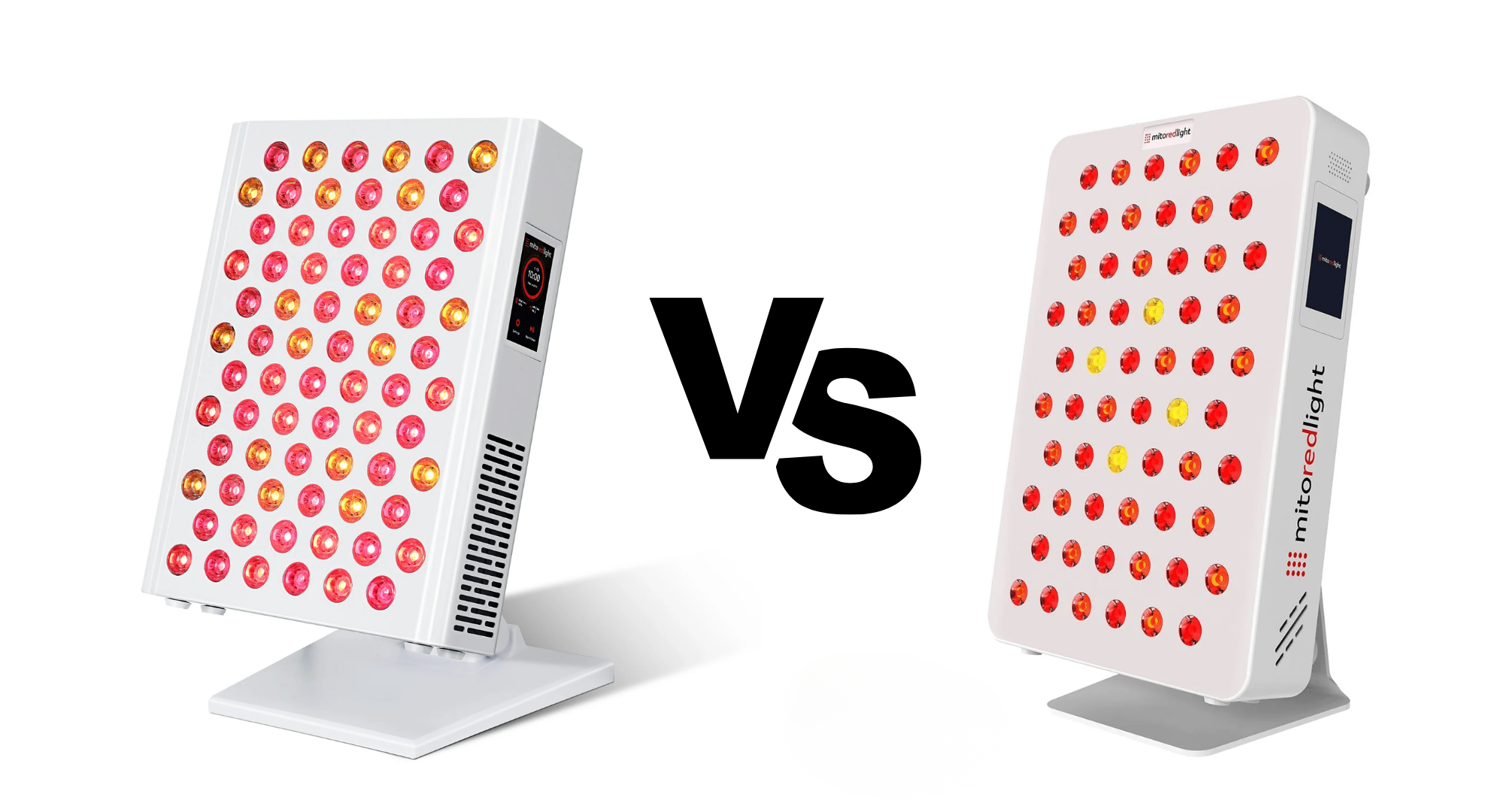
The MitoADAPT and MitoPRO are two popular red light therapy panels by Mito Red Light that aim to support skin rejuvenation, cellular energy, and faster workout recovery.
While both panels come from the same company, they serve different purposes.
The MitoPRO is the higher-irradiance workhorse for deep tissue sessions, while the MitoADAPT gives you more modes and extra wavelengths, including 670nm and 940nm, so you can fine-tune sessions depending on what you’re working on.
In this article we’ll take a look at them side-by-side to help you decide if the extra $100 for the ADAPT’s added features is worth the upgrade or if the PRO model gives you everything you need.
Disclosure: This post contains affiliate links.
Quick Comparison: MitoADAPT MIN 4.0 vs MitoPRO 300X
| Feature | MitoPRO X | MitoADAPT |
|---|---|---|
| Price | ||
| Irradiance* | >130 mW/cm² at 6 inches | >106 mW/cm² at 6 inches |
| Power Consumption (W) | 125W | 130W |
| Wavelength Options | 590nm, 630nm, 660nm, 810nm, 830nm, 850nm | 590nm, 630nm, 660nm, 670nm, 810nm, 830nm, 850nm, 940nm |
| Control Interface | Touchscreen / Bluetooth + App | Touchscreen / Bluetooth + App |
| LED Technology | Dual-chip LEDs | Dual-chip LEDs |
| Size | 14.5″ X 9.5″ X 2.5″ | 12″ X 9″ X 2.5″ |
| Warranty | 3 years | 3 years |
| EMF Levels | Low | Low |
*Irradiance varies by distance and mode; these stated values are best used for relative comparison.
What is the MitoADAPT?
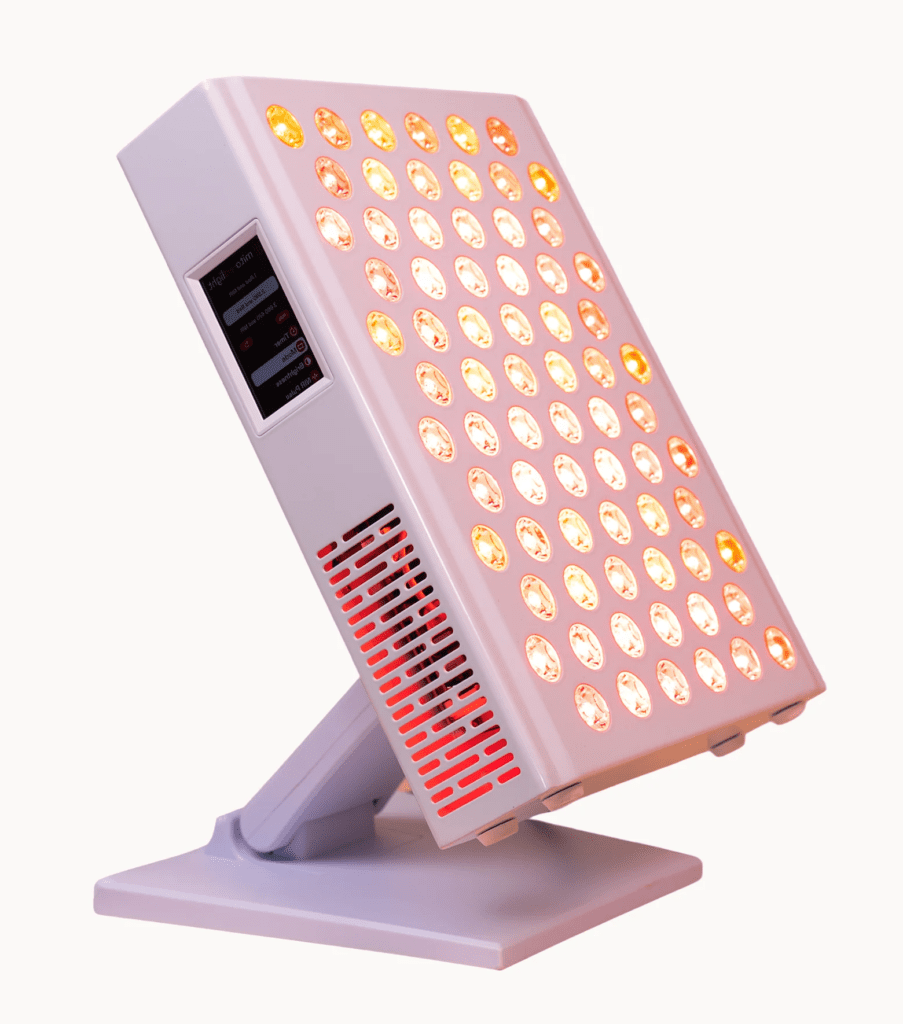
The MitoADAPT 4.0 is the newest addition to Mito Red Light’s lineup, and it’s built for people who want more control over their sessions.
Instead of a fixed wavelength blend, it offers 11 different modes that let you isolate specific wavelengths like Red Only for a collagen boost, Deep NIR Only for joint, bone and body composition support, or Broad NIR for muscle recovery.
The idea is that you can experiment with what works best for your particular goals rather than using the same setting every time. See the full list below or on the official website.

It also comes with a Bluetooth-connected app that tracks your sessions, logs your usage, and lets you adjust brightness remotely.
The irradiance is lower than the MitoPRO line (around 106 mW/cm² at 6 inches on the smallest model), but the customization tends to appeal to people who like testing different protocols.
What is the MitoPRO X?
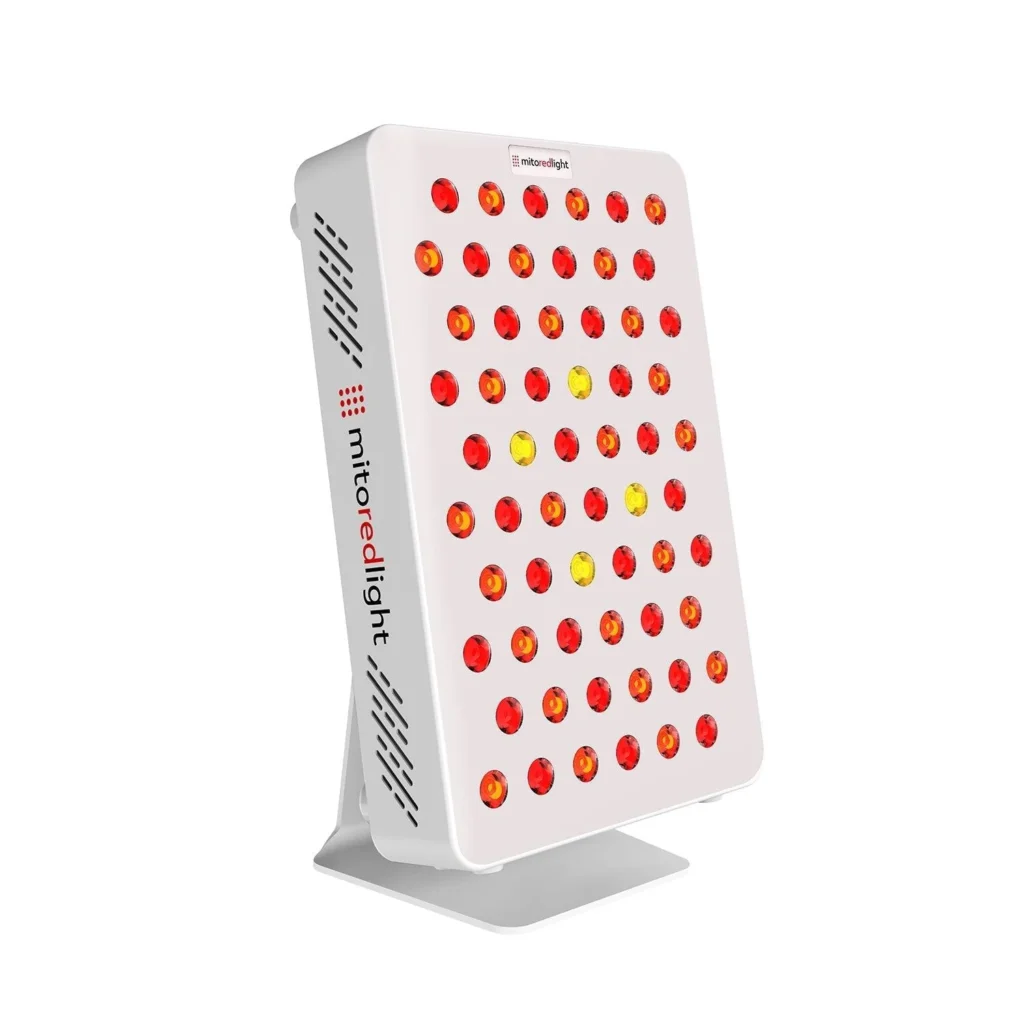
The MitoPRO X is Mito Red Light’s premium panel line, and it’s built for people who want higher power output with more control than a basic on/off switch.
It uses six wavelengths (590nm, 630nm, 660nm, 810nm, 830nm, and 850nm) instead of the typical two or four, which means you’re getting a broader range of light across the red and near-infrared spectrum.
The dual-chip design lets you run it as 100% red light, 100% near-infrared, or split it 50/50 so you can target skin work separately from deeper tissue sessions.
It also features a touchscreen interface and built-in alarm function. You can set it to turn on automatically in the morning or use it as a reminder to take a wellness break during the day.
The app integration gives you remote control from your phone and includes extras like NIR Extend or Interval pulsing, it also supports session tracking if you’re the type who likes seeing patterns in your usage.
Some people find the app helpful for staying consistent, while others just use the touchscreen and ignore the app entirely. The panel works equally well either way.
See full details of the MitoPRO here.
MitoADAPT vs MitoPRO: Irradiance & Power Output Numbers
The MitoPRO X delivers between 130-160 mW/cm² at six inches, depending on which size you get. The MitoADAPT 4.0 sits lower at 106-140 mW/cm².
Higher irradiance tends to mean shorter session times for the same effect, which is something to take into consideration if you’re fitting red light therapy into a tight morning routine or targeting deeper tissue like sore knees or shoulder joints.
Some people who switched to the MitoADAPT mentioned it felt less intense for muscle recovery compared to the higher-powered MitoPRO panels.
That said, the MitoADAPT’s gentler output can be an useful if you’re mainly focused on skin or prefer longer, more relaxed sessions. It depends on what you’re trying to accomplish and how much time you’re willing to spend in front of the panel.
Check Price of the MitoADAPT | Check Price of the MitoPRO
MitoADAPT vs MitoPRO: Size Options and Coverage Area
Both panel lines offer three sizes, but with different dimensions and coverage.
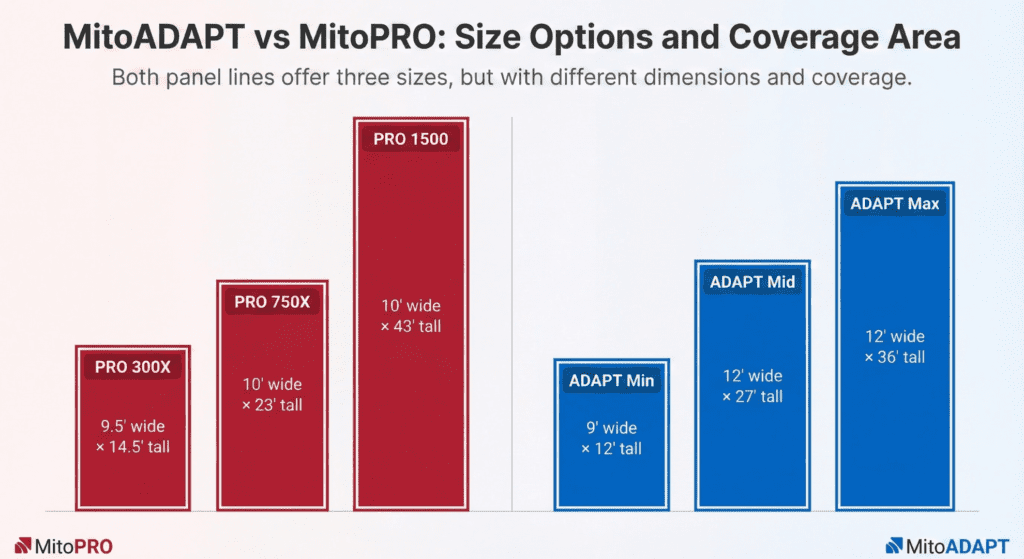
The smaller panel sizes from either line work well for face and upper chest. If you’re using them at face level, it’s worth grabbing a pair of red light therapy glasses to protect your eyes during sessions.
Mid-range panels are better for those that want to cover half their body at once without repositioning constantly. The largest sizes handle mostly full-body coverage in a single session, which can simplify your session if you’re dealing with widespread muscle soreness.
The MitoADAPT Min & Max panels are slightly wider but shorter than the MitoPRO X equivalents. Depending on your height and how you plan to mount the panel, one layout might fit your space better than the other.
MitoADAPT 4.0 vs MitoPRO: Wavelength Customization
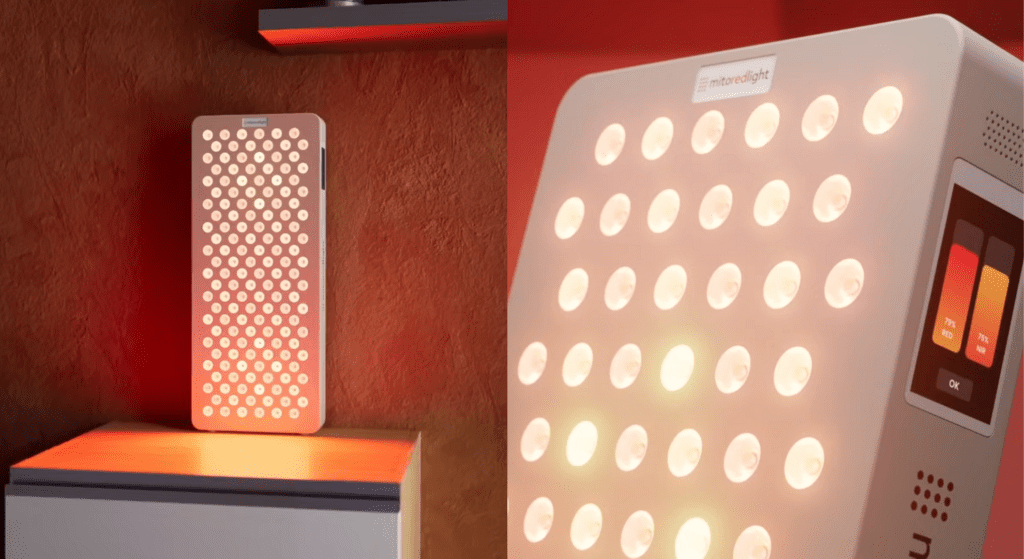
MitoPRO X Wavelengths
The MitoPRO X uses six wavelengths (590nm, 630nm, 660nm, 810nm, 830nm, 850nm) in a fixed blend.
You can switch between 100% red light, 100% near-infrared, or a 50/50 split. That gives you flexibility without overwhelming options.
MitoADAPT 4.0 Wavelengths
The MitoADAPT 4.0 takes customization further with eight wavelengths (590nm, 630nm, 660nm, 670nm, 810nm, 830nm, 850nm, 940nm) and 11 different modes. You can isolate specific ranges for targeted goals like using only red light for collagen work or switching to near-infrared before bed for deeper tissue support.
The trade-off between the two RLT panels is that 11 modes can feel a little overwhelming at first, and a lot of people end up using the same one or two most of the time anyway.
If you enjoy tweaking your setup and testing what feels best for your energy or sleep, the MitoADAPT’s flexibility can be a real plus. But if you want something simple that you can turn on and use without overthinking it, the MitoPRO X’s more straightforward setup is often the better fit.
MitoADAPT vs MitoPRO: App Connectivity and Smart Features
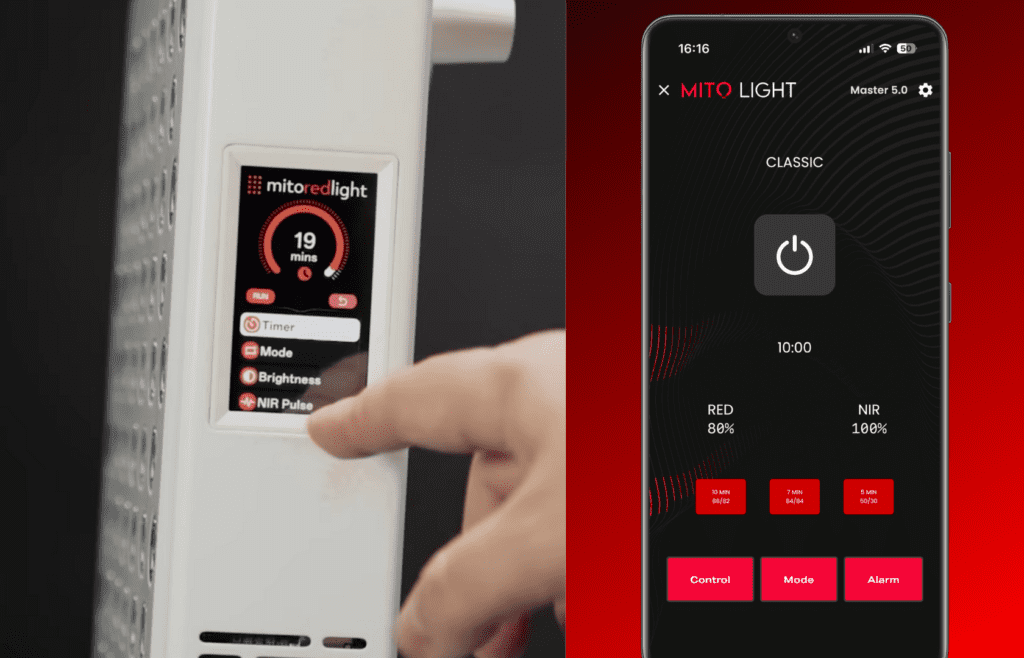
Both red light therapy panels offer Bluetooth app connectivity for remote control and session tracking, though the experience varies depending on what you’re hoping to get out of it.
The MitoPRO X app lets you adjust settings from your phone, set alarms for automated sessions, and track your usage over time.
With the MitoADAPT, the app leans more toward customization, letting you switch between its 11 modes remotely and log how you felt after a session so you can keep traack of what you personally respond to.
In real world use, app feedback is mixed. Some users like seeing their session history because it helps them stay consistent. Others mention a clunky interface or occasional syncing issues and end up relying on the panel controls instead.
The good news is you don’t need the app for either model. The built-in controls are straightforward, so you can set your session time, adjust brightness, and start in seconds. If you enjoy tracking your usage, the app can be a helpful extra. If not, you’re not missing anything essential.
MitoADAPT vs MitoPRO: Value and Realistic Results Timeline
The MitoPRO X starts at $449 for the smallest model, while the MitoADAPT 4.0 starts at $549. That $100 difference comes down to whether the extra wavelength modes and customization matter for your specific goals.
If you want a simpler panel with strong stated irradiance and you plan to use the same setup most days then the MitoPRO X offers better value. If you’re drawn to experimenting with the extra modes and wavelength options then the MitoADAPT’s flexibility may be a better fit.
For timelines, red light therapy is usually a weeks-to-months game. Some people notice better skin quickly, but changes tied to collagen and visible aging tend to take a few months of consistent use.
Layering a serum before your session can support absorption. Mito Red Light actually makes their own formula for red light therapy panels, though vitamin C or hyaluronic acid work fine too.
If you want a simple way to track progress, compare photos every few weeks instead of day to day.
Conclusion: Should You Choose the MitoADAPT or MitoPRO?

Most people deciding between the MitoADAPT and the MitoPRO are weighing whether they want more control and customization, or if they’d rather have higher power output with simpler operation.
If you’re mainly focused on how your skin looks such as working on fine lines, improving firmness, or trying to boost collagen production over time then both panels can help with that.
Red light wavelengths tend to work on surface-level concerns like tone and texture, while near-infrared penetrates deeper for things like muscle soreness after workouts or stiff joints that feel tight in the morning.
The real question is whether you’re someone who likes experimenting with different protocols and tracking what works, or if you’d rather just turn it on and keep things straightforward.
The ADAPT is the newer, more feature-rich option, with more modes to help dial in specific wavelengths for different goals. You can check out the ADAPT here.
The PRO is the simpler, higher-irradiance workhorse that’s been popular for years, with straightforward controls and no learning curve if you just want to turn it on and get in consistent sessions. Check out the PRO here.