Best Red Light Therapy Hair Straightener: Style Smarter With Less Heat Damage
Straightening your hair shouldn’t mean choosing between a smooth finish and healthier-looking strands. High heat, repeated passes, and daily styling can leave hair feeling dry, fragile, and harder to grow out over time.
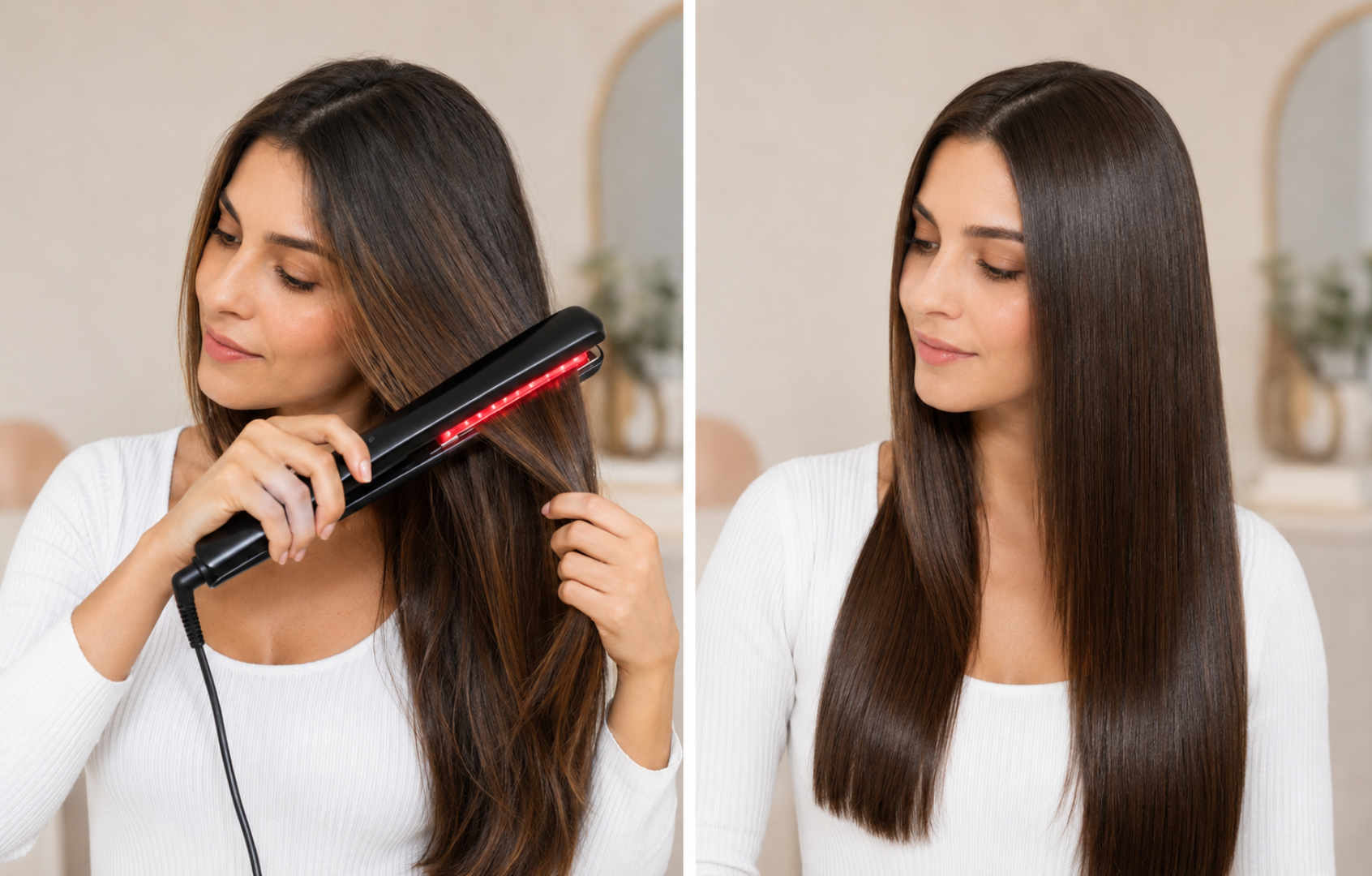
A red light therapy hair straightener can help by offering smooth styling at lower heat, with red light technology built in to help protect the hair shaft while you work.
These dual-purpose flat irons pair the everyday job of straightening with photobiomodulation, the same light-based technology used in red light therapy devices. Instead of relying on aggressive heat alone, they add red and infrared light to the hair shaft, so you can keep styling with less heat damage.
If you also dry your hair before styling, see our guide to the best red light therapy hair dryer for a tool that supports your scalp at the drying stage too.
Disclosure: This blog is reader-supported. As an Amazon Associate we may earn a small commission on qualifying purchases.
Our Top Pick: SRILabs StyleQ Flat Iron
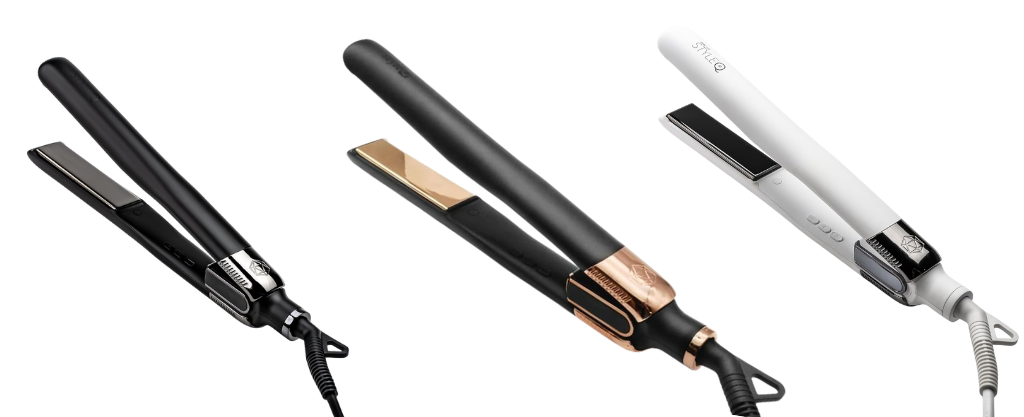
The SRILabs StyleQ combines red light technology with titanium plates and GraphFlow heat distribution to deliver a sleek, one-pass finish at a lower temperature, which is exactly what damaged and fine hair needs. Reviews report faster styling with fewer passes, plus smoother, frizz-free hair that holds up through the day.
At around $200, it also sits well below a $600-plus laser cap and most premium straighteners, so you get a daily styling tool and a red light feature in one.
Key Features
- Red Light (Infrared) Technology designed to penetrate the hair shaft, reduce breakage, and lock in natural moisture and shine
- 3D Floating Titanium Plates that adapt to your hair, suit all types from fine to thick and coarse, and glide through without tugging or snagging
- GraphFlow Graphene Technology for fast, even heat so you can straighten in fewer passes, even on stubborn grays
- Negative Ion Technology that helps eliminate frizz and seal in moisture for a sleeker, shinier finish
- 12 Heat Settings From 250°F to 450°F with a digital display, so you can match the temperature to your hair instead of cranking it to the max
- Heats Up in Under 60 Seconds to cut your styling time
- Doubles as a Curling Iron for ringlets or beach waves thanks to its curved, ergonomic design
- Dual Voltage, 360-Degree Swivel Cord, and 45-Minute Auto Shut-Off for travel-friendly, worry-free use
Who Is It Best For?
Women dealing with thinning, color-treated, or heat-damaged hair who still style several times a week. It also suits curly and thick-haired women who straighten occasionally but worry about losing their curl pattern, plus anyone who has been burned by premium tools that overheat and underdeliver.
This can be especially helpful for postpartum hair loss and for women in their 40s and 50s who’ve noticed their ponytail looking thinner than before.
Many still want smooth, styled hair without adding more stress to fragile strands. Lower-heat styling with built-in red light helps them style with less heat while adding light-based support during each pass.
Customer reviews mention smoother, shinier hair, less pulling, and less visible damage compared with older flat irons with one happy buyer saying her hair stayed sleek even in higher humidity.
👉 Check Current Price and Availability of the SRILabs StyleQ on Amazon
How Red Light Therapy Hair Straighteners Work
A red light therapy hair straightener combines everyday styling with red and infrared light.
The infrared heat helps warm the hair shaft more evenly, while a tool like the StyleQ uses graphene plates to spread heat consistently. This can make it easier to straighten at a lower temperature with fewer passes, which means less total heat than using a standard flat iron at 400°F or higher.
Heat reduction is the benefit with the strongest case behind it. Hair experts recommend keeping tools under about 350°F, because damage accumulates well before hair visibly fries, and the keratin in the cortex begins to denature around 392°F. Since many flat irons reach 400°F or more, styling in a gentler heat range can help protect fragile hair from unnecessary stress.
The light component is more nuanced. Red light has been studied more for scalp health than for heat styling. It’s thought to stimulate the mitochondria inside cells, which may support follicle function, and some research suggests it may help improve scalp circulation. These effects are gradual and not guaranteed.
A flat iron is also not the same as a dedicated laser cap for hair loss, which delivers a longer, more concentrated dose of light. The clearest, most measurable benefit of a red light straightener is reduced heat damage.
Benefits of Red Light Therapy While You Straighten
The biggest benefit of a red light flat iron is reduced heat exposure. Styling at a moderate temperature instead of the hottest setting can ease the ongoing heat stress that dries out hair, weakens strands, and leads to split ends.
Over time, less heat damage can mean less breakage, which may help you keep more length instead of losing the ends faster than your roots can grow.
In this kind of tool, the red and infrared light is used to penetrate the hair shaft, help support moisture retention, and reduce surface damage while you style. That can leave hair looking smoother and shinier without relying on extreme heat.
Negative ions and titanium plates add to the styling benefits. The ions are meant to reduce frizz and help hair hold moisture, while the smooth titanium plates move through the hair with less pulling.
Together, these features can help hair look sleeker in fewer passes, which means less repeated heat on the same sections.
How to Use the StyleQ for the Best Results
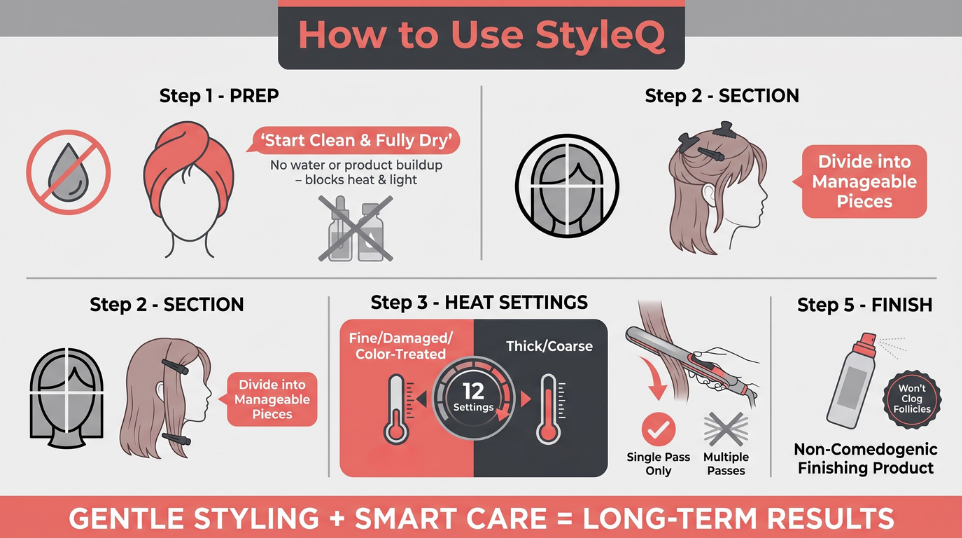
- Start with clean, fully dry hair. Water and product buildup can block both the heat and the light from doing their job, so dry your hair completely and skip heavy serums until after styling.
- Section your hair into manageable pieces and choose a lower heat setting first. Fine, damaged, or color-treated hair usually does best at 250°F to 325°F, while thicker or coarser hair may need 375°F to 450°F. The StyleQ’s range starts at 250°F, so you can stay gentle and step up only if needed instead of defaulting to the hottest option. Glide the iron through each section in slow, single passes rather than going over the same piece again and again.
- Follow up with a lightweight, non-comedogenic finishing product that will not clog your follicles such as the SEEN Magic Serum (available on Amazon).
What to Expect From Red Light Therapy for Thinning, Damaged Hair
Red light therapy takes time, and the changes are gradual rather than dramatic. The first thing many people notice is less breakage and smoother texture, simply from styling at lower heat.
After several weeks of regular use, hair may feel stronger, and look shinier. However it’s important to keep your expectations grounded.
A red light straightener is a styling tool, not a hair-growth device. For a closer look at standalone options, see our guide to the best red light therapy for hair loss at home.
Remember to give any new hair growth approach at least three months of consistent use before deciding whether it’s working.
Red Light Therapy Hair Straightener vs Traditional Flat Iron vs RLT Cap
| Feature | SRILabs StyleQ | Standard Flat Iron | Dedicated RLT Cap |
|---|---|---|---|
| Primary use | Daily styling with less heat damage | Daily styling only | Scalp treatment only |
| Heat control | 12 adjustable settings | Often fixed or limited | No heat |
| Red light technology | Built in during styling | None | Concentrated, longer dose |
| Plate material | Titanium with GraphFlow | Varies, often ceramic | Not applicable |
| Frizz and shine | Negative ions for smoother finish | Varies | Not applicable |
| Fits into your day | Uses time you already spend styling | Uses styling time | Separate 20-plus minute sessions |
| Typical price range | Around $200 | $30 to $600 | $400 to $1,500+ |
Final Thoughts
A red light therapy hair straightener is a newer take on hair care that brings lower-heat styling and shaft-protecting red light into one at-home tool. For anyone dealing with thinning, breakage, or years of heat damage, it offers a way to keep the look you want without the same toll on your hair.
The SRILabs StyleQ delivers on that with titanium plates, even GraphFlow heat, negative ions for shine, and red light built into every pass.
Start with realistic expectations and lower heat. Work through your hair in sections, avoid repeated passes, and give any new hair care approach at least three months of regular use before judging the results.
The StyleQ’s lower-heat styling, frizz-fighting shine, and shaft-protecting red light are designed so you can finally stop choosing between hair that looks good and hair that stays healthy.
Frequently Asked Questions
Does A Red Light Therapy Hair Straightener Actually Work?
Yes, a red light therapy hair straightener can work as a lower-damage styling tool, since pairing reduced heat with red light may support smoother, less damaged strands, though the clearest benefit most users report is less breakage and frizz rather than dramatic regrowth from the iron itself.
The red light dose from a flat iron is brief compared with a dedicated cap, so think of it as protective styling with a bonus rather than a standalone treatment.
Are Red Light Flat Irons Better Than Regular Straighteners?
Yes, red light flat irons can be better than regular straighteners for damaged or fine hair, because they usually run at lower temperatures and add infrared or red light meant to reduce stress on the hair shaft, which may help cut down on the breakage that high-heat tools cause over time.
Titanium plates and negative ions, like those on the SRILabs StyleQ, also help smooth frizz with fewer passes. The trade-off is price, since these tools cost more than basic irons, but the reduced damage can be worth it for hair that is already fragile.
Can A Flat Iron Help With Thinning Hair?
Not directly, a flat iron will not regrow thinning hair on its own, but a red light therapy straightener like the SRILabs StyleQ may help by lowering the heat damage that weakens fragile strands, which can reduce breakage and protect the length you already have while you style.
For active hair loss, some people pair gentle styling with a dedicated red light device or a treatment recommended by their doctor, using the straightener as the lower-damage way to keep styling in the meantime.
What Temperature Is Safe For Damaged Or Color-Treated Hair?
For damaged or color-treated hair, most experts recommend a range of 250°F to 325°F and keeping any flat iron under about 350°F, since damage builds as the temperature rises and the keratin in the cortex begins to denature around 392°F, so the StyleQ’s settings, which start at 250°F, let you stay in that gentler zone while still getting a sleek finish.
Start at the lowest setting that smooths your hair and only increase if needed. If your hair is bleached or already fragile, drop one or two settings below what your hair type would normally take. Fewer passes at a lower temperature protect it far better than one aggressive pass at maximum heat.
How Often Should I Use A Red Light Therapy Hair Straightener?
You can use a red light therapy hair straightener as often as you normally style your hair. Keep the heat moderate and limit repeated passes to reduce heat damage while you style.
Disclaimer: This article is for informational purposes only and is not medical advice. Red light therapy results vary from person to person, and a hair straightener is not a treatment for hair loss or any medical condition. If you are dealing with significant hair loss or a scalp condition, speak with a doctor or dermatologist.