Will Red Light Therapy Help Sunburn or Make It Worse?
Will red light therapy help with sunburn, or will it make things worse? If you’ve ever dealt with that hot, tight feeling after too much sun, you’re probably desperate for anything that speeds up healing.
Red light therapy has become popular for skin issues, but sunburn is tricky. Your skin is already inflamed and damaged, so adding more light—even therapeutic light—might sound counterintuitive. The short answer: it depends on timing, wavelength, and how bad your burn is.
Let me walk you through what actually happens when you use infrared light on sun-damaged skin, when it might help, and when you should absolutely skip it.
How Red Light Therapy Actually Works on Skin
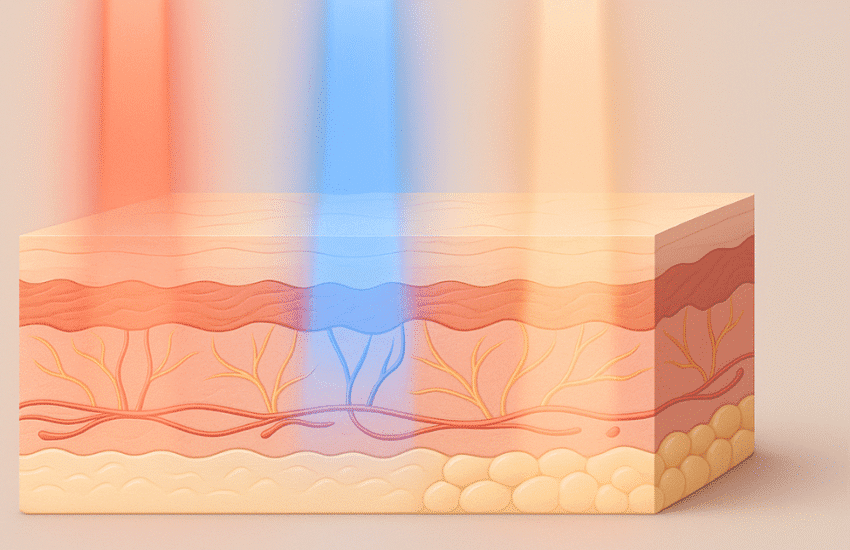
Red light therapy uses specific wavelengths—usually between 630nm and 850nm—to penetrate your skin and reach cells underneath. These wavelengths stimulate your mitochondria, the tiny power plants in your cells, to produce more ATP (basically cellular energy).
When your cells have more energy, they can repair damage faster. Think of it like giving your phone a full charge so it runs all its functions smoothly. For normal skin issues like fine lines or minor inflammation, this process can be especially helpful.

- Red light (630-660nm) penetrates surface layers of skin
- Near-infrared (850nm) reaches deeper tissue and promotes cellular repair
- Mitochondria absorb light energy and convert it to ATP
- Increased ATP production accelerates healing processes
- Timing matters—acute damage responds differently than chronic issues
The Problem With Using Light Therapy on Fresh Sunburn
That hot feeling from a fresh sunburn isn’t trapped heat from the sun—it’s inflammation. Your blood vessels have dilated to rush immune cells to the damaged area, making your skin feel warm and tight.
Red light therapy sits in a different category from lying in the sun. At the doses used in photobiomodulation, red and near-infrared light mostly work through non-thermal, photochemical effects—they nudge mitochondria and cell signalng, rather than cooking your skin the way strong sunlight or a heat lamp would.
So does that mean you should blast a fresh sunburn with your red light panel? Not so fast.
The research we do have so far is mostly about pre-conditioning the skin. In some studies, 660 nm LED used before UV exposure helped skin handle the hit better and reduced how red it got later. That’s more like “light-based SPF support” than an after-sun emergency fix.
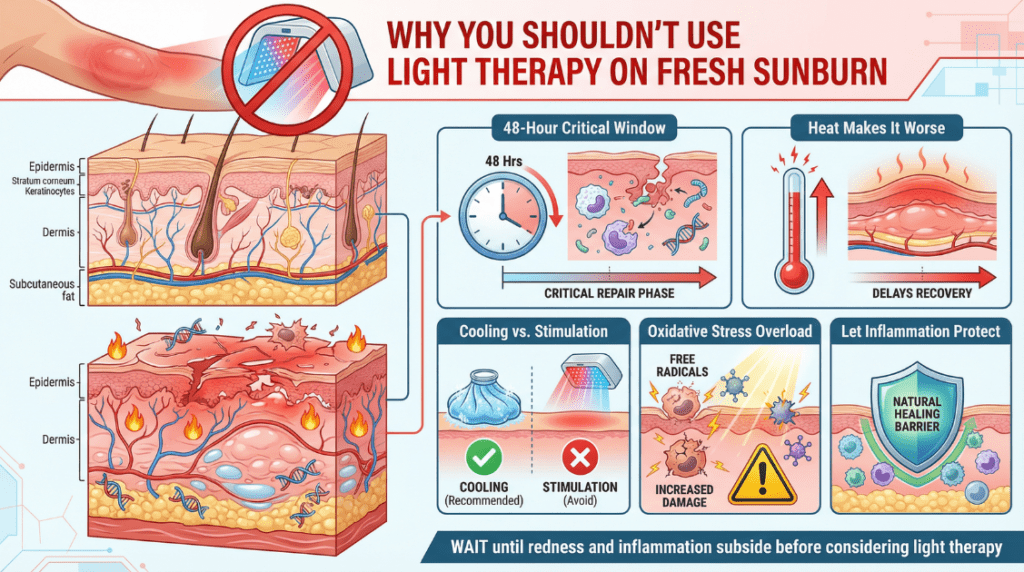
What we don’t really have yet are good human trials where someone gets an actual sunburn and then uses red light immediately afterward, with clear data on pain, healing time, or peeling. On the flip side, standard burn and sunburn care still says the same thing it always has:
- Cool the area
- Avoid extra heat
- Use soothing topicals and pain relief as needed
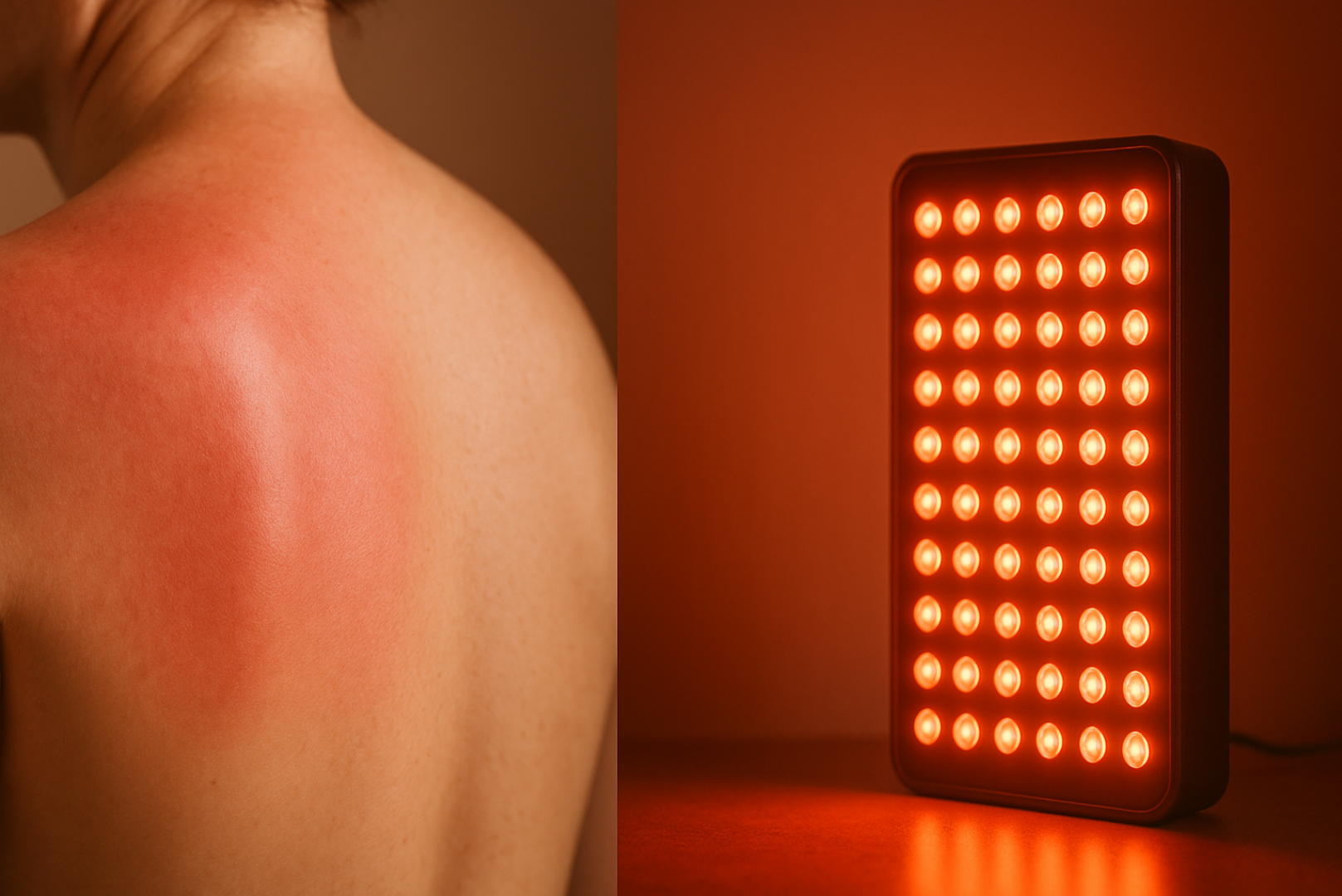
Remember, a lot of home red light devices get warm just from the electronics. On normal skin that’s no big deal; on raw, inflamed, “don’t even touch me” sunburn, pressing a warm panel right up against it is a recipe for misery, whether or not the photons are doing something helpful underneath.
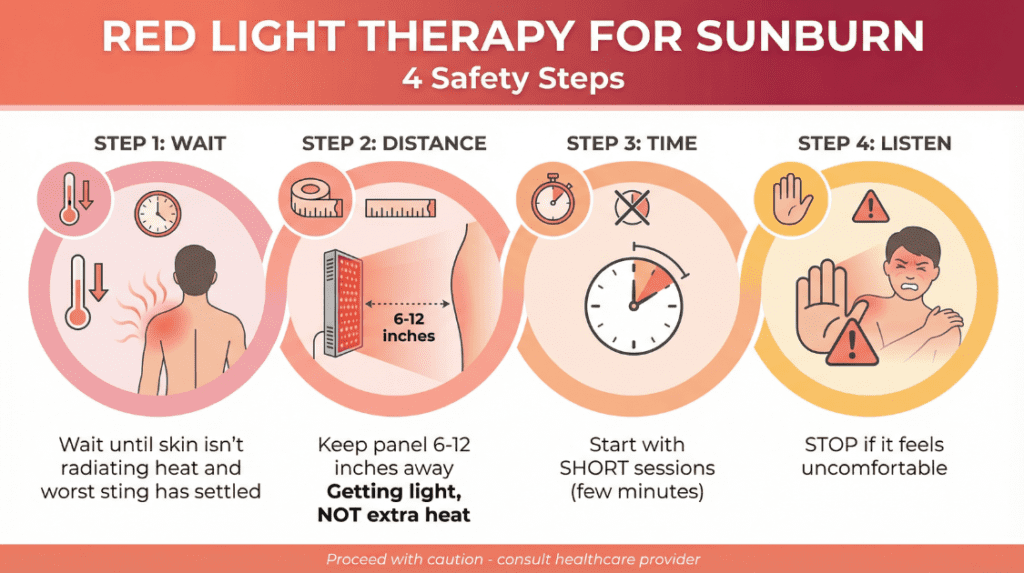
If you’re determined to experiment with red light at home around a sunburn, a more cautious approach looks like this:
- Wait until your skin isn’t radiating heat and the worst sting has settled (72+ hours is recommended)
- Keep the panel back a bit (for example, 6–12 inches away) so you’re getting light, not extra heat.
- Start with shorter sessions (5-10 minutes maximum), not a long session.
- Stop if it feels uncomfortable
Red light therapy might speed up healing for sun-damaged skin, especially in the recovery phase, but it won’t replace the basics: stay out of the sun, wear sunscreen, and take care of the burn properly. If your sunburn is severe, blistered, or covers a large area, skip the light panel and see a doctor.
When Red Light Therapy Might Actually Help Sunburn Recovery
Once you’re past the acute phase (usually 72+ hours after burning) red light therapy might speed up the healing process. At this point, your skin has moved from crisis mode to repair mode, and that’s when cellular energy boost becomes useful.
In animal studies on second-degree thermal burns, 660 nm red light has been shown to speed up healing and improve how well the skin regenerates, by reducing dead tissue and boosting repair signals in the damaged area.
What Wavelengths and Settings Matter for Sun-Damaged Skin
Not all red light devices are created equal, especially when you’re dealing with compromised skin.
Visible red light (630nm-660nm) is actually your best friend for acute and early-phase sunburn recovery. Because sunburn is a surface injury, this wavelength targets the upper layers of skin where the damage occurred.
Near-infrared (850nm) goes deeper to muscles and joints, which is great for aches but less effective for the surface burn itself.
Power density matters too. Clinical wound-healing protocols recommend 20-50 mW/cm² for damaged skin.
At these conservative power densities, red light operates through photochemical mechanisms (cell signaling and energy production), not thermal heat, making it safe even on inflamed tissue. Higher power densities (>100 mW/cm²) shift the mechanism toward thermal effects, which can add unwanted heat to already-compromised skin.
Think of it like the difference between a gentle warm breeze and standing in front of a heater. Your damaged skin needs the gentlest effective dose.
Better Alternatives for Sunburn Relief
Honestly, red light therapy shouldn’t be your first choice for fresh sunburn. Cold compresses, aloe vera, and anti-inflammatory medications work better for immediate relief because they address what your skin actually needs: cooling and hydration.
Your burned skin has lost moisture and barrier function. No amount of light therapy fixes that in the acute phase. Save the red light for week two when your skin is rebuilding collagen and dealing with hyperpigmentation from the damage.
- Apply cold compresses for 15-20 minutes every few hours
- Use pure aloe vera gel to soothe and hydrate damaged skin
- Take ibuprofen or aspirin to reduce prostaglandin-driven inflammation
- Apply fragrance-free moisturizer once initial heat subsides
- Consider red light therapy only during the rebuilding phase (days 3-14)
Signs You Should Skip Red Light Therapy Entirely
Some sunburns are too severe for any at-home treatment, including red light therapy. If you have blistering, fever, chills, or severe pain, you need medical attention, not a light panel.
Even for moderate burns, if your skin feels hot to the touch or looks bright red, it’s not ready for light therapy. Wait until the heat subsides and the color shifts from angry red to pink. Your skin will tell you when it’s ready—it’ll stop feeling like it’s radiating heat.
- Blistering indicates second-degree burns requiring medical evaluation
- Fever, chills, or nausea signal possible sun poisoning
- Broken skin barrier increases infection risk with any treatment
- Bright red, hot-to-touch skin is too inflamed for light exposure
- Severe pain lasting beyond 48 hours warrants professional assessment
The Bottom Line: Will Red Light Therapy Help with Sunburn?
So, will red light therapy help with sunburn? For acute sunburn (first 72 hours), it’s unlikely to help and may create additional discomfort. Your skin is inflamed, the area is hot, and adding photostimulation during peak inflammation can paradoxically trigger pro-inflammatory responses.
Your best strategy is the traditional approach: cool the area, hydrate it, reduce inflammation with NSAIDs, and protect it from further sun exposure.
For recovery-phase sunburn (after 72+ hours), red light therapy at 660nm using conservative power densities (20-50 mW/cm²) may accelerate healing by supporting collagen production, reducing residual inflammation, and promoting cellular energy.
Sessions should be short (5-10 minutes), infrequent (1-3 times weekly), and discontinued immediately if discomfort increases.
Think of red light as a recovery accelerant, not an emergency treatment.
The smartest approach? Prevent sunburn in the first place with proper sun protection. But if you’re already dealing with sun damage, give your skin what it needs in the right order: cool it down, hydrate it, protect it, and only then consider light therapy to speed up the final healing stages.
Disclaimer: This content is for informational and educational purposes only and is not a substitute for professional medical advice, diagnosis, or treatment. Always talk to your doctor or another qualified health provider before starting any new treatment, including red light therapy. Never ignore or delay seeking medical advice because of something you read online.