Does Red Light Help with Cellulite? What the Science Says
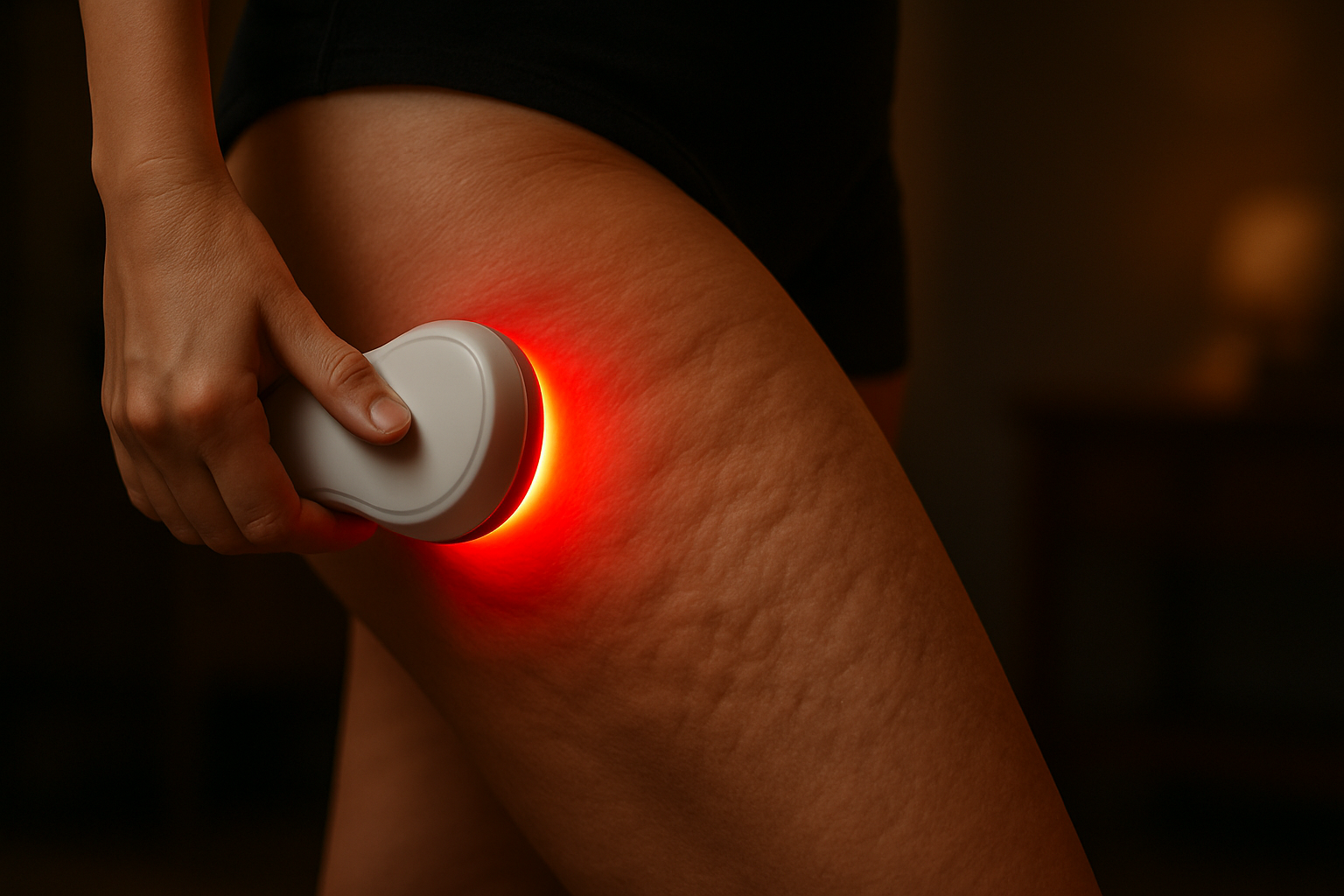
Cellulite affects nearly 90 percent of women, and red light therapy is gaining attention as a gentler option for reducing the look of dimpling. Using specific wavelengths of light, RLT may help improve circulation, support collagen production, and influence fat cell metabolism, which could gradually soften the uneven orange-peel texture of cellulite.
For at-home use on thighs and glutes, a red light leg wrap or body belt such as Novaa Light Pad XL covers more skin and keeps sessions hands-free.
If you’re weighing options, see our guide to the best red light leg wraps for coverage, wavelengths, and fit. Or read on to learn what current research actually shows, how treatments are done in clinics vs at home, and the kind of results you can realistically expect.
The Science Behind Cellulite Formation: How Does Red Light Help with Cellulite?
Those dimples that seem impossible to smooth out have a scientific explanation. Cellulite forms when fat deposits push through the connective tissue beneath the skin, creating that characteristic orange-peel texture.
Women’s connective tissue runs vertically, which makes it easier for fat to push through and create dimples. Men’s tissue crisscrosses, providing more support. That’s why 80-90% of women experience cellulite at some point, regardless of their body weight or fitness level.
Hormones can play a big part in cellulite. Estrogen affects where the body stores fat and may also influence circulation in areas where cellulite commonly appears.
Reduced blood flow can mean the skin gets less oxygen and fewer nutrients, which may make dimpling look more noticeable.
Genetics can play a role too. If cellulite runs in your family, you may be more likely to develop it. It commonly shows up on the thighs, buttocks, and abdomen, where women naturally carry more body fat.
What Research Says About Red Light Therapy for Cellulite Reduction
Research on red light therapy for cellulite is still limited, but some small studies have reported encouraging results.
A 2011 study in the Journal of Cosmetic and Laser Therapy followed 20 women for 3 months. One group completed treadmill training alone, while the other combined the same exercise program with 850 nm near-infrared LED therapy.
The group receiving light therapy showed greater reductions in thigh and saddlebag measurements, along with improvements in the appearance of cellulite.
The study was small, and because the light therapy was used alongside exercise, it can’t tell us how well 850 nm near-infrared light works on its own. Still, the specific wavelength used gives us a useful point of comparison when looking at at-home red light therapy devices.
The Novaa Light Pad XL includes 850 nm near-infrared light, the same wavelength used in this study, along with 635 nm red light.
In this study, treatments were given regularly over 3 months rather than as a one-off session. Research hasn’t established exactly how often maintenance treatments are needed or how long cellulite improvements last after treatment stops.
Results can vary from person to person, and the evidence doesn’t support expecting cellulite to disappear completely. Red and near-infrared light therapy may help improve its appearance, especially when used consistently, but it is better viewed as one option alongside exercise, nutrition, and other cellulite treatments.
How Does Red Light Therapy Help Reduce the Appearance of Cellulite?
Infrared light therapy may help improve the appearance of cellulite by increasing circulation in the treated area. Better blood flow brings more oxygen and nutrients to the skin, which may support healthier skin function and gradually make dimpling look less noticeable.
Red light may stimulate fibroblasts, the cells responsible for producing collagen. Increased collagen production can help support the skin’s connective tissue, which may make cellulite look less noticeable over time.
For cellulite, red light in the 630-660 nm range is often paired with near-infrared light around 810-850 nm. These wavelengths reach different depths in the tissue and may support circulation and fluid movement, which could help reduce some of the swelling that makes cellulite look more noticeable.
What to Expect: Red Light Therapy Duration for Cellulite Treatment
Red light therapy for cellulite usually requires regular sessions over several weeks. Many treatment plans use 2-3 sessions per week for around 4-12 weeks, with session length depending on the device and the size of the treatment area.
Changes are usually gradual rather than immediate. Some people may notice small improvements in the appearance of skin texture or firmness after several weeks of consistent use, although results vary and cellulite may not disappear completely.
At-home devices are convenient and can make it easier to stay consistent, but their power output can differ from professional equipment. Treatment costs also vary, with professional sessions often priced individually and home devices requiring a larger upfront purchase.
Does Combining Red Light Therapy With Other Treatments Help Cellulite?
Red light therapy may be more useful when it’s combined with other approaches rather than used on its own.
Strength training can improve muscle tone in the thighs and buttocks, while strategies that support fat loss with red light therapy may help address some of the fat beneath the skin.
Some people also use dry brushing before red light sessions, although there’s limited evidence that dry brushing itself reduces cellulite. It may temporarily increase surface circulation, but any effect on dimpling is likely to be short-lived.
Topical retinol may be another option. With consistent use for at least six months, a product containing 0.3% retinol may support collagen production and thicken the skin, although results vary and pronounced dimpling may show little improvement.
Staying hydrated supports normal skin function, but drinking more water alone won’t remove cellulite. If skin texture is also a concern, a red light device for crepey skin may be another option for supporting firmer-looking skin over time.
Conclusion
Red light therapy may offer a non-invasive way to reduce the appearance of cellulite, especially when used consistently alongside healthy habits. Research points to modest improvements, but results can vary widely from person to person.
If you’re considering it, keep expectations realistic. Cellulite treatments usually take time, and red light therapy may require regular sessions to maintain any changes you notice.
For a hands-free option that covers the thighs and glutes, a wider wrap such as the Novaa Light Pad XL, which includes 850 nm near-infrared light, may make regular sessions easier by treating a larger area at once.
Cellulite is extremely common and can affect women of all body types and fitness levels. Red and near-infrared light may help improve its appearance, but it’s best used alongside habits such as regular exercise, good hydration, and other evidence-based treatments. If you have a medical condition or concerns about whether red light therapy is suitable for you, speak with a healthcare professional before starting.
Health Disclaimer: The information in this article is for educational purposes only and is not a substitute for professional medical advice. Always consult a qualified healthcare provider before starting any new treatment. Individual results may vary.