5 Benefits of Red Light at Night to Help Improve Your Sleep
Red light in the evening can make your space feel more relaxed, but it may also help your body wind down for sleep. Unlike the blue-rich light from phones, tablets, and many LED bulbs, red wavelengths are less likely to interfere with your natural nighttime signals.
Switching to dim red lighting a few hours before bed can reduce your exposure to bright, blue-rich light as you wind down. Here’s how evening red light may affect sleep and why some people use it as part of their nighttime routine.
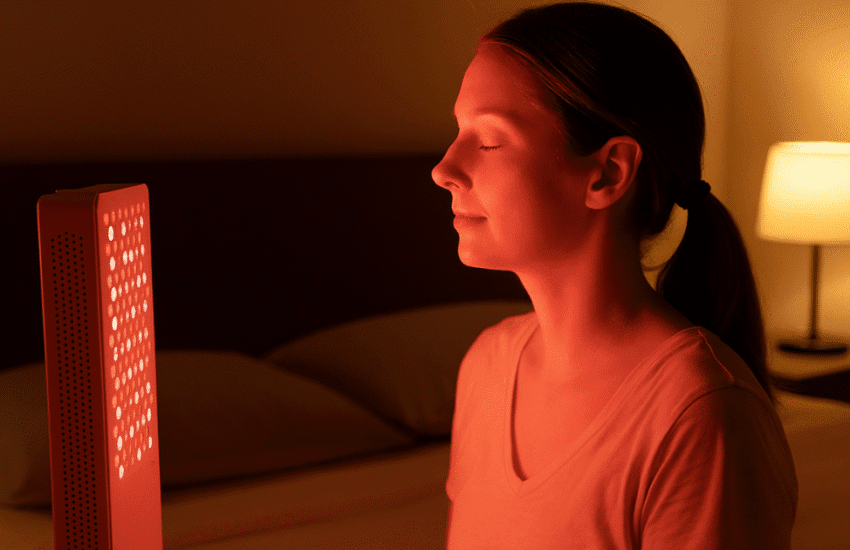
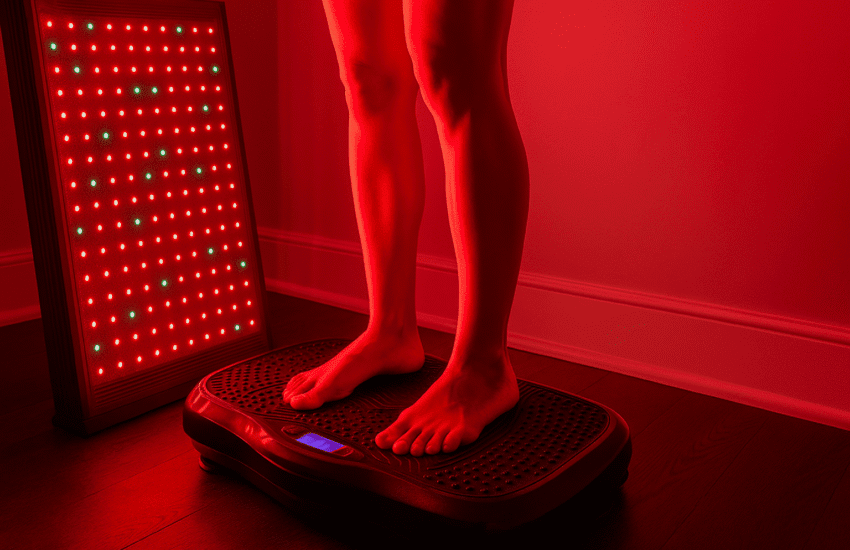
Red light therapy bulbs are different from the dim red bulbs used for evening lighting. They’re higher-output devices designed for targeted use on areas such as muscles and joints. If that’s what you’re looking for, see our guide to the best red light therapy bulbs for home use
1. Dim Red Light Is Less Likely to Disrupt Melatonin at Night
Melatonin is one of the main hormones that helps regulate your sleep-wake cycle. As daylight fades, your body naturally starts producing more of it, which helps signal that it’s time to wind down.
Bright screens and strong overhead lighting late at night can interfere with that process. Red light is much gentler on your nighttime signals, which is why some people use red light therapy at night or switch to red bulbs in the evening.
I swapped my bedside lamp for a simple red bulb and noticed within a few nights that I was spending less time scrolling before bed. The softer lighting made it easier to settle down and break the cycle of lying awake after getting into bed.
If sleep is your main goal, the best time to use red light therapy for sleep can depend on your evening routine and when you normally go to bed.
2. Red Light May Be Easier on Your Eyes at Night
After hours of staring at screens, bright white light can feel harsh on tired eyes.
Red light uses longer wavelengths and is generally less stimulating at night than blue-rich light from phones, monitors, and many LED bulbs. Switching to a dim red light bulb in the evening can create softer lighting without flooding the room with bright light.
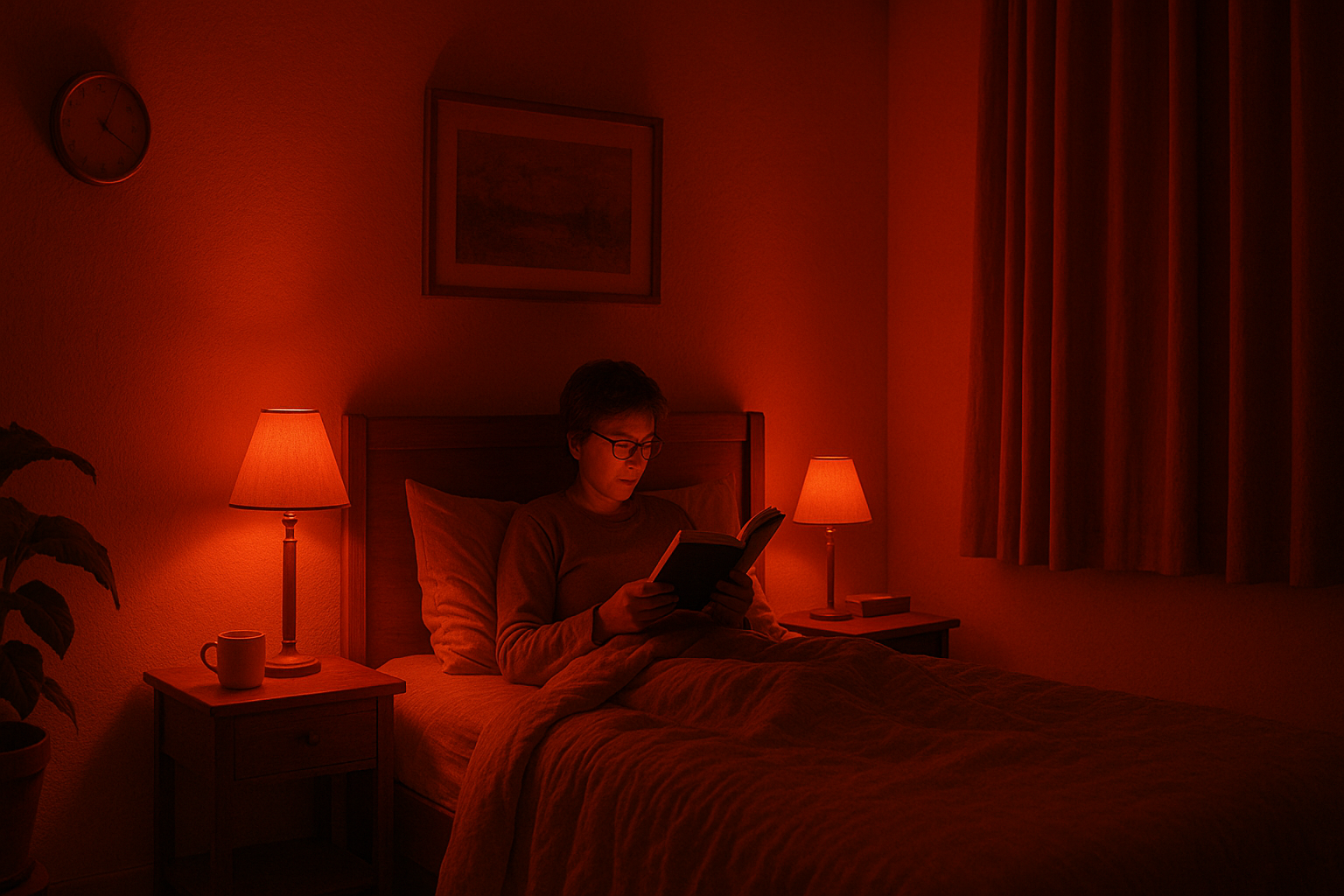
If you like reading before bed, place a low-wattage red lamp beside you rather than using a strong overhead light. Keeping evening lighting dim may also support your natural sleep signals, which is one reason people use it as part of their bedtime routine.
Red light won’t necessarily fix dry or irritated eyes, but reducing bright, blue-heavy light in the evening may make your surroundings more comfortable after a long day of screen time.
3. How Red Light Helps Create a Better Environment for Sleep
There’s a reason sunset feels different from bright daytime light. As evening arrives, dimmer, warmer light gives your body fewer signals to stay alert and can make it easier to wind down.
Using red light at night can help create that calmer environment without the blue-heavy light produced by phones, tablets, and many standard bulbs.
For an easy setup, use dimmable red light bulbs in your bedroom lamps. Lower the brightness about an hour before bed so your eyes and brain have time to adjust to a darker setting.
It’s a small change, but creating a dim, low-stimulation bedroom can make your nighttime routine feel calmer and help signal that the day is coming to an end.
4. How Red Light at Night May Support Your Circadian Rhythm
Your circadian rhythm depends heavily on light cues, with brighter light during the day and dimmer light at night helping your body keep a regular sleep-wake schedule.
Blue-rich light from phones, tablets, and other screens can signal daytime to the brain, especially when you use them late at night. Dim red light is less likely to interfere with those nighttime signals, which is why some people use red light at night as part of their evening routine.
This may be useful for shift workers, frequent travelers, or anyone dealing with an irregular schedule. Using red light at the right time may help make those transitions a little easier, although it won’t completely reset your body clock on its own.
If circadian rhythm and sleep are your main goals, the best time to use red light therapy for sleep can depend on your usual bedtime, work schedule, and light exposure throughout the day.
5. Red Light Can Help You to Navigate Nighttime Safely Without Waking Your Brain
Getting up for a bathroom trip in the middle of the night can make it harder to fall back asleep, especially if you switch on a bright white light.
A small red light bulb in the hallway, bedroom, or bathroom can provide enough light to move around safely without filling the room with bright, blue-heavy light.
Red night lights can also be useful for parents checking on children or handling late-night feeds. The softer light keeps the room dim, which may make it easier for everyone to settle back to sleep.
If you’re trying to reduce bright light exposure before and during sleep, using red light at night is a simple, low-cost change to your nighttime setup.
Easy Tips for Adding Red Light to Your Evening Routine
You don’t need to retrofit your whole home to see benefits.
- Start with one red LED bulb in your bedroom or bathroom. Most standard fixtures can accommodate them, and quality red bulbs typically cost under $20.
- Consider smart bulbs if you want to automate the transition. Many smart lighting systems can gradually shift from bright white during the day to warm red in the evening.
- Use red light filters on your devices as a backup option
- Time it right by switching to red light about 2-3 hours before your intended bedtime. Keep the bulb at the lowest brightness that still lets you see comfortably.
Combining red light with solid sleep hygiene can amplify the effect. Pair it with a cool room temperature, blackout curtains, and a wind-down ritual that doesn’t involve screens. Over time, a consistent wind-down routine can also help reinforce regular sleep timing.
The Bottom Line
Making the switch to using red light in the evening is one of the simplest tweaks you can make for better sleep and overall wellbeing. By preserving melatonin, easing eye strain, and keeping your circadian rhythm humming along, red wavelengths can work with your body instead of against it.
Start small with just one red lamp in your bedroom, hallway, or bathroom and keep the brightness low in the hours before bed.
Red light won’t fix every sleep problem, but it can be an easy, low-cost way to reduce harsh evening light and make winding down easier. If sleep problems continue or regularly affect your day, it’s worth speaking with a healthcare professional.