Best At-Home Light Therapy for Rosacea: 5 LED Masks Compared
Rosacea can make even simple skincare feel unpredictable. A moisturizer that felt fine yesterday might sting today, while heat, stress, weather and other personal triggers can leave the cheeks and nose looking flushed long after the trigger has passed.
At-home LED light therapy offers another way to care for rosacea-prone skin without adding an exfoliating acid or strong active ingredient.
If you’re comparing red light therapy for rosacea with yellow light therapy, the best device isn’t the one with the longest list of colors. Instead, look for relevant wavelengths, short sessions and a design that works alongside the skincare products or prescriptions you already use.
Top recommendation: The MitoGLOW LED Face Mask is our top choice for rosacea-prone skin because its dedicated Calm mode uses 590nm yellow light, a wavelength studied in people with sensitive facial skin and linked with improvements in visible redness and stinging. Its rigid design hovers above the face instead of pressing against reactive cheeks, while sessions take less than ten minutes.
Best LED Masks for Rosacea at a Glance
| Product | Best for | Key Wavelengths | Session Time | Where To Buy |
|---|---|---|---|---|
| MitoGLOW LED Face Mask | Best Overall | 590nm yellow, 630nm red, 830nm near-infrared | 8 to 10 min | Shop MitoGLOW |
| iRestore Laser Face Mask Pro | Best Premium | 590nm amber, 633nm and 660nm red, 830nm, 850nm and 1072nm near-infrared | 10 min | Shop on iRestore |
| Glokore Wireless LED Face Mask | Best Budget | 590nm yellow, 630nm red | 10 min | Shop on Glokore |
| Ulike ReGlow LED Face Mask | Best Value | 590nm yellow, 630nm red, 830nm near-infrared | 5 to 8 min | Shop on Amazon |
| CurrentBody Skin LED 4-in-1 Zone Facial Mapping Mask | Best Multi-Mode Mask | 590nm yellow, 633nm and 660nm red, 830nm near-infrared | 10 min | Shop on Amazon |
Does LED Light Therapy Help Rosacea? What Studies Show
Research on LED light therapy for rosacea is limited, but human studies point to yellow and red wavelengths as promising for redness-prone skin.
In a 2026 randomized trial of 30 people with sensitive facial skin, 590nm yellow light reduced measured erythema and improved transepidermal water loss and stinging after eight weeks. Combining 590nm yellow with 630nm red also improved sensitivity scores.
Direct rosacea evidence is smaller. A 2024 retrospective study reported faster improvement when yellow LED was added to minocycline and ozonated hydrotherapy. A 2025 observational study of 90 people also found better results when 590nm yellow followed by 830nm near-infrared was added to a broader treatment program.
Because both studies used combination treatments, they can’t tell us how much yellow light contributed on its own.
Two papulopustular rosacea case reports also recorded less redness and fewer inflammatory lesions after sequential 480nm blue and 650nm red light.
Taken together with the controlled sensitive-skin trial above, 590nm yellow has some of the most encouraging human evidence for facial redness and sensitivity among the wavelengths used in at-home LED masks.
The masks below aren’t clinically proven to treat rosacea, so we ranked them for rosacea-prone skin based on how closely their wavelengths match the available research, along with design, comfort, and suitability for visible redness. Red and near-infrared modes were considered a bonus for broader cosmetic skin goals.
Top Picks – LED Masks for Rosacea and Facial Redness
Best Overall: MitoGLOW LED Face Mask
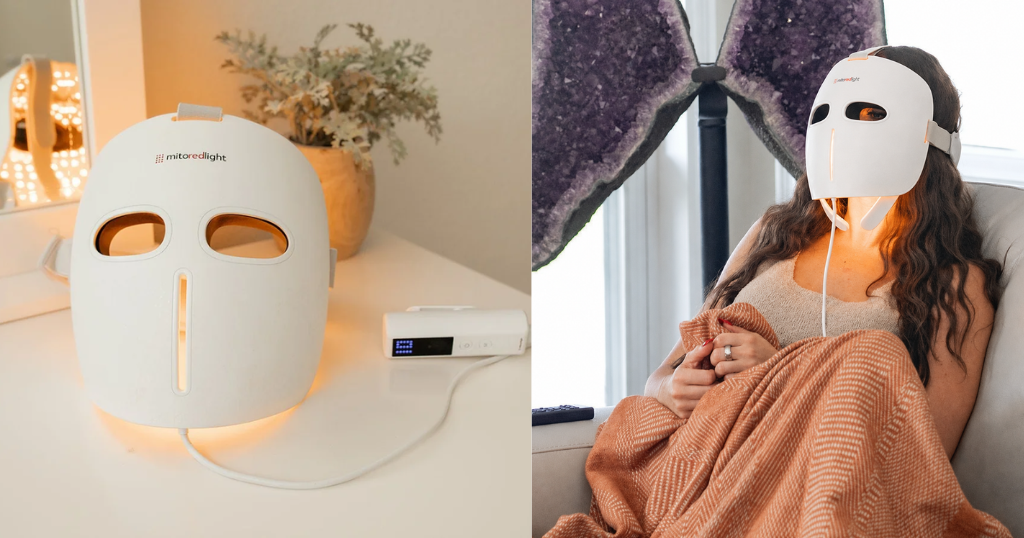
The MitoGLOW LED Face Mask takes first place because its dedicated Calm mode delivers 590nm yellow light.
When your cheeks already look flushed, one button starts a session at that wavelength, giving you a focused option for visible redness without having to cycle through multiple settings.
Its rigid shell sits above most of the face instead of pressing directly against the skin. That can make it more comfortable for reactive cheeks, while built-in blackout shields help reduce glare. The rotating lower section also directs light toward the jaw and under the chin.
The dedicated Calm mode uses 590nm yellow light for sessions of up to ten minutes, while the Deep Renewal mode combines 630nm red with 830nm near-infrared light for sessions of up to eight minutes.
This gives you a focused yellow-light option when visible redness is the priority, plus a separate mode for broader skin-aging goals.
Best for: Redness-prone skin that feels uncomfortable under a close-fitting mask.
Bottom line: MitoGLOW offers the strongest balance of promising 590nm yellow light, a dedicated mode for redness and a design that avoids pressing against the cheeks, making it our top LED mask for rosacea-prone skin.
Best Premium: iRestore Laser Face Mask Pro
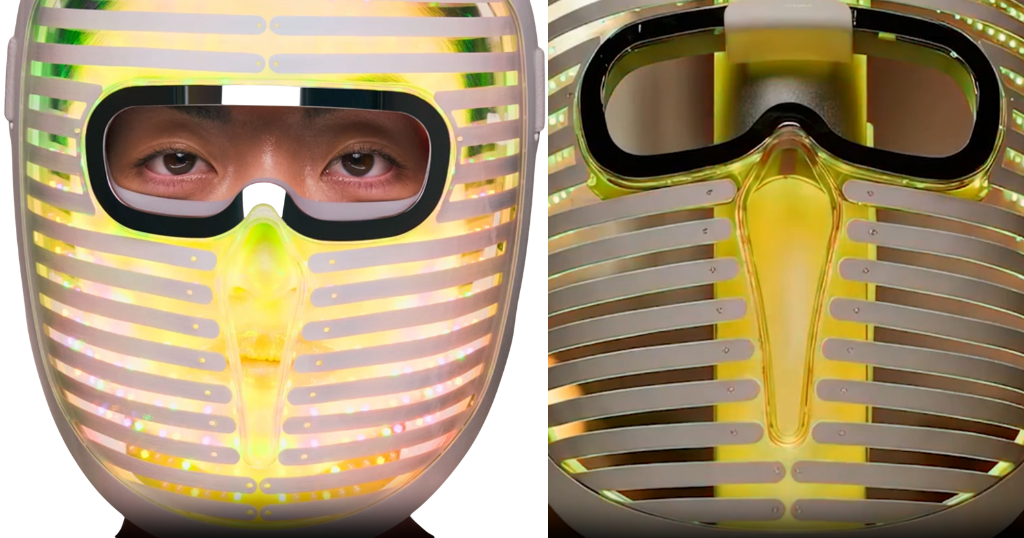
The iRestore Laser Face Mask Pro combines 590nm amber light with red and near-infrared wavelengths, giving you more light therapy options in a single mask.
iRestore’s Restore mode combines 590nm amber light with green, red, and infrared wavelengths, and the brand positions it for the appearance of redness. It’s a good option if flushing is one concern alongside fine lines, uneven-looking tone, or other visible signs of skin aging.
The mask packs 150 lasers and 650 LEDs, with its lasers delivering 633nm red and 1072nm near-infrared light, while the LEDs add 590nm amber, 660nm red, 830nm near-infrared, and 850nm near-infrared wavelengths.
While the laser component hasn’t been shown to treat rosacea, and LED masks aren’t a treatment for the condition itself, the mix of amber, red, and near-infrared light gives you more options for cosmetic concerns such as visible redness, uneven-looking tone, and signs of skin aging.
That broader light coverage is paired with a more comfortable design. The ventilated shell sits above the face instead of pressing into the cheeks, while built-in eye shields help reduce glare. A fit sensor checks the mask position before the lasers turn on, and each mode runs for just ten minutes.
Best for: Shoppers who want a premium mask for facial redness and visible skin aging, especially if pressure from flexible silicone feels uncomfortable.
Bottom line: iRestore gives you a broader mix of amber, red, and near-infrared light for several cosmetic skin concerns. MitoGLOW puts more emphasis on redness with its dedicated 590nm Calm mode, so it’s the one you may want to lean toward if redness is the main concern.
Best Budget: Glokore Light Therapy Mask
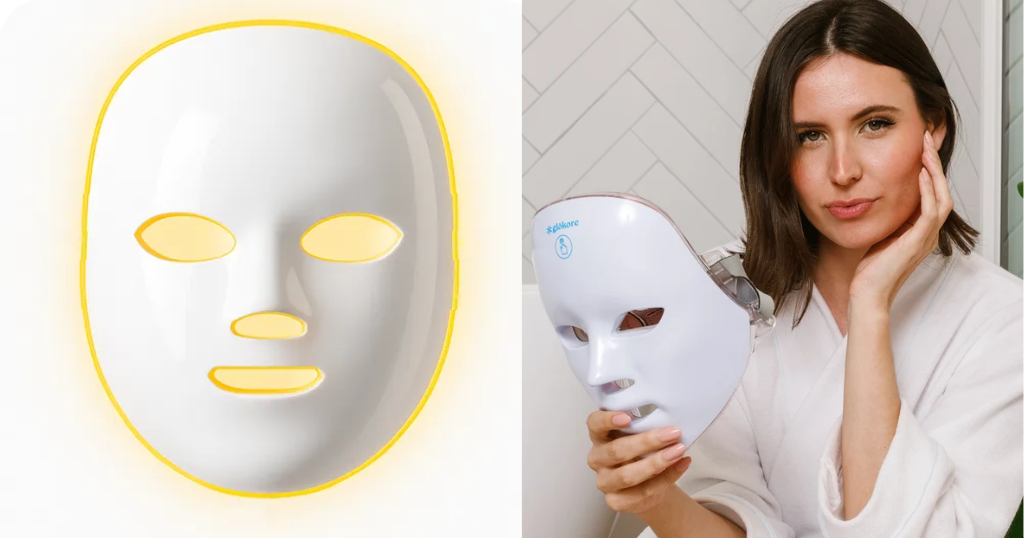
The GloKore Wireless LED Face Mask offers 590nm yellow light, the same wavelength examined in a controlled study involving sensitive skin, at a much lower price than many LED masks.
GloKore also includes 630nm red light for times when you want to support wider cosmetic skin goals. The mask is lightweight and wireless, which makes the ten-minute session easier to complete without remaining beside an outlet.
At $109.99 when reviewed, Glokore costs considerably less than the other masks in this guide. That lower price makes it a promising first LED mask for someone who wants yellow light therapy for rosacea-prone skin but isn’t ready to spend several hundred dollars.
Best for: Anyone who wants an included 590nm yellow light setting at a lower price.
Bottom line: Glokore stands out as a budget LED mask for rosacea-prone skin because it includes a 590nm yellow setting, plus six other light modes including 630nm red for broader cosmetic skin goals, all without moving into premium-mask pricing.
Best Multi-Mode LED Mask: CurrentBody Skin 4-in-1 LED Mask
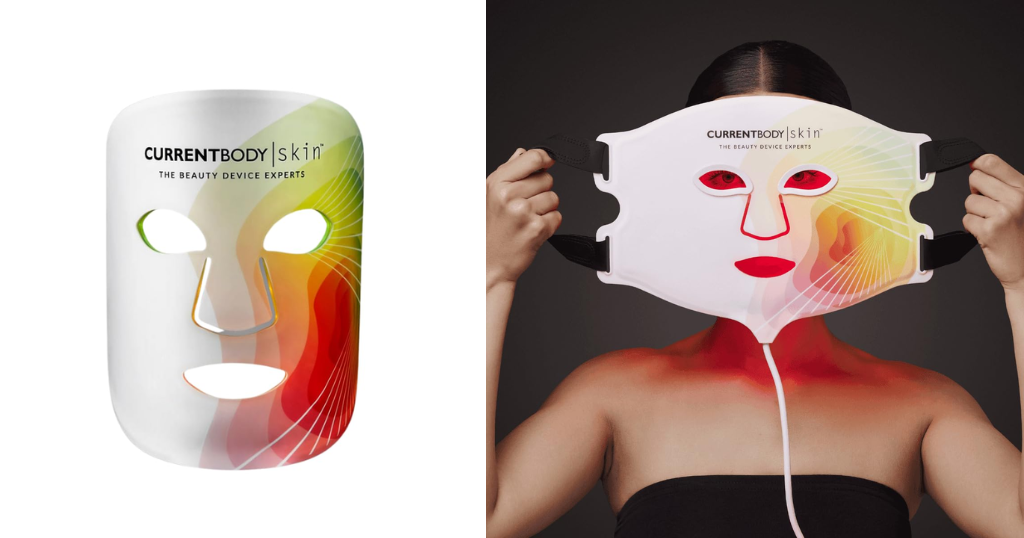
The CurrentBody Skin LED 4-in-1 is a good choice if redness is only one of several skin concerns you want to target. Its facial-mapping program directs 590nm yellow and 830nm near-infrared light across the cheeks, nose, and chin, while other settings address concerns such as uneven-looking pigmentation and visible signs of skin aging.
The mask uses 360 LEDs across five wavelengths, with four treatment programs that run automatically for ten minutes.
However, its flexible silicone design sits closely against the cheeks and nose, so it has more skin contact than non-contact masks like the MitoGLOW.
Best for: Anyone who wants one flexible LED mask for redness as well as pigmentation or visible skin aging.
Bottom line: CurrentBody is the more versatile pick if you want targeted light across different areas of the face rather than buying an LED mask mainly for redness.
Best Value: Ulike ReGlow LED Face Mask
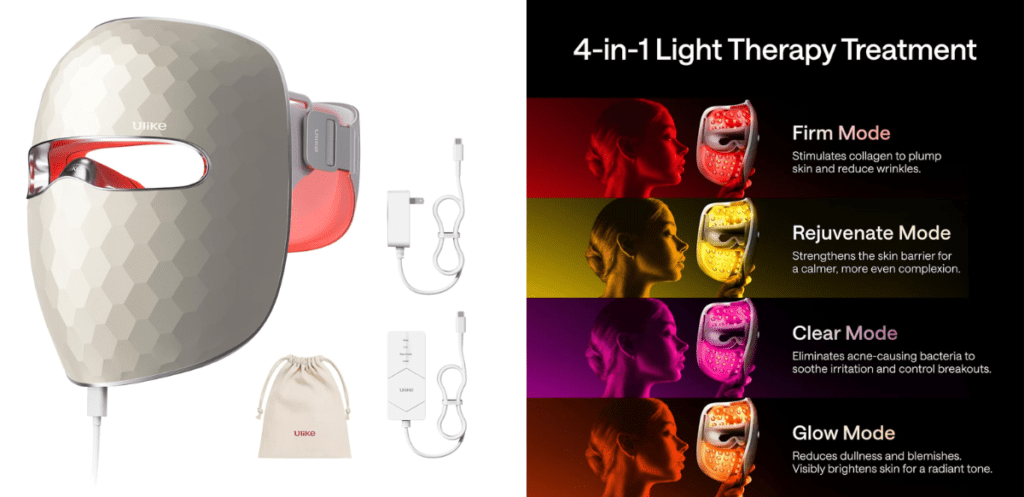
The Ulike ReGlow is a hands-free LED face mask with four preset modes that combine red, yellow, blue, and infrared light. Its dedicated Rejuvenate mode pairs 590nm yellow light with 830nm near-infrared, giving you a dedicated yellow-light option for days when facial redness looks more noticeable.
For broader cosmetic goals, Glow mode adds 630nm red light and runs for just five minutes, so the same mask can also cover concerns like the appearance of uneven texture and early signs of skin aging.
The design keeps the LEDs about one centimeter away from your skin, which may help reduce direct contact on tender or reactive cheeks. A built-in eye shield also helps control brightness without the need for separate goggles.
Best for: Anyone who wants 590nm yellow light alongside red and near-infrared wavelengths in one versatile mask.
Bottom line: Ulike ReGlow earns our best-value pick for rosacea-prone skin by pairing 590nm yellow with 830nm near-infrared in a simple eight-minute Rejuvenate session.
MitoPRO 300X: Best No-Contact Light Therapy Panel for Rosacea-Prone Skin
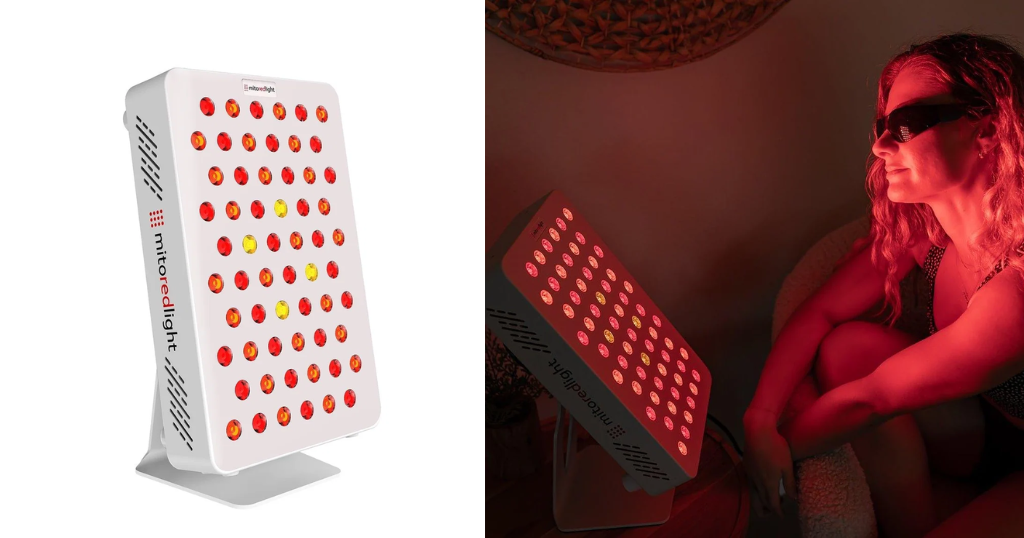
If a close-fitting LED mask feels uncomfortable against flushed cheeks, the MitoPRO 300X offers a no-contact alternative.
Its visible-light mode combines 590 nm amber with 630 nm and 660 nm red light, including the 590 nm wavelength studied in controlled research on sensitive facial skin.
The 9.5-by-14.5-inch panel is designed for targeted face-and-neck coverage, while the included tabletop stand keeps straps and silicone away from reactive skin. Mito recommends 10 minutes for its visible-light mode, and the three-year warranty gives you more protection on the purchase.
The three visible wavelengths operate together rather than as separate color settings, giving you broader amber-and-red coverage.
Best for: Light therapy for the face and neck without a device touching sensitive cheeks.
Bottom line: The MitoPRO 300X pairs 590nm amber light with a comfortable no-contact format.
What Color Light Therapy Is Best for Rosacea?
Yellow Light Therapy for Rosacea at 590nm
Yellow light is one of the more promising options when persistent facial redness is the main concern. In a 2026 controlled trial involving sensitive facial skin, 590nm light lowered measured erythema while also improving measures related to skin barrier function and stinging.
There is also direct rosacea research involving 590nm. A 2025 observational study used 590nm yellow followed by 830nm near-infrared light alongside medication and topical treatment, while an earlier rosacea study incorporated yellow LED into a combination treatment.
Neither study isolated yellow light on its own, but together they add to the case for looking specifically for a verified 590nm mode.
Red Light Therapy for Rosacea at 630 to 660nm
Red light has been studied too, but the evidence reviewed here doesn’t support it as a stand-alone rosacea treatment. In the controlled sensitive-skin trial, 630nm red light was paired with yellow, while two rosacea case reports used 650nm red after blue light.
So when you’re comparing LED masks, 630nm to 660nm red light can be a useful extra wavelength, but it doesn’t show that a red-only device will improve the appearance of rosacea. A separate red mode still gives you more flexibility for broader cosmetic skin goals without making it part of every session.
Near-Infrared Light Therapy for Rosacea Around 830nm
Near-infrared light penetrates deeper than yellow or red light and now appears in human rosacea research, although it hasn’t been isolated as a stand-alone treatment.
In a 2025 observational study, 830nm near-infrared was delivered after 590nm yellow light as part of a broader rosacea treatment program. The results were promising, but because both wavelengths and other treatments were used together, the study can’t tell us what 830nm contributed on its own.
For that reason, near-infrared is best viewed as a useful additional wavelength rather than the main reason to choose a device for rosacea-prone skin.
Blue Light Therapy for Rosacea at 415 to 480nm
The direct rosacea evidence for blue light is very limited. Two case reports used 480nm blue light followed by 650nm red light in people with papulopustular rosacea, and both reported improvements in inflammatory lesions and redness. Because blue and red were used together, though, the reports can’t tell us how much blue light contributed on its own.
If visible redness is your main concern, 590nm yellow light lines up more closely with controlled human research.
Because the rosacea evidence is limited and blue visible light may aggravate some rosacea-prone skin, it isn’t a wavelength I’d prioritize when redness is your main concern.
Is an LED Mask or Red Light Therapy Panel Better for Rosacea?
An LED face mask is often the easier option for at-home rosacea light therapy because it covers the full face in one timed session. Preset modes also take the guesswork out of positioning and treatment time.
A panel may suit you better if you want completely non-contact light therapy or plan to use red light on your neck and body as well.
The tradeoff is that many panels focus on 660nm red and 850nm near-infrared light, while fewer include 590nm yellow, which more closely matches the yellow-light studies discussed above.
You can explore their broader uses in our guide to red light therapy panel benefits.
For face-only use, choose a mask with a dedicated yellow or restoring mode. Then check the fit and session length to make sure it’s something you’ll be comfortable using regularly.
How to Choose the Best Red Light Therapy Device for Rosacea-Prone Skin
Choose Verified Wavelengths, Not Color Labels
Look for exact nanometer values because color names alone don’t tell you what reaches your skin. For facial redness, 590nm yellow currently has some of the most relevant human evidence among the wavelengths commonly found in at-home LED masks.
Red light in the 630nm to 660nm range can complement it, while near-infrared broadens the mask’s cosmetic use.
Pick a Mask That Won’t Aggravate Your Triggers
If pressure against the cheeks bothers you, a rigid shell may feel better than close-fitting silicone. MitoGLOW hovers above most of the face, while Ulike leaves about one centimeter of clearance. CurrentBody sits closer to the skin, so its flexible fit is better suited to people who tolerate facial contact.
Choose a Mode and Session You’ll Actually Use
A named redness program or dedicated yellow setting removes the uncertainty around color selection. MitoGLOW’s Calm mode runs for up to ten minutes, while Glokore offers a lower-priced 590nm setting in a wireless mask.
Can LED Light Therapy Make Rosacea Worse?
Rosacea triggers vary from person to person, so even a wavelength that suits one person’s skin may cause flushing or irritation in another.
Blue light deserves extra caution because blue visible light can increase oxidative stress and may aggravate rosacea-prone skin. Therapeutic blue LED has also appeared in small rosacea studies, so the evidence is mixed and isn’t strong enough to recommend it when redness is the main concern.
Heat can also trigger rosacea. Red and near-infrared LED therapy is generally intended to be non-thermal, but if a mask or panel makes your face feel noticeably hot, increases flushing, or causes burning or stinging, stop the session and follow your clinician’s advice.
How to Use Red Light Therapy for Rosacea at Home
- Use the mask on clean, dry skin unless its instructions say otherwise. Apply moisturizer after the session so the LEDs reach bare skin and the mask stays clean.
- Begin with the program intended for redness-prone skin. MitoGLOW calls it Calm, while iRestore uses Restore. Ulike offers Rejuvenate and CurrentBody names its program Restoring. With Glokore, select the dedicated 590nm yellow setting.
- Follow the brand’s treatment time and weekly schedule. Before the first session, take a photo in consistent lighting, then repeat it after four weeks and again at eight weeks. Photos make gradual changes easier to judge than daily mirror checks influenced by heat or stress.
- Keep the rest of your skincare gentle. Wash with a mild cleanser and follow treatment with a fragrance-free moisturizer. Daily broad-spectrum sunscreen also helps protect rosacea-prone skin from a common trigger. If you use prescription rosacea medication, continue following your clinician’s plan.
Eye Safety for Ocular Rosacea
Ocular rosacea can make the eyes feel dry, irritated, light-sensitive, or easily inflamed, so eye protection should be taken seriously with any LED mask or panel.
If you have ocular rosacea, eye discomfort, diagnosed eye disease, recent eye surgery, or strong light sensitivity, check with an eye doctor or healthcare professional before using red light therapy near the face.
For safer use:
- Choose a mask with removable eye inserts, built-in eye shields, or a design that keeps light away from the eyes.
- Follow the manufacturer’s instructions for eye protection, treatment distance and session length.
- Don’t look directly at the LEDs unless the manufacturer specifically states that this is safe for the device.
- Stop using the device if you notice eye pain, increased dryness, burning, blurry vision, headaches, or worsening irritation.
For most rosacea-prone users, eye comfort is just as important as wavelength. The best device is the one that lets you address visible redness without aggravating sensitive eyes.
You may also want to compare glasses for red light therapy if brightness, near-infrared exposure, or eye comfort is a concern.
Is At-Home Red Light Therapy for Rosacea Worth It?
At-home LED light therapy can be worth considering if you want a gentle, non-exfoliating option for rosacea-prone skin. It won’t treat or cure rosacea, and results aren’t guaranteed, but some wavelengths have been studied for visible redness and sensitive skin.
For facial redness, pay more attention to the stated wavelength than the number of colors a mask offers. A clearly listed 590nm yellow light setting gives you a closer match to the research, while fit and session length can make the device easier to use consistently.
The MitoGLOW is our top LED mask for rosacea-prone skin because its dedicated Calm mode delivers 590nm yellow light, while the hovering shell avoids pressing directly against flushed or sensitive cheeks.
If you want to spend less, Glokore also lists a 590nm yellow setting and adds other wavelengths for broader cosmetic skin concerns.
For most people choosing between the two, MitoGLOW is the more focused option for redness, while Glokore gives you a lower-cost way to try 590nm light at home.
Frequently Asked Questions
What Is The Best LED Mask For Rosacea?
MitoGLOW is our top pick for rosacea-prone skin because it offers a dedicated 590 nm Calm mode and a rigid design that hovers above the face instead of resting directly on the skin. That makes it a strong option for people who want yellow light and a mask that avoids as much direct contact as possible.
However, LED masks aren’t a treatment for rosacea, so follow your clinician’s advice and use light therapy only as an addition to your recommended care plan.
Is Yellow Light Or Red Light Better For Rosacea?
There isn’t enough research to say that yellow or red light is definitively better for rosacea. However, 590 nm yellow light currently has stronger controlled human evidence for reducing erythema in sensitive facial skin.
In a 2026 randomized trial, 590 nm yellow LED therapy reduced erythema index, transepidermal water loss, and skin sensitivity after eight weeks. The participants had sensitive skin rather than diagnosed rosacea, so the study supports the wavelength rather than proving that yellow light treats rosacea.
Direct rosacea evidence is more limited. Two case reports used 480 nm blue light followed by 650 nm red light, which means the effect of red light alone couldn’t be determined.
How Often Should I Use Red Or Yellow Light Therapy For Rosacea?
Use an LED mask according to the treatment schedule provided by its manufacturer. Session length and light dose vary between devices, so using a mask for longer or more often doesn’t necessarily improve results.
For example, MitoGLOW’s 590nm Calm mode can run for up to ten minutes. Follow the current treatment frequency listed in the device instructions rather than increasing session length or frequency in an attempt to speed up results.
If your skin becomes warmer, redder, or more irritated after treatment, stop using the device and speak with a dermatologist.
How Long Does LED Light Therapy Take To Improve Redness?
There isn’t enough clinical evidence to establish how long LED light therapy takes to improve rosacea redness. The available human studies suggest that any change should be assessed over several weeks rather than after a few sessions.
The 590 nm sensitive-skin trial measured results at two, four, and eight weeks. In two rosacea case reports, improvement in erythema and papules was observed after five of ten twice-weekly blue and red LED sessions.
Taking photos in the same lighting before treatment and again after four and eight weeks can make subtle changes easier to compare.
Is LED Light Therapy The Same As IPL For Rosacea?
No. LED light therapy and IPL are different treatments. LED masks use relatively low-intensity light during repeated home sessions, while intense pulsed light delivers high-intensity pulses of broad-spectrum visible light during professional treatments.
IPL and vascular lasers are established options for persistent redness and visible blood vessels caused by rosacea. At-home LED masks haven’t been shown to remove fixed facial capillaries in the same way.
Can I Use Skincare With An LED Mask?
Most LED face masks should be used on clean, dry skin before moisturizer and other skincare products. Apply the rest of your skincare after the session unless your device specifically instructs you to use a compatible product beforehand.
Check the device instructions if you use prescription skincare or medications that can cause photosensitivity. Your dermatologist or prescriber can also advise whether the timing of a prescription product needs to change around LED sessions.
Can Red Light Therapy Help Rosacea?
Red light has appeared in rosacea research, but there isn’t enough evidence to show that an at-home red-only mask treats the condition.
The direct rosacea evidence consists of two case reports in which 650 nm red light was used sequentially with 480 nm blue light. A separate controlled trial combined 630 nm red with 590 nm yellow light in people with sensitive skin rather than rosacea. Because red light wasn’t tested alone in either study, its individual effect on rosacea remains uncertain.
Can LED Light Therapy Remove Visible Blood Vessels?
At-home LED light therapy hasn’t been shown to remove the visible blood vessels caused by rosacea. These fixed vessels, called telangiectasia, are treated more directly with professional options such as IPL, pulsed dye laser, or other vascular lasers.
The American Academy of Dermatology reports that most patients treated for visible blood vessels see a 50% to 75% reduction after one to three laser or light treatments. Treatments are generally spaced three to four weeks apart.
An LED mask can still be used as part of a wider skincare or dermatology plan, but it shouldn’t be presented as a replacement for IPL or vascular laser treatment when visible capillaries are the main concern.
Disclaimer: This article is for general information only and isn’t medical advice. Rosacea can vary a lot from person to person, and light therapy may not be suitable for everyone. Speak with a dermatologist or qualified healthcare provider before using red light therapy, especially if you have ocular rosacea, active irritation, a history of photosensitivity, or you use medications that make your skin more sensitive to light. Stop using the device and seek medical advice if redness, flushing, burning, stinging, eye discomfort, or irritation gets worse.